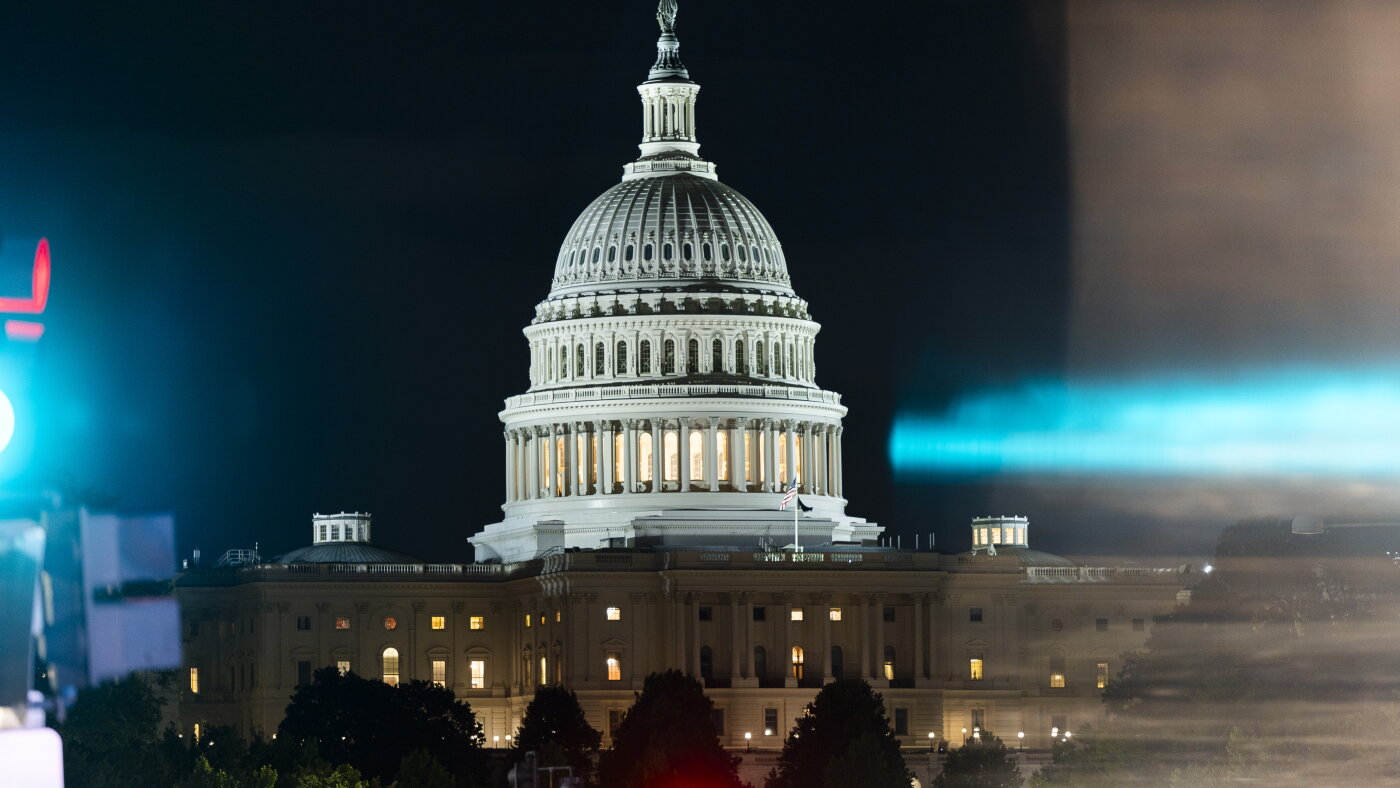
Photo via NPR

Can I trust the polls? And other questions from listeners about the 2026 midterms

Read the original at NPR ↗
Cite

Montanaro, D. (2026, October 31). Can I trust the polls? And other questions from listeners about the 2026 midterms. NPR. https://www.npr.org/2026/10/31/g-s1-149981/listener-questions-npr-midterms-2026-election

Dated from the outlet's own feed. Check the original for its byline.

NPR · collected 2026-10-31 · by Domenico Montanaro

Quick Summary

Listeners have submitted questions to NPR about the reliability of polls ahead of the 2026 midterms. Political correspondent Domenico Montanaro addresses concerns over poll accuracy by explaining that while some polls can be misleading, especially at the state level due to lack of local journalism funding, national polls tend to perform well within their margin of error. He emphasizes the importance of focusing on trends and significant movements in public opinion rather than specific candidate margins, highlighting that polling remains a valuable tool when used alongside other reporting methods like historical context and campaign coverage.
Written by AI on 2026-10-31, from this article's own text only (the story summary below draws on all the coverage).

AI analysis

Story summary

Ahead of the 2026 midterm elections, NPR received questions from listeners about political polling accuracy and its implications for election coverage. Listeners expressed concerns over the reliability of polls following recent high-profile misses at the state level, though national polls have generally been accurate within margins of error. Political correspondent Domenico Montanaro noted that while there are good and bad polls, just as there are good and bad reporters, it is important to consider the margin of error in poll results, which can range from 6 to 8 percentage points.

Written for “2026 Midterms Poll Trust” on 2026-10-31, grounded in this article and the 0 other(s) covering the same event.
Why this leaning score
This article does not take a side on a contested political question, so it has no leaning score. That is an answer rather than a gap: a match report or a rescue can be warmly or critically written without being left or right, and scoring it anyway is how approval of a subject gets recorded as a political position.
No political leaning scored for article 119276 · logged 2026-10-31

Story

📰 2026 Midterms Poll Trust
Politics · 1 article(s) covering the same event.

Compared with similar articles

This article reads unscored and hedges 10% of its claims. Each row says how that neighbour differs.
The Guardian
⚖️ Leans left Hedges 5 of 22 claims Outlet record 66/100
“The articles discuss different aspects of the midterms and do not describe the same specific incident or occurrence.”
TIME
⚖️ Leans right Hedges 8 of 48 claims Outlet record 59/100
“The articles discuss different aspects of polling and public opinion leading up to the midterms, but describe distinct content and sources.”
Daily Mail
Hedges 9 of 40 claims Outlet record 68/100
“The articles discuss different aspects of the midterms, with Article A focusing on Nate Silver's prediction and probability models for election outcomes, while Article B addresses listener questions about trusting polls and accuracy in political reporting.”
Toronto Star
Hedges 1 of 45 claims Outlet record 64/100
“Article A discusses The AP Voter Poll methodology and its role in explaining election outcomes, while Article B addresses listener questions about trusting polls in general for the upcoming midterms.”
The Bulwark
Hedges 2 of 13 claims
“The articles discuss different aspects of election coverage and do not describe the same specific incident or occurrence.”
NPR
⚖️ Leans left Hedges 3 of 22 claims Outlet record 60/100
“The articles discuss different aspects of the midterm election and do not describe the same specific incident.”
NPR
Hedges 2 of 18 claims Outlet record 60/100
“The articles discuss different aspects of the 2026 midterms and do not describe the same specific incident or occurrence.”
The Guardian
Hedges 0 of 1 claims Outlet record 66/100
“The articles cover different aspects of the midterm elections, with Article A discussing key races and Article B addressing listener questions about polls and election coverage.”
NPR
Hedges 1 of 9 claims Outlet record 60/100
“The articles cover different aspects of election coverage and analysis, not the same specific incident or time frame.”
Al Jazeera
⚖️ Leans left Hedges 4 of 47 claims Outlet record 60/100
“The articles discuss different aspects of the midterm elections; one focuses on California's role and races, while the other addresses listener questions about polls and election coverage.”
How this article was measured signals, leaning charts, publisher record, byline, topics and claims

Signals How these are calculated →

Claims extracted
87
sentences that state something as happening or true
Uncertain
10%
9 of 87 hedged ("reportedly", "may", "according to")
Leaning
not political
takes no side on a contested political question
Publisher signals
60/100
NPR's corrections and hedging, across everything collected from it. Not a measure of accuracy.
Outlets on this story
1
Politics
Same framing elsewhere
1
articles that frame the event the way this one does
Analyzed 2026-10-31 · how these are computed

How this is being covered How these are calculated →

Article leaning vs. publisher reliability
Source leaning vs. consistency

Publisher

NPR · 984 article(s) · 3 correction(s) detected
Running correction rate · 3 correction(s)

Who wrote this

Domenico Montanaro
5 article(s) here · 1 carrying a prediction
🔮 Get the latest on the midterms & more in the NPR App Ahead of Election Day, there are a lot of questions about what might happen, what the implications of different outcomes might be and even what it's like to cover elections.
🔮 Mississippi and Nebraska are also more competitive than Republicans would like, but GOP candidates are favored there.
🔮 But, there are indications of why a potential wave could be limited, a new NPR/PBS News/Marist poll finds.
🔮 If a poll has a 3 percentage-point margin of error, this means that candidate could have a 5-point lead or be losing by a point.
🔮 The Cook Political Report forecasts a five-to-15-seat net gain for Democrats at this point.
Also by Domenico Montanaro
Nothing else under this byline is closely related to this article, so these are simply their most recent.

Topics

Americans NPR Republican the NPR Politics Podcast

Subjects

NPR ORG · 4× - Domenico Montanaro PERSON · 1× Americans NORP · 1× Domenico Montanaro PERSON · 1× Republican NORP · 1× the NPR Politics Podcast ORG · 1×

Narrative

Plus, I got my start covering midterm elections, researching the 2006 elections and learning about every single congressional race, and it was fascinating — the characters, the different types of places and economies and people in this very large country.
framing: assertive · carried by 1 article(s) · first seen 2026-10-31
🔮 Get the latest on the midterms & more in the NPR App Ahead of Election Day, there are a lot of questions about what might happen, what the implications of different outcomes might be and even what it's like to cover elections.

Claims (87 extracted, 9 hedged)

Can I trust the polls? asserted
I → trust → polls
Get the latest on the midterms & more in the NPR App Ahead of Election Day, there are a lot of questions about what might happen, what the implications of different outcomes might be and even what it's like to cover elections. uncertain
it → get → elections
In collaboration with the NPR Politics Podcast, listeners sent in their questions about the election and politics for our political correspondents to answer. asserted
correspondents → send → election
How can you as a reporter provide an accurate news piece utilizing poll results? asserted
you → provide → results
This is a common question every election cycle, but it's a little like saying, "I don't like the media because the media is biased." asserted
media → say → media
National polls have actually been pretty good when it comes to the horse race, with a slight underestimation of Republican turnout. asserted
it → come → turnout
But remember, these polls have margins of error. asserted
polls → remember → error
That means a poll with +/- 3 or 4 percentage points is actually a range of 6 to 8 points. asserted
poll → mean → points
That's important because in a country with very close elections, the kind of precision that Americans expect sets up the polls for failure because they're not intended to be that specific. asserted
they → expect → failure
They set more of a fuzzy range. asserted
They → set → range
State surveys have seen a lot of junk polls, even a couple fake ones this time around. asserted
surveys → see → polls
So it's really important to pay attention to the quality of the pollster. asserted
it → pay → pollster
Local newspapers and TV stations just don't have the kind of money that national outlets do to pay for good, rigorous and frequent polling. asserted
outlets → have → polling
I talk a lot about polls, but you rarely hear me talking about specific margins between candidates, unless there's been a trend moving the needle in a certain direction. asserted
me → talk → direction
The races are close, within margin of error in many places, and that's all that really needs to be conveyed. asserted
that → need → places
Unfortunately, some outlets emphasize the horse race, but the best stuff is underneath. asserted
stuff → emphasize → race
For example, we wouldn't know how quickly public opinion moved on important issues, approval ratings, attitudes and how strongly people feel about those things without this data. asserted
people → know → data
Also, for those who don't think reporters should use polls at all, understand that campaigns and corporations spend millions of dollars on polling to inform where they spend money, where they travel and what messages to use. asserted
they → think → messages
They use the same pollsters you hear about externally. asserted
you → use → pollsters
All that said, polling is one tool. asserted
polling → say → ?
It's not everything, and it should be mixed with historical context, reporting with campaigns, and being on the ground, which are all priorities of NPR's as well. asserted
which → mix → NPR
- Domenico Montanaro, NPR senior political editor and correspondent Do you prefer reporting on midterms or presidential election years? asserted
you → prefer → midterms
Are there unique opportunities that midterms have? asserted
midterms → have → that
Presidential elections are certainly easier to cover in the sense that there are two sides who are looking to be in one job. asserted
who → cover → job
You get a lot of quirky candidates in down-ballot races sometimes with interesting storylines that might not see a lot of daylight in a presidential election, which is like a solar eclipse. uncertain
which → get → eclipse
Plus, I got my start covering midterm elections, researching the 2006 elections and learning about every single congressional race, and it was fascinating — the characters, the different types of places and economies and people in this very large country. asserted
it → get → country
- Domenico Montanaro, NPR senior political editor and correspondent Reporting during the midterms is so much more fun! asserted
Reporting → report → midterms
Rallies for presidential candidates have tons of security and stadium-size venues. asserted
Rallies → have → security
Tagging along with a candidate for House or Senate, especially early in the cycle, can be so much more intimate. asserted
Tagging → tag → cycle
This year, I've covered candidates at an antique shop, a farmer's market, a UAW picnic, a family farm and a smokejumper-themed brewery. asserted
I → cover → shop
There is more opportunity to see candidates up close, watch them interact with voters and even ask them questions. asserted
them → be → questions
- Sam Gringlas, NPR congressional reporter I personally like all elections, which is what makes a presidential year so great, you get a whole smorgasbord of contests. asserted
you → like → contests
The top of the ticket certainly consumes a lot of oxygen but I've found you can often learn more about how the election is going by spending time with congressional candidates or even candidates for the state legislature. asserted
election → consume → legislature
And, unlike midterm years, more voters are engaged, which makes for better voter interviews. asserted
which → engage → interviews
But, please check back in a week and a half to see how my sleep debt is doing and whether I still say I "like all elections," because this may just be the light at the end of the tunnel pre-election euphoria speaking. uncertain
this → check → tunnel
Is there a race you're watching out of your own curiosity that may not "matter" at the national level? uncertain
that → watch → level
Every race counts when it comes to the balance of power in the House and the Senate. asserted
it → count → House
But I have been joking that following the twists and turns in Nevada's 2nd Congressional District is now my hobby. asserted
following → joke → District
I did a story about this race about a month ago and it has only gotten more wild since. asserted
it → do → race
It is a district that President Trump won by 14 points that hasn't been represented by a Democrat in its more than 40 years in existence. asserted
that → win → existence
…and 47 more, not listed.

💬Give feedback
🕘History 🎫Support