Supreme Court to weigh whether oil companies can be forced to pay for climate damage

Read the original at Los Angeles Times ↗
Los Angeles Times · collected 2026-10-04 · by David G. Savage

Quick Summary

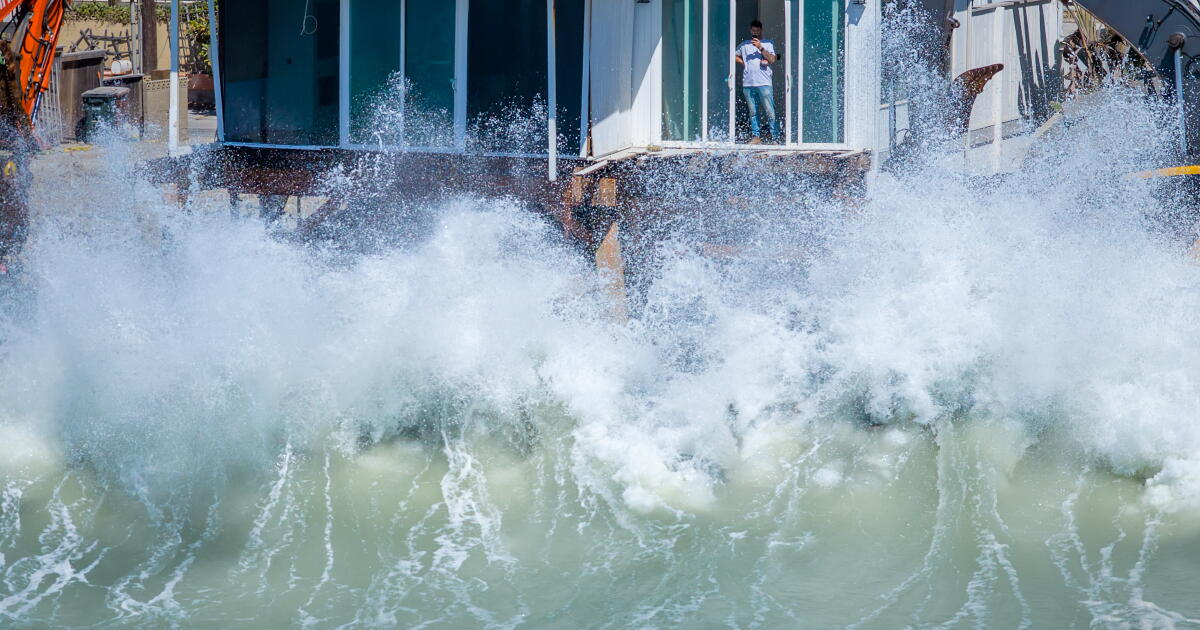
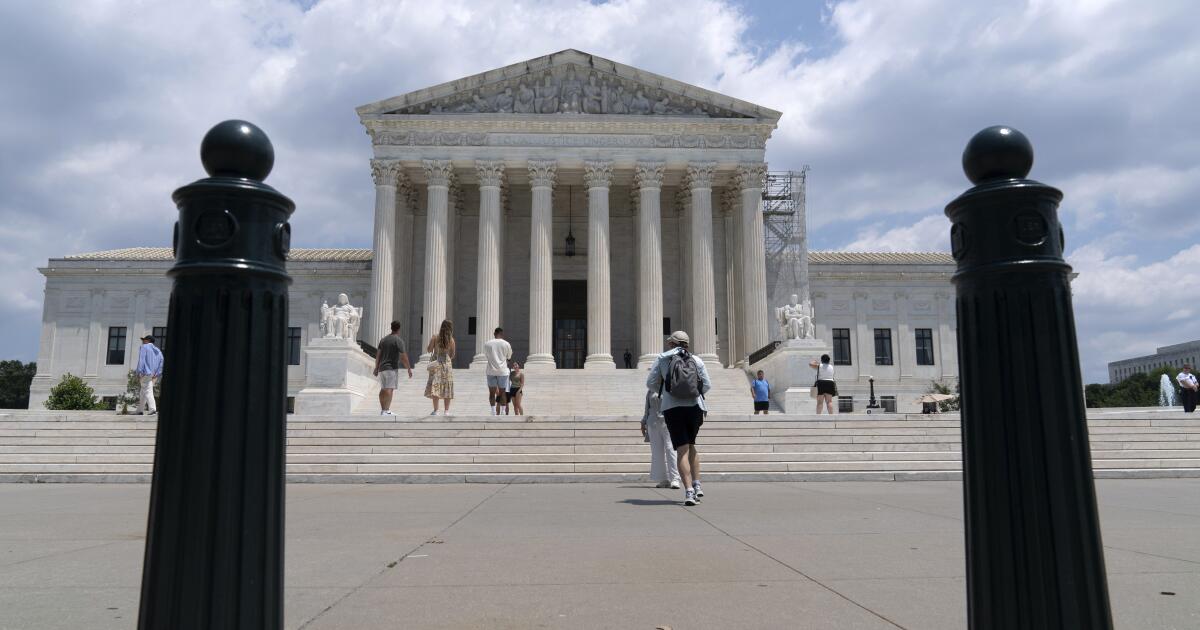
The Supreme Court will consider whether oil companies can be held liable for climate damage during its new term starting Monday. California and several other states have sued major oil firms, accusing them of deceiving the public about fossil fuels' impact on global warming over decades. The case involves claims that these companies should pay damages for environmental harm caused by their products, a legal strategy modeled after lawsuits against tobacco and opioid industries. However, previous rulings have been inconsistent regarding where such cases can be heard and under what laws they can proceed.
Written locally by qwen2.5:14b on 2026-10-04, using this article's own text rather than the other coverage of the same event (that is the story summary below).

AI analysis runs on qwen2.5:14b, locally

Story summary

When the Supreme Court begins its new term on Monday, it will consider Suncor Energy v. Boulder County, a case that could determine if state and local governments can sue oil companies for damages caused by climate change. In 2018, Boulder County and the City of Boulder sued Exxon Mobil and Suncor Energy, alleging the companies engaged in deceptive practices regarding fossil fuel dangers and seeking compensation for associated environmental harms. The case has drawn significant attention from the manufacturing community, which fears that a ruling allowing such lawsuits could lead to a patchwork of legal actions against companies involved in complex national issues. Arguments before the Court on October 5 will provide insight into how aggressively the conservative-leaning justices may rule, with potential implications for job growth and business investment across America.

Written for “Climate Lawsuit Supreme Court Case” on 2026-10-05, grounded in this article and the 3 other(s) covering the same event.

Signals How these are calculated →

Claims extracted
57
claim-shaped sentences
Uncertain
33%
19 of 57 hedged
Leaning
withheld
no quote in the article backed the model's score
Correction & hedging signals
95.1
corrections and hedging in what we collected; not a measure of accuracy
Outlets on this story
4
Politics
Narrative spread
1
articles carrying this framing
Analyzed 2026-10-04 · how these are computed

Story

📰 Climate Lawsuit Supreme Court Case
Politics · 4 article(s) covering the same event. See how they differ ↓

How this is being covered How these are calculated →

Article leaning vs. publisher reliability
Source leaning vs. consistency

Compared with similar articles

This article reads unscored and hedges 33% of its claims. Each row says how that neighbour differs.
CBS News
⚖️ Leans left 🔴 23% hedged 13 of 57 📰 publisher trust 66
“Both articles refer to the Supreme Court beginning its new term on October 4, 2026, by hearing arguments regarding whether oil companies can be held liable for climate change damage.”
Washington Examiner
⚖️ leaning not scored 🔴 6% hedged 2 of 33 📰 publisher trust 72
“Both articles describe the Supreme Court's decision to hear the case Suncor Energy v. Boulder County on whether state and local governments can sue oil companies for climate damage, set to begin in the new term starting Monday.”
Washington Examiner
⚖️ Leans left 🔴 21% hedged 12 of 56 📰 publisher trust 72
“Both articles discuss the Supreme Court hearing arguments in Suncor Energy v. County Commissioners of Boulder County regarding whether states can sue oil and gas companies for climate change damages.”
Toronto Star
⚖️ leaning not scored 🔴 12% hedged 4 of 33 📰 publisher trust 63
“While both articles discuss the Supreme Court's consideration of a case related to climate change and potential damages from wildfires, they do not describe the exact same incident or hearing. Article A focuses on a specific homeowner's experience with a wildfire, while Article B discusses the broader legal proceedings involving oil companies.”
Reason
⚖️ leaning not scored 🔴 20% hedged 2 of 10 📰 publisher trust 66
“Article A discusses Justice Alito's recusal decision in Suncor Energy v. Boulder County, while Article B provides a broader overview of the case and its implications without focusing on the recusal.”
CBS News
⚖️ leaning not scored 🔴 9% hedged 9 of 102 📰 publisher trust 66
“While both articles discuss the upcoming Supreme Court term, Article A focuses specifically on the climate change case involving oil companies, whereas Article B mentions multiple high-profile cases including immigration and guns in addition to climate change.”
Mother Jones
⚖️ Leans left 🔴 10% hedged 5 of 49 📰 publisher trust 95
“While both articles discuss Justice Alito's recusal from a significant climate case before the Supreme Court, they appear to describe different aspects or moments leading up to and including the hearing. Article A focuses on Alito’s decision to recuse himself while legal experts comment on the ramifications; Article B discusses the impending hearing at the start of the new term.”
Washington Examiner
⚖️ Leans strongly right 🔴 3% hedged 1 of 29 📰 publisher trust 72
“Article A discusses the reliance on fossil fuels, while Article B focuses on the Supreme Court case regarding whether oil companies can be forced to pay for climate damage. Although related, they describe different specific events.”
Reason
⚖️ leaning not scored 🔴 21% hedged 18 of 87 📰 publisher trust 66
“The articles discuss the Supreme Court hearing arguments in Suncor Energy v. Boulder County but focus on different aspects and details.”

Publisher

Los Angeles Times · 175 article(s) · 0 correction(s) detected
No corrections detected for this publisher. That may mean careful reporting, or simply that nothing has been checked.

Who wrote this

David G. Savage
8 article(s) here · 1 carrying a prediction
🔮 In its new term, the court will also hear major cases on immigration and guns.
🔮 “At this late date, ordering reversion to the 2025 map in the midst of an ongoing election would usher in electoral chaos,” the justices wrote.
🔮 - The decision will aid states that seek to scrub their voter rolls and remove those who are not citizens.
🔮 - Click here to listen to this article - - The administration could try to impose new regulations for the 2028 elections.
🔮 Acting on his own, Trump had the East Wing of the White House torn down in October and ordered work to start on a massive new building that would dwarf the old executive mansion and seat 1,000 guests for dinner.
🔮 At issue is whether the president acting on his own may build a huge new ballroom complex that is expected to dwarf the historic Executive Mansion.
🔮 By a 5-4 vote, the justices granted an emergency appeal from Trump and his lawyers on Monday, setting aside a judge’s order that would stop the construction.
🔮 California leaders immediately noted the limits of the high court ruling and said they would file a lawsuit to prevent Trump’s desired changes from taking effect. “The Supreme Court just let the Trump administration move ahead (for now) with its plan to disenfranchise voters across the country.
Also by David G. Savage
Nothing else under this byline is closely related to this article, so these are simply their most recent.
All 8 articles by David G. Savage →

Topics

Boulder California Colorado Supreme Court The Supreme Court

Subjects

California GPE · 3× The Supreme Court ORG · 3× Boulder GPE · 2× Boulder County GPE · 2× Colorado GPE · 2× Samuel A. Alito PERSON · 2× Supreme Court ORG · 2× Colo. GPE · 1× Rob Bonta PERSON · 1× WASHINGTON GPE · 1×

Narrative

The administration says it seeks assurances from those countries that the deported persons will not be not be abused or persecuted, but it refuses hearings for individuals. More than 25,000 people have been expelled to ‘third countries’ under Trump, including to dangerous and conflict-ridden nations such as the Central Africa Republic. U.S. District Judge Brian Murphy in Boston has ruled these deportees are entitled to a “meaningful notice” of where they are being sent and “meaningful opportunity” to contest this if they have a reasonable fear they will face persecution and torture. Trump administration lawyers filed emergency appeals at the Supreme Court to set aside Murphy’s orders.
framing: mixed · carried by 1 article(s) · first seen 2026-10-04
🔮 In its new term, the court will also hear major cases on immigration and guns.

Claims (57 extracted, 19 hedged)

Supreme Court to weigh whether oil companies can be forced to pay for climate damage asserted
companies → weigh → damage
- Click here to listen to this article - - Justice Samuel A. Alito, a reliable conservative, withdrew from the case, making a 4-4 tie vote possible. - asserted
vote → click → case
In its new term, the court will also hear major cases on immigration and guns. asserted
court → hear → immigration
The Supreme Court will open its new term Monday by hearing arguments on whether the oil and gas industry may be forced to pay damages for the scorching heat waves, wildfires and droughts that are blamed on climate change. uncertain
that → open → change
It’s a momentous question the justices have put off deciding for nearly a decade — and may do so again. uncertain
justices → ’ → decade
California joined more than two dozen blue states and municipalities in 2023 when it sued the five largest oil companies, alleging “decades of deception” over the danger of a warming climate. asserted
it → join → climate
They have “privately known the truth for decades but have fed us lies and mistruths to further their record-breaking profits at the expense of our environment,” California Atty. Gen. Rob Bonta said. asserted
Bonta → know → environment
Such climate-change lawsuits were patterned after the mass claims against the tobacco and opioid industries. uncertain
lawsuits → pattern → industries
Both were accused of concealing the dangers of their very profitable products. asserted
Both → accuse → products
But the climate suits have stalled. asserted
suits → stall → ?
Judges have been divided over whether these potentially huge claims should be decided in federal or state court, and if so, under what law. uncertain
claims → divide → law
Last year, Boulder County, Colo., won a 5-2 ruling in the state Supreme Court that allowed its 2018 suit to proceed as a claim of a public nuisance, an unjust enrichment or a civil conspiracy. uncertain
suit → win → nuisance
These are referred to as “common law” claims that are long-standing and traditional but do not rely on a measure approved by the Legislature. uncertain
that → refer → Legislature
California has sued five of the largest oil and gas companies in the world, alleging that they engaged in a ‘decades-long campaign of deception’ about climate change and the risks posed by fossil fuels. asserted
they → sue → fuels
The Colorado judges also said the climate-change suits are not “preempted” or blocked by federal anti-pollution laws because the suit for damages did not regulate greenhouse gas emissions. asserted
suit → say → emissions
The dissenters said the state court was giving Boulder a “green light to act as its own republic” to punish the Exxon Mobil Corp. for the impact of “global climate change.” asserted
court → say → change
Appealing to the Supreme Court, the oil companies sounded the same theme. asserted
companies → appeal → theme
“Boulder, Colorado cannot make energy policy for the entire country,” they said. asserted
they → make → country
A ruling for the county would “authorize all 50 states and tens of thousands of municipalities” to ask their local juries to “impose ruinous liability” on the fossil fuel industry, they told the court. asserted
they → authorize → court
The Trump administration joined in support of the industry’s appeal. asserted
administration → join → appeal
“Our federal system would disintegrate if each state could tackle inherently national or international problems by forcing its regulatory prescriptions on the other 49,” the administration’s lawyers wrote. uncertain
lawyers → disintegrate → 49
In February, the justices voted to hear the case and decide whether federal law blocks state law claims for the “effects of interstate and international greenhouse-gas emissions.” uncertain
law → vote → emissions
The court scheduled the case of Suncor Energy and Exxon Mobil vs. Boulder County as the first of the new term. asserted
court → schedule → term
Legal experts say the industry’s claim to be shielded by federal law is weak. uncertain
claim → say → law
UCLA law professor Alejandro Camacho described the “preemption arguments as the latest and perhaps most ambitious effort to weaponize federal law to prevent polluters and fraudsters from paying for the harms they cause.” asserted
they → describe → harms
Neither the Constitution nor the Clean Air Act provides such a shield, he said. asserted
he → provide → shield
Legal experts on the other side question the notion that a public nuisance can be defined so broadly to include both the sale of a legal product and the impact on carbon pollution, much of it coming from China and India. asserted
much → question → China
The outcome in the Supreme Court remains in doubt. asserted
outcome → remain → doubt
Last week, Justice Samuel A. Alito, a reliable conservative, announced he was withdrawing from the case. asserted
he → announce → case
He did not say why, but he owns stock in other oil companies that could be affected by the court’s decision. uncertain
that → say → decision
A broad ruling for Boulder would send a shock through the fossil-fuel industry and clear the wave of climate-change suits to proceed in state courts. The industry may turn to Congress. uncertain
industry → send → Congress
have introduced bills that would shield energy companies from such liability claims. uncertain
that → introduce → claims
Similarly, a broad ruling shielding the oil companies probably would block all of the climate change suits, including California’s. asserted
ruling → shield → California
The justices may opt out of ruling, however. uncertain
justices → opt → ruling
When they granted review of the case, they asked the lawyers on both sides to weigh in on whether the high court had “jurisdiction” to decide the Boulder case. asserted
court → grant → case
Usually the U.S. Supreme Court reviews only final judgments handed down by state courts, and the Boulder case did not result in a final ruling. asserted
case → review → ruling
And without Alito, the court could split 4 to 4. uncertain
court → split → Alito
Colorado ranchers struggling with severe drought and heat have filed a friend-of-the-court brief in a climate case that soon will be heard by the U.S. Supreme Court. asserted
that → struggle → Court
A decision based on a tie vote would affirm Boulder’s early stage victory but would not set a precedent that would govern other cases. In its new term, the court also will hear major cases on immigration and guns. asserted
court → base → immigration
Two of the cases test the Trump administration’s strict deportation policies. asserted
Two → test → policies
…and 17 more, not listed.

💬Give feedback
🕘History 🎫Support