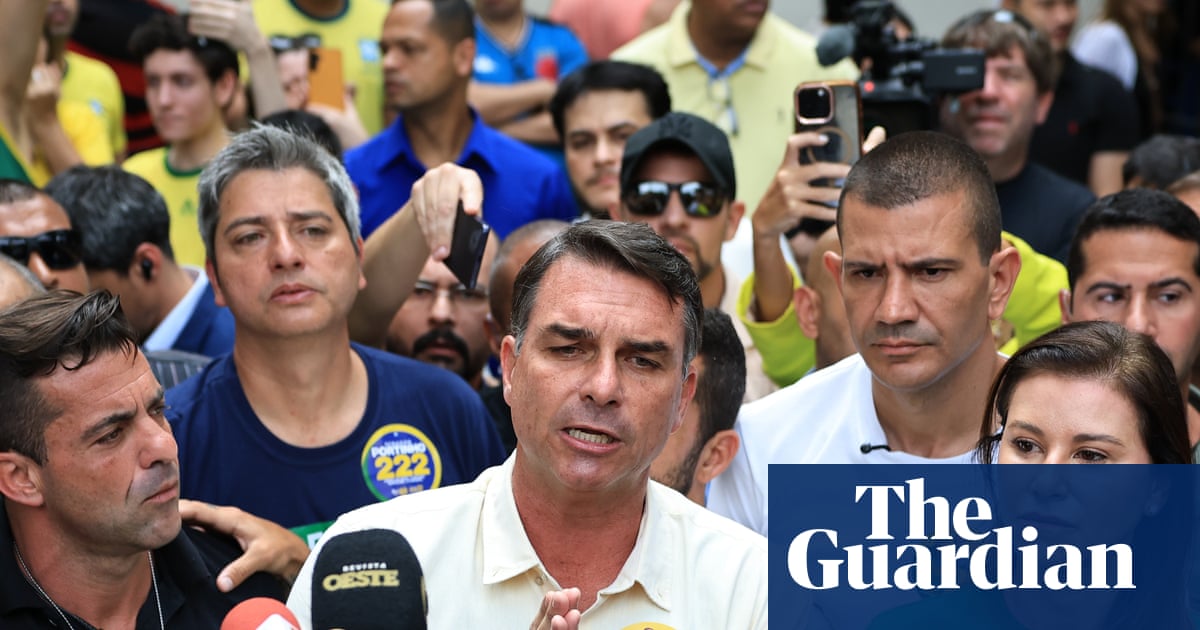
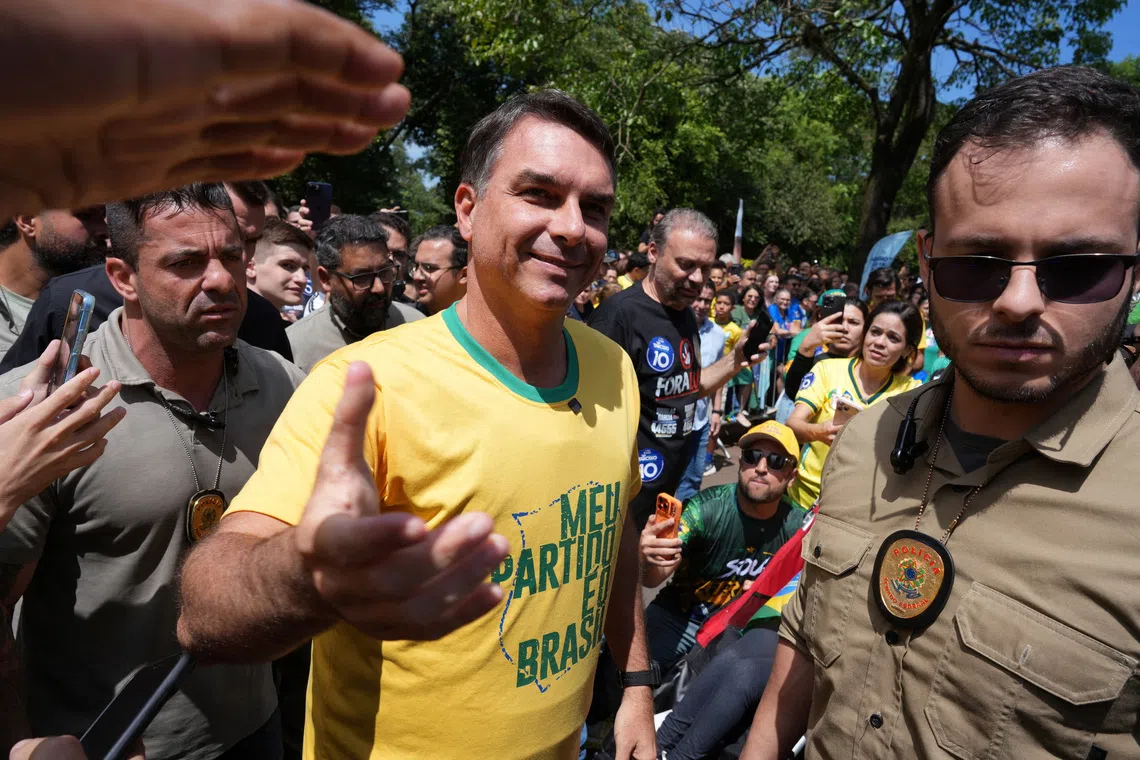
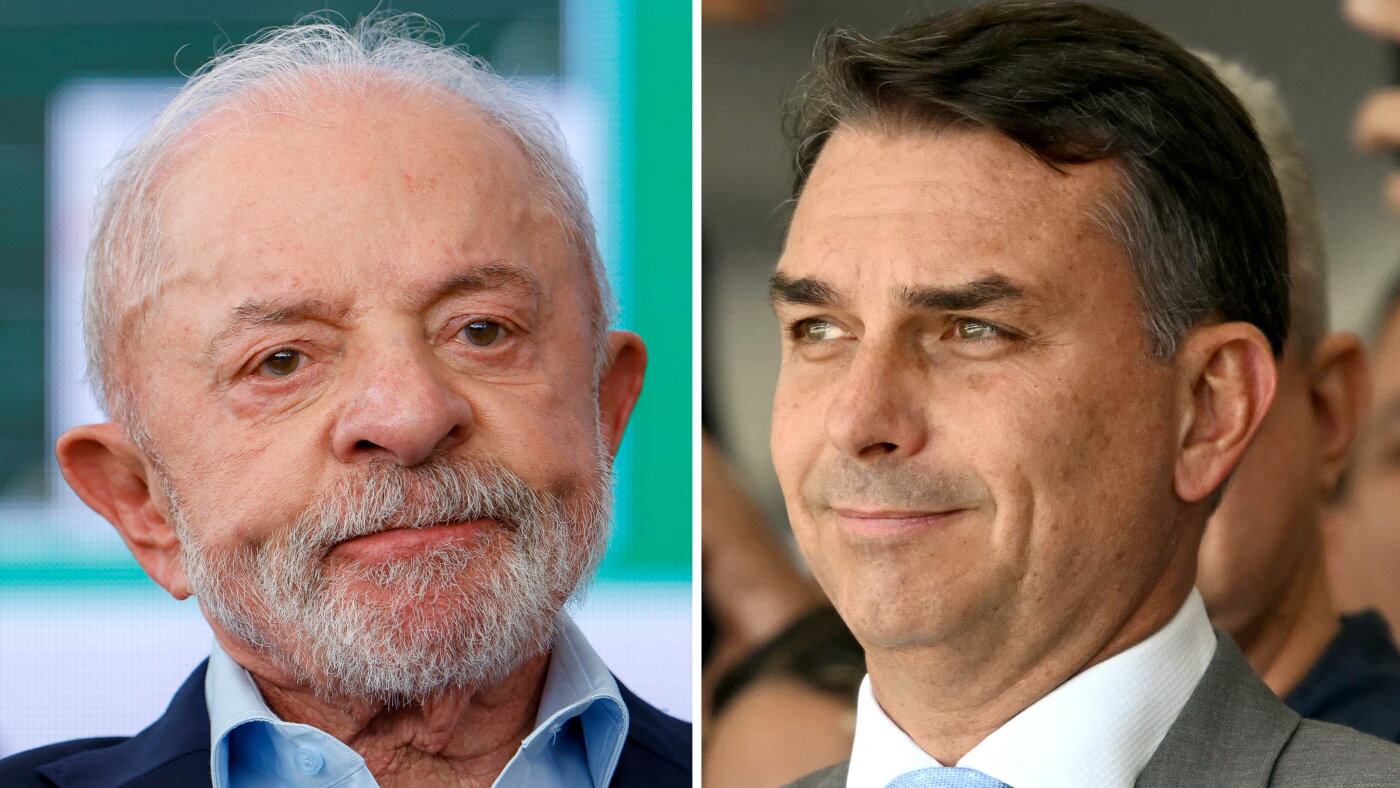
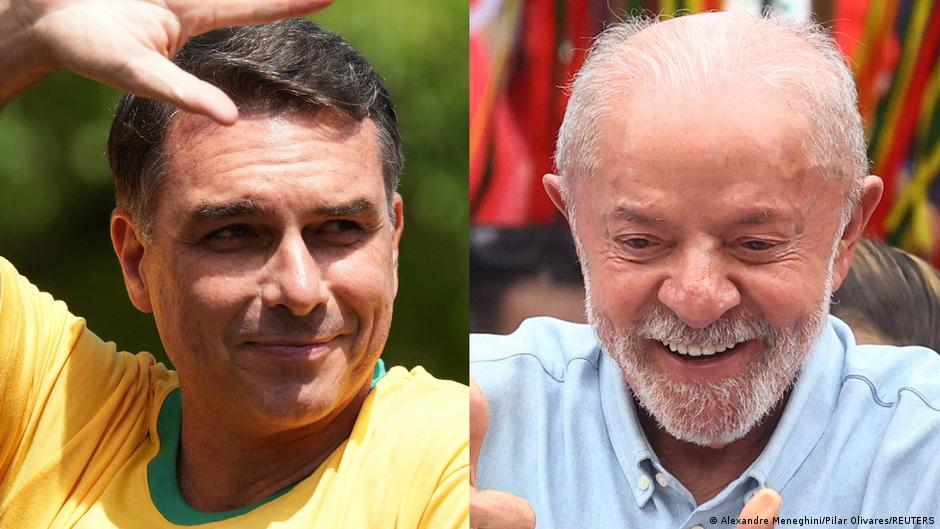
Brazil’s presidential election will go to the second round after far-right candidate Flavio Bolsonaro narrowly outpolled incumbent Luiz Inacio Lula da Silva but failed to secure the majority needed to avoid a runoff.
asserted
Bolsonaro → go → runoff
Mr Bolsonaro took an early lead as the South American nation began reporting results on Sunday afternoon in the first round of a tight election, following a campaign dominated by corruption scandals, economic anxiety and accusations of US meddling.
asserted
nation → take → meddling
The field of 13 candidates had been led by two clear frontrunners – Mr Lula da Silva, 80, who was seeking a fourth term, and Flavio, the 45-year-old son of former president Jair Bolsonaro.
asserted
who → lead → Bolsonaro
With 99.9 per cent of the votes counted, Mr Bolsonaro had won 47 per cent, compared with 45.1 per cent for the incumbent.
asserted
Bolsonaro → count → incumbent
Mr Bolsonaro received 56.1m votes to Mr Lula da Silva’s 53.8m.
They will now contest a 25 October runoff.
asserted
They → receive → runoff
Early results had shown southern states leaning towards Mr Bolsonaro reporting faster, while votes from Mr Lula da Silva’s northeast stronghold were tallied slower.
asserted
votes → show → stronghold
Mr Bolsonaro-aligned politicians won several key races, including three seats for members of his family.
asserted
politicians → align → family
As many as 34 of the 54 newly elected senators are from the right or the far-right.
asserted
34 → elect → right
Mr Bolsonaro’s Liberal Party emerged with the largest number of governors, senators and federal deputies elected so far, putting it in a strong position to wield influence in Congress.
asserted
Party → emerge → Congress
The runoff will determine whether Brazil joins a wider wave of electoral gains across Latin America by right-wing candidates aligned with US president Donald Trump, or whether Mr Lula da Silva will secure another term despite tensions between his government and Washington over trade and security.
asserted
Silva → determine → trade
Despite growing worries over Brazil's public finances and sluggish economic growth, the campaign had offered meagre policy debate, as both leading candidates skipped the major TV debates.
asserted
candidates → grow → debates
Addressing his supporters, Mr Bolsonaro said that the result pointed to “the end of an era” for the ruling Workers’ party.
asserted
result → address → party
“Lula has fought seven presidential elections.
asserted
Lula → fight → elections
He’s worried about power.
asserted
He → ’ → power
I am worried about the future of Brazil,” he said.
asserted
he → say → Brazil
While polls right up until Saturday showed Mr Lula da Silva would likely lead the first round but not avoid a runoff, Mr Bolsonaro told journalists earlier in Rio de Janeiro he was confident he could win the presidency in the first round, citing voters’ frustration with his chief opponent.
uncertain
he → show → opponent
He was counting on "a protest vote from people who would otherwise vote for another candidate but are opposed to Lula", he said.
asserted
he → count → Lula
"I hope it’s enough to secure a victory in the first round."
asserted
it → hope → round
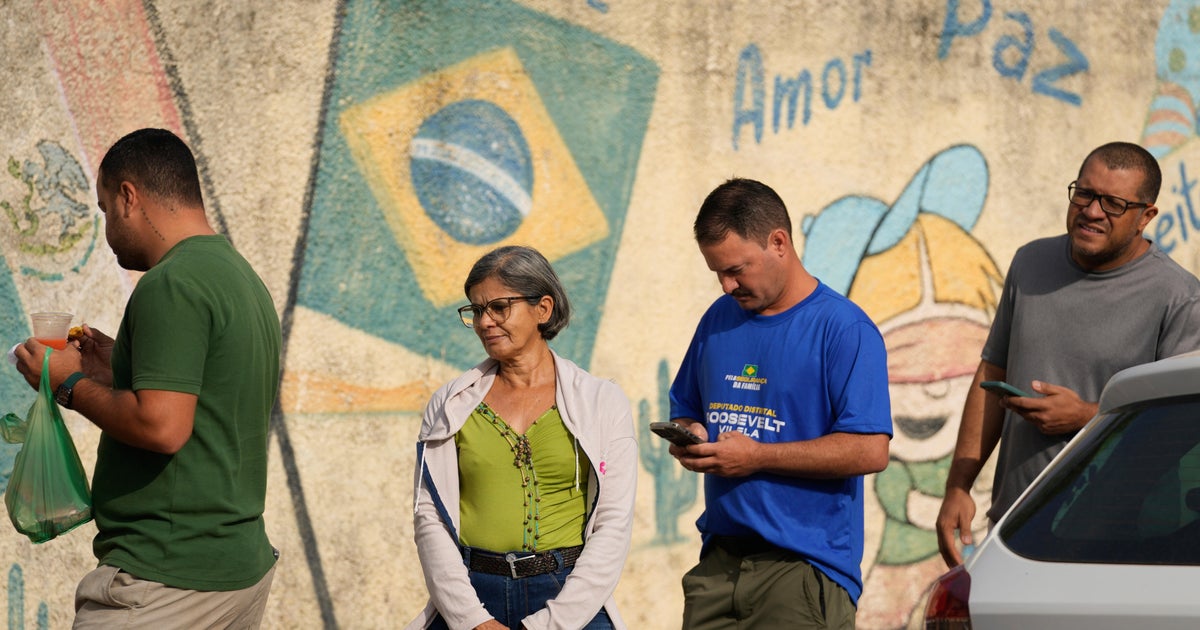
Thaise Lima, a 41-year-old lawyer on her way to vote in Sao Paulo, said her main goal was to get the Workers' Party out of office.
asserted
goal → vote → office
"I don't think Flavio is the best candidate, but I might decide to vote for him in the next few minutes," she said, adding that she wished psychiatrist and author Augusto Cury were a more viable candidate.
uncertain
Cury → think → minutes
Fernando Tempel, 49, a management consultant, told Reuters he was voting for Mr Bolsonaro despite initially planning to vote for Romeu Zema, the former governor of Minas Gerais state.
asserted
he → tell → state
On the other hand, Mr Lula da Silva’s allies had warned that the Trump administration might refuse to recognise election results if he won, pointing to an aborted effort to send US officials to Brazil.
uncertain
he → warn → Brazil
"What is at stake is the future of Brazil," the president said earlier after voting in Sao Bernardo do Campo, in Sao Paulo state.
asserted
president → say → state
Mr Trump has not formally endorsed a candidate, though he had hosted Mr Bolsonaro at the White House and praised him publicly.
asserted
he → endorse → him
after the results, the incumbent president said: “We have just had a lesson in Brazilian democracy.
asserted
We → say → democracy
We can never get everything we want.
asserted
we → get → everything
I confess to you that I was convinced I was going to win the election in the first round.
asserted
I → confes → round
But we have a second round.”
asserted
we → have → round
“From tomorrow we will launch a new campaign,” he added, “and in a campaign with only two candidates we will be able to show the difference between our proposals for Brazil.
asserted
we → launch → Brazil
Cristiano, 34, a doctor in Brasilia who voted for the president and preferred to withhold his surname told Reuters: “I'm a little worried about everything that's been happening recently, including internationally.
asserted
that → vote → everything
I feel this election has had a lot of outside influence, more than in previous elections.”
asserted
election → feel → elections
"We are confident in our President Lula, who will fight for national sovereignty," said Pedro Palacio, 45, who was voting in Brasilia alongside his wife, Andreia, and their two sons and two dogs, all of whom wore outfits supporting the president.
asserted
all → fight → president
Earlier, Brazil's electoral court chief Kassio Nunes Marques said in a press conference that “teams monitoring international risks have not identified any risks whatsoever”.
asserted
teams → say → risks
It was reported on Wednesday that Brazilian intelligence officials had briefed a French and German delegation on alleged US and Russian interference before the election.
asserted
officials → report → election
The US has rejected claims of interference in Brazil's affairs.
uncertain
US → reject → affairs
Despite falling inequality and unemployment, Mr Lula da Silva has struggled to win over voters grappling with high living costs, heavy household debt and the threat of street crime and more pervasive gang activity.
asserted
Silva → fall → crime
Mr Bolsonaro had sought to capitalise on cost-of-living concerns, while Mr Lula da Silva had moved to ban online gambling and, as the race tightened, expanded welfare and proposed fresh debt relief for families.
asserted
race → seek → families
Rising spending and public debt above 82 per cent of GDP have stoked fiscal concerns that Brazil's next president will need to address.
asserted
president → rise → that
The government lowered its economic growth forecasts for this year and next to 2.0 per cent and 2.3 per cent respectively.
asserted
government → lower → cent
"I voted for Brazil to start growing again," said Marciano de Souza e Silva, a 52-year-old public servant in Brasilia and former Workers’ Party voter who moved right, voting for Jair Bolsonaro in 2018 and 2022 and Flavio on Sunday.
asserted
who → vote → Sunday
…and 8 more, not listed.
 The Aporia