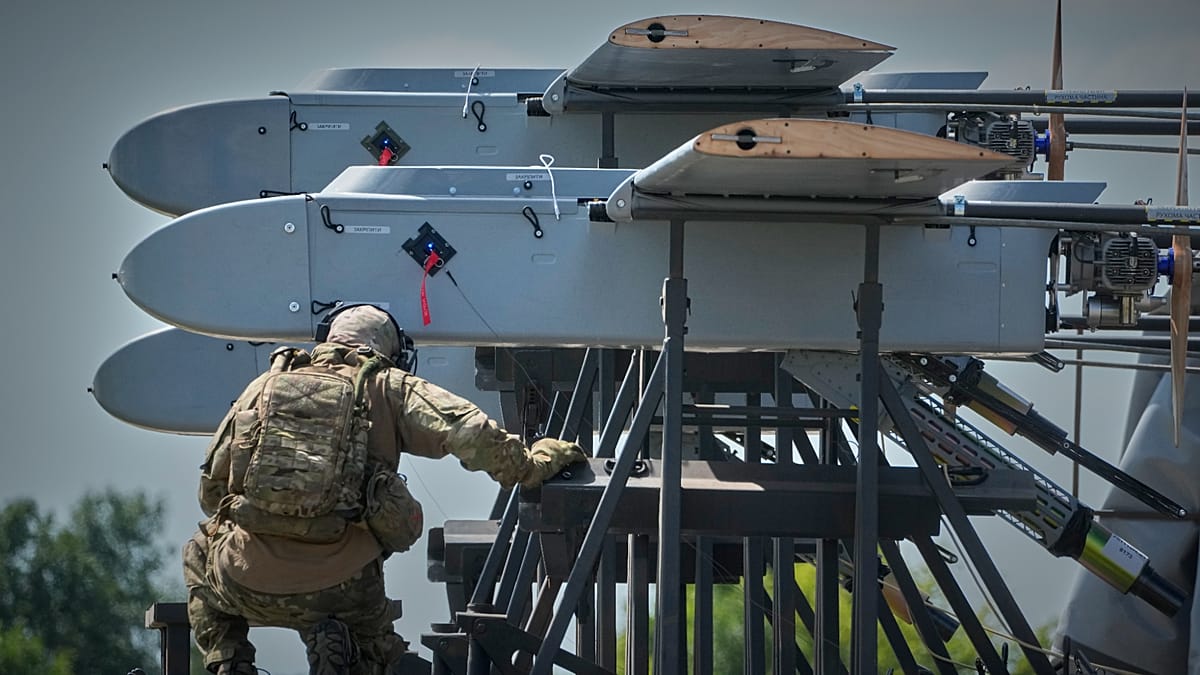
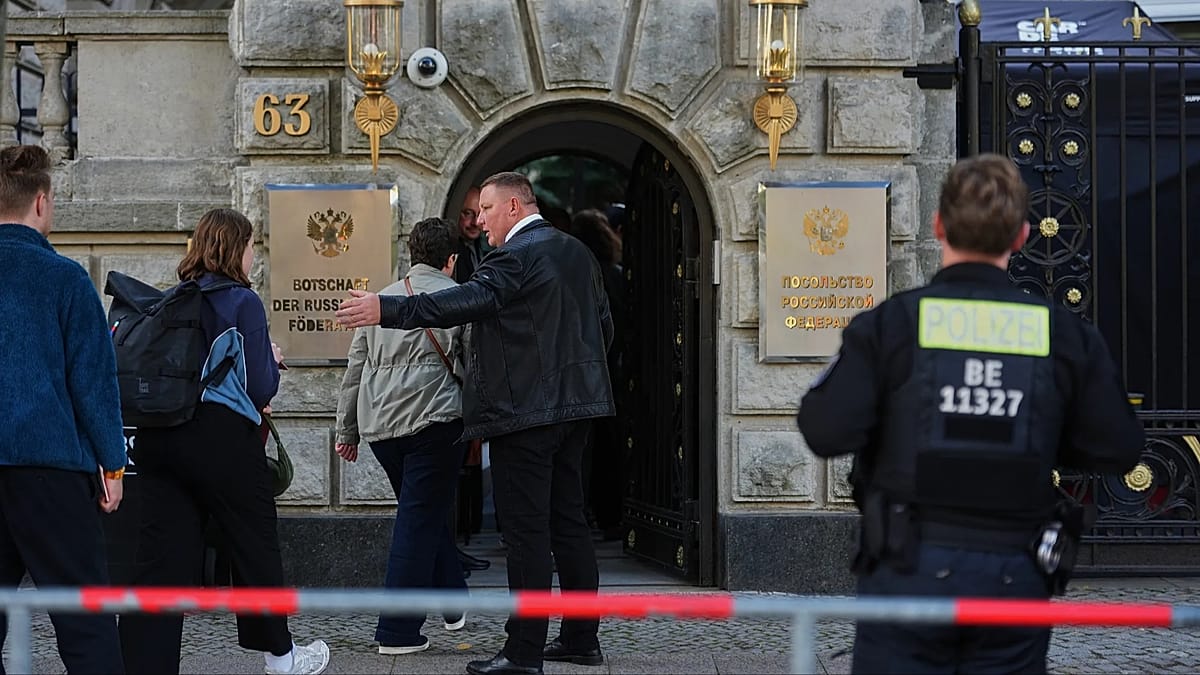
The edict covers energy, transport, logistics and any facility deemed critical to national security, and can be imposed by presidential instruction alone.
asserted
edict → cover → instruction
Experts called it "hybrid nationalisation," warning it would be used to seize assets from companies under the pretext of security failure.
asserted
it → call → failure
Vladimir Putin has signed a decree that could place privately owned businesses under state management if the government judges they have failed to protect themselves against Ukrainian drone attacks — a move legal experts described on Wednesday as a potential tool for seizing assets from Russian companies under the pretext of security failures.
uncertain
experts → sign → failures
The edict, which took effect immediately, covers facilities in the fuel and energy sector, industry, communications, energy — including nuclear — utilities, transport and logistics, and any other facility deemed of "particular importance for the security, economic stability and the livelihood of the population of the Russian Federation."
asserted
which → take → Federation
It allows temporary state management to be imposed without a court decision, based on a presidential instruction alone — which lawyers noted could be given orally.
uncertain
lawyers → allow → instruction
State management can now be triggered by a company's failure to adopt security measures against drone attacks, violations of security requirements, or steps judged ineffective.
asserted
management → trigger → requirements
Crucially, the Russian president's decree does not define who decides whether the threshold has been met or on what criteria.
asserted
threshold → define → criteria
A source within a major Russian energy company, speaking to Euronews on condition of anonymity, said they feared the decree would be used in internal corporate disputes — that employees could use it to denounce management during conflicts, with devastating consequences.
uncertain
employees → speak → consequences
Legal and business experts reacted sharply.
asserted
experts → react → ?
Political analyst Abbas Gallyamov called it "hybrid nationalisation".
asserted
Gallyamov → call → it
"After they have bombed you, the state will come to you and, accusing you of failing to protect yourself from the attack, will seize it from you," he said.
asserted
he → bomb → you
Lawyer Andrei Grivtsov said the extremely broad definition of "critical infrastructure" left unanswered the fundamental question of who would assess compliance and on what basis.
asserted
who → say → basis
A representative of one of Russia's largest agribusiness holdings, speaking anonymously to Forbes Russia, was more direct, calling the decree "a tool that will allow large assets to be taken away from business under the pretext of non-compliance with security measures."
Lawyer Sergei Uchitel warned against taking the word "temporary" at face value.
asserted
Uchitel → speak → value
In practice, external management means a company loses control over its operations, cannot set its own strategy, and is eventually forced to sell "on terms that can hardly be described as voluntary," Uchitel said.
asserted
Uchitel → mean → terms
Representatives of oil refineries and e-commerce platforms Wildberries and Ozon struck by Ukrainian drones have yet to comment on Putin's decision.
asserted
Representatives → strike → decision
Drone strikes and fuel shortages
The decree was issued against the backdrop of an intensifying Ukrainian drone campaign against Russian economic infrastructure, as Moscow's all-out war against Ukraine continues well into its fifth year.
asserted
war → issue → year
In the first six months of 2026, Ukrainian drones successfully struck Russian refineries at least 194 times — 11 times more often than in the same period of 2025, according to Financial Times calculations.
uncertain
drones → strike → calculations
Wildberries warehouses have been hit 21 times across 16 regions since mid-July, and since Saturday, Ukrainian drones have struck six Ozon logistics facilities in three days.
asserted
drones → hit → days
Kyiv has recently stepped up strikes on Russian logistics and energy infrastructure in a bid to cut the source of funding for Moscow's war machine amid sustained Russian bombardment of Ukrainian cities and villages.
asserted
Kyiv → step → cities
According to the UN, at least 437 civilians were killed in Ukraine in July, the highest monthly figure since May 2022, 30% higher than in June and 70% higher than in July 2025.
uncertain
civilians → accord → July
Kyiv has repeatedly warned Russian forces are deliberately continuing to target residential areas and civilian infrastructure.
asserted
forces → warn → areas
Three days before signing the decree, Deputy Prime Minister Alexander Novak instructed oil companies to revise their refinery maintenance schedules to avoid worsening existing fuel shortages.
asserted
Novak → sign → shortages
Under the new decree, any delays in restoring damaged facilities could now have direct legal consequences for their owners.
uncertain
delays → restore → owners
First Deputy Prime Minister Denis Manturov sought to reassure businesses on the day of publication, telling RBC that the decree "will be applied selectively; this is not about nationalisation."
He said decisions would be taken "at the very highest level" and that there was no mechanism for mass introduction of temporary management.
asserted
decisions → seek → management
"Today, the owners of enterprises treat the threats we face with varying degrees of responsibility," he said.
asserted
he → treat → responsibility
"In a number of cases, ensuring the security of facilities and staff, unfortunately, is not their priority.
asserted
ensuring → ensure → facilities
It is precisely in such cases that the state will assume responsibility."
asserted
state → assume → responsibility
 The Aporia