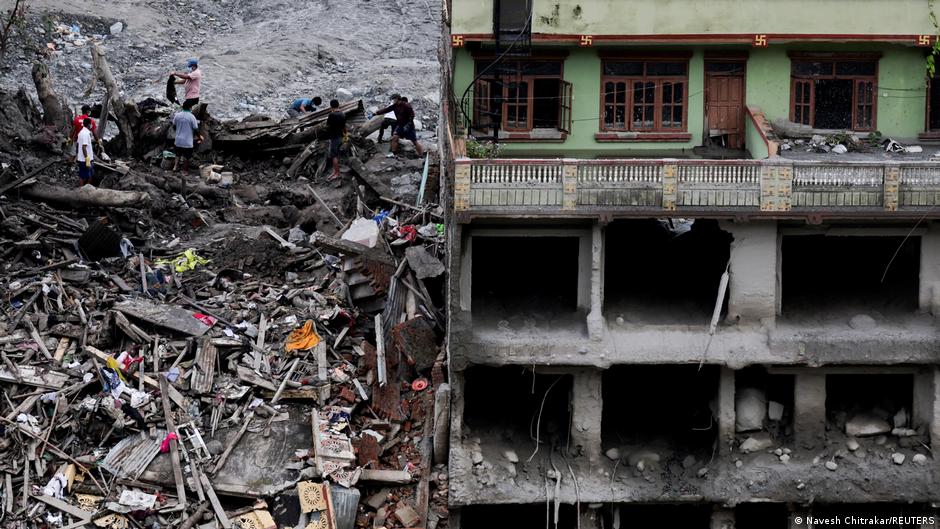
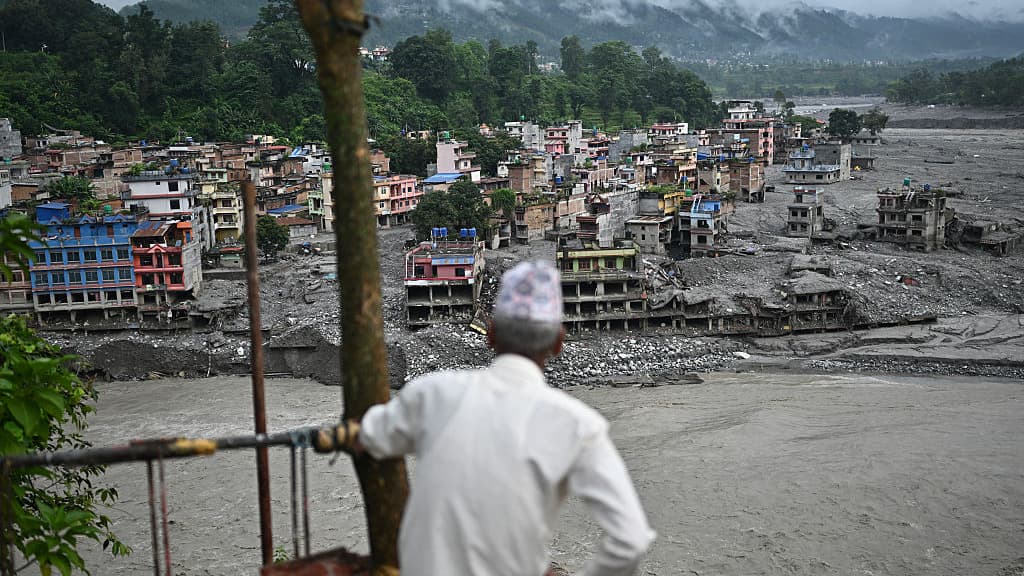
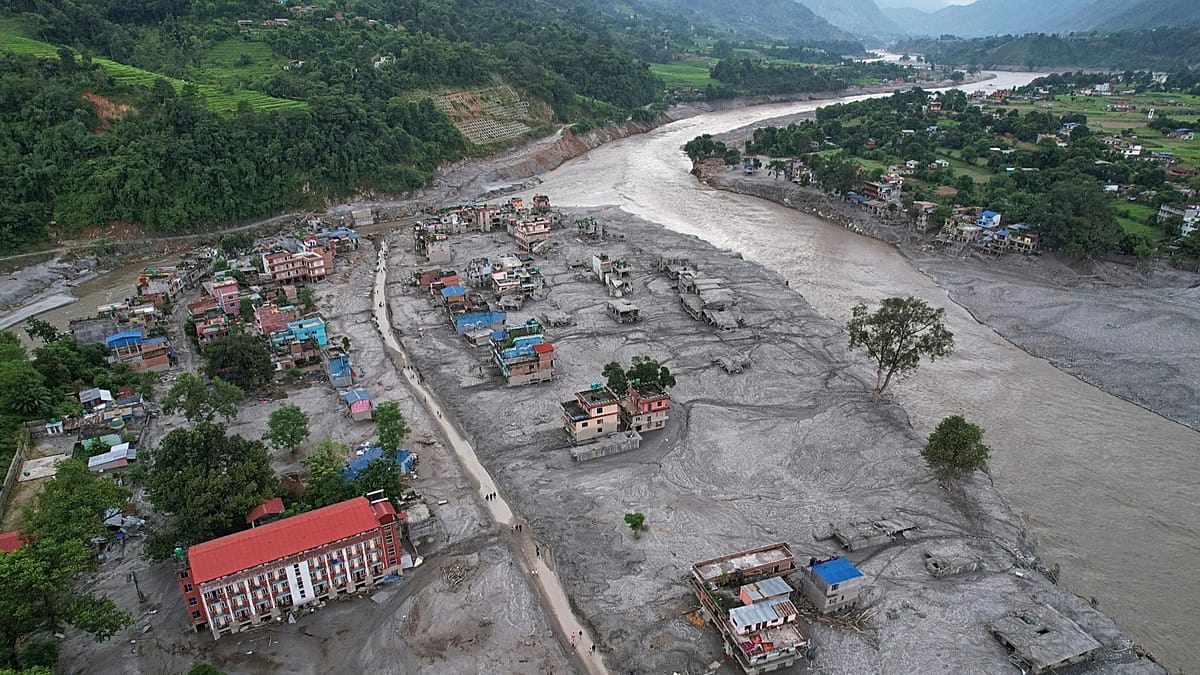
Photo via The Hindu

Why WFP calls Nepal flood relief one of its toughest missions | Explained

Read the original at The Hindu ↗
Cite

K, A. (2026, September 18). Why WFP calls Nepal flood relief one of its toughest missions | Explained. The Hindu. https://www.thehindu.com/news/international/why-wfp-calls-nepal-flood-relief-one-of-its-toughest-missions-explained/article71479785.ece

Dated when The Aporia collected the article, usually within hours of publication. Check the original for its exact date and byline.

The Hindu · collected 2026-09-18 · by Abhinaya K

Quick Summary

Riaz Lodhi, head of the World Food Programme (WFP) in Nepal, declared on September 17, 2026, that recent floods and landslides following a glacial collapse were among the most challenging disasters the agency had encountered. With over 6,000 people missing and 1,410 confirmed deaths from the August 26 flash floods, Lodhi highlighted severe access issues due to damaged infrastructure and unstable terrain, particularly in districts like Rasuwa and Nuwakot. To address these challenges, the WFP is employing innovative solutions such as drones capable of delivering up to 100kg of supplies and temporary bridges, marking a significant shift from previous relief efforts that relied on traditional methods like mules and porters.
Written by AI on 2026-09-18, from this article's own text only (the story summary below draws on all the coverage).
See how they differ ↓

AI analysis

Story summary

In late August 2026, flash floods caused by a glacial collapse near the Nepal-Tibet border devastated central and northern Nepal, leading to over 1,450 deaths as of September 20. The floodwaters swept away homes, vehicles, roads, bridges, and hydropower projects in multiple districts including Chitwan, Rasuwa, and Nawalparasi. With more than 6,000 people still missing, recovery efforts are hampered by severe damage to infrastructure and the decomposed state of many recovered bodies, complicating identification processes.

Prime Minister Balendra Shah has declared an early warning system for natural disasters as a top priority in Nepal, acknowledging that such systems could have saved lives. Meanwhile, international experts suggest climate change likely contributed to the instability of glaciers and permafrost, triggering the devastating avalanche that caused the floods. The disaster highlights the urgent need for global action on climate issues, with scientists noting that without faster transitions towards zero fossil fuel emissions, similar catastrophic events will become more frequent in the future.

Written for “Nepal Flood Disaster” on 2026-11-18, grounded in this article and the 18 other(s) covering the same event.

How they differ

11 outlets covered “Nepal Flood Disaster”.

What each outlet says

One AI summary per outlet of its latest article on this story, written from that article alone and checked against it. Open the article for the outlet's own words.

The HinduThis outlet18 Sep

Riaz Lodhi, head of the World Food Programme (WFP) in Nepal, declared on September 17, 2026, that recent floods and landslides following a glacial collapse were among the most challenging disasters the agency had encountered. With over 6,000 people missing and 1,410 confirmed deaths from the August 26 flash floods, Lodhi highlighted severe access issues due to damaged infrastructure and unstable terrain…

Why WFP calls Nepal flood relief one of its toughest missions | Explained (this article)4 articles from The Hindu on this story
Al Jazeera20 Sep

The article reports on the aftermath of devastating floods in Nepal caused by a glacial collapse along the Trishuli River, which killed at least 1,386 people and left thousands missing. In Betrawati, a small riverside town, survivors like Anusa Thapa Magar find no trace of their homes or loved ones, as entire settlements were swept away. The flood debris includes personal items such as shoes and backpacks…

Photos: Nepal flood survivors find little trace of former lives →3 articles from Al Jazeera on this story
The Guardian17 Sep

A recent study led by Imperial College London links climate change to a catastrophic glacier collapse in Nepal and Tibet that killed over 1,300 people last month. Researchers found unusually warm conditions preceding the collapse of an ice mass, which released 110 million cubic meters of water and debris into rivers below, causing flash floods on an unprecedented scale. The study emphasizes how rising temperatures…

Climate crisis likely behind devastating Nepal-Tibet floods that killed more than 1,300, first study finds →2 articles from The Guardian on this story
Daily Mail23 Sep

Mita and Hemant Parikh, a couple from Georgia who were part of a pilgrimage group heading to Mount Kailash in Tibet, narrowly escaped a deadly flood in Nepal that killed over 1,000 people. They had taken an unplanned detour to see Mount Everest, which kept them away when the flood struck their hotel, destroying it and leaving many others missing or dead. The couple attributes their survival to divine intervention…

Couple describes the moment they cheated death to survive flood in Nepal that killed more than 1,000 →2 articles from Daily Mail on this story
South China Morning Post19 Sep

Young Nepalis are grappling with anxiety and emotional distress following the August glacier collapse in Nepal that killed over 1,400 people. A 21-year-old forestry student involved with Nepalese Youth for Climate Action described struggling to focus amid reports of death and destruction, highlighting the mental toll of climate disasters on youth. The article focuses on the psychological impact of climate change on…

Young Nepalis battle climate dread in wake of flood disaster →2 articles from South China Morning Post on this story
Deutsche Welle14 Sep

Three weeks after deadly flash floods triggered by a glacier collapse hit Nepal’s Bhotekoshi-Trishuli river corridor near the Chinese border, recovery efforts are underway amidst continued search operations for over 5,130 missing people. The disaster has claimed at least 1,386 lives and destroyed more than a dozen hydropower facilities. In Uttargaya Rural Municipality alone, 877 people remain missing and only 12…

Nepal: thousands still missing as flood recovery begins →
Show 5 more outlets
Time15 Sep

Floods in Nepal and Tibet have caused significant destruction, leading to over 1,300 deaths and leaving around 5,000 people unaccounted for. These floods destroyed infrastructure including bridges and hydropower plants. While climate change is a contributing factor, the article highlights that human activities such as unplanned urbanization, deforestation, and disrupted natural drainage also exacerbate flood damage…

Nepal Cannot Stop the Floods. It Can Stop Them From Becoming Disasters. →
Toronto Star17 Sep

A recent analysis by World Weather Attribution indicates that climate change contributed to the collapse of a Himalayan slope near Nepal’s border with China on August 26, leading to catastrophic flooding and over 1,300 deaths. While acknowledging that a large earthquake in 2015 may have initially weakened the rock, researchers found that rising temperatures have thinned glaciers and thawed mountain permafrost…

Climate change made deadly Nepal glacier and rock collapse more likely, according to analysis →
BBC17 Sep

A study published by the World Weather Attribution finds that climate change significantly contributed to a devastating glacier collapse near the Nepal-Tibet border on August 26, resulting in over 1,400 deaths and thousands missing. The event was triggered by rising temperatures and thinning glaciers, which combined with heavy snowfall and potential damage from a 2015 earthquake to create a dangerous compound…

Climate change helped trigger Nepal-Tibet disaster, study finds →
Euronews17 Sep

Scientists from the World Weather Attribution group have determined that climate change significantly contributed to a deadly flood near Nepal's border with China on August 26. The disaster killed more than 1,300 people and left over 5,000 missing when a mountain slope collapsed due to long-term warming effects such as glacier retreat and permafrost thaw, destabilizing the area and triggering a massive flow of water…

Climate change was key factor in deadly Nepal-China flood, scientists say →
CBS News22 Sep

Mita and Hemant Parikh, a Georgia couple, survived a devastating flood in Nepal while on a spiritual pilgrimage to Mount Kailash in Tibet. The flood occurred nearly a month ago and claimed the lives of 47 people from their group; seven guides are also missing. The Parikhs made an impromptu decision to visit Lhasa and Everest Base Camp before rejoining their group, which led them to safety while others were caught in…

Georgia couple who survived Nepal flood shares their story →

Where they agree and split

Agreed

AI · cited, from two or more outlets

  • More than 1,300 people are confirmed dead and more than 5,000 remain missing after the floods.23
  • The disaster was triggered by a glacier collapse near Nepal’s border with China.12

Disputed

Picked by our model, which is sometimes wrong

  • While some sources claim climate change played a significant role in the disaster, others suggest it may not have been the sole cause and that pre-existing geological weaknesses contributed to the collapse.34

Framing

How the first headlines put it

  • Deutsche Welle focuses on the ongoing search-and-rescue efforts and the number of missing people, while The Guardian emphasizes Nepal's demand for climate compensation from major polluters.12
  • The Toronto Star highlights the scientific analysis linking climate change to the disaster, whereas CBS News focuses on a personal story of survival and loss.35
Words to watch (4)

Nepal says big polluters must ‘wake up’ as it calls for climate compensation over flood disaster The Guardian

Scientists blame climate change for Nepal's devastating flash floods - and warn similar disasters are 'inevitable' as global temperatures continue to rise Daily Mail

Climate change helped trigger Nepal-Tibet disaster, study finds BBC

What the China-Nepal floods teach us about crisis communication South China Morning Post

The full story: what happened, how it changed, and all 19 articles →

Compared with similar articles

This article reads unscored and hedges 5% of its claims. Each row says how that neighbour differs.
BBC News
Hedges 6 of 18 claims Outlet record 65/100
The Hindu
Hedges 3 of 8 claims Outlet record 60/100
The Hindu
Hedges 0 of 3 claims Outlet record 60/100
“Article A describes Sanjay Sah's personal experience surviving nine days underground after the Nepal floods, while Article B focuses on the World Food Programme's perspective on the ongoing relief efforts and challenges of the flood disaster as a whole.”
Deutsche Welle
Hedges 1 of 35 claims Outlet record 95/100
TIME
Leans strongly left Hedges 5 of 65 claims Outlet record 60/100
The Guardian
Leans strongly left Hedges 3 of 34 claims Outlet record 64/100
Euronews
Leans left Hedges 2 of 25 claims Outlet record 60/100
Al Jazeera
Leans strongly left Hedges 5 of 16 claims Outlet record 60/100

Story

Nepal Flood Disaster
Environment · 19 article(s) covering the same event. Compare every outlet's account →
How this article was measured signals, leaning charts, publisher record, byline, topics and claims

Signals How these are calculated →

Claims extracted
37
sentences that state something as happening or true
Uncertain
5%
2 of 37 hedged ("reportedly", "may", "according to")
Leaning
not political
takes no side on a contested political question
Publisher signals
60/100
The Hindu's corrections and hedging, across everything collected from it. Not a measure of accuracy.
Outlets on this story
19
Environment
Same framing elsewhere
1
articles that frame the event the way this one does
Analyzed 2026-09-18 · how these are computed

How this is being covered How these are calculated →

Article leaning vs. publisher reliability
Source leaning vs. consistency

Publisher

The Hindu · 907 article(s) · 2 correction(s) detected
Running correction rate · 2 correction(s)

Who wrote this

Abhinaya K
4 article(s) here · 1 carrying a prediction
Pike would have been the first woman in more than 200 years to be executed in Tennessee.
Rebuilding the necessary infrastructure is expected to take several weeks.
Also by Abhinaya K
Nothing else under this byline is closely related to this article, so these are simply their most recent.

Topics

Himalayan Nepal Rasuwa WFP the World Food Programme

Subjects

WFP ORG · 9× Nepal GPE · 8× Lodhi PERSON · 4× Himalayan NORP · 3× Rasuwa GPE · 2× AFP ORG · 1× Nuwakot GPE · 1× Riaz Lodhi PERSON · 1× the United Nations ORG · 1× the World Food Programme ORG · 1×

Narrative

Recalling the use of mules, yaks and porters during the 2015 earthquakes in the Himalayan country, he said innovation and technology has ensured that food reaches those in need in five to 10 minutes.
framing: assertive · carried by 1 article(s) · first seen 2026-09-18
Rebuilding the necessary infrastructure is expected to take several weeks.

Claims (37 extracted, 2 hedged)

The story so far: Weeks after catastrophic floods hit Nepal, authorities are scrambling to mount a relief effort with over 6,000 people still missing and death toll climbing to 1,410. asserted
toll → hit → 1,410
Aid operations in the disaster-hit country rank among the most challenging for the World Food Programme (WFP), its head said on Thursday (September 17, 2026). asserted
head → hit → Thursday
What has the WFP said? asserted
WFP → say → What
Riaz Lodhi, head of the WFP in Nepal, said that the August 26 flash floods and its aftermath were among the “top three most challenging disasters” the agency had faced. asserted
agency → say → disasters
The WFP, a branch of the United Nations which is committed to ending hunger and has been awarded the Nobel Peace Prize, provides relief in conflict and disaster zones. asserted
which → commit → zones
While speaking about the Nepal situation, Mr. Lodhi cited the profound access challenge in the country. asserted
Lodhi → speak → country
“We have seen disasters, we have seen earthquakes, we have seen disasters caused by floods, we have seen war situations, conflicts,” he told AFP. asserted
he → see → AFP
“We have had access challenges in many of these situations”, he added, but said the challenges in Nepal were extreme. asserted
challenges → have → Nepal
What are the challenges WFP faces? asserted
WFP → face → ?
The flooding and landslides have displaced several people and have disrupted access to essential services. asserted
flooding → displace → services
The WFP has said that the main operational constraint has been physical access to affected people. asserted
constraint → say → people
Several areas in the epicenter of the disaster remain cut off. asserted
areas → cut → disaster
A largely rural country, many people in Nepal live in mountain districts. asserted
people → live → districts
The flash flood, reportedly triggered by a Himalayan glacial mountain collapse, wiped away key access points. uncertain
flood → trigger → points
Around 40 bridges have been damaged or destroyed and the risk of flooding persists making the terrain unstable. asserted
terrain → damage → flooding
Mudslides and rubble have also hampered relief efforts. asserted
Mudslides → hamper → efforts
Rasuwa and Nuwakot remain among the worst-affected areas. asserted
Rasuwa → remain → areas
“This is a very unique access challenge where, in some places, the only way to reach people is by helicopter,” Mr. Lodhi said. asserted
Lodhi → reach → helicopter
Apart from being an expensive endeavor, the time taken to reach these places has also now increased. asserted
time → take → places
Rebuilding the necessary infrastructure is expected to take several weeks. asserted
Rebuilding → rebuild → weeks
What is being done now? asserted
What → do → ?
The Nepal government is working with the UN to help those affected by the deadly disaster. asserted
government → work → disaster
Relief supplies are being dispatched continuously by road and air while temporary bridges are being set up where necessary. asserted
bridges → dispatch → road
Army Personnel are also using temporary zip lines to transport people from one river bank to another. asserted
Personnel → use → another
The WFP has said that it is using drones to provide food to affected people. asserted
it → say → people
These drones can reportedly carry up to 100kg, depending on the operating conditions. uncertain
drones → carry → conditions
Mr. Lodhi has called the technology a “game changer”. asserted
Lodhi → call → technology
Recalling the use of mules, yaks and porters during the 2015 earthquakes in the Himalayan country, he said innovation and technology has ensured that food reaches those in need in five to 10 minutes. asserted
food → recall → minutes
Mr. Lodhi said that WFP had not used drones at this scale before. asserted
WFP → say → scale
The WFP has said that it expects to provide food relief for four to six months in Nepal. asserted
it → say → Nepal
The road to rebuilding Nepal is a long one. asserted
road → rebuild → Nepal
The access challenges are going to remain even as Nepali leaders say that the country is going to need long-term support. asserted
country → go → support
The country has estimated that the reconstruction bill will amount to $4.78 billion. asserted
bill → estimate → billion
“In living memory, we haven’t seen a mountain hazard event like this for a very, very long time,” Kamal Kishore, the Head of the UN Office for Disaster Risk Reduction said. asserted
Kishore → live → Reduction
As climate change accelerates, concerns mount over safety of these regions in the Himalayan belt. asserted
concerns → accelerate → belt
Flash floods last year in the same region too had caused extensive damage and claimed nine lives. asserted
floods → cause → lives
Experts have called for stricter norms, assessing infrastructure for multiple disasters, focusing on development in less-dangerous areas and early warning systems. asserted
Experts → call → areas
Give feedback · no sign-in needed

No sign-in needed for now. Your note is sent without a name, so it cannot be answered.

History Support