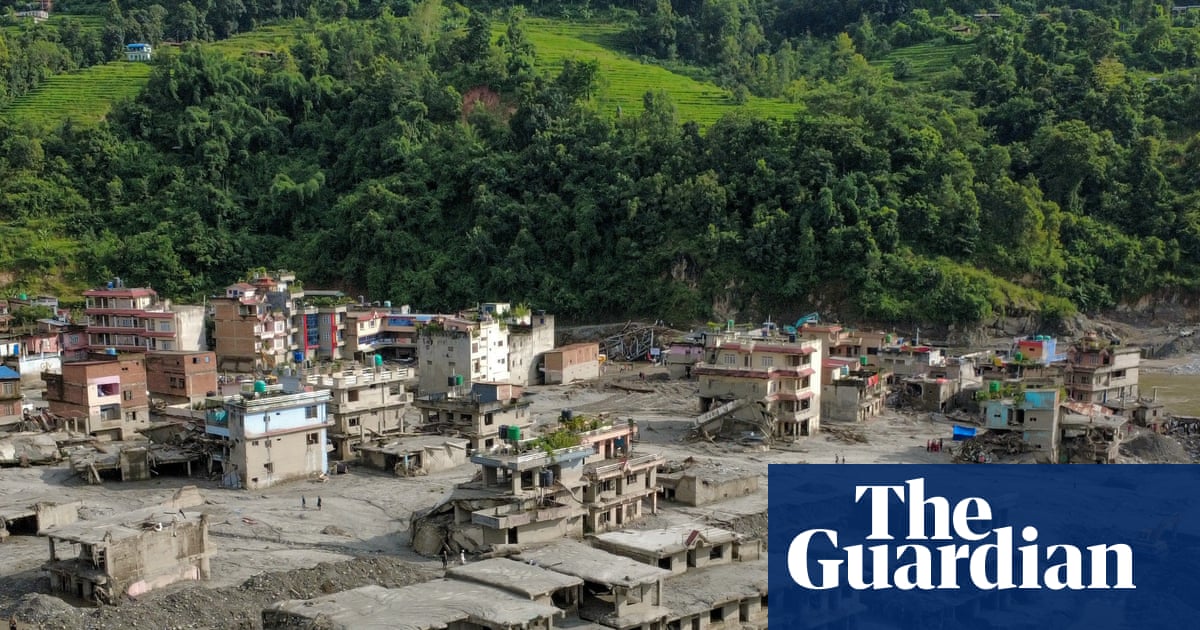
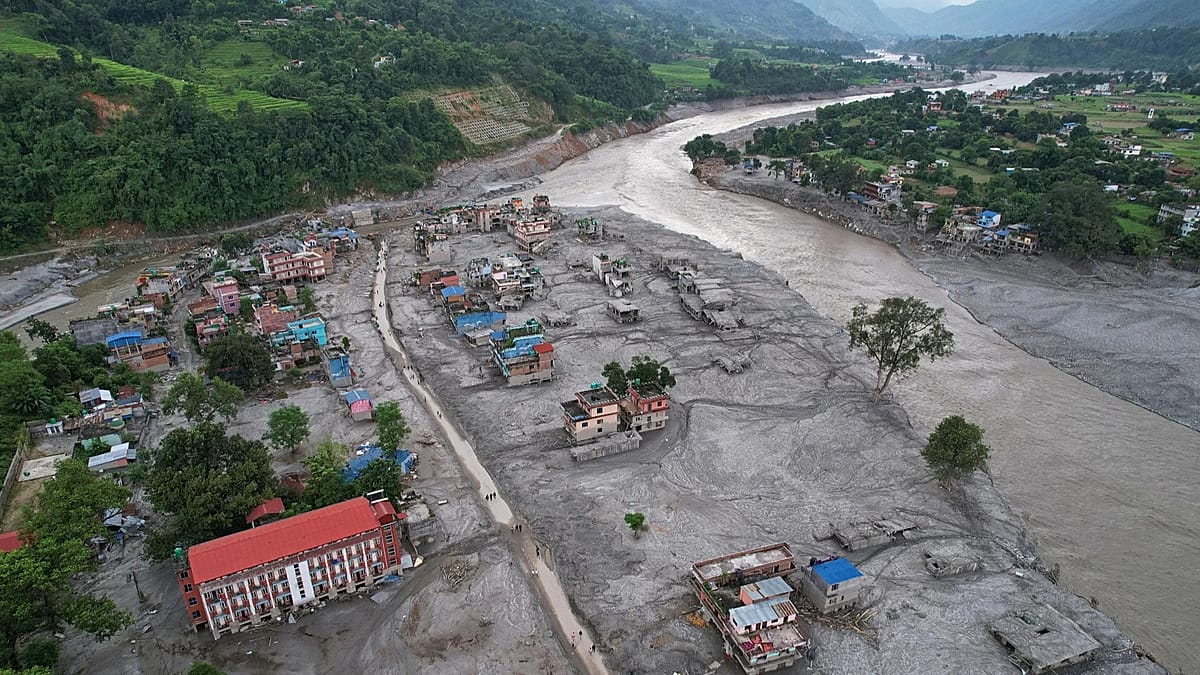
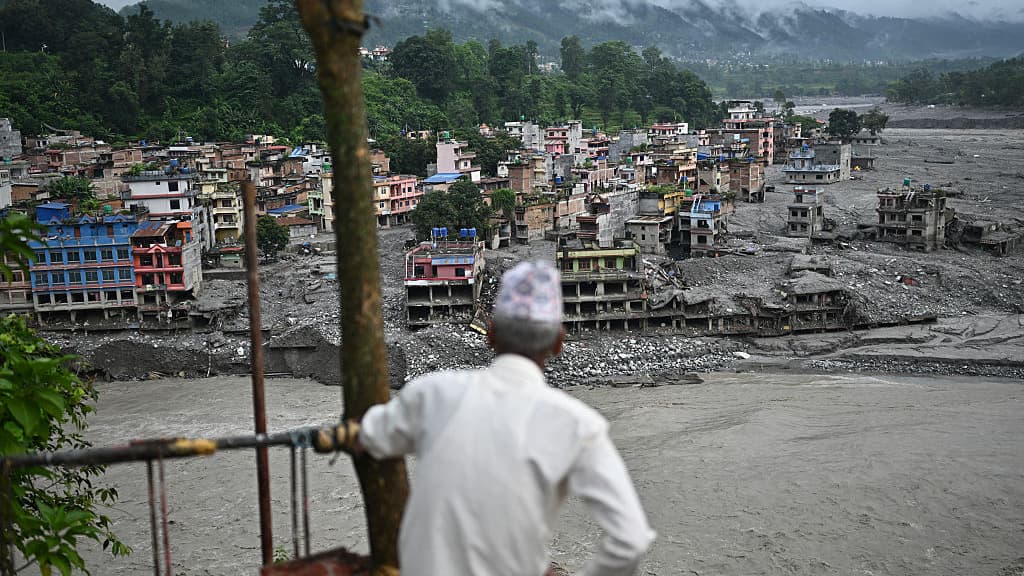
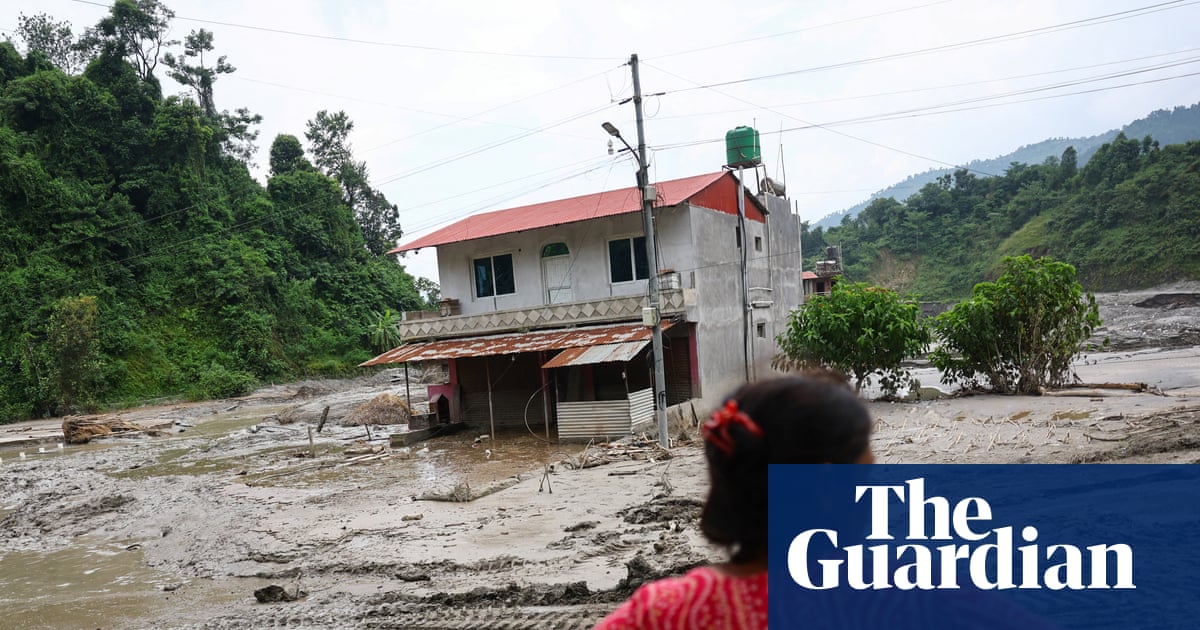
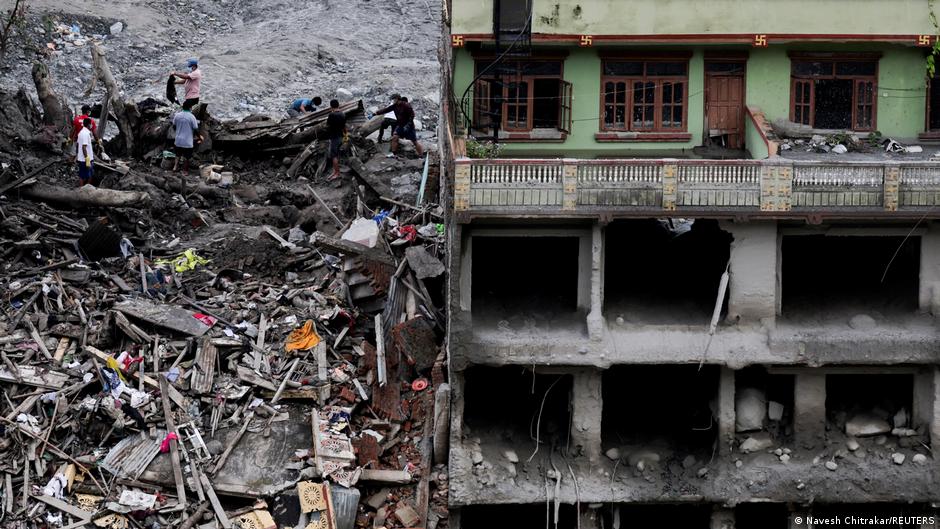
Scientists blame climate change for Nepal's devastating flash floods - and warn similar disasters are 'inevitable' as global temperatures continue to rise

Daily Mail · collected 2026-09-17 · by Shivali Best
Read the original at Daily Mail ↗

Summary

Scientists attribute Nepal's recent devastating flash floods to climate change, with over 1,300 deaths and more than 5,000 missing. On August 26, a massive section of glacier and rock fell from Lantang Lirung mountain, triggering an enormous flood downstream. The World Weather Attribution experts link the disaster to prolonged permafrost thaw and glacial thinning caused by climate change, warning that similar events will likely occur as global temperatures continue to rise.
Written by the local model on 2026-09-17, using this article's own text rather than the other coverage of the same event (that is the story summary below).

Signals How these are calculated →

Claims extracted
25
claim-shaped sentences
Uncertain
20%
5 of 25 hedged
Leaning
Leans left
of the writing, not the subject
Correction & hedging signals
58.6
corrections and hedging in what we collected; not a measure of accuracy
Outlets on this story
8
Environment
Narrative spread
1
articles carrying this framing
Analyzed 2026-09-17 · how these are computed

AI analysis (generated at analysis time, not now)

Story summary

On August 26, 1,300 people were killed and over 5,000 remain missing after a massive section of glacier and rock collapsed near the border between Nepal and China, triggering catastrophic flooding that caused billions in damage. A report by the World Weather Attribution found human-caused global warming likely contributed to the disaster by thinning glaciers and thawing mountain permafrost, destabilizing the slope where the collapse occurred. Though not an extreme weather event itself, long-term changes linked to climate change are evident. Researchers also noted a significant role of rising temperatures causing glacier retreat across the Himalayas, increasing instability in the region. Nepal's foreign minister, Shisir Khanal, called on major polluters like India and China for climate compensation, emphasizing the need for global action despite minimal local contributions to greenhouse gases.

Written for “Climate Change Impacting Nepal Flooding” on 2026-09-17, grounded in this article and the 7 other(s) covering the same event.
Why this leaning score
The article's own words the score was based on. Each is quoted verbatim and was checked against the article text before being stored, so you can find it in the original.
Score -0.45 Confidence high
Leaning score -0.45 for article 15026 (high confidence, 2 verified quotes) · logged 2026-09-17

Story

📰 Climate Change Impacting Nepal Flooding
Environment · 8 article(s) covering the same event.

How this is being covered How these are calculated →

Article leaning vs. publisher reliability
Source leaning vs. consistency

Compared with similar articles

This article reads leans left and hedges 20% of its claims. Each row says how that neighbour differs.
BBC News · 0.94 cosine similarity
⚖️ Leans left 🔴 33% hedged 6 of 18 📰 publisher trust 96
“Both articles describe the exact same glacier collapse and flood disaster in Nepal on August 26, attributing it to climate change.”
Toronto Star · 0.90 cosine similarity
⚖️ Leans left 🔴 14% hedged 5 of 37 📰 publisher trust 61
“Both articles discuss the same specific disaster involving a glacier and rock collapse in Nepal on August 26, which caused catastrophic flooding.”
The Guardian · 0.93 cosine similarity
⚖️ leaning not scored 🔴 13% hedged 3 of 23 📰 publisher trust 95
“Both articles describe the same catastrophic flood event in Nepal and Tibet, caused by a glacier collapse on August 26, which resulted in over 1,300 deaths.”
Euronews · 0.92 cosine similarity
⚖️ Leans left 🔴 8% hedged 2 of 25 📰 publisher trust 96
“Both articles describe the same catastrophic flood in Nepal that occurred on August 26, which was caused by climate change factors such as glacier retreat and permafrost thaw.”
TIME
⚖️ Leans strongly left further left than this 🔴 8% hedged 5 of 65 📰 publisher trust 95
“Both articles describe the same devastating flood event in Nepal around August 2026, with similar casualty figures and details about glacial meltwater and debris.”
The Guardian
⚖️ Leans strongly left further left than this 🔴 9% hedged 3 of 34 📰 publisher trust 95
“Both articles describe the same specific flood disaster in Nepal triggered by a glacier collapse on August 26, with similar death tolls and missing persons.”
Deutsche Welle
⚖️ leaning not scored 🔴 3% hedged 1 of 35 📰 publisher trust 95
“While both articles discuss the same flood disaster in Nepal, Article A focuses on recovery efforts three weeks after the incident, while Article B emphasizes scientific analysis blaming climate change for triggering the disaster.”

Publisher

Daily Mail · 800 article(s) · 5 correction(s) detected
Running correction rate · 5 correction(s)
2026-09-15
Infamous prisoner known for his 'stop snitching' slogan DISAPPEARS during transfer from one federal prison to another
2026-09-15
Charles Manson's 'right-hand man' dies in prison at 83 after his parole was blocked 8 times
2026-09-15
Jeffrey Epstein's suicide watch 'companion' insists paedophile financier DID kill himself after becoming 'defeated' in his final days
2026-09-07
The evidence Epstein did NOT kill himself: Lawyer and pathologist reveal details they claim indicate the paedophile WAS murdered in jail in new documentary
2026-09-06
Clarifications and corrections

Who wrote this

Shivali Best
4 article(s) here · 1 carrying a prediction
🔮 Worryingly, the scientists say this could just be a taste of what's to come as global temperatures continue to rise.
🔮 A researcher at a leading AI company has quit over concerns that big tech firms are in an 'out of control' race to build systems that could wipe out humanity.
🔮 - READ MORE: Area affected by wildfires in Europe will TRIPLE by 2100 - See more Daily Mail on Google - save us as a Preferred Source Over the summer, devastating wildfires have swept across Europe, displacing thousands of people.
🔮 But new analysis might make you think twice before splashing the cash at certain popular high street chains.
Also by Shivali Best
Nothing else under this byline is closely related to this article, so these are simply their most recent.

Topics

Daily Mail Imperial College London Nepal Utrecht University the World Weather Attribution

Subjects

Nepal GPE · 2× Climate Analytics South Asia ORG · 1× Daily Mail ORG · 1× Friederike Otto PERSON · 1× Himalayan NORP · 1× Imperial College London ORG · 1× Manjeet Dhakal PERSON · 1× Utrecht University ORG · 1× Walter Immerzeel PERSON · 1× the World Weather Attribution ORG · 1×

Narrative

Science must now drive urgency: deeper and faster global emission reductions, greater investment in understanding complex mountain risks, strengthened monitoring and early warning, climate-resilient development, and international climate finance support at the scale and speed that frontline countries like Nepal need.'
framing: assertive · carried by 1 article(s) · first seen 2026-09-17
🔮 Worryingly, the scientists say this could just be a taste of what's to come as global temperatures continue to rise.

Claims (25 extracted, 5 hedged)

- See more Daily Mail on Google - save us as a Preferred Source Scientists have blamed climate change for the devastating floods in Nepal last month. asserted
Scientists → see → Nepal
The catastrophic event, which took place on August 26, saw a massive section of overhanging glacier and rock fall from Lantang Lirung mountain. asserted
section → take → mountain
This caused an enormous flood of water, ice and debris that swept downstream, killing over 1,300 people – with more than 5,000 still missing. asserted
5,000 → cause → people
Now, experts from the World Weather Attribution say that climate change contributed to permafrost thaw and glacial thinning that likely influenced the collapse. asserted
that → say → collapse
Worryingly, the scientists say this could just be a taste of what's to come as global temperatures continue to rise. uncertain
temperatures → say → ?
Professor Friederike Otto, Professor of Climate Science at Imperial College London, said: 'Without much faster action to transition to zero fossil fuel emissions we will inevitably see more disasters of this scale occurring in the years to come.' asserted
disasters → say → years
Rather than a single extreme weather event, they describe the event as a 'compound crisis' with several causal factors asserted
they → describe → factors
The catastrophic event, which took place on 26 August, saw a massive section of overhanging glacier and rock fall from Lantang Lirung mountain. asserted
section → take → mountain
This caused an enormous flood of water, ice and debris that swept downstream, killing over 1,300 people – with more than 5,000 still missing For their analysis, the team looked at the impact climate change had on last month's disaster. asserted
change → cause → disaster
Rather than a single extreme weather event, they describe the event as a 'compound crisis' with several causal factors. asserted
they → describe → factors
Firstly, they highlight the glacier thinning, which they say is a result of decades of atmospheric warming. asserted
they → highlight → warming
This thinning lifted the altitude of the freezing threshold on the high Himalaya by around 100m per decade, according to the experts. uncertain
thinning → lift → experts
In the process, this exposed ice and permafrost deep in the bedrock to higher and longer thaw temperatures, weakening mountain slopes. asserted
this → expose → slopes
Meanwhile, a previous earthquake is 'likely to have also further preconditioned the slope for collapse', according to the team. uncertain
earthquake → precondition → team
They explained: 'Although its specific contribution to this disaster cannot yet be confirmed, a massive 7.8 magnitude earthquake in 2015 may have further contributed to the slope failure alongside other geological and climatic factors.' Looking at the temperatures in the region around the time of the disaster, the researchers found that both July and August were the warmest on record. uncertain
July → explain → record
What's more, high snowfall in October and November last year added large amounts of water in the months preceding the disaster. asserted
snowfall → add → disaster
Professor Walter Immerzeel, Mountain Hydrologist at Utrecht University, said: 'We are witnessing fundamental, irreversible shifts in Himalayan mountain environments. ' asserted
We → say → environments
Climate change from the burning of fossil fuels is pushing the freezing line – the zero–degree isotherm – upward by roughly 100 metres per decade, exposing perennially frozen ground and bedrock to thaw conditions that are longer and warmer than before. asserted
that → push → conditions
'When you combine high–elevation permafrost degradation with glacier retreat and record summer heat, the structural integrity of these mountain walls is compromised. asserted
integrity → combine → walls
The catastrophic impacts of what can then happen are clear for all to see.' asserted
all → happen → ?
Worryingly, even if prevention measures are put in place now, we could see similar events in the near-future, the researchers warn. uncertain
researchers → put → future
That's because past glaciers and high-altitude permafrost respond over decades to temperature rises – meaning past warming is 'already locked in'. asserted
warming → respond → rises
Manjeet Dhakal, Director of Climate Analytics South Asia, added: 'The magnitude of this disaster is testing Nepal's response capacities and the limits of adaptation. ' asserted
magnitude → add → adaptation
Every fraction of a degree of warming matters. asserted
fraction → matter → warming
Science must now drive urgency: deeper and faster global emission reductions, greater investment in understanding complex mountain risks, strengthened monitoring and early warning, climate-resilient development, and international climate finance support at the scale and speed that frontline countries like Nepal need.' asserted
countries → drive → Nepal

💬 Give feedback
🕘 History 🎫 Support