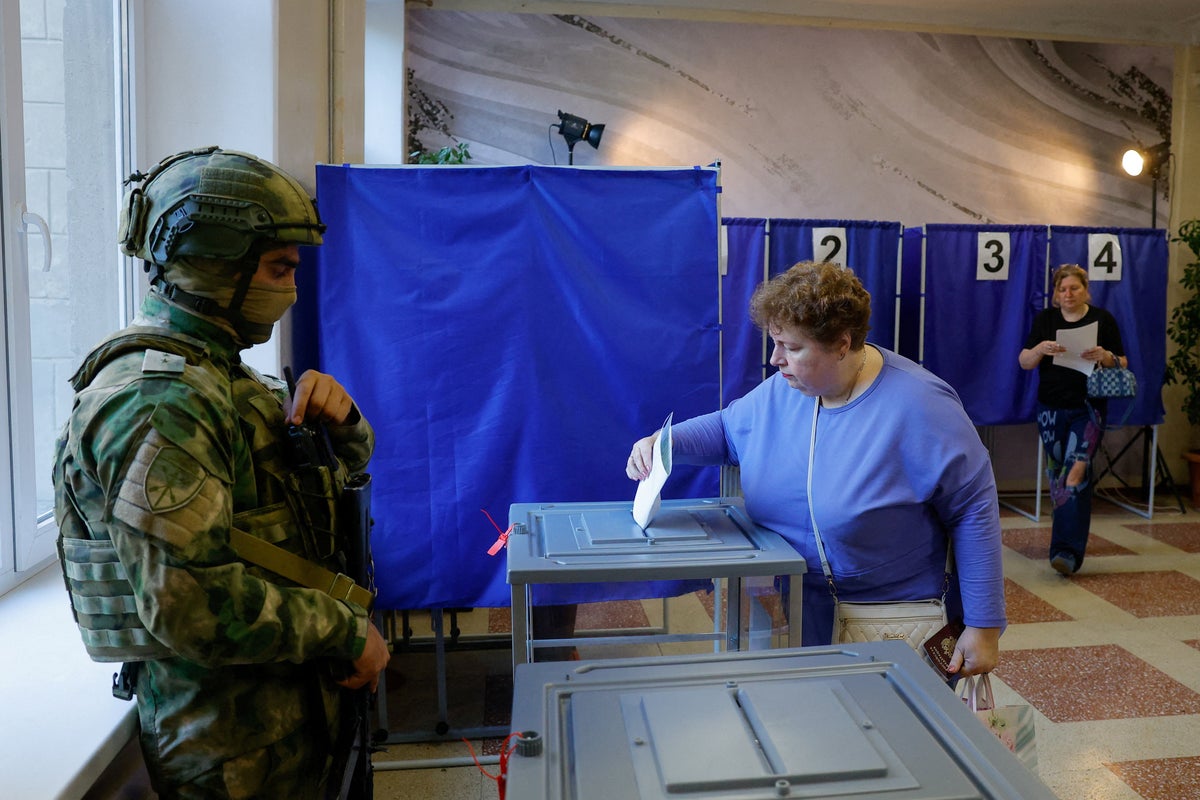
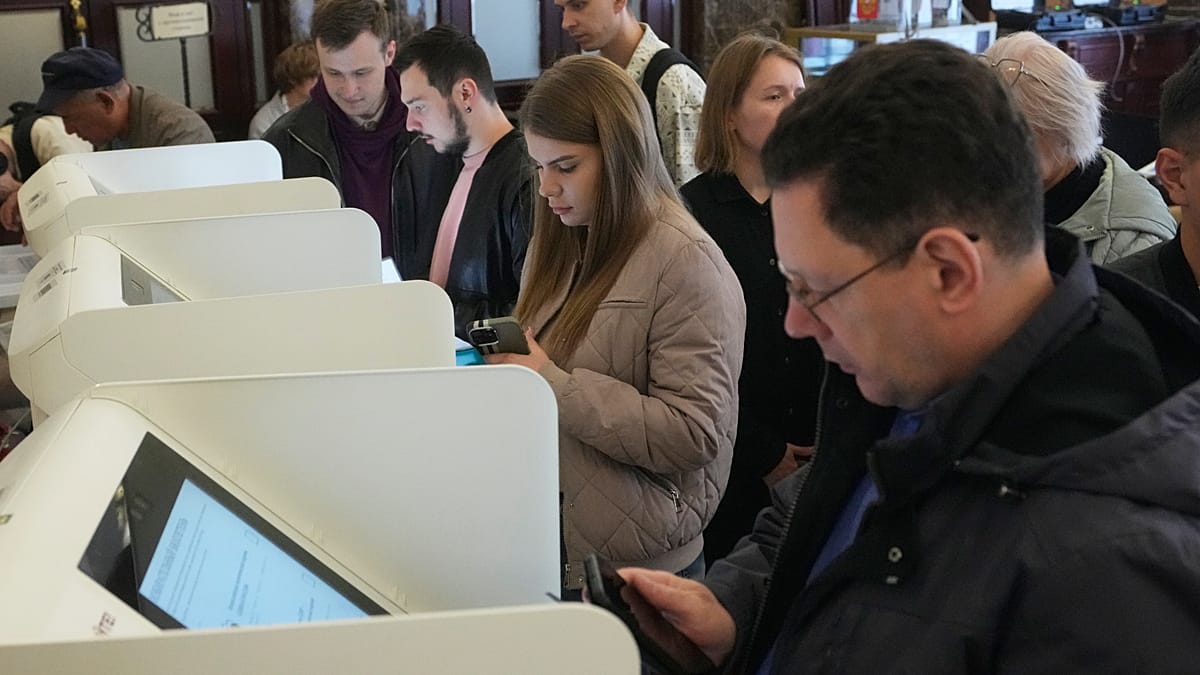
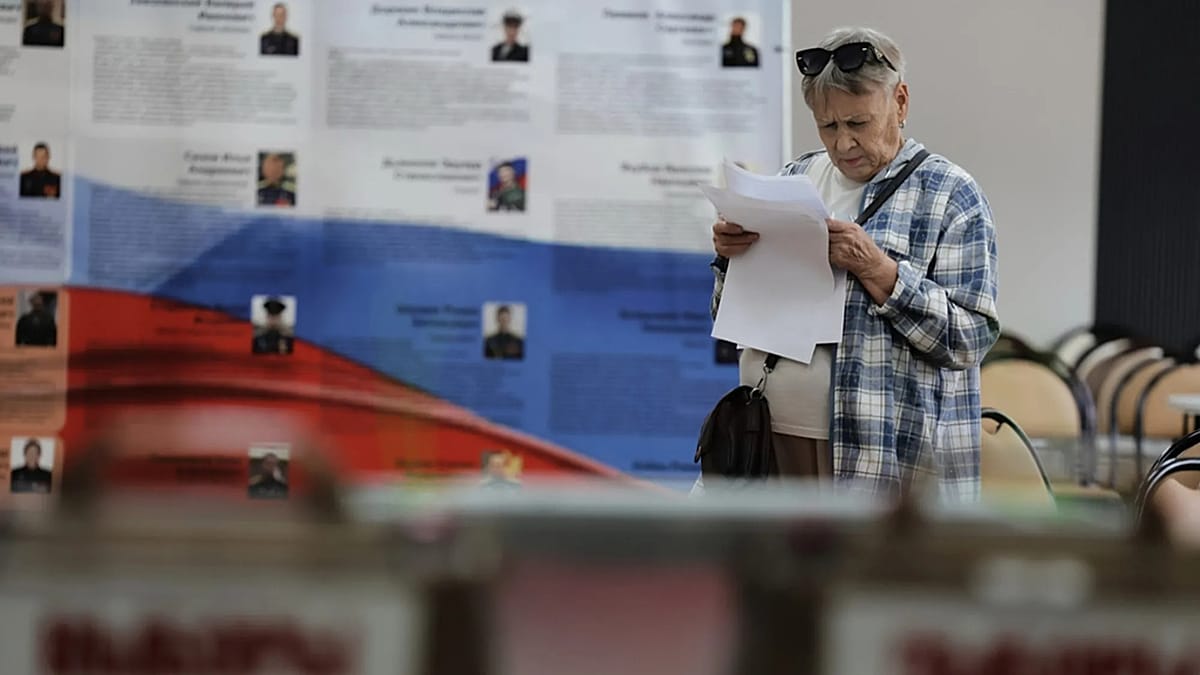
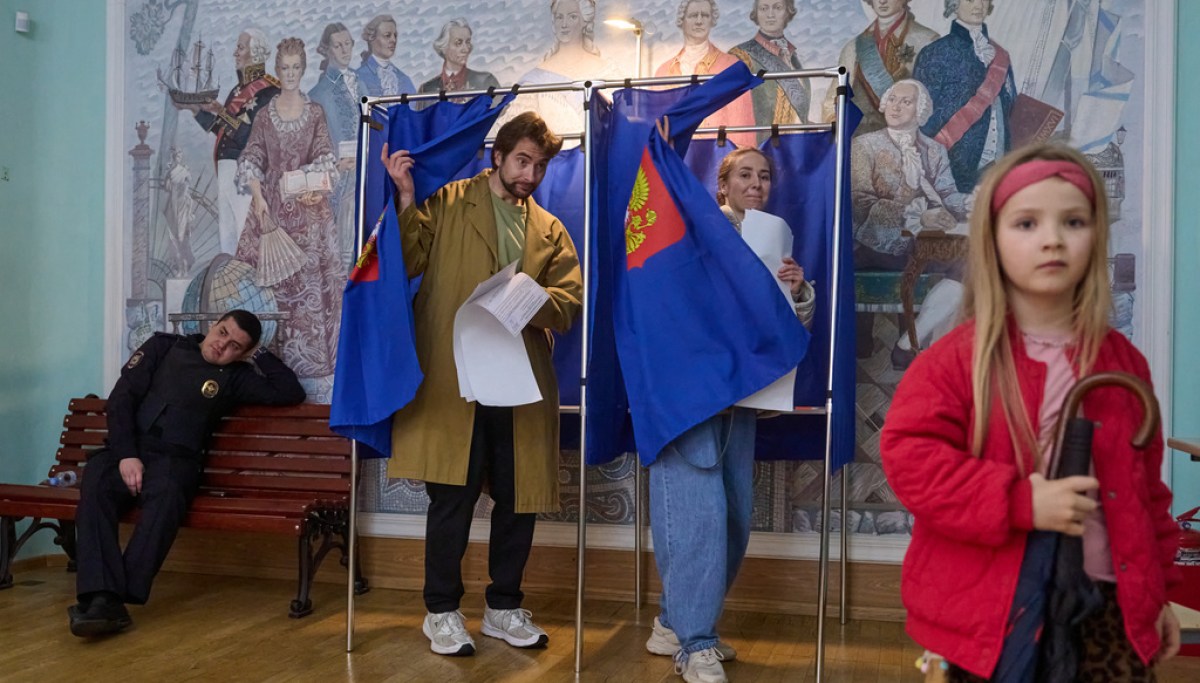
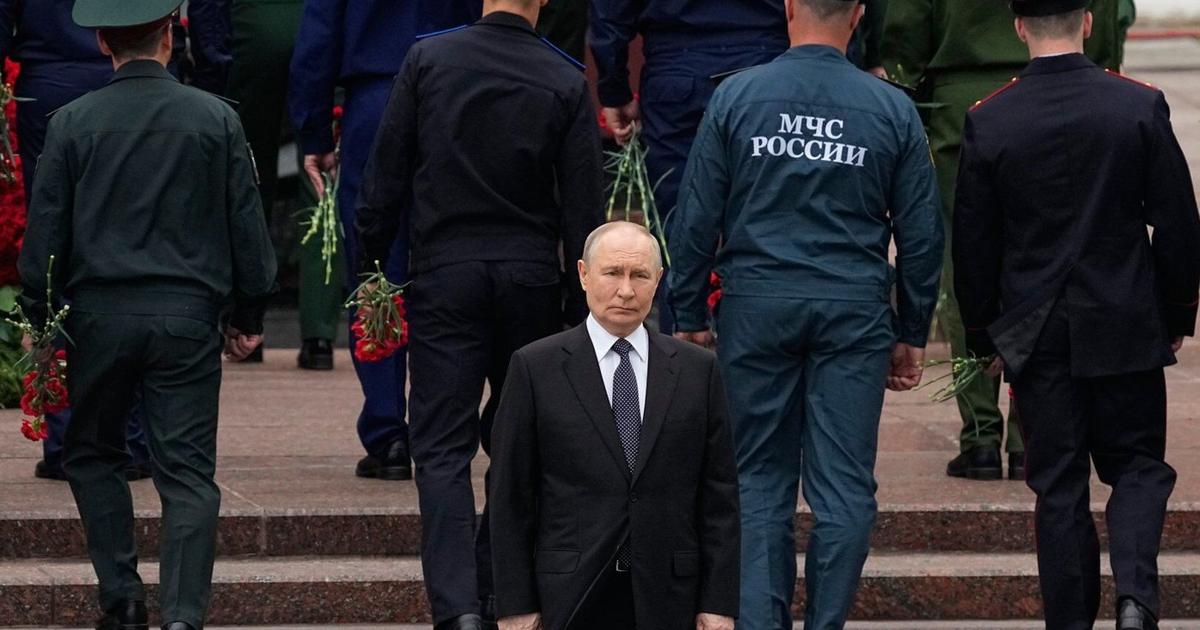
Russian parliamentary elections are taking place amid economic and social challenges, yet the ruling United Russia Party is expected to maintain control. President Vladimir Putin’s influence is so strong that even independent candidates struggle to participate; Boris Nadezhdin, an anti-war activist, was banned from running due to being labeled a "foreign agent." The article attributes Putin's continued popularity and political dominance to U.S. President Donald Trump’s actions, which have allegedly favored Russia in various international conflicts and economic spheres.
Written locally by qwen2.5:14b on 2026-09-18,
using this article's own text rather than the other coverage of the
same event (that is the story summary below).
Story summary
Russian parliamentary elections, held from September 18-20, were widely expected to see United Russia, President Vladimir Putin's party, maintain its dominance over the State Duma (lower house of parliament). Despite critics arguing that the outcome was predetermined and would have no significant impact on the country’s future, Russian authorities made persistent efforts to ensure high voter participation under current electoral law. The elections came amidst increasing war fatigue and economic hardship due to Ukraine's drone strikes targeting oil refineries and warehouses within Russia, causing fuel shortages and internet blackouts.
Exit polls conducted by independent groups at embassies and consulates abroad revealed starkly different results from those inside Russia: New People, an opposition party, garnered around 45% of the votes compared to United Russia’s reported near-58% support domestically. These discrepancies highlight a divergence between domestic and international perceptions of Putin's popularity, with many Russian expatriates opposing the war and expressing anxiety over its economic and social consequences.
Critics argue that these elections are more about demonstrating the regime's resilience than reflecting genuine public sentiment or political contestation, given the tight control exercised by the Kremlin.
Written for “Russia's Wartime Elections” on 2026-10-05,
grounded in this article and the 64 other(s) covering the same event.
Russians go to the polls in elections to its parliament amid a fuel crisis, mortuaries swollen with war dead, and an economy that is shrinking.
asserted
that → go → dead
All ingredients point to what should be a landslide against the ruling United Russia Party.
asserted
what → point → Party
But when the results are announced towards the end of this month, Vladimir Putin’s rubber-stamp-representatives are certain to emerge victorious.
asserted
representatives → announce → month
They are likely to have the 300+ seats in the Duma to rewrite the constitution.
asserted
They → have → constitution
Putin will have the US president to thank for that.
asserted
president → have → that
Donald Trump has hamstrung Ukraine by cutting military aid, taken Russia’s side in all negotiations for peace, inexplicably ignored Russia’s support for Iran it the war he started against Tehran, and is now sitting on legislation that would cut back on Putin’s profits from oil price spikes that Trump caused.
asserted
Trump → hamstring → that
And to make sure there’s no place for opposition in a new Duma, where dissident voices could be heard and ignored, independent candidates have been squeezed out of registration well ahead of the polls.
uncertain
candidates → make → polls
Boris Nadezhdin launched a campaign in 2024 on an anti-war platform and even gained the 100,000 signatures he needed to run for the Duma.
asserted
he → launch → Duma
He was then declared a ‘foreign agent” and forbidden to collect the signatures he already had.
asserted
he → declare → signatures
He was soon detained and fined for posting a photograph of Alexei Navalny, the opposition leader poisoned in a Kremlin jail and then banned from leaving Russia.
asserted
He → detain → Russia
His natural response was to finally say: “I am not willing to put at risk those who support me and took part in the election campaign — my family, my campaign team, the signature collectors and my supporters.”
asserted
who → say → campaign
He fled Russia and now lives in exile.
asserted
He → flee → exile
The independent Russian pollsters the Levada Center's August survey found 76% approved of Putin's performance and 18% disapproving.
asserted
% → find → performance
Some 56% said Russia was moving in the right direction versus 27% saying it was on the wrong course.
asserted
it → say → course
Polling under a violent dictatorship that that has invaded a neighbour should be seen as skewing for personal safety – telling the truth on the threshold of your home could lead to a fatal tumble off a balcony in the same flat.
uncertain
telling → poll → flat
Still, recent polling found that Russians are now feeling some of the pain of the country’s war against Ukraine.
asserted
Russians → find → Ukraine
Kyiv has been launching effective long ranger missile attacks and hitting closer to 50 per cent of Russia’s oil refining sites.
asserted
Kyiv → launch → sites
Levada found that 55% said petrol shortages had made their lives more difficult, with 32% saying they had seriously complicated life.
asserted
they → find → life
Putin’s approval rating has dipped below 80 per cent for the first time since he ordered the full-scale invasion of Ukraine – by only about 8 per cent though.
asserted
he → dip → cent
Growth has stalled to roughly 1–1.3% for 2026 after a wartime spending boom pushed it above 4% in 2023–24, and the economy has effectively split in two.
asserted
economy → stall → two
There is a state-subsidized military-industrial sector that’s expanding, and a civilian economy — small and medium enterprises especially — stagnating or shrinking.
asserted
that → be → ?
Putin has used the National Wealth Fund, Russia's sovereign reserve, to fund his war.
asserted
Putin → use → war
But it’s a thinning cushion.
asserted
it → ’ → ?
It held $113.5 billion in liquid assets before the 2022 invasion.
asserted
It → hold → invasion
Now it’s got $50 billion, or less.
asserted
it → get → billion
The Israeli-US war against Iran caused oil prices spikes that delivered a bonanza for Russia at a time when Ukraine has trying to drive the Kremlin out of the war by killing so many Russians that Moscow could no longer afford the $165,000 compensation for those killed in action.
uncertain
Moscow → cause → action
Oil price hikes have meant a daily bonus worth up to $150 million a day, according to Chatham House.
uncertain
hikes → mean → House
A bill that’s been passed by both the US houses is now sitting on Trump’s desk.
asserted
that → pass → desk
It is designed to offset the bonuses that Putin has enjoyed and to cripple his shadow fleets of tankers and other oil smuggling mechanisms.
asserted
Putin → design → tankers
It is also designed to allow him to impose massive sanctions on China and India, Russia’s biggest oil importers.
asserted
him → design → China
The White House hasn’t indicated whether the US president would sign the legislation into law.
asserted
president → indicate → law
He is unlikely to put the squeeze on his friend in Kremlin – not at a time when Putin is openly threatening Europe and the UK while losing some ground in the war in Ukraine and his economy is looking fragile.
asserted
economy → put → Ukraine
That would mean the US supporting its European allies – and Trump hasn’t done that since he returned to the Oval Office last year.
asserted
he → mean → Office
 The Aporia