Vladimir Putin’s ruling United Russia party won Sunday's Russian parliamentary elections with 57.83% of the vote, securing an overwhelming majority in the State Duma. Despite this victory, independent exit polls from Russians abroad showed a starkly different outcome: New People party received a significant portion of votes, while United Russia garnered only about 5%. This discrepancy highlights voter dissatisfaction and strategic voting against Putin’s regime, indicating underlying political instability within Russia.
Written locally by qwen2.5:14b on 2026-09-21,
using this article's own text rather than the other coverage of the
same event (that is the story summary below).
Story summary
Russian parliamentary elections, held from September 18-20, were widely expected to see United Russia, President Vladimir Putin's party, maintain its dominance over the State Duma (lower house of parliament). Despite critics arguing that the outcome was predetermined and would have no significant impact on the country’s future, Russian authorities made persistent efforts to ensure high voter participation under current electoral law. The elections came amidst increasing war fatigue and economic hardship due to Ukraine's drone strikes targeting oil refineries and warehouses within Russia, causing fuel shortages and internet blackouts.
Exit polls conducted by independent groups at embassies and consulates abroad revealed starkly different results from those inside Russia: New People, an opposition party, garnered around 45% of the votes compared to United Russia’s reported near-58% support domestically. These discrepancies highlight a divergence between domestic and international perceptions of Putin's popularity, with many Russian expatriates opposing the war and expressing anxiety over its economic and social consequences.
Critics argue that these elections are more about demonstrating the regime's resilience than reflecting genuine public sentiment or political contestation, given the tight control exercised by the Kremlin.
Written for “Russia's Wartime Elections” on 2026-10-05,
grounded in this article and the 64 other(s) covering the same event.
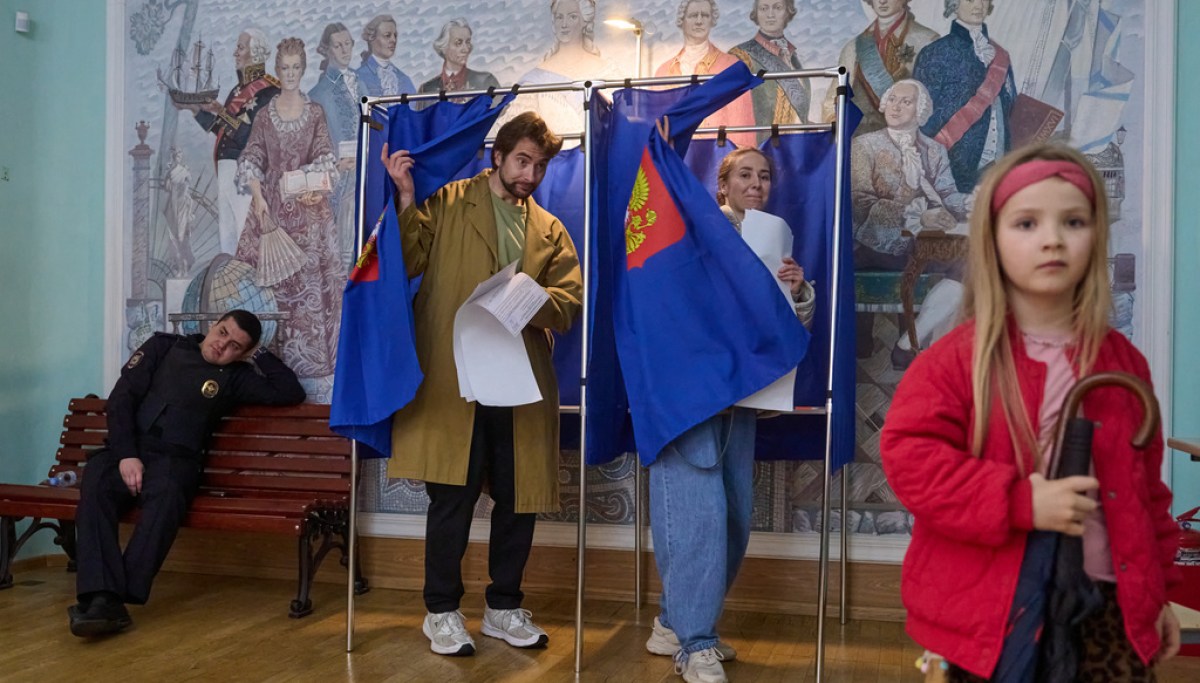
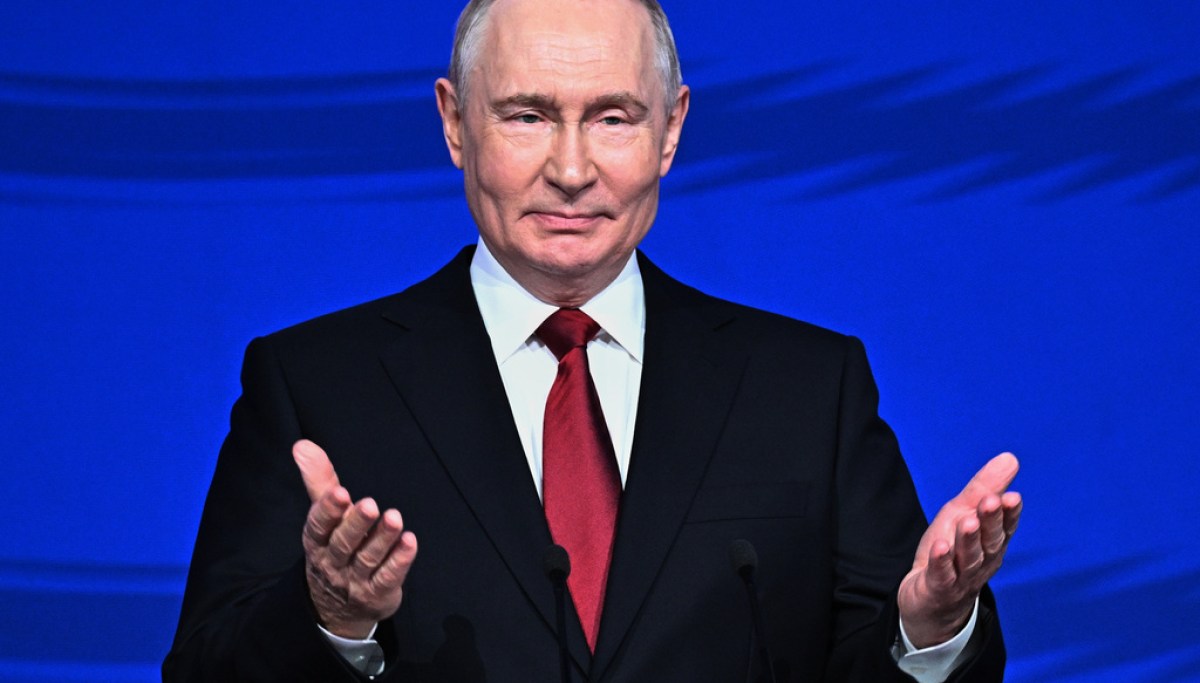
Russian President Vladimir Putin’s party dominated the weekend elections for the State Duma, with results that did not surprise observers familiar with the country’s tightly controlled election system, but outcomes on the fringes show Moscow might be losing its grip.
uncertain
Moscow → dominate → grip
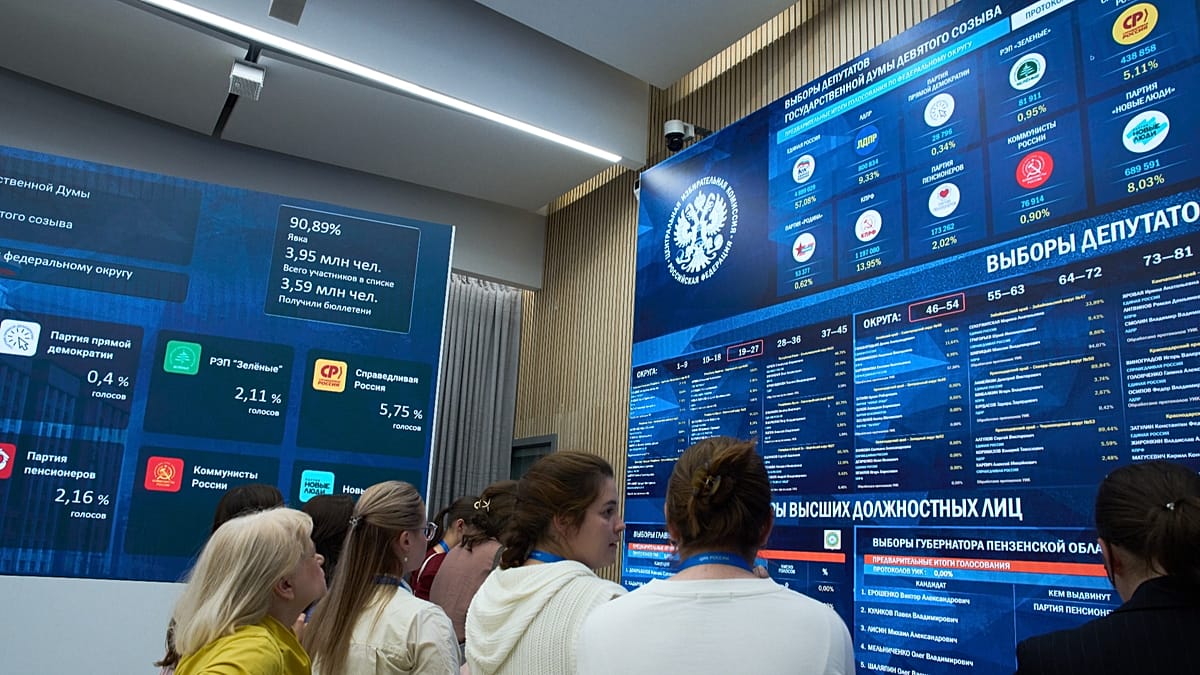
United Russia, the country’s governing party, claimed a continued mandate to power on Monday, with 57.83% of the vote.
asserted
Russia → govern → vote
That result includes a near sweep of single-member districts, giving it an even stronger advantage, with the expectation of occupying 355 of the Duma’s 450 seats — smashing its previous 2016 record of 343 seats.
asserted
result → include → seats
“These indicators, of course, point to the highest level of consolidation within Russian society around the head of state,” Kremlin spokesman Dmitry Peskov said at a press conference.
asserted
Peskov → point → conference
The Communist Party, which almost universally votes alongside United Russia on major policies, came in second and is expected to net 40.
asserted
which → vote → 40
Fellow controlled opposition parties, the Liberal Democrat Party and New People, won 25 and 20 seats respectively.
asserted
parties → control → seats
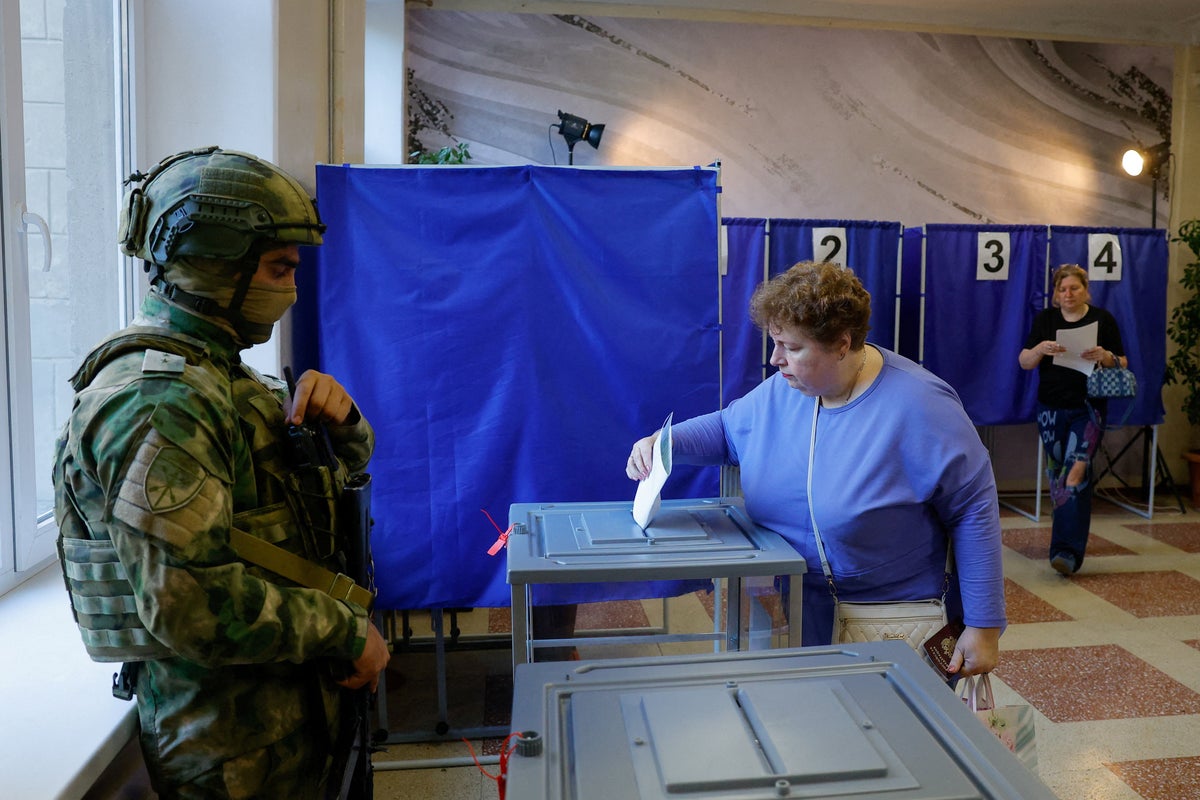
It has been largely perceived as a rubber-stamp election, the first held since the Russian invasion of Ukraine began in 2022, and the list of candidates was severely restricted by government bureaucracy.
asserted
list → perceive → bureaucracy
Federal agencies challenge opposition groups’ ability to run campaigns through dubious standards such as signature collections and investigations over alleged foreign influence — processes ripe for exploitation by loyalist overseers.
asserted
agencies → challenge → overseers
A campaign from the highest levels of the Kremlin sought to bolster voter turnout for the election, and the government is now reporting 60% participation, the highest since 2013.
asserted
government → seek → 2013
“Pretty much everyone understands that these are not free and fair elections,” Evgeny Roshchin, head of the Democratic Resilience program at the Center for European Policy Analysis, told the Washington Examiner.
asserted
Roshchin → understand → Examiner
“So, whatever outcome you may see — either an official or unofficial reporting, it’s not the reflection of the level of support that voters in normal democracies usually give to their representatives.
uncertain
voters → see → representatives
They choose among the lesser evils.”
asserted
They → choose → evils
Roshchin pointed to independent exit polls that documented votes cast by Russian citizens abroad, showing a staggering victory for the New People party across the board.
asserted
that → point → board
The Communist Party came in second, and United Russia is estimated to have received a mere 5% of the vote.
asserted
Russia → come → vote
“This is what I take as an expression of the protest vote, or the strategic vote. …
asserted
I → take → vote
That’s the purest reflection,” he explained.
asserted
he → ’ → ?
A standout result nationwide was the unexpected victory of the anti-war Yabloko party, which managed to win a seat in the Novgorod regional Duma with 6.38% of the vote.
asserted
which → manage → vote
Yabloko was banned from the national election and most regional elections on the flimsy ground that assets in party election campaign materials violated copyright law.
asserted
assets → ban → law
It was also accused of accepting foreign finances and engaging in extremist activities.
asserted
It → accuse → activities
Roshchin was surprised when he saw the anti-war party clinch the seat and break the electoral threshold that would allow it to stand in future elections without fighting through the signature-gathering process often used to reject parties disfavored by the government.
asserted
it → surprise → government
“That’s what makes Yabluka still a viable party for the future.
asserted
Yabluka → ’ → future
If they didn’t make it to the Novgorod Parliamentary Assembly, they would probably have disappeared altogether from the political landscape, as some of the other liberal parties did who didn’t manage to get into parliamentary assemblies,” he explained to the Washington Examiner.
asserted
he → make → Examiner
“It’s important not because there is one representative from that party in their assembly.
asserted
It → ’ → assembly
It’s important because it gives them a chance to run again in the future elections as a party.
asserted
it → ’ → party
The final day of the election was disrupted by a massive Ukrainian assault on Moscow, sending pillars of smoke rising against the skyline of the Russian capital.
More than 1,000 drones were deployed in the attack, which managed to breach air defense systems through sheer numbers.
Videos show that the Gazpromneft-Moscow Refinery, one of Russia’s most important oil facilities, was struck less than 10 miles from the Kremlin itself.
asserted
Refinery → disrupt → Kremlin
 The Aporia