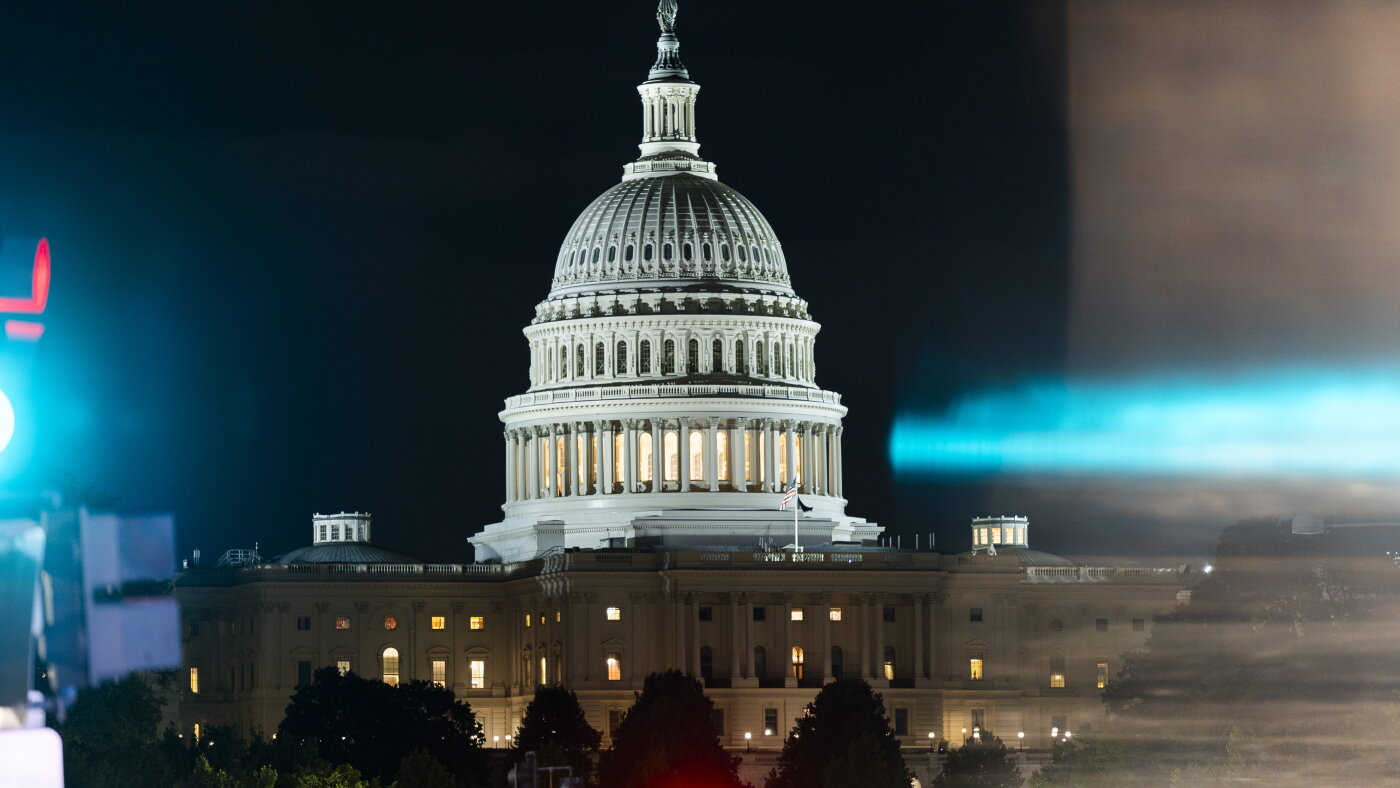
With less than a month until the midterm elections, Democrats hold a clear advantage over Republicans due to President Trump's low approval ratings and his inability to reduce prices as promised. The Cook Political Report forecasts a five-to-15-seat gain for Democrats in the House, putting them at around 220 to 230 seats post-election. In the Senate, six more seats have shifted towards the Democrats since June, making it increasingly likely they will win control. Trump's approval rating stands at just 37%, tied with George W. Bush as the lowest pre-midterm approval in recent history.
Written locally by qwen2.5:14b on 2026-10-06,
using this article's own text rather than the other coverage of the
same event (that is the story summary below).
Democrats' advantage is clear with less than a month to go in the midterm elections
President Trump was elected in 2024, in large measure, with a mandate to bring down prices.
asserted
Trump → go → prices
But that hasn't happened.
asserted
that → happen → ?
Instead, Trump is facing record-low approval ratings, and voters are blaming him for costs that have continued to rise since he took office this second time around.
asserted
he → face → office
As a result, Republicans are likely to pay the price at the ballot box next month.
asserted
Republicans → pay → box
One month out from Election Day, the electoral landscape has shifted even more so in Democrats' direction.
asserted
landscape → shift → direction
They are favored to win the House, albeit with a fairly narrow majority.
asserted
They → favor → majority
The Cook Political Report forecasts a five-to-15-seat net gain for Democrats at this point.
asserted
Report → forecast → point
That would give them in the range of 220 to 230 seats come January.
asserted
That → give → seats
(218 is needed for a majority.)
asserted
218 → need → majority
The Senate has shifted more dramatically over the last several months.
asserted
Senate → shift → months
Six seats have moved more in Democrats' direction since June in comparing Cook's ratings from then to now.
asserted
seats → move → ratings
When the cycle first started, the Senate was a long shot for Democrats.
asserted
Senate → start → Democrats
Trump has just a 37% approval rating, according to an average of the polls.
uncertain
Trump → have → polls
That's tied for the lowest pre-midterm approval in the last half century.
asserted
That → tie → century
Back then, Iraq was spiraling into civil war, and Republicans lost both the House and Senate.
asserted
Republicans → spiral → House
Trump is also facing a historic intensity of opposition; 53% in the latest NPR/PBS News/Marist poll said they strongly disapprove of the job the president is doing, the highest ever recorded in the survey.
asserted
president → face → survey
That's not a great sign for Republicans with Trump insisting that the midterm elections be about him.
asserted
elections → insist → him
They usually lose about two dozen seats in the House and four in the Senate.
asserted
They → lose → Senate
There are multiple reasons Democratic gains might be limited, including mid-decade redistricting helping to insulate Republicans, fewer competitive-to-potentially competitive House seats, with most in districts Trump won in 2024, Republicans' campaign spending edge and the unpopularity of the Democratic Party.
uncertain
Trump → be → Party
That said, the headwinds the GOP is facing are very real.
asserted
GOP → say → ?
Republicans have lost their edge on the economy
Economic issues continue to rate as the top problem and most important issue facing the country.
asserted
issues → lose → country
Most presidents get more blame and credit than they deserve for the economy, but the war with Iran and Trump's tariffs were choices that have directly led to increased costs on many goods and energy.
asserted
that → get → goods
The economy is increasingly bifurcated with the wealthy doing well and regular people struggling.
asserted
people → bifurcate → ?
Wealthy Americans are seeing increases in their wealth and stock portfolios, which are dominated by AI companies.
asserted
which → see → companies
Inflation is outpacing wages, meaning people's paychecks aren't taking them as far.
asserted
paychecks → outpace → them
There isn't a lot of turnover in the labor market, so if someone doesn't have a job or is looking to change, it's not an easy thing to do.
asserted
it → be → job
Plus, many are turning against AI.
asserted
many → turn → AI
In many places, it's driving up utility costs and, along with the rising national debt, is making borrowing more difficult.
asserted
borrowing → drive → debt
All of that is coming at a time when gas prices have skyrocketed because of the Iran war, and interest rates are creeping higher.
asserted
rates → come → war
In trying to tame inflation, the Federal Reserve hiked rates this fall.
asserted
Reserve → try → rates
That makes it more expensive to borrow money and harder to pay for things like houses and cars.
asserted
it → make → houses
The blame for that sort of thing often gets pointed directly at the White House and the party in power, and right now, that's Trump and Republicans.
asserted
that → point → power
An AP/NORC poll released last week, for example, found that 65% said higher-than-usual prices are more because of Trump's policies than factors outside of his control.
asserted
prices → release → control
Just 26% said they approved of the job he's doing on the economy.
asserted
he → say → economy
An NBC News poll from September found that for only the second time in the Trump era, respondents said they trusted Democrats more than Republicans on the economy.
asserted
they → find → economy
The only other time Democrats led on that question was in 2018 – the last midterm year when Trump was president.
asserted
Trump → lead → 2018
Democrats won 42 seats and control of the House then.
asserted
Democrats → win → House
Add the widely negative views of the economy to the administration's immigration enforcement tactics, discretionary domestic cuts, the slashing of regulations and the government workforce, and it's all firing up Democrats.
asserted
it → add → Democrats
An opposition party enthusiastic to vote is a major warning sign for the president's party, especially in a midterm year.
asserted
party → vote → year
History is not on the side of the president's party in midterm elections
In 18 of the 20 midterms since World War II, the president's party has lost House seats.
asserted
party → lose → seats
…and 22 more, not listed.
 The Aporia