
Neutrino Research Nobel Prize
9 outlets
9 reporters
- AFPDawn
- Kostya ManenkovToronto Star
- Stefanie DazioToronto Star
- NBC NewsNBC News
- BBC NewsBBC
- The Associated PressNPR
- Ivan SemeniukThe Globe and Mail
- Associated PressNew York Post
- Brendan RuberrySemafor
By day
Articles per day
Cite
Neutrino Research Nobel Prize. (2026, October 10). The Aporia. https://the-aporia.com/event/59310
“Neutrino Research Nobel Prize.” The Aporia, 10 Oct. 2026, https://the-aporia.com/event/59310.
“Neutrino Research Nobel Prize.” The Aporia, October 10, 2026. https://the-aporia.com/event/59310.
Dated the day this page was built. The link always leads to this event, even after the stories are regrouped.
Belgian American particle physicist Francis Halzen was announced as the winner of the 2026 Nobel Prize in Physics on Tuesday in Stockholm.
Summary AI · cited
Commentators have speculated that the prize could recognize achievements such as research in particle physics, astrophysics or the invention of an 'invisibility cloak'.1
Francis Halzen was awarded the Nobel Prize in Physics for his contributions to the IceCube Neutrino Observatory and the discovery of high-energy neutrinos of astrophysical origin.23
The observatory, located at Amundsen–Scott South Pole Station in Antarctica, uses a cubic kilometre volume of ice to detect flashes of light from high-energy neutrinos.24
Halzen's work has led to the development of new methods for studying subatomic particles and opened up possibilities for future astronomical discoveries.5
Written by AI from articles by 5 outlets. Each sentence links to the articles it rests on, and was checked automatically: every name, number and quote must appear in the sentences it cites, or it is removed.
Sources cited (5)
- Particle physics, astrophysics and 'invisibility cloak' tipped for physics Nobel Dawn, 6 Oct
- Belgian physicist awarded Nobel Prize for pioneering work tracking neutrino particles at South Pole CBC, 6 Oct
- Francis Halzen wins Nobel Prize in physics for work on high-energy neutrinos of astrophysical origin New York Post, 6 Oct
- Neutrino experiment pioneer Francis Halzen wins Nobel Prize in Physics The Globe and Mail, 6 Oct
- Nobel Prize in Physics awarded to ‘ghost particle’ scientist Semafor, 6 Oct
What happened
The outlets' own sentences, most widely reported first. Hover or tap one to see who reported it.
Halzen, 82, was recognized for "decisive contributions to the IceCube Neutrino Observatory and the discovery of high-energy neutrinos of astrophysical origin," the award-giving body said.
Last year, three scientists won the Nobel Prize in physics for research on the strange behavior of subatomic particles called quantum tunneling that enabled the ultra-sensitive measurements achieved by MRI machines and laid the groundwork for better cellphones and faster computers.
The announcements of this year’s prizes began Monday with the Nobel Prize in medicine being awarded to three scientists whose work led to a tool that uses light to help unravel how the brain works.
After Friday’s peace prize is awarded, the Nobel Memorial Prize in Economic Sciences will be announced on Oct. 12.
What each outlet says
One AI summary per outlet of its latest article on this story, written from that article alone and checked against it. Open the article for the outlet's own words.
Belgian physicist Francis Halzen won the Nobel Prize in Physics for his work on subatomic particles at the South Pole. The prize recognized his contributions to the IceCube Neutrino Observatory and the discovery of high-energy neutrinos from space. Halzen, a professor at the University of Wisconsin-Madison, was praised for his vision and leadership in developing an observatory that uses a cubic kilometre of ice…
Nobel physics prize honours work on 'ghost messengers from space' →2 articles from Dawn on this storyThe Royal Swedish Academy of Sciences in Stockholm will announce the Nobel Prize in physics on Tuesday. Last year, the prize was awarded to three scientists for their work on quantum tunneling, which has applications in technologies like MRI machines and contributes to advancements in cellphone technology and computer processing speed.
Nobel Prize in physics to be awarded in Stockholm →The Royal Swedish Academy of Sciences in Stockholm will announce the Nobel Prize in physics on Tuesday. Last year's award recognized research into quantum tunneling with practical applications in technology like MRI machines and cellphones. The prizes this week also include chemistry and literature awards, followed by the peace prize and economics prize later in October. Each laureate receives 12 million Swedish…
Nobel Prize in physics to be awarded in Stockholm →Belgian physicist Francis Halzen has received the Nobel Prize in Physics for his work on the IceCube observatory, located at the South Pole. The observatory uses a cubic kilometre of ice equipped with light sensors to detect cosmic neutrinos, which provide insights into high-energy phenomena in space. The Royal Swedish Academy of Sciences highlighted Halzen's visionary approach and leadership in developing this…
'Ghost particles' from space telescope wins physics Nobel →Francis Halzen, a Belgian physicist, was awarded the Nobel Prize in Physics for his work on the IceCube Neutrino Observatory at the South Pole. This observatory, which became operational in 2011 and spans one cubic kilometre of glacial ice, helped detect high-energy neutrinos from space. The prize includes a sum of 12 million Swedish crowns ($1.7 million CAD). Halzen's contribution was highlighted for his visionary…
Belgian physicist awarded Nobel Prize for pioneering work tracking neutrino particles at South Pole →Francis Halzen won the Nobel Prize in physics for his work on high-energy neutrinos from space, specifically through his contributions to the IceCube Neutrino Observatory at the South Pole. Mark Pearce of the Nobel Committee praised Halzen's leadership and scientific vision that led to a new kind of astronomy. Born in Belgium and now 82 years old, Halzen expressed surprise upon receiving the award. The prize…
Francis Halzen wins Nobel Prize in physics for work on high-energy neutrinos from space →Show 3 more outlets
Francis Halzen, a University of Wisconsin-Madison professor, has been awarded the Nobel Prize in Physics for his pioneering work on the IceCube Neutrino Observatory at the South Pole. The observatory, completed in 2011 and using one cubic kilometer of Antarctic ice to detect high-energy neutrinos from space, marked a significant advancement in particle astrophysics. Halzen expressed surprise at winning, noting that…
Neutrino experiment pioneer Francis Halzen wins Nobel Prize in Physics →Francis Halzen won the 2026 Nobel Prize in physics for his work with high-energy neutrinos of astrophysical origin through the IceCube Neutrino Observatory at the South Pole. Mark Pearce, chair of the Nobel Committee for Physics, praised Halzen's leadership and scientific vision that led to new discoveries in astronomy. Born in Belgium and now 82 years old, Halzen expressed surprise at winning but hoped it would aid…
Francis Halzen wins Nobel Prize in physics for work on high-energy neutrinos of astrophysical origin →Francis Halzen, a Belgian-American scientist, received the 2026 Nobel Prize in Physics for his groundbreaking work on neutrinos, often referred to as "ghost particles," at the South Pole. He established an ice laboratory there that uses the unique clarity of Antarctic ice to detect these subatomic particles, which typically pass undetected through matter. Halzen emphasized that while his discovery was significant…
Nobel Prize in Physics awarded to ‘ghost particle’ scientist →Analysis
Agreed
Reported by outlets on both sides of the middle
No sentence was reported across the range.
Disputed
Picked by our model, which is sometimes wrong
No disagreement the check could confirm. That does not prove there is none.
Framing
How the first headlines put it
How it changed
- 6 Oct
Belgian American particle physicist Francis Halzen was announced as the winner of the 2026 Nobel Prize in Physics on Tuesday in Stockholm.
Coverage 10 articles
Suggested from 6 outlets: the fullest account of the event, no political position was found in its wording and its publisher is declared as reporting rather than commentary.
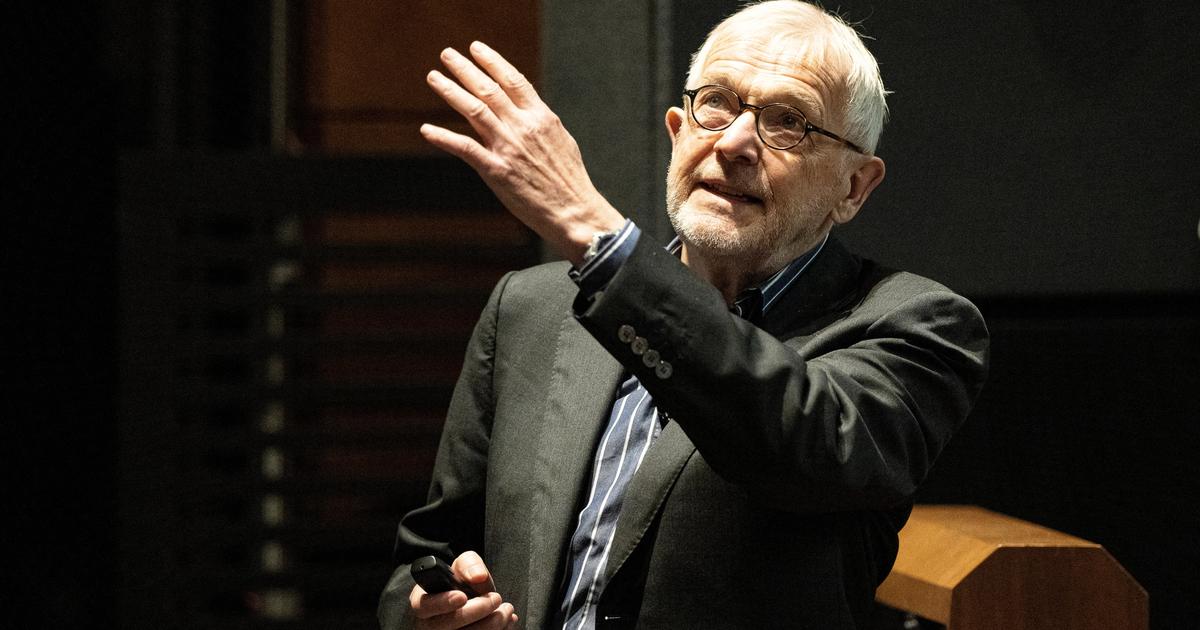 6 Oct Nobel Prize in Physics awarded to ‘ghost particle’ scientistFrancis Halzen, a Belgian-American scientist, received the 2026 Nobel Prize in Physics for his groundbreaking work on neutrinos, often referred to as "ghost particles," at the South Pole. He established an ice laboratory there that uses the unique clarity of Antarctic ice to detect these subatomic particles, which typically pass undetected through matter. Halzen emphasized that while his discovery was significant…Semafor
 6 Oct Francis Halzen wins Nobel Prize in physics for work on high-energy neutrinos of astrophysical originFrancis Halzen won the 2026 Nobel Prize in physics for his work with high-energy neutrinos of astrophysical origin through the IceCube Neutrino Observatory at the South Pole. Mark Pearce, chair of the Nobel Committee for Physics, praised Halzen's leadership and scientific vision that led to new discoveries in astronomy. Born in Belgium and now 82 years old, Halzen expressed surprise at winning but hoped it would aid…New York Post
 6 Oct Neutrino experiment pioneer Francis Halzen wins Nobel Prize in PhysicsFrancis Halzen, a University of Wisconsin-Madison professor, has been awarded the Nobel Prize in Physics for his pioneering work on the IceCube Neutrino Observatory at the South Pole. The observatory, completed in 2011 and using one cubic kilometer of Antarctic ice to detect high-energy neutrinos from space, marked a significant advancement in particle astrophysics. Halzen expressed surprise at winning, noting that…The Globe and Mail
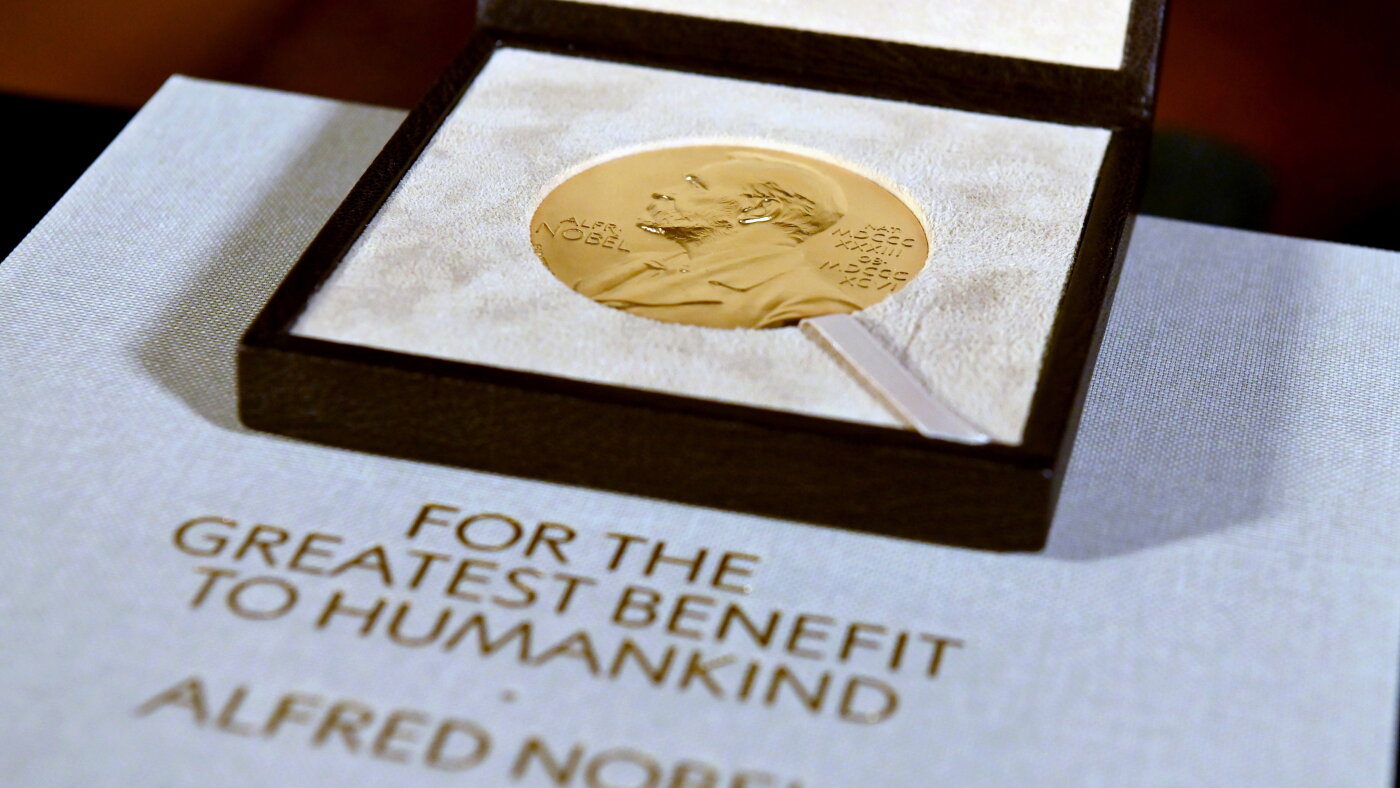 6 Oct Francis Halzen wins Nobel Prize in physics for work on high-energy neutrinos from spaceFrancis Halzen won the Nobel Prize in physics for his work on high-energy neutrinos from space, specifically through his contributions to the IceCube Neutrino Observatory at the South Pole. Mark Pearce of the Nobel Committee praised Halzen's leadership and scientific vision that led to a new kind of astronomy. Born in Belgium and now 82 years old, Halzen expressed surprise upon receiving the award. The prize…NPR
- 6 Oct Belgian physicist awarded Nobel Prize for pioneering work tracking neutrino particles at South PoleFrancis Halzen, a Belgian physicist, was awarded the Nobel Prize in Physics for his work on the IceCube Neutrino Observatory at the South Pole. This observatory, which became operational in 2011 and spans one cubic kilometre of glacial ice, helped detect high-energy neutrinos from space. The prize includes a sum of 12 million Swedish crowns ($1.7 million CAD). Halzen's contribution was highlighted for his visionary…CBC
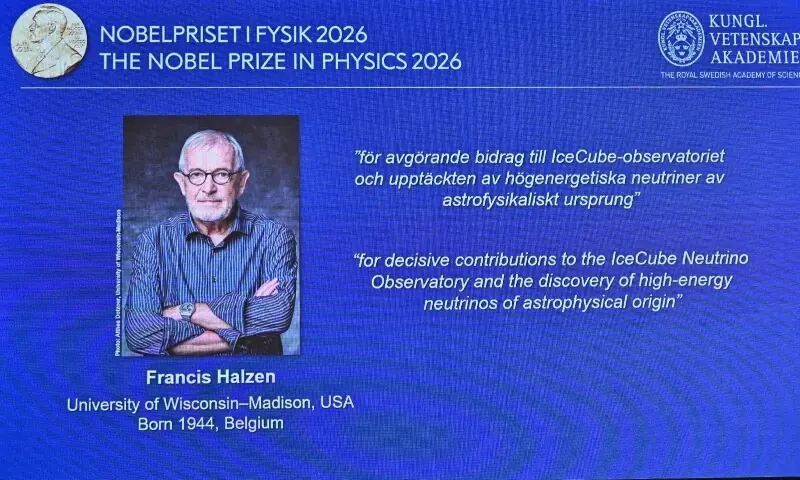 6 Oct Nobel physics prize honours work on 'ghost messengers from space'Belgian physicist Francis Halzen won the Nobel Prize in Physics for his work on subatomic particles at the South Pole. The prize recognized his contributions to the IceCube Neutrino Observatory and the discovery of high-energy neutrinos from space. Halzen, a professor at the University of Wisconsin-Madison, was praised for his vision and leadership in developing an observatory that uses a cubic kilometre of ice…Dawn
 6 Oct 'Ghost particles' from space telescope wins physics NobelBelgian physicist Francis Halzen has received the Nobel Prize in Physics for his work on the IceCube observatory, located at the South Pole. The observatory uses a cubic kilometre of ice equipped with light sensors to detect cosmic neutrinos, which provide insights into high-energy phenomena in space. The Royal Swedish Academy of Sciences highlighted Halzen's visionary approach and leadership in developing this…BBC
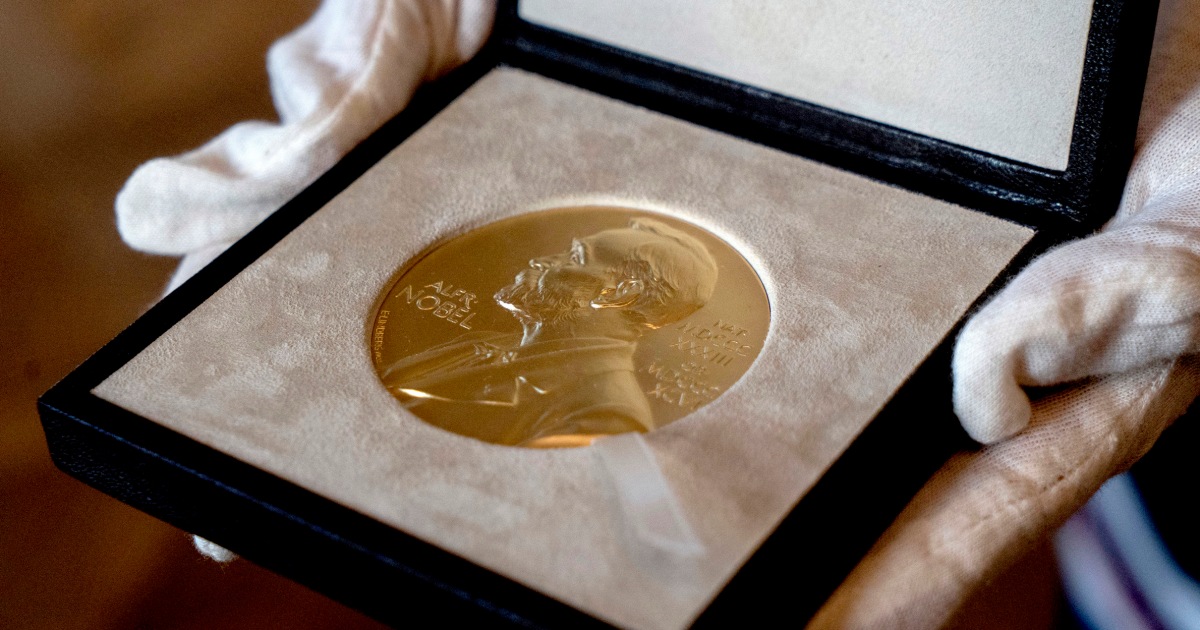 6 Oct Nobel Prize in physics to be awarded in StockholmThe Royal Swedish Academy of Sciences in Stockholm will announce the Nobel Prize in physics on Tuesday. Last year's award recognized research into quantum tunneling with practical applications in technology like MRI machines and cellphones. The prizes this week also include chemistry and literature awards, followed by the peace prize and economics prize later in October. Each laureate receives 12 million Swedish…NBC News
 6 Oct Nobel Prize in physics to be awarded in StockholmThe Royal Swedish Academy of Sciences in Stockholm will announce the Nobel Prize in physics on Tuesday. Last year, the prize was awarded to three scientists for their work on quantum tunneling, which has applications in technologies like MRI machines and contributes to advancements in cellphone technology and computer processing speed.Toronto Star
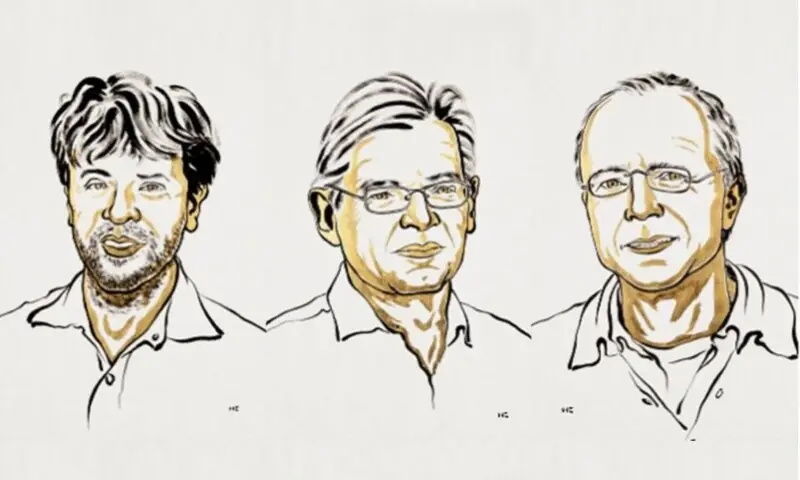 6 Oct Particle physics, astrophysics and 'invisibility cloak' tipped for physics NobelThe Nobel Prize in Physics is set to be announced on Tuesday at 11:45 am in Stockholm. Speculations suggest that researchers involved in particle physics, astrophysics, or metamaterials like Britain’s John B. Pendry and David Smith might receive recognition for their work on an "invisibility cloak." Other potential nominees include Federico Capasso for his contributions to the quantum cascade laser and Pablo…Dawn
Keep exploring
 Similar coverageNobel Prize in Chemistry
 Similar coverageNobel Prize Brain Research
 Similar coverageSpace Station Noble Prize Nomination
 Similar coverageNobel Prize Winner Makes Lunch
 RecentMilwaukee Brewers Win First World Series Title
 RecentWNBA Finals Scheduling Issues
 RecentIsraeli Election Results and Controversy
 RecentMary Peltola Decoy Dan Investigation
 RecentBolsonaro Family's Flight from Brazil
 RecentHegseth Fires Top General Over Leaks
Built 2026-10-10 from 10 articles. Every sentence on this page is quoted from the linked article; nothing was written by a model except the Summary and the items marked AI, which cite their sources, and the questions and labels under "Disputed". Photos are from the outlets that covered the story, never from articles our check marks sensitive.