
Nobel Prize Brain Research
13 outlets
Each outlet's article on this story, most articles first
13 reporters
- The Straits TimesThe Straits Times
- KOSTYA MANENKOV Associated PressABC News (US)
- STEFANIE DAZIO Associated PressABC News (US)
- Nicola Davis Science correspondentThe Guardian
- Michelle RobertsBBC
- The Associated PressNPR
- Associated PressNew York Post
- Ivan SemeniukThe Globe and Mail
- Niklas PollardThe Independent
- Johan AhlanderThe Independent
- Bhanvi SatijaThe Independent
- ReutersDawn
- Al Jazeera StaffAl Jazeera
By day
Articles per day
Cite
Nobel Prize Brain Research. (2026, October 6). The Aporia. https://the-aporia.com/event/56538
“Nobel Prize Brain Research.” The Aporia, 6 Oct. 2026, https://the-aporia.com/event/56538.
“Nobel Prize Brain Research.” The Aporia, October 6, 2026. https://the-aporia.com/event/56538.
Dated the day this page was built. The link always leads to this event, even after the stories are regrouped.
Optogenetics opened what the Nobel assembly called a new era in neuroscience, the discovery of a light-controlled switch to turn on and off nerve cells and circuits in the brain to better learn how it works — to start unraveling the pathways that lead to behavior and disease.
Summary AI · cited
Research into weight-loss drugs was considered a potential winner of the Nobel Prize in Medicine as award week began.1
The prize recognizes their discoveries concerning light-gated ion channels and optogenetics, which allows for the precise optical control of neurons in living brains.23
The winners will share a prize of 12 million Swedish kronor (approximately £901,500 or $1.74 million Canadian dollars).45
Their work has applications in clinical trials for restoring vision to people with retinitis pigmentosa by inserting light-sensitive proteins into the retina.2
Written by AI from articles by 5 outlets. Each sentence links to the articles it rests on, and was checked automatically: every name, number and quote must appear in the sentences it cites, or it is removed.
Sources cited (5)
- Research into weight-loss drugs tipped for Nobel as award week opens The Straits Times, 5 Oct
- German and US scientists win Nobel medicine prize for work that has helped understand how the brain works Dawn, 5 Oct
- Three Researchers Awarded 2026 Nobel Prize in Physiology or Medicine for Their Pioneering Contributions to Optogenetics Toronto Star, 5 Oct
- Nobel prize in medicine 2026 awarded for research into mysteries of brain The Guardian, 5 Oct
- Nobel prize awarded to researchers who learned how to light up the brain The Globe and Mail, 5 Oct
What happened
The outlets' own sentences, most widely reported first. Hover or tap one to see who reported it.
Monday’s announcement kicks off a week of Nobel prize reveals, with the recipient or recipients of the physics prize to be named on Tuesday, chemistry on Wednesday, literature on Thursday and the Nobel Peace Prize on Friday.
The Nobel Assembly of Sweden’s Karolinska Institute medical university said Deisseroth, 54, Hegemann, 71, and Nagel, 73, were selected for their “discoveries concerning light-gated ion channels and optogenetics”.
The medicine prize will be followed by the prizes for physics on Oct 6 and chemistry on Oct 7.
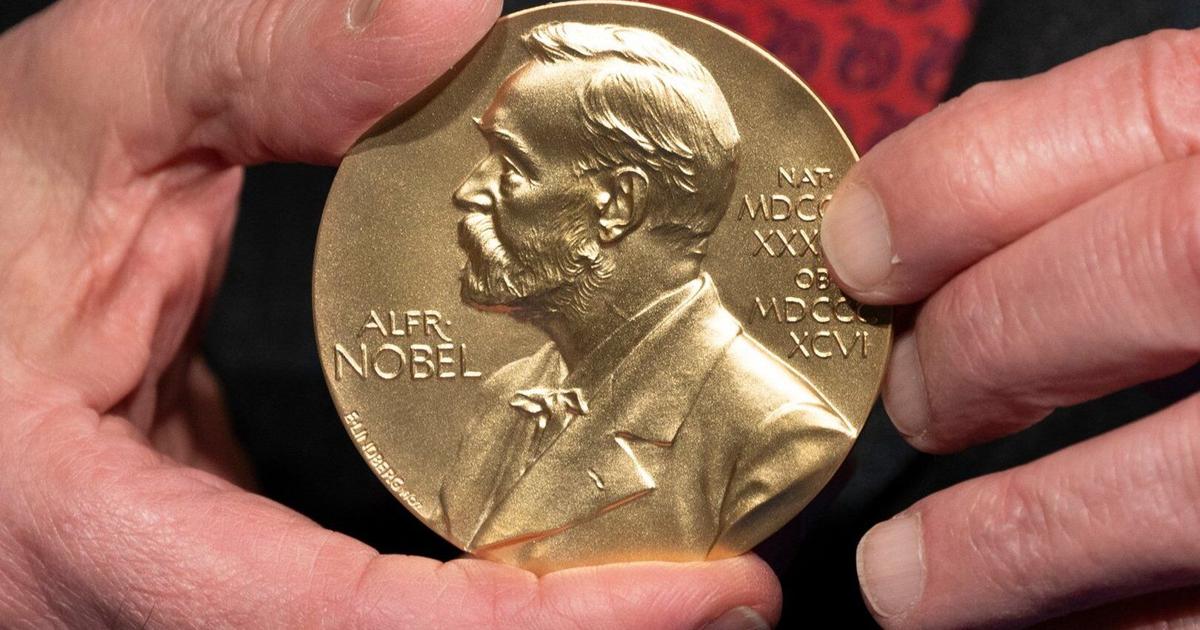
The Nobel prize in physiology or medicine 2026 has been awarded to three scientists for their work on investigating the mysteries of the brain.
What each outlet says
One AI summary per outlet of its latest article on this story, written from that article alone and checked against it. Open the article for the outlet's own words.
Karl Deisseroth from the United States and Germans Peter Hegemann and Georg Nagel were awarded the 2026 Nobel Prize in Physiology or Medicine for their work on light-gated ion channels and optogenetics. Their discoveries have enabled researchers to control individual nerve cells in living brains using light, a method now widely used globally to study brain functions. The trio will share a prize sum of 12 million…
German, US scientists win Nobel prize for work that has helped understand how the brain works →2 articles from Dawn on this storyOn October 5th, the Nobel Prize in Physiology or Medicine was awarded to both an American and a German researcher for their contributions to medical science. The article does not provide further details about the specific research or the names of the recipients.
10/5: CBS Evening News →2 articles from CBS News on this storyThe article discusses potential recipients of the Nobel Prize in Physiology or Medicine for their work on hormones and appetite regulation, which has led to developments like weight-loss drugs such as Ozempic and Mounjaro. Notable researchers being considered include Daniel Drucker, Jens Juul Holst, and Svetlana Mojsov. The prize announcement is scheduled for October 5, with other potential areas of focus including…
Research into weight-loss drugs tipped for Nobel as award week opens →This year's Nobel Prize week begins in Stockholm with the awarding of the medicine prize at the Karolinska Institute on Monday. The prize money for each category is 12 million Swedish kronor, equivalent to about $1.2 million. Following the medicine prize, other categories including physics, chemistry, literature, and peace will be announced throughout the week, with the Nobel Memorial Prize in Economic Sciences…
The Nobel Prize week is kicking off in Stockholm with the medicine award →The Nobel prize in physiology or medicine for 2026 was awarded to Karl Deisseroth, Peter Hegemann, and Georg Nagel for their groundbreaking work on light-gated ion channels and optogenetics. The scientists will share a prize of approximately £901,500, which was announced by the Nobel assembly at the Karolinska Institute in Stockholm on Monday. This is the 117th time the prize has been awarded, with only 14 women…
Nobel prize in medicine 2026 awarded for research into mysteries of brain →Karl Deisseroth, Peter Hegemann, and Georg Nagel were awarded this year's Nobel Prize in Physiology or Medicine for their development of optogenetics, a technique that uses light to control nerve cells in living tissue. Their work has enabled scientists to better understand neural circuits involved in memories, feelings, and behaviors related to neurological and psychiatric disorders. Clinically, optogenetics is…
Nobel Prize awarded for showing how nerve cells shape feelings →Show 7 more outlets
The Nobel Prize in medicine was awarded to Karl Deisseroth, Peter Hegemann, and Georg Nagel for their work on optogenetics and light-gated ion channels, which helps explain how the brain activates nerve cells. The scientists are affiliated with universities in Germany and the United States; specifically, Deisseroth is at Stanford University, while Hegemann is at Humboldt University in Berlin and Nagel at the…
Nobel medicine prize goes to 3 scientists for research into brain activity →Three scientists received the Nobel Prize in Medicine for their research on how the brain controls the activity of individual nerve cells. The awardees include two German researchers and one from the United States. This recognition marks the beginning of Nobel Week, with upcoming awards including physics, chemistry, literature, peace, and economics prizes.
Nobel medicine prize awarded to scientists for brain activity research →The Nobel Prize in medicine was awarded to Karl Deisseroth, Peter Hegemann, and Georg Nagel for their work on optogenetics, a technique that uses light to control the activity of nerve cells in the brain. The researchers, based at universities in Germany and the United States, discovered how to use specific proteins to make neurons sensitive to light, enabling precise study of neural circuits. Their groundbreaking…
Nobel medicine prize goes to 3 scientists for research into brain activity →Three scientists—Karl Deisseroth from Stanford University, and Peter Hegemann and Georg Nagel from Germany—have been awarded this year's Nobel Prize in Physiology or Medicine for their work developing optogenetics, a technique that uses light to control brain cells. Their research originated with the study of algae proteins sensitive to light, leading to methods where channelrhodopsin genes are inserted into…
Nobel prize awarded to researchers who learned how to light up the brain →Three researchers, Karl Deisseroth, Peter Hegemann, and Georg Nagel, were awarded the 2026 Nobel Prize in Physiology or Medicine for their work on light-gated ion channels and optogenetics, which allows for precise control of individual nerve cells in living brains. The prize is worth 12 million Swedish crowns ($1.2 million) and recognizes discoveries that have advanced understanding of brain functions globally.
Nobel prize in medicine awarded to scientists studying mysteries of the brain →Karl Deisseroth from Stanford University and Germans Peter Hegemann and Georg Nagel won the 2026 Nobel Prize in Physiology or Medicine for their work on optogenetics. The trio were recognized "for their discovery of a molecular switch for nerve cells" that allows researchers to control neural activity using light, advancing understanding of brain functions related to learning, fear, addiction, and movement. Each…
Nobel medicine prize honours US and German scientists for optogenetics work →On October 5, 2026, Karl Deisseroth from Stanford University in the USA, Peter Hegemann from Humboldt University of Berlin, and Georg Nagel from the University of Würzburg were awarded the Nobel Prize in Physiology or Medicine for their pioneering work on optogenetics. The prize honors their contributions to developing light-gated ion channels that enable precise control of cellular activity using light, with…
Three Researchers Awarded 2026 Nobel Prize in Physiology or Medicine for Their Pioneering Contributions to Optogenetics →Analysis
Agreed
AI · cited, from two or more outlets
- Karl Deisseroth, Peter Hegemann, and Georg Nagel were the recipients of the prize for their work on optogenetics.42
Quoted from the coverage (1)
“This method is now being used in laboratories around the world to reveal the brain’s mysteries,” Perlmann said.
Disputed
Picked by our model, which is sometimes wrong
No disagreement the check could confirm. That does not prove there is none.
How it changed
- 5 Oct
Optogenetics opened what the Nobel assembly called a new era in neuroscience, the discovery of a light-controlled switch to turn on and off nerve cells and circuits in the brain to better learn how it works — to start unraveling the pathways that lead to behavior and disease.
Coverage 15 articles
Suggested from 9 outlets: the fullest account of the event, no political position was found in its wording and its publisher is declared as reporting rather than commentary.
 6 Oct 10/5: CBS Evening NewsOn October 5th, the Nobel Prize in Physiology or Medicine was awarded to both an American and a German researcher for their contributions to medical science. The article does not provide further details about the specific research or the names of the recipients.CBS News
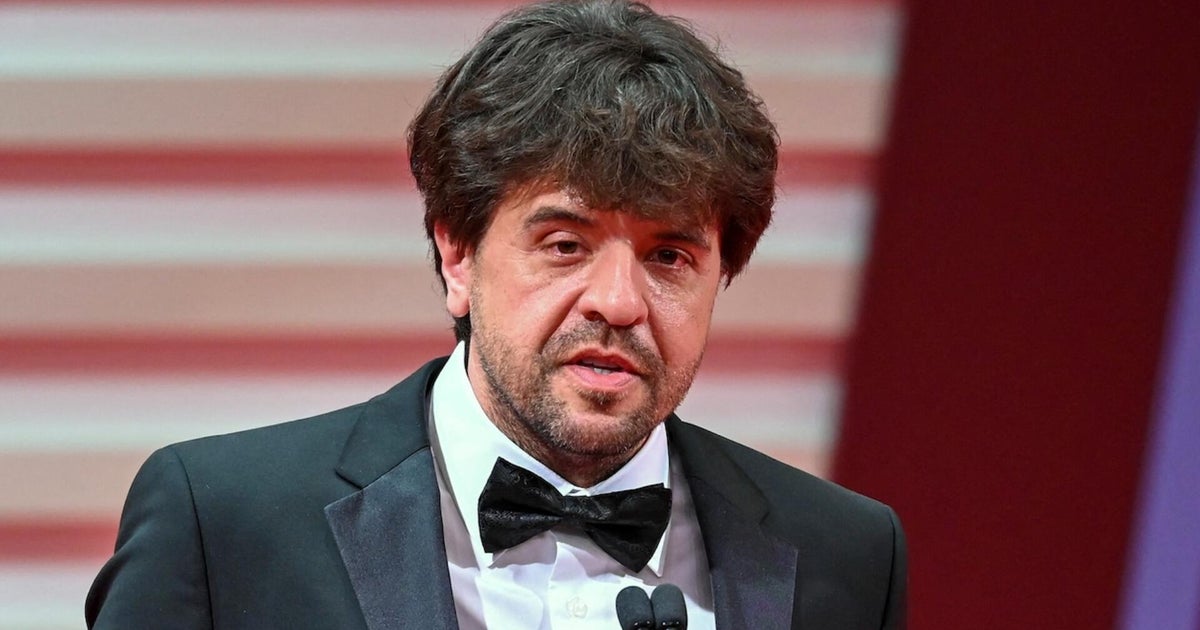 6 Oct U.S. and German scientists win Nobel Price in medicine for discoveries on optogenetics
CBS News- 5 Oct Three Researchers Awarded 2026 Nobel Prize in Physiology or Medicine for Their Pioneering Contributions to OptogeneticsOn October 5, 2026, Karl Deisseroth from Stanford University in the USA, Peter Hegemann from Humboldt University of Berlin, and Georg Nagel from the University of Würzburg were awarded the Nobel Prize in Physiology or Medicine for their pioneering work on optogenetics. The prize honors their contributions to developing light-gated ion channels that enable precise control of cellular activity using light, with…Toronto Star
 5 Oct Nobel medicine prize honours US and German scientists for optogenetics workKarl Deisseroth from Stanford University and Germans Peter Hegemann and Georg Nagel won the 2026 Nobel Prize in Physiology or Medicine for their work on optogenetics. The trio were recognized "for their discovery of a molecular switch for nerve cells" that allows researchers to control neural activity using light, advancing understanding of brain functions related to learning, fear, addiction, and movement. Each…Al Jazeera
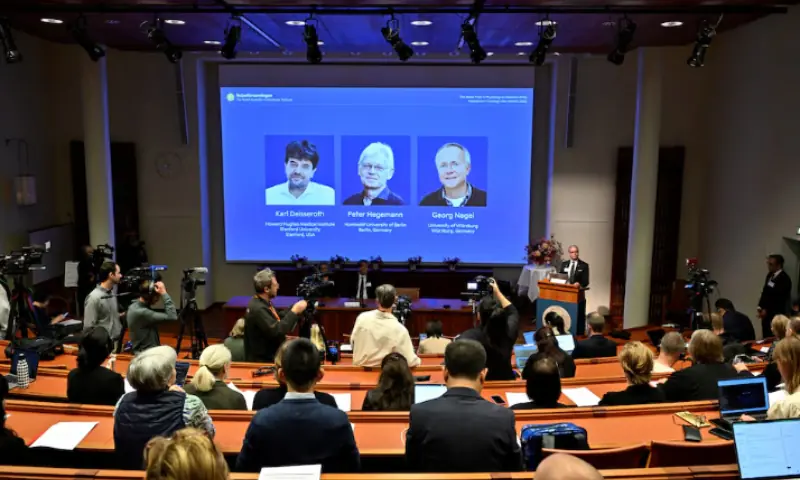 5 Oct German, US scientists win Nobel prize for work that has helped understand how the brain worksKarl Deisseroth from the United States and Germans Peter Hegemann and Georg Nagel were awarded the 2026 Nobel Prize in Physiology or Medicine for their work on light-gated ion channels and optogenetics. Their discoveries have enabled researchers to control individual nerve cells in living brains using light, a method now widely used globally to study brain functions. The trio will share a prize sum of 12 million…Dawn
- 5 Oct German and US scientists win Nobel medicine prize for work that has helped understand how the brain worksKarl Deisseroth from the United States and Germans Peter Hegemann and Georg Nagel were awarded the 2026 Nobel Prize in Physiology or Medicine for their pioneering work on light-gated ion channels and optogenetics, which allows scientists to control individual nerve cells with light. The trio’s research has enabled significant advancements in understanding brain functions and is being applied clinically to treat…Dawn
 5 Oct Nobel prize in medicine awarded to scientists studying mysteries of the brainThree researchers, Karl Deisseroth, Peter Hegemann, and Georg Nagel, were awarded the 2026 Nobel Prize in Physiology or Medicine for their work on light-gated ion channels and optogenetics, which allows for precise control of individual nerve cells in living brains. The prize is worth 12 million Swedish crowns ($1.2 million) and recognizes discoveries that have advanced understanding of brain functions globally.The Independent
 5 Oct Nobel prize awarded to researchers who learned how to light up the brainThree scientists—Karl Deisseroth from Stanford University, and Peter Hegemann and Georg Nagel from Germany—have been awarded this year's Nobel Prize in Physiology or Medicine for their work developing optogenetics, a technique that uses light to control brain cells. Their research originated with the study of algae proteins sensitive to light, leading to methods where channelrhodopsin genes are inserted into…The Globe and Mail
 5 Oct Nobel medicine prize goes to 3 scientists for research into brain activityThe Nobel Prize in medicine was awarded to Karl Deisseroth, Peter Hegemann, and Georg Nagel for their work on optogenetics, a technique that uses light to control the activity of nerve cells in the brain. The researchers, based at universities in Germany and the United States, discovered how to use specific proteins to make neurons sensitive to light, enabling precise study of neural circuits. Their groundbreaking…New York Post
5 Oct Nobel medicine prize awarded to scientists for brain activity researchThree scientists received the Nobel Prize in Medicine for their research on how the brain controls the activity of individual nerve cells. The awardees include two German researchers and one from the United States. This recognition marks the beginning of Nobel Week, with upcoming awards including physics, chemistry, literature, peace, and economics prizes.ABC News (AU)
Show all 15 articles
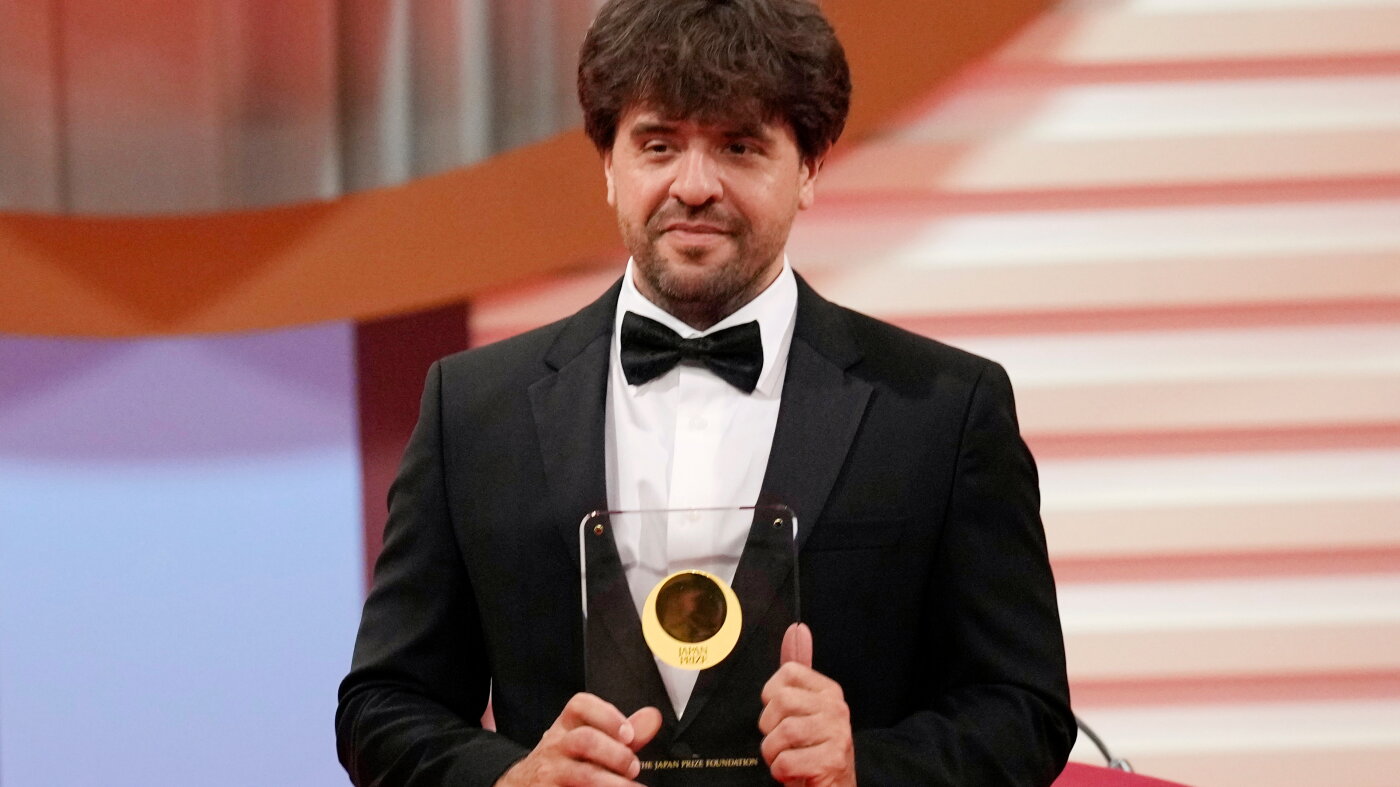 5 Oct Nobel medicine prize goes to 3 scientists for research into brain activityThe Nobel Prize in medicine was awarded to Karl Deisseroth, Peter Hegemann, and Georg Nagel for their work on optogenetics and light-gated ion channels, which helps explain how the brain activates nerve cells. The scientists are affiliated with universities in Germany and the United States; specifically, Deisseroth is at Stanford University, while Hegemann is at Humboldt University in Berlin and Nagel at the…NPR
 5 Oct Nobel Prize awarded for showing how nerve cells shape feelingsKarl Deisseroth, Peter Hegemann, and Georg Nagel were awarded this year's Nobel Prize in Physiology or Medicine for their development of optogenetics, a technique that uses light to control nerve cells in living tissue. Their work has enabled scientists to better understand neural circuits involved in memories, feelings, and behaviors related to neurological and psychiatric disorders. Clinically, optogenetics is…BBC
 5 Oct Nobel prize in medicine 2026 awarded for research into mysteries of brainThe Nobel prize in physiology or medicine for 2026 was awarded to Karl Deisseroth, Peter Hegemann, and Georg Nagel for their groundbreaking work on light-gated ion channels and optogenetics. The scientists will share a prize of approximately £901,500, which was announced by the Nobel assembly at the Karolinska Institute in Stockholm on Monday. This is the 117th time the prize has been awarded, with only 14 women…The Guardian
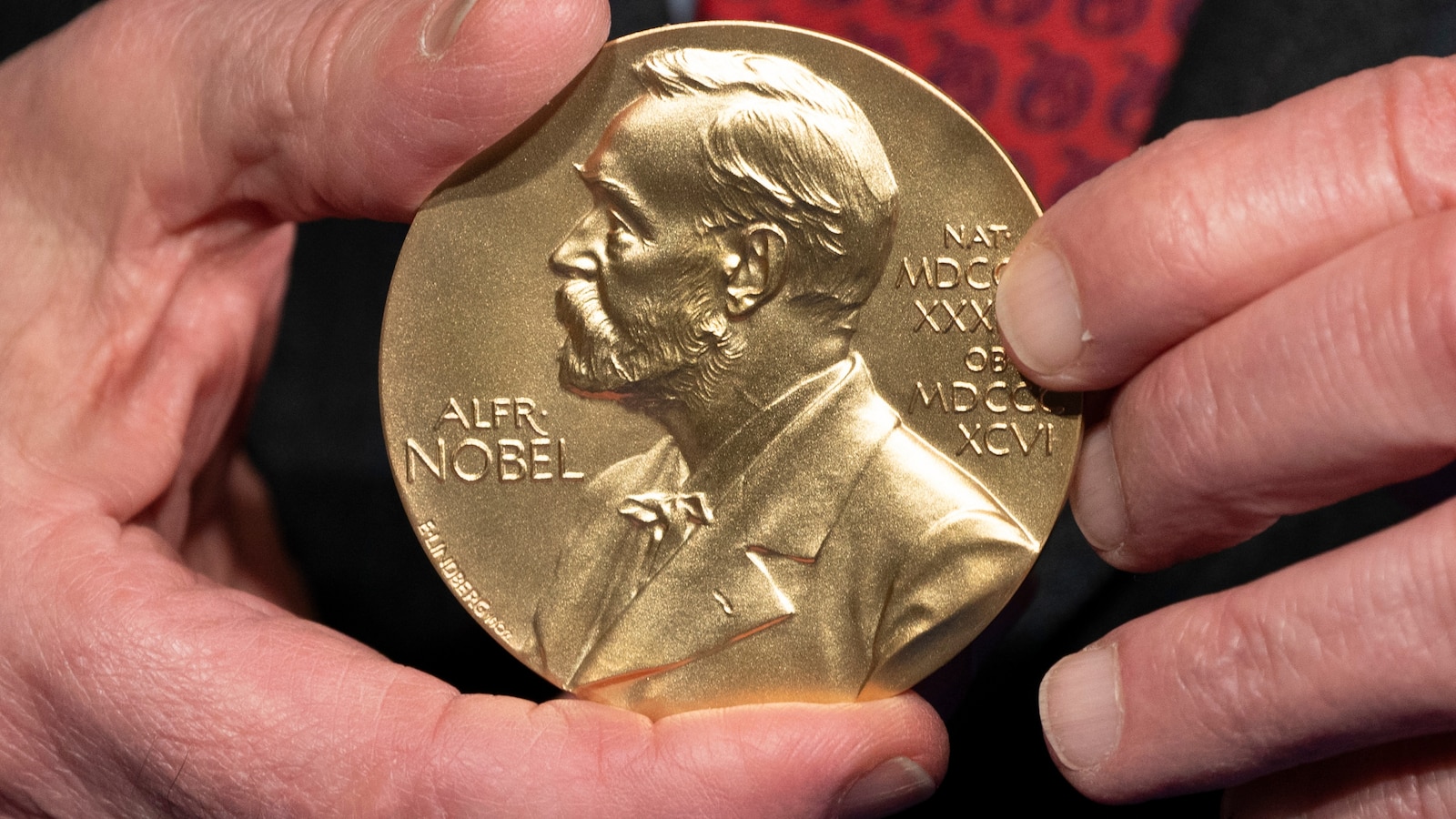 5 Oct The Nobel Prize week is kicking off in Stockholm with the medicine awardThis year's Nobel Prize week begins in Stockholm with the awarding of the medicine prize at the Karolinska Institute on Monday. The prize money for each category is 12 million Swedish kronor, equivalent to about $1.2 million. Following the medicine prize, other categories including physics, chemistry, literature, and peace will be announced throughout the week, with the Nobel Memorial Prize in Economic Sciences…ABC News (US)
5 Oct Research into weight-loss drugs tipped for Nobel as award week opensThe article discusses potential recipients of the Nobel Prize in Physiology or Medicine for their work on hormones and appetite regulation, which has led to developments like weight-loss drugs such as Ozempic and Mounjaro. Notable researchers being considered include Daniel Drucker, Jens Juul Holst, and Svetlana Mojsov. The prize announcement is scheduled for October 5, with other potential areas of focus including…The Straits Times
Keep exploring
 Similar coverageSpace Station Noble Prize Nomination
 RecentMilwaukee Brewers Win First World Series Title
 RecentWNBA Finals Scheduling Issues
 RecentIsraeli Election Results and Controversy
 RecentMary Peltola Decoy Dan Investigation
 RecentBolsonaro Family's Flight from Brazil
 RecentHegseth Fires Top General Over Leaks
 RecentPatrick Stewart Dies at 86
 RecentChina Purges and Promotions Under Xi
 RecentFinnish Norwegians Leaders Talk Putin Ukraine War
Built 2026-10-06 from 15 articles. Every sentence on this page is quoted from the linked article; nothing was written by a model except the Summary and the items marked AI, which cite their sources, and the questions and labels under "Disputed". Photos are from the outlets that covered the story, never from articles our check marks sensitive.