‘Institutional neglect’: 25 years on from 9/11, experts sound alarm over US counter-terror efforts

The Guardian · collected 2026-09-10 · by Jason Burke International security correspondent
Read the original at The Guardian ↗

Summary

Experts warn that 25 years after the 9/11 attacks, US counter-terror efforts are facing growing challenges due to "complacency", budget cuts, and a shift in focus from terrorism to other national security threats. According to Bruce Hoffman, a terrorism expert at Georgetown University, the architecture built after 9/11 is eroding, recreating conditions of under-resourcing that preceded the attacks. Intelligence veterans have criticized the Trump administration's appointments, including Tulsi Gabbard and Kash Patel, for lacking sufficient experience in law enforcement. The US intelligence community is experiencing a "basket of factors" including funding, personnel, and complacency, with some analysts suggesting that al-Qaida may be waiting for the right opportunity to strike again.
Written by the local model on 2026-09-10, using this article's own text rather than the other coverage of the same event (that is the story summary below).

Signals How these are calculated →

Claims extracted
38
claim-shaped sentences
Uncertain
11%
4 of 38 hedged
Leaning
Leans strongly left
of the writing, not the subject
Publisher trust
59.3
red-flag proxy, not a credibility rating
Outlets on this story
61
World
Narrative spread
1
articles carrying this framing
Analyzed 2026-09-10 · how these are computed

AI analysis (generated at analysis time, not now)

Story summary

Twenty-five years after the September 11 attacks, people around the world are reflecting on how their lives were changed by that day.

Colin McShane, whose father was a firefighter who died in the line of duty, remembers watching TV with his family as a child and trying to understand what was happening. He now wants to join the FDNY, following in his father's footsteps.

Meanwhile, Sue Riccardelli and her wife, Maureen Murray, are flying a flag outside their New Jersey home that honors the people of central Newfoundland who cared for them and over 6,500 other passengers after their planes were grounded in Gander, N.L. They plan to bring the flag to performances of "Come From Away," a musical about the stranded passengers and their hosts.

Many Americans are also still dealing with the physical and emotional toll of that day, including thousands of first responders who have died or become ill from working at ground zero. Mia Farina, a former police officer, was diagnosed with chronic lung disease related to her work in 2014.

In addition, anti-Muslim sentiment and Islamophobia persist 25 years after the attacks, with some politicians and pundits using stereotypes and misinformation to demonize Muslims and other minority groups. This has led to increased hate crimes and erosion of civil liberties.

As the country marks the anniversary of 9/11, many are reflecting on how their lives have changed since that day and how they can come together to support each other in the face of adversity.

Written for “Impact of the 9/11 Attacks” on 2026-09-10, grounded in this article and the 60 other(s) covering the same event.
Why this leaning score
The article's own words the score was based on. Each is quoted verbatim and was checked against the article text before being stored, so you can find it in the original.
Score -0.65 Confidence high 1 quote(s) discarded as not found in the article
Leaning score -0.65 for article 7641 (high confidence, 4 verified quotes) · logged 2026-09-10

Story

📰 Impact of the 9/11 Attacks
World · 61 article(s) covering the same event. This is the one the site leads with.

How this is being covered How these are calculated →

Article leaning vs. publisher reliability
Source leaning vs. consistency

Compared with similar articles

This article reads leans strongly left and hedges 11% of its claims. Each row says how that neighbour differs.
ABC News (AU)
⚖️ Leans left further right than this 🔴 5% hedged 8 of 171 📰 publisher trust 60
“Both articles describe the exact same terrorist attack on September 11, 2001, in New York and Washington”
Zeteo
⚖️ Leans left further right than this 🔴 0% hedged 0 of 7
“Both articles mention the 9/11 attacks on September 11, 2001 in New York and Washington as a single incident that killed approximately 3,000 people”
The Straits Times
⚖️ Leans right further right than this 🔴 11% hedged 3 of 27 📰 publisher trust 94
“Both articles are clearly reporting on the 25th anniversary of the September 11, 2001 attacks”
Toronto Star
⚖️ Leans left further right than this 🔴 4% hedged 2 of 53 📰 publisher trust 62
“Both articles describe the same incident of the 9/11 attacks on New York and Washington”
ProPublica
⚖️ Leans left further right than this 🔴 9% hedged 11 of 121 📰 publisher trust 95
“Both articles refer to the same incident: the 9/11 attacks that occurred 25 years prior”
Zeteo
⚖️ Leans strongly left 🔴 0% hedged 0 of 14
“Both articles describe the September 11, 2001 attacks as the starting point for their analysis”
The Dispatch
⚖️ Leans left further right than this 🔴 0% hedged 0 of 3 📰 publisher trust 96
“Both articles describe the September 11, 2001 terrorist attacks as a pivotal event that led to the creation of new US agencies and had significant consequences for international relations.”
Semafor
⚖️ Leans left further right than this 🔴 20% hedged 1 of 5 📰 publisher trust 96
“Article A mentions a general lack of confidence in the government's ability to foil terror attacks, while Article B specifically references the 9/11 attacks as a historical event, indicating they are discussing related but different topics”
NPR
⚖️ Leans strongly left 🔴 6% hedged 3 of 51 📰 publisher trust 59
“Although both articles mention 9/11, they are focused on different aspects: Article A discusses how the intelligence community adapted after 9/11, while Article B reflects on the ongoing challenges in countering international terrorism 25 years later”
The Guardian
⚖️ Leans strongly left 🔴 9% hedged 6 of 68 📰 publisher trust 59
“Article A mentions Pete Hegseth's leadership as the main issue, while Article B refers to the 9/11 attacks as a historical event that has led to current counter-terror efforts”

Publisher

The Guardian · 191 article(s) · 1 correction(s) detected
Running correction rate · 1 correction(s)
2026-09-07
Former Louisiana mayor completes 90-day jail term for raping 16-year-old boy

Who wrote this

Jason Burke International security correspondent
1 article(s) here · 1 carrying a prediction
🔮 Bruce Hoffman, a terrorism expert at Georgetown University, said: “I remember [9/11] and this pure chaos and pandemonium in the streets and I remember thinking that we would never lower our guard again and complacency against a threat that is episodic but when it is revealed highly consequential.”
The only article under this byline in the corpus.

Topics

Georgetown University Islamist New York Washington al-Qaida

Subjects

al-Qaida ORG · 3× Clarke PERSON · 2× Bruce Hoffman PERSON · 1× Donald Trump PERSON · 1× Georgetown University ORG · 1× Hoffmann PERSON · 1× Islamist NORP · 1× New York GPE · 1× Osama bin Laden’s PERSON · 1× Washington GPE · 1×

Narrative

In 1996 and again in 1998, 10 years after founding al-Qaida, Bin Laden “declared war” on America with statements issued from a base in Afghanistan, listing grievances including US backing for “tyrannical, apostate” regimes in the Middle East such as in his native Saudi Arabia amid a broader diatribe against what he called western aggression against Muslims worldwide.
framing: assertive · carried by 1 article(s) · first seen 2026-09-10
🔮 Bruce Hoffman, a terrorism expert at Georgetown University, said: “I remember [9/11] and this pure chaos and pandemonium in the streets and I remember thinking that we would never lower our guard again and complacency against a threat that is episodic but when it is revealed highly consequential.”

Claims (38 extracted, 4 hedged)

The US faces growing challenges in countering international terrorism as resources are diverted to other threats, experienced security officials leave and “complacency” spreads, experts have warned. asserted
experts → face → threats
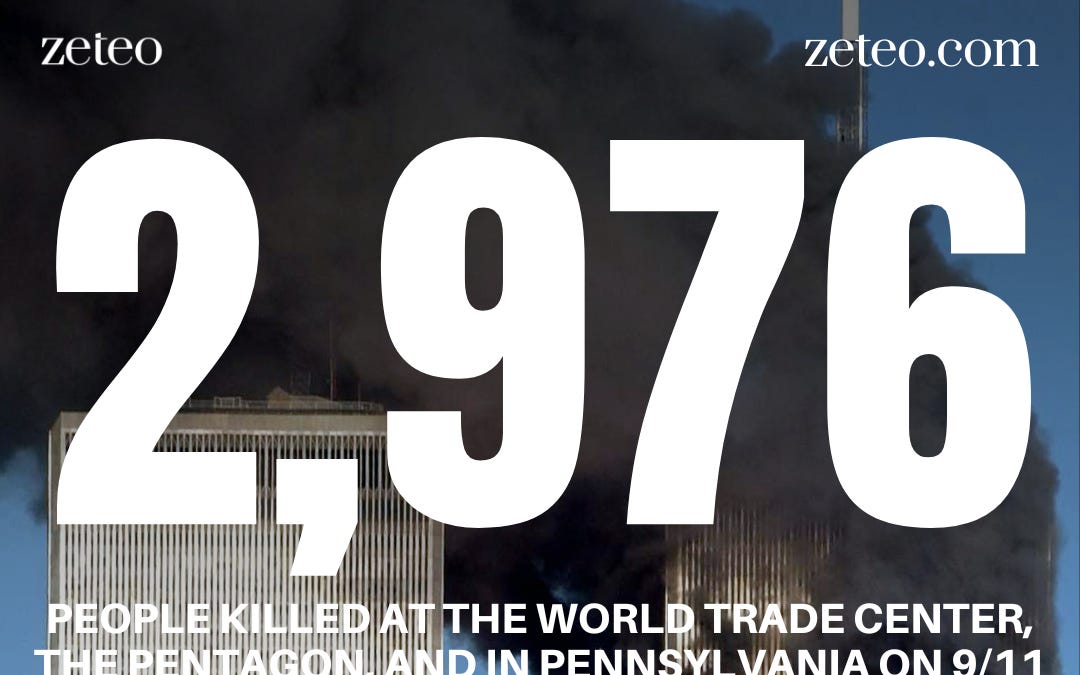
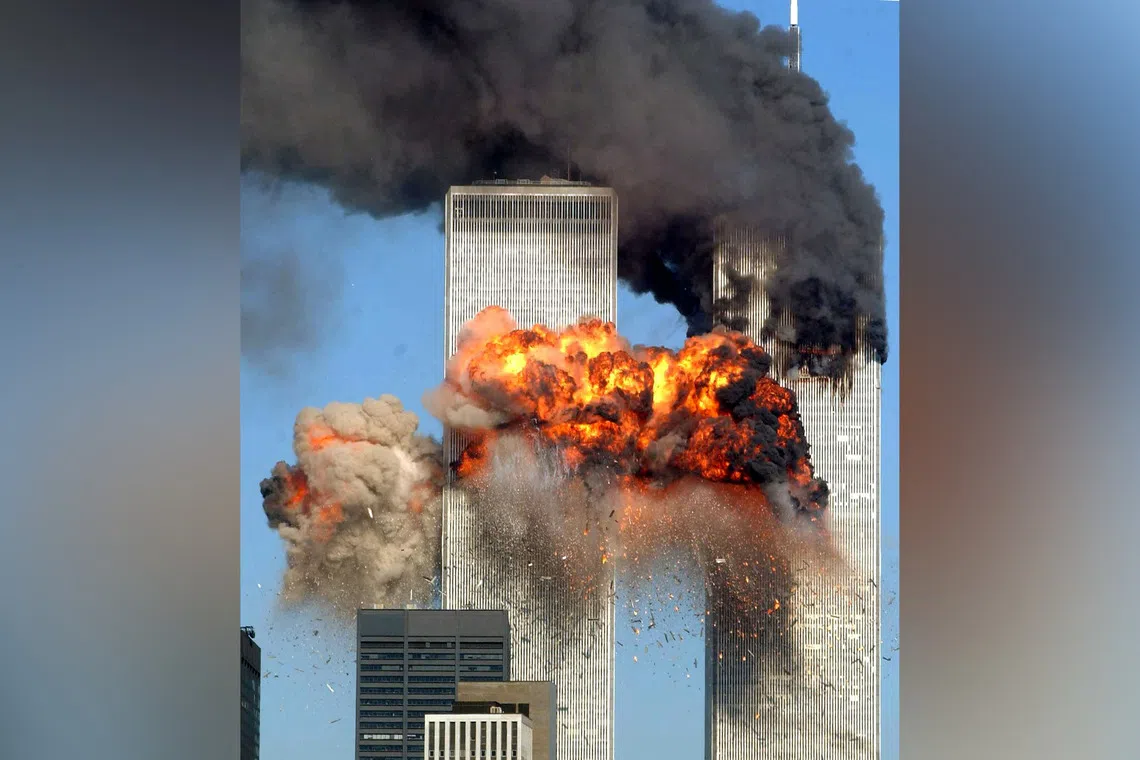
It is 25 years this week since the 9/11 attacks launched by Osama bin Laden’s al-Qaida on New York and Washington, which killed about 3,000 people and led to decades of conflict, radicalisation and instability across the Middle East and beyond. asserted
which → launch → East
Though there have been no successful attacks on anything like a similar scale in the US since, and only a small number inspired by extremist Islamist ideologies, many are warning of growing risks. asserted
many → inspire → risks
Some blame Donald Trump for politicising counter-terrorism efforts, making ill-considered and inappropriate appointments to senior intelligence posts and diverting attention from more urgent threats with a campaign against drug cartels. asserted
Some → blame → cartels
Bruce Hoffman, a terrorism expert at Georgetown University, said: “I remember [9/11] and this pure chaos and pandemonium in the streets and I remember thinking that we would never lower our guard again and complacency against a threat that is episodic but when it is revealed highly consequential.” asserted
it → say → threat
This year, Hoffmann told the US House permanent select committee on intelligence that “the counter-terrorism architecture built after 9/11 is eroding … through budget cuts, personnel losses, and the diminution of terrorism as a national security priority”. asserted
architecture → tell → priority
This was “recreating the conditions of under-resourcing and institutional neglect that preceded the 2001 attacks. asserted
that → recreate → attacks
Moreover, the terrorist threat to Americans has both changed and grown.” Analysts are split over whether the lack of obvious recent efforts by al-Qaida to strike in the US suggests a lack of ambition or disguises a careful, strategic plan to wait for the right opportunity. uncertain
lack → change → opportunity
Last month, a UN report based on intelligence supplied by member states’ monitoring said the “al-Qaida senior leadership remained marginalized” while “its capability and intent to conduct external operations remained unclear”. uncertain
capability → base → operations
Colin Clarke, the executive director of the Soufan Center, said the US intelligence community was experiencing a “basket of factors” including “funding, personnel [and] complacency”. asserted
community → say → funding
We did the global war on terror for 20 years and people were keen to pivot to something else,” he said. asserted
he → do → something
Most analysts support a 2018 shift away from terrorism to focus on “long-term, strategic competition by … revisionist powers” such as Russia and China. asserted
analysts → support → Russia
But choices made by the Trump administration have exacerbated existing problems. asserted
choices → make → problems
“There is a real lack of morale because of the way the president has treated the intelligence community … the quiet professionals are really demoralised,” Clarke said. asserted
Clarke → be → community
Intelligence veterans criticised the appointments of Tulsi Gabbard as director of national intelligence and Kash Patel as director of the FBI, accusing both of lacking sufficient top-level experience in law enforcement. asserted
veterans → criticise → enforcement
For the 2026 financial year, funding requested for the principal agencies of the civilian intelligence community totalled $81bn. asserted
funding → request → 81bn
But the designation of criminal groups such as the Mexican drug cartels as foreign terrorist organisations has stretched resources. asserted
designation → stretch → resources
An updated counter-terrorism strategy released in May by the Trump administration has been controversial. uncertain
strategy → update → administration
Many intelligence experts and analysts have highlighted how the strategy downplays the rising threat from rightwing extremism in the US and stresses instead the battle against leftwing violence, cartels and gangs. asserted
strategy → highlight → violence
“It is a very partial document [and] raises the question: are you protecting America or people who agree with you?” said Clarke. asserted
Clarke → raise → you
“We have finite resources now. asserted
We → have → resources
You don’t have a blank cheque like after 9/11 and at the same time it’s not just Sunni jihadist groups which are considered the threat.” asserted
which → have → time
Devorah Margolin at the Washington Institute for Near East Policy said that the new strategy was a significant shift. asserted
strategy → say → Policy
“That is not to say that counter-terrorism policies cannot change as the landscape changes, but this year’s strategy appears more focused on a political agenda than the reality of the threat,” Margolin added. asserted
Margolin → say → threat
“While the strategy still acknowledged the threat posed by groups like the Islamic State and al-Qaida, it also expanded definitions of counter-terrorism. asserted
it → acknowledge → terrorism
It sought to use the vast counter-terrorism bureaucracy that has been built over the last two decades for its own political agenda. asserted
that → seek → agenda
This has spread dwindling counter-terrorism resources even thinner.” asserted
This → spread → resources
The loss of experienced personnel is a significant problem, experts say, with many criticising the dismantlement last year of programmes aimed at countering extremist ideologies and preventing radicalisation. asserted
many → say → radicalisation
Don Rassler, the director of strategic initiatives at the Combating Terrorism Center at West Point, said that terrorism became less of a priority as strategic focus shifted to real or potential threats from China and Russia, and warned the US needed to be careful the intelligence community did not “revert back to the dynamics that led to an event like 9/11”. asserted
that → say → 9/11
The 2001 attacks were the culmination of a series of attacks launched by Bin Laden on US targets. asserted
attacks → launch → targets
In 1996 and again in 1998, 10 years after founding al-Qaida, Bin Laden “declared war” on America with statements issued from a base in Afghanistan, listing grievances including US backing for “tyrannical, apostate” regimes in the Middle East such as in his native Saudi Arabia amid a broader diatribe against what he called western aggression against Muslims worldwide. asserted
he → found → Muslims
Shortly afterwards, double bombings demolished two US embassies in east Africa and a suicide attack nearly sank a US warship off Yemen in 2000. asserted
attack → demolish → 2000
The failure of senior officials including George W Bush to act on multiple intelligence warnings was highlighted by the congressional investigation into the 9/11 attacks, as well as the failure of the FBI and the CIA to share with each other vital information that might have prevented the atrocity. uncertain
that → include → atrocity
An al-Qaida effort to blow up a passenger plane as it prepared to land in Detroit in 2009 was averted only at the last minute when explosives failed to detonate as intended. asserted
explosives → blow → minute
An attack a decade later by a single “self-radicalised” Saudi Arabian air force officer in Florida which killed three was linked to the organisation’s affiliate in Yemen. asserted
which → radicalise → Yemen
Rassler said extremist Islamist groups were still a key priority but with fewer resources and fewer people the US had “to accept more terrorist risk”. asserted
US → say → risk
“There hasn’t been another attack … but there is a danger of believing that the [terrorist] threat isn’t there. asserted
threat → be → ?
The threat is different in many ways from 10 years ago and we have to be as clear-eyed as possible about it.” asserted
we → have → it

💬 Give feedback
🕘 History 🎫 Support