After 25 years, the legacy of the September 11 terror attacks continues to shape America's politics and its place in the world.
asserted
legacy → continue → world
A quarter-century on, what lingers in the mind from that world-upending day?
asserted
what → linger → day
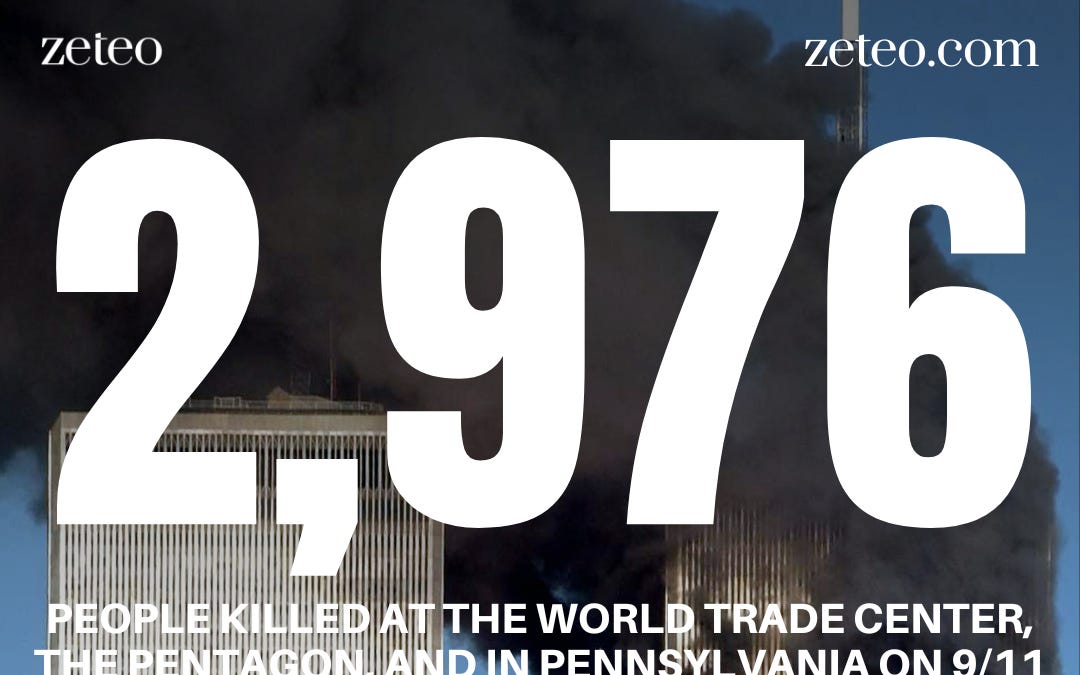
Or 9/11, as it quickly came to be labelled, a term previously known as the primary emergency number in North America but now forever associated with an Islamist terrorist attack that killed 2,977 people from more than 100 countries, not including the 19 hijackers.
asserted
that → come → hijackers
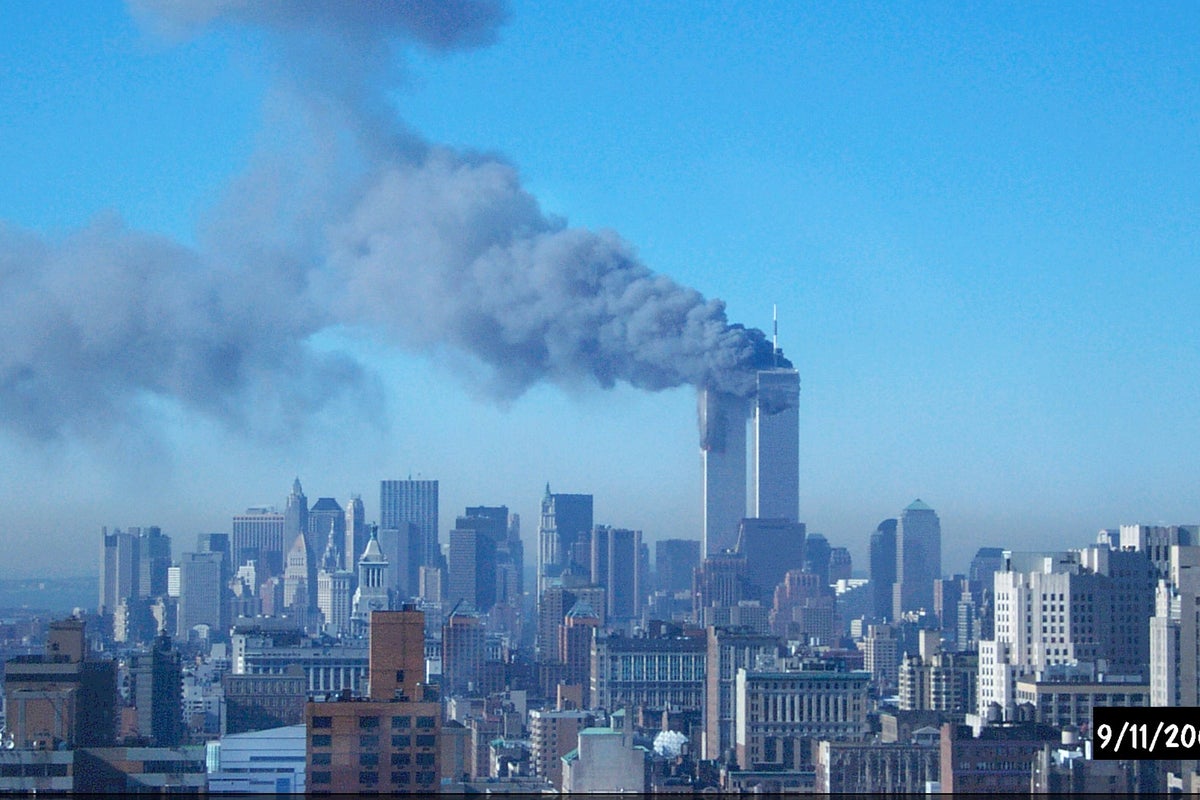
Perhaps, initially, it was sheer confusion, as news channels interrupted regular programming to switch to images from Lower Manhattan.
asserted
channels → interrupt → Manhattan
A billowing plume of charcoal grey smoke darkened what had been on that autumn morning almost cloudless blue skies.
asserted
what → billow → skies
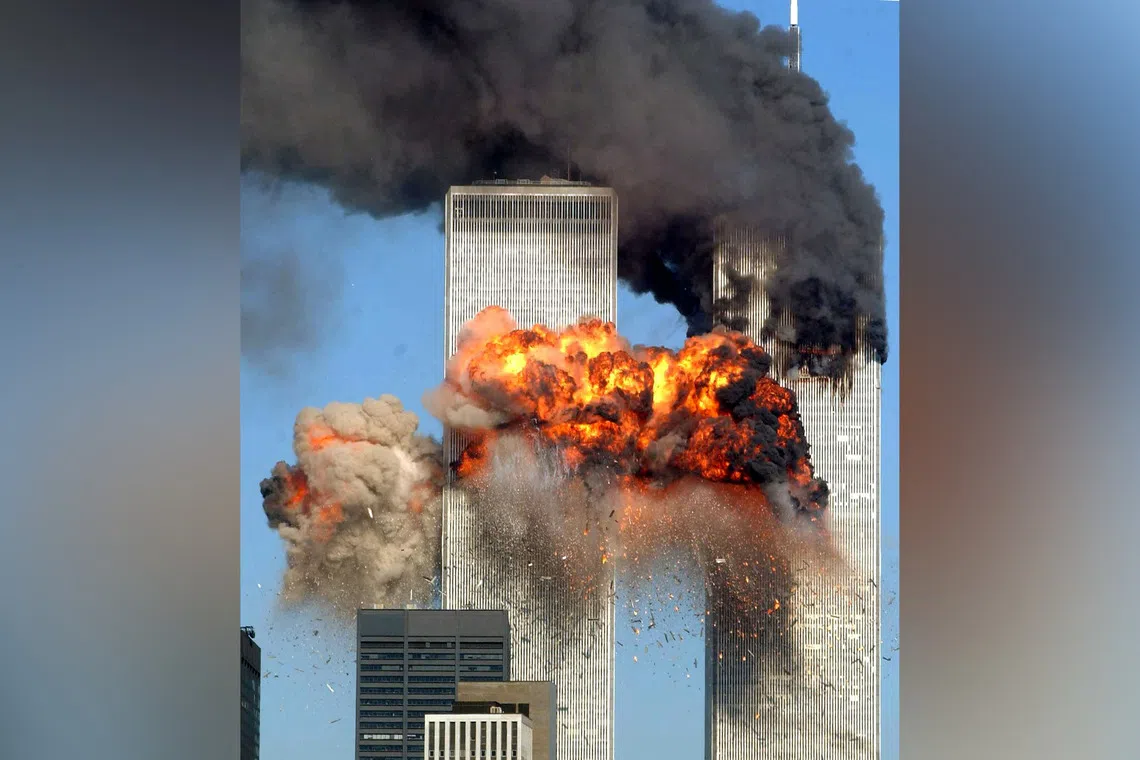
Maybe it was the shock of seeing the second plane spearing into the South Tower, when it instantly became clear that terrorism, not pilot or mechanical error, was to blame.
asserted
terrorism → see → Tower
Some will recall President George W Bush reading a book, The Pet Goat, to a group of schoolchildren in Sarasota, Florida, and the sight of his ashen-faced White House Chief of Staff, Andrew Card, whispering in his ear.
asserted
Chief → recall → ear
"A second plane hit the second tower," said Card.
asserted
Card → hit → tower
Not just America, but our world had changed with manic suddenness.
asserted
America → change → suddenness
The first plane hit the north face of the North Tower at 8:46am.
asserted
plane → hit → 8:46am
The second plane crashed into the south face of the South Tower at 9:03am.
asserted
plane → crash → 9:03am
American Airlines Flight 77 slammed into the Pentagon, like New York's Twin Towers, a symbol of US hegemony.
asserted
Flight → slam → hegemony
Shortly after 10am, a plane crashed in a field in Shanksville, Pennsylvania.
asserted
plane → crash → Shanksville
Passengers aboard United Airlines Flight 93, we found out later, had fought back against the al-Qaeda terrorists who had hijacked the plane with the intention of flying it into a government building in Washington DC, probably the United States Capitol building or the White House.
asserted
who → find → DC
All these years on, it is traumatising to recall the towers collapsing in on themselves, those sturdy, seemingly indomitable skyscrapers disintegrating into columns of plunging ash.
asserted
towers → recall → ash
By 10:30am, the World Trade Center had ceased to exist.
asserted
Center → cease → 10:30am
So, too, the complacency of the post-Cold War world when America seemed so unassailable.
asserted
America → seem → world
From a day of such momentous history, it is the smaller, personal details that evoke powerful memories.
asserted
that → evoke → memories
The recordings of workers trapped inside the burning towers telephoning loved ones, knowing they were uttering final farewells.
asserted
they → trap → farewells
Coming at the dawning of a new millennium, September 11 was the first major global event of the globalised age.
asserted
September → come → age
Coming in the early years of our new online world, where the information flow was instantaneous, 9/11 became more of a shared, intimate and immediate experience.
asserted
9/11 → come → experience
How did it change America and the watching world?
asserted
it → change → America
'God Bless America'
asserted
God → bless → America
In the immediate aftermath of the attacks the United States of America was genuinely united.
asserted
States → unite → America
A nation already showing signs of its present-day polarity demonstrated shoulder-to-shoulder solidarity.
asserted
nation → show → solidarity
Only the previous year, a disputed presidential election ultimately decided by a Supreme Court voting along ideological lines, had shown America to be a 50/50 nation.
asserted
America → dispute → lines
After the US television networks decided in 2000 to adopt the same colour scheme for their election night graphics, it became more common to split the country into Republican red and Democratic blue.
asserted
it → decide → red
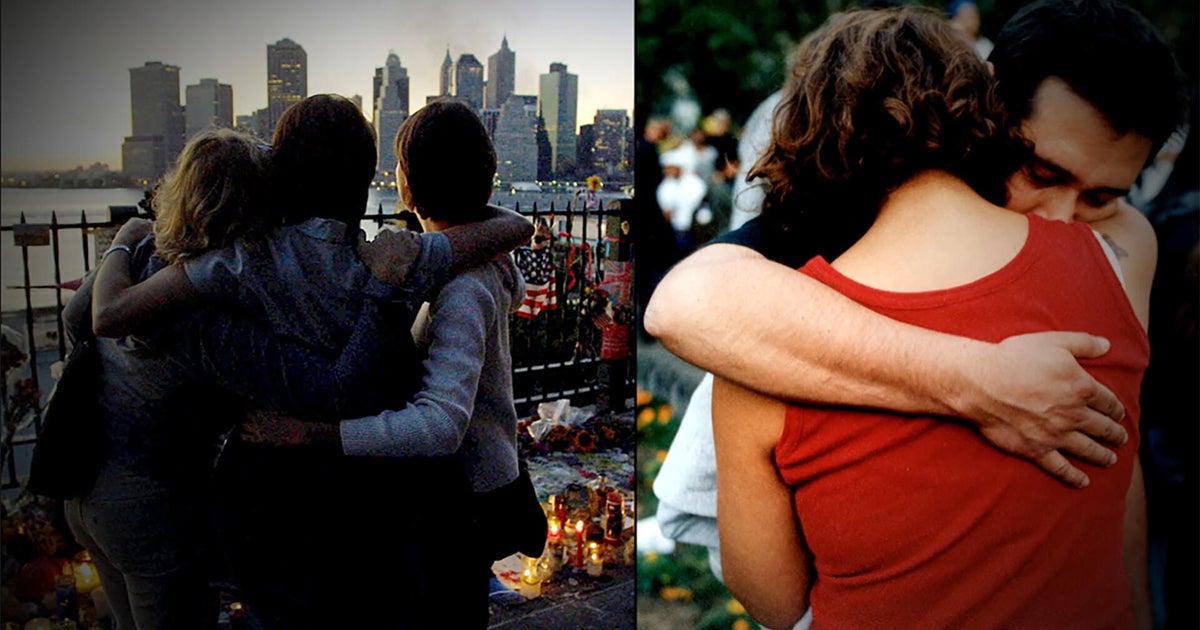
In the hours, days and weeks after 9/11, though, Americans came together at vigils, in long queues that formed outside blood donation centres and in singing of the national anthem ahead of baseball and gridiron matches.
asserted
that → come → matches
That evening, about 150 Republican and Democrat lawmakers gathered on the East Steps of the US Capitol building, where they broke spontaneously into a rendition of "God Bless America".
asserted
God → gather → America
A few weeks later, a poll conducted in early October indicated 79 per cent of Americans had displayed the Stars and Stripes, a burst of red, white and blue patriotism.
asserted
cent → conduct → patriotism
Journalists from many of the US networks affixed flag pins to their lapels.
asserted
Journalists → affix → lapels
As young Washington correspondent at the time of the 9/11 attacks, I saw all of this with my own eyes.
asserted
I → see → eyes
United in war
Since the end of the Cold War, America had lacked a common enemy.
asserted
America → lack → enemy
As the Russian intellectual Georgy Arbatov warned US diplomats as tensions abated between Moscow and Washington: "We are going to do a terrible thing to you.
asserted
We → warn → you
We are going to deprive you of an enemy."
asserted
We → go → enemy
Now, in Osama Bin Laden — the mastermind of 9/11 — and the al-Qaeda terror network he founded, America once again had a shared demon and as a result, a renewed sense of patriotic bipartisanship.
asserted
America → found → bipartisanship
George W Bush, a Republican president who had reached the White House in such contested circumstances, saw his approval ratings soar to 90 per cent.
asserted
ratings → reach → cent
After addressing a joint session of Congress on September 20 — a speech in which he announced the start of a "war on terror" — Bush was hugged by then-Senate Democratic leader, Tom Daschle, a gesture which signalled a partisan ceasefire.
asserted
which → address → ceasefire
Another poll, from the Washington Post and ABC News, found 93 per cent backed military action against those responsible for the 9/11 attacks.
asserted
cent → find → attacks
If that meant going to war then more than nine out of 10 Americans agreed.
asserted
Americans → mean → war
…and 131 more, not listed.
 The Aporia