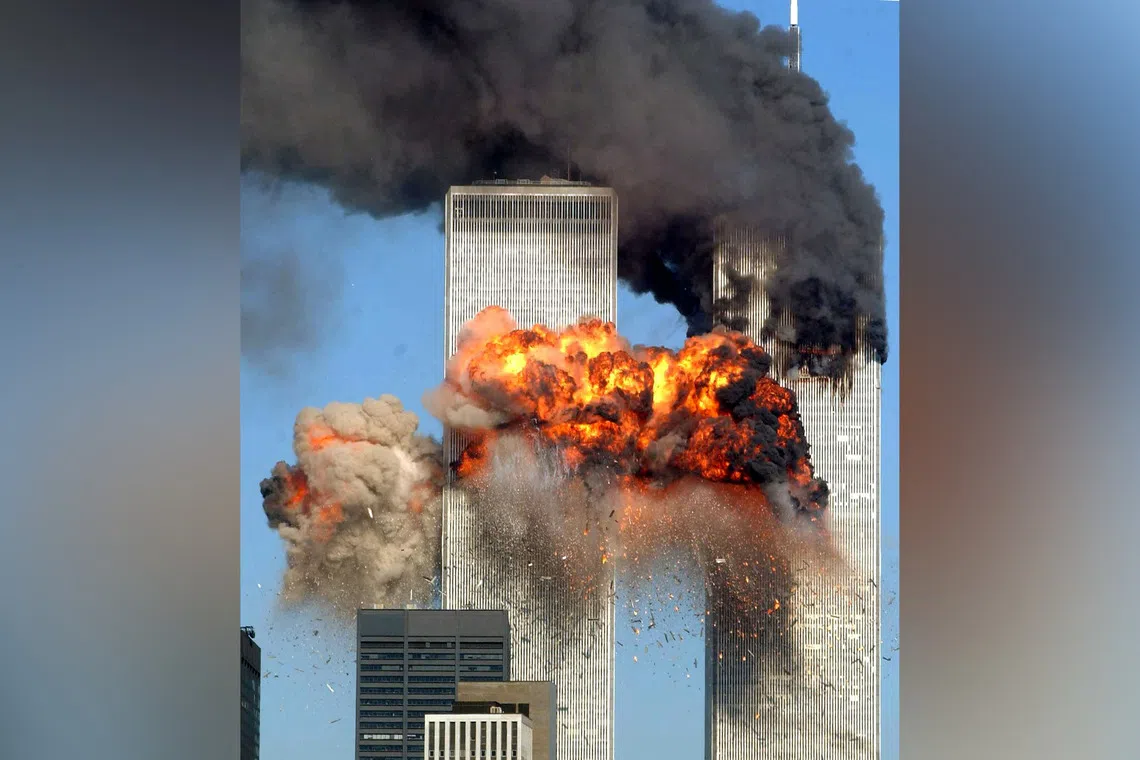
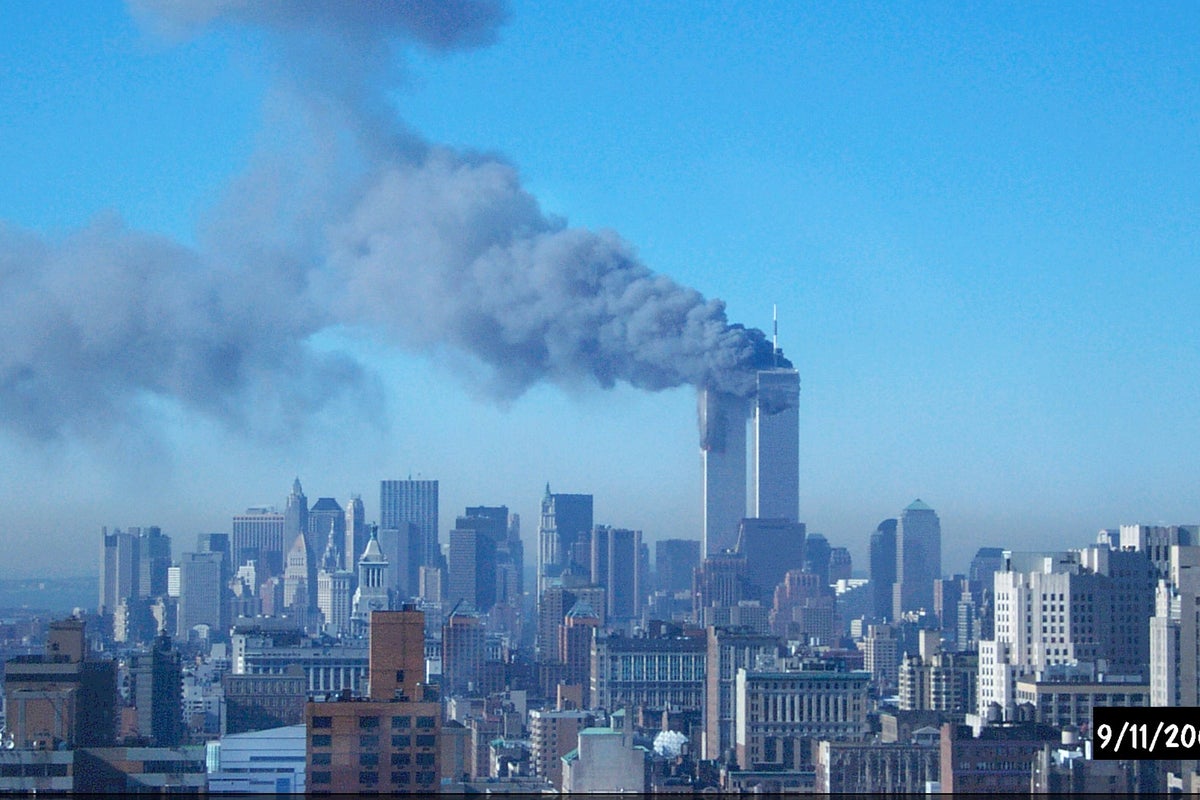
The first duty of a government, countless leaders over the decades have said, is to safeguard its population.
asserted
leaders → say → population
On 11 September 2001 the US manifestly failed to do that.
asserted
US → fail → that
The intelligence was there, yet tragically, nobody joined up the dots in time.
asserted
nobody → join → time
9/11, as the attacks on the US became known, came to define – along with the response – a generation of foreign, security and intelligence policy for the first two decades of this century.
On 11 September 2001, as al-Qaeda's suicide pilots flew those hijacked planes into the World Trade Center, I was just finishing a deployment in our Middle East bureau.
asserted
I → know → bureau
As a Palestinian taxi driver drove me through the pine-clad hills west of Jerusalem to Tel Aviv's Ben Gurion airport he suddenly turned up the car's radio.
asserted
he → drive → radio
"Something big has happened in America," he said.
asserted
he → happen → America
He wasn't exaggerating.
asserted
He → exaggerate → ?
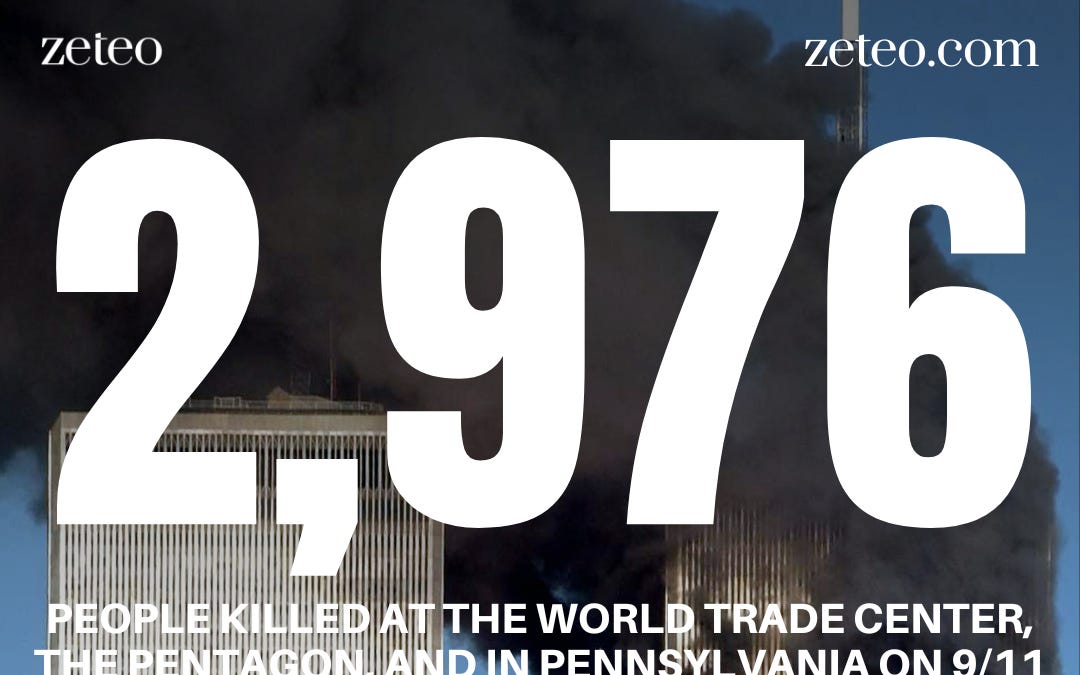
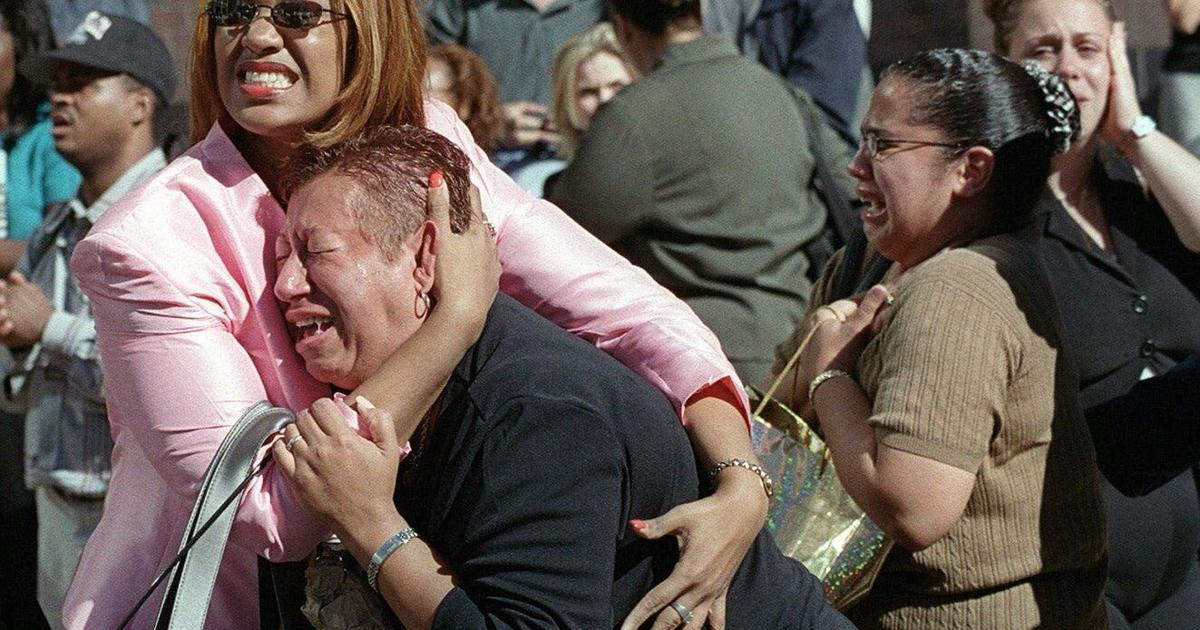
2,977 victims died that day.
asserted
victims → die → ?
The attacks did not come out of nowhere.
asserted
attacks → come → ?
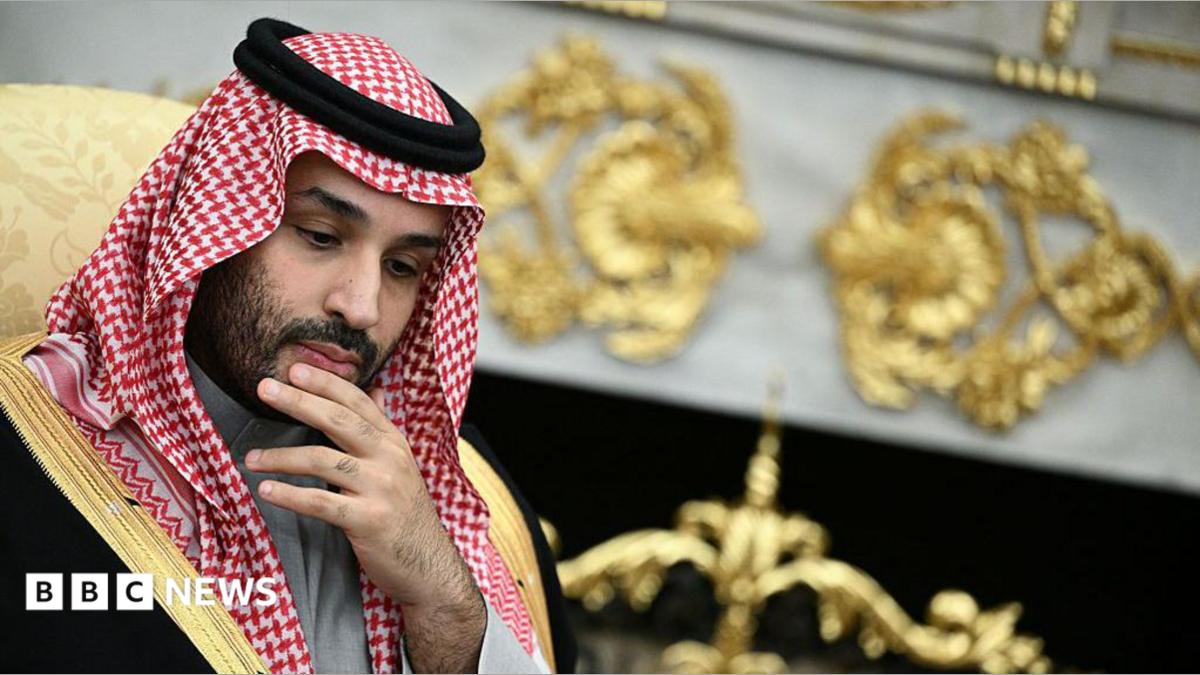
The CIA had been aware of the al-Qaeda network and its exiled Saudi leader, Osama Bin Laden, for years prior to 2001.
asserted
CIA → exile → 2001
It even had a taskforce dedicated to hunting him down.
asserted
It → have → him
Nine days after the 11 September attacks, then US President George W Bush declared the "War on Terror".
asserted
Bush → declare → Terror
The successes include plots that have been foiled, suspects who have been arrested, brought to trial, convicted and jailed.
asserted
who → include → trial
How has intelligence-gathering, counter-terrorism and strategic planning changed in the 25 years since the worst terrorist attack in US history?
asserted
gathering → change → history
A colossal intelligence failure
No one can question that 9/11 was a colossal intelligence failure, or to be more specific, a failure of imagination in the US intelligence community.
asserted
9/11 → question → community
At the time both the CIA and the FBI were in possession of information which, if shared properly, could have prevented what happened.
uncertain
what → share → information
The 9/11 Commission Report that followed blamed "failures of imagination, policy, capabilities and management" on the US government.
asserted
that → follow → government
The CIA and FBI, the report concluded, failed to properly assess intelligence and share information with each other and take sufficient steps to disrupt the plot.
asserted
report → conclude → plot
This most basic of lessons has since been largely – although not completely – learnt, and sharing between Western intelligence agencies is infinitely better than it was in 2001.
asserted
it → learn → 2001
The old rivalries between say, MI5 and Police Counter Terrorism have dissolved, first with regional 'fusion centres' dotted around the UK and now, most recently, with the establishment of the high-security Counter Terrorism Operations Centre in London.
asserted
rivalries → dissolve → London
Here MI5 intelligence officers might find themselves sitting literally right next to police officers whose job it is to take the executive action to stop a terrorist plot.
uncertain
it → find → plot
Equally, they might find themselves sitting next to a US federal agent from the FBI or a language specialist seconded from GCHQ.
uncertain
themselves → find → GCHQ
Since 9/11, there has also been a root-and-branch reorganisation of US intelligence with the establishment of a National Counter Terrorism Center just outside Washington DC and a Director of National Intelligence to ensure that information is shared where it needs to be between the 18 separate US intelligence agencies.
asserted
it → ensure → agencies
The relationship between the CIA and its UK counterpart, the Secret Intelligence Service (better known as MI6) is perhaps the closest one in the world.
asserted
relationship → know → world
This is supplemented by the Five Eyes alliance that pools intelligence between the US, UK, Canada, Australia and New Zealand.
asserted
that → supplement → US
Yet disastrous failures of intelligence, assessment and strategic planning have still occurred since the planes hit the Twin Towers.
asserted
planes → occur → Towers
In the run-up to the US-led invasion of Iraq in 2003, MI6 unwisely allowed its intelligence to be politicised, leading to the organisation suffering its worst reputational setback since the days of betrayal by the double agent Kim Philby and other Soviet moles in the 1950s and 60s.
asserted
organisation → lead → 1950s
Against a backdrop of overwhelming political pressure from Washington to produce evidence that Iraq, under its President Saddam Hussein, still possessed Weapons of Mass Destruction (WMDs), MI6 supplied Prime Minister Tony Blair's government with what turned out to be flawed intelligence.
asserted
what → produce → government
Iraq did indeed have WMDs in the past, but it was all destroyed after the 1991 Gulf War.
asserted
it → have → War
Following the Iraq invasion of 2003, MI6 then underwent a complete revamp of how it assesses the raw intelligence, known as CX, that comes in from agents in the field.
asserted
that → follow → field
Today there is a clear separation between the agent runners - whose job it is to gather that intelligence from sources in places like Iran, North Korea or from inside proscribed terrorist groups such as al-Qaeda - and the reports team, whose job is to check and challenge that intelligence, often sending it back to demand more substantiation.
asserted
job → be → substantiation
"The [2003] Iraq war was based on deeply flawed intelligence," says General Sir Richard Shirreff who served in Iraq as a divisional commander.
asserted
who → base → commander
"Have we learnt from it?
asserted
we → learn → it
No, I think we're bad at learning…
asserted
we → think → ?
It was so obvious as a Commander that we were heading for strategic failure".
asserted
we → head → failure
After the Iraq invasion an inquiry followed once again, culminating in the Butler Review.
asserted
inquiry → follow → Review
This concluded that the UK's intelligence on Iraq's alleged WMD programme "was seriously flawed and heavily reliant on unverified sources".
uncertain
intelligence → conclude → sources
The Security Service, MI5, has also had its own failures, amid numerous undoubted successes, in foiling terrorist plots.
asserted
Service → have → plots
"After 9/11," says Lord Jonathan Evans, who ran MI5 from 2007-2013, "the assessment was that by far the most pressing security threat to the UK was the terrorist threat from al-Qaeda and associated individuals and groups".
asserted
threat → say → al
But with a database back then of more than 20,000 "Subjects of Interest" and a high number of investigations running concurrently, MI5 faced – and still does – a daily challenge of which leads to prioritise.
asserted
challenge → run → prioritise
…and 42 more, not listed.
 The Aporia