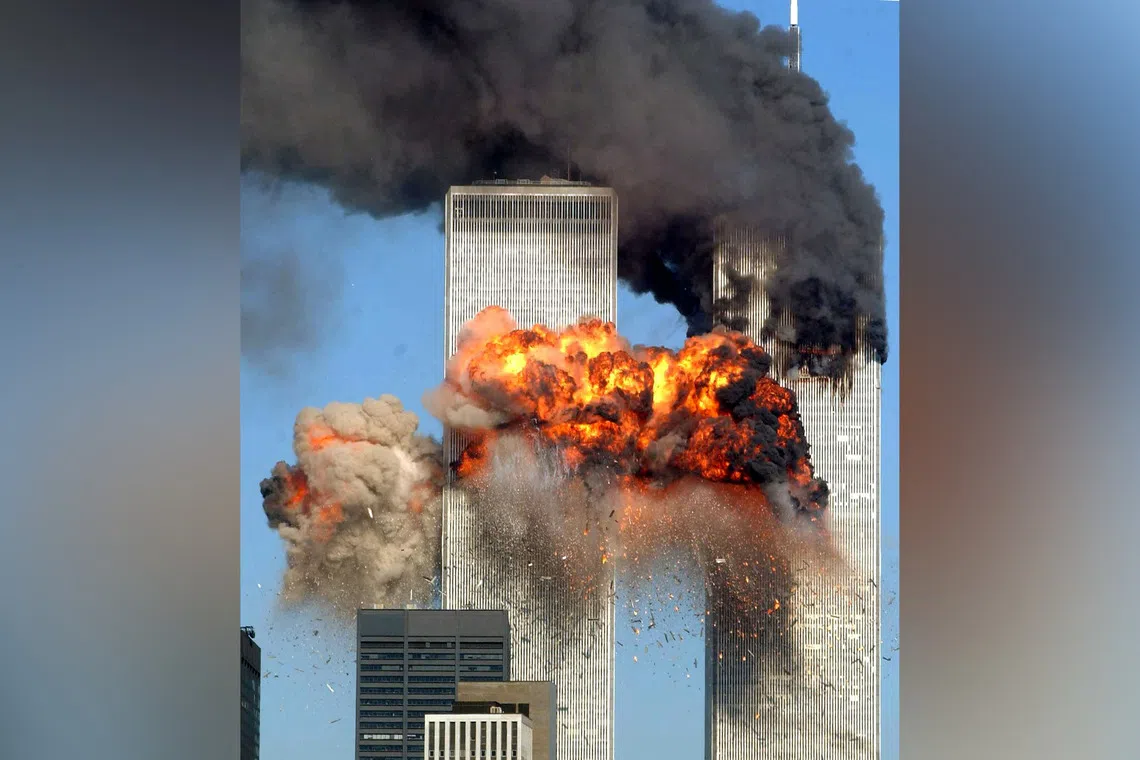
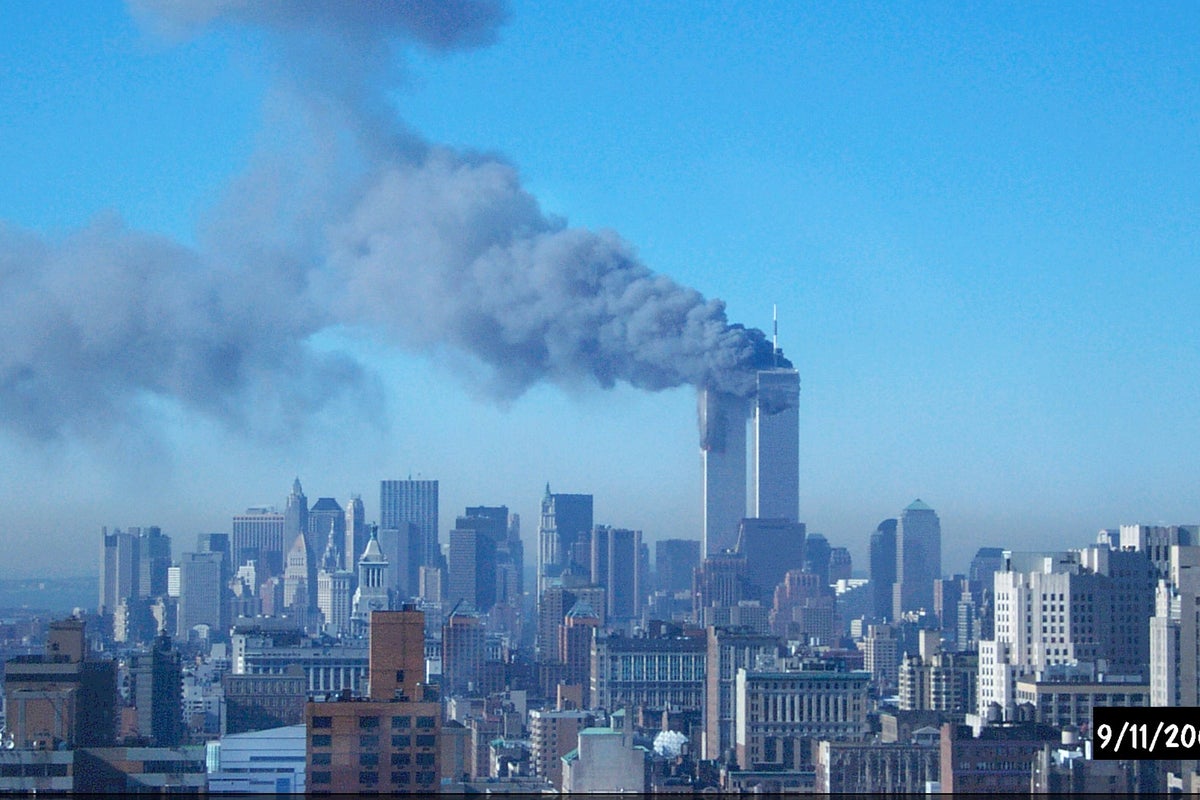
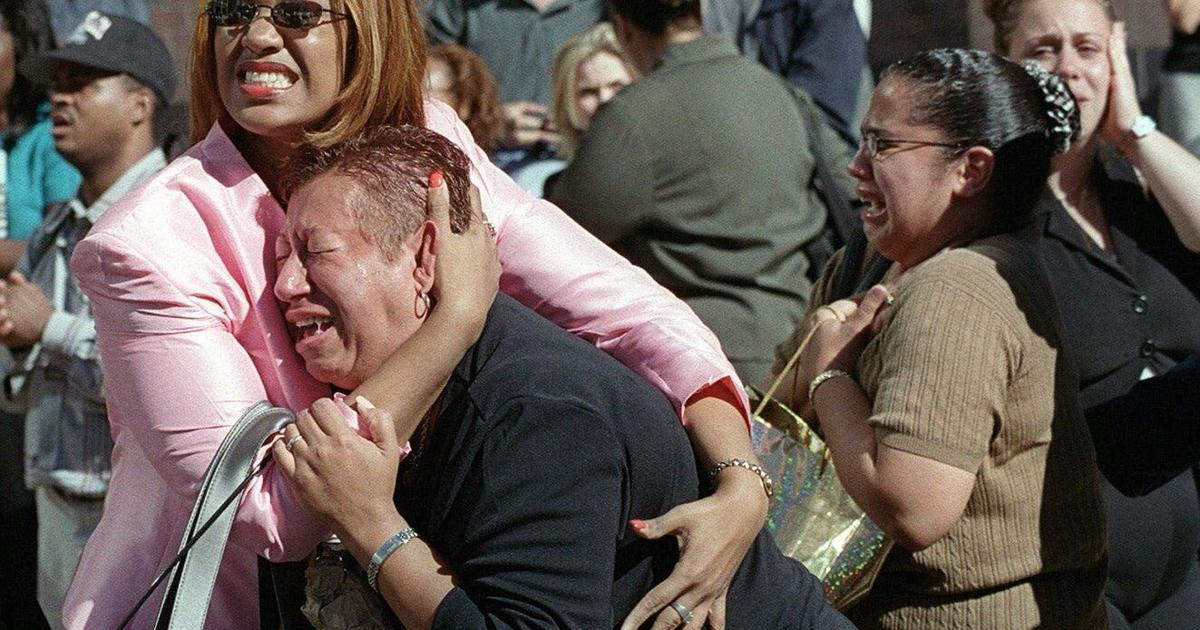
As Andrew Sullivan wrote a few days after the Twin Towers fell, America’s national myth includes the idea that the country exists as “the place apart, the city on a hill, the eternal elsewhere”—a place of safety and refuge from the bloodshed and suffering that mark so many pages of human history.
asserted
that → write → history
Americans have always believed that “whatever horrors lay out there, there was always this place, where no external force could harm them, where no foreign threat could ever intrude.
uncertain
threat → believe → them
And the remarkable fact is that this myth had been reinforced and seemingly confirmed over the course of the 20th century—decades during which the United States engaged in a series of wars and police actions around the globe without ever suffering “an attack on America itself—its soil, its cities, its land.”
asserted
States → reinforce → America
In these manifold conflicts, only the distant military outpost of Pearl Harbor ever experienced the horror of aerial bombardment.
asserted
outpost → experience → bombardment
Through two world wars, the deadly skirmishes of the Cold War, and the grossly lopsided interventions of the 1990s, American civilians remained secure in their homeland, unscathed by the indiscriminate violence of modern warfare, untouched by the uniquely potent experience of existential threat that comes from living with the ever-present possibility of violent death at the hands of a powerful national adversary.
asserted
that → remain → adversary
And the experience changed things in manifold unexpected ways.
asserted
experience → change → ways
Rightshift
The first sign of a shift on the right became apparent around the time of the 2002 State of the Union speech—the one in which President George W. Bush talked about an Axis of Evil and began laying the groundwork for a regime change war to depose Saddam Hussein in Iraq.
asserted
Bush → become → Iraq
I’m not simply, or even mainly, talking about this newly aggressive approach to foreign policy.
asserted
I → talk → policy
I mean, at least as much, a broader shift of attitude on the right.
asserted
I → mean → right
Since the early days of the Reagan administration, if not before, the conservative movement had been setting up a counter-establishment of right-leaning intellectuals who could do policy analysis and make public arguments in defense of conservative priorities in op-ed pages and the Sunday morning political talk shows.
uncertain
who → set → pages
The tone was sometimes cartoonish, but it was usually grounded in serious arguments.
asserted
it → ground → arguments
But that changed.
asserted
that → change → ?
What over the previous four months had been a uniform chorus of patriotic support for the president and the Afghanistan campaign quickly evolved into a frenzy of bellicosity.
asserted
been → evolve → bellicosity
Some columnists denounced deterrence and stability in favor of unilateral preemptive war to overthrow hostile regimes.
asserted
columnists → denounce → regimes
Others openly advocated American imperialism.
asserted
Others → advocate → imperialism
Still others proposed that the United States act to topple the governments of a series of sovereign nations in the Muslim Middle East, including Iraq, Iran, Syria, Lebanon, Egypt, and Saudi Arabia.
asserted
States → propose → Iraq
These were the intellectually respectable suggestions, published in mainstream newspapers and long-established journals of opinion.
asserted
These → publish → opinion
Farther down the media hierarchy, on cable news, websites, and blogs, conservatives of all stripes closed ranks, unleashing a verbal barrage on any and all who dissented from a united front in favor of unapologetic American military muscle.
asserted
who → close → muscle
They were dismissive of complication and analysis, defensive by default, worshipful of “manliness,” admiring of swaggering bluntness, contemptuous of doubt and indecision, addicted to hyperbole, eager to expose “appeasement,” and prone to paranoia.
asserted
They → expose → paranoia
Self-congratulation and self-righteousness ruled the day.
asserted
congratulation → rule → day
Much of this had a longstanding place on the right, though it often lived on the fringes.
asserted
it → have → fringes
After the Senator from Wisconsin crashed and burned, it migrated back to the margins, residing in John Birch Society meetings and Phyllis Schlafly’s mimeographed newsletters.
asserted
it → crash → meetings
It lent right-populist energy to Barry Goldwater’s insurgent campaign for the GOP nomination in 1964 and eventually contributed to Ronald Reagan’s failed 1976 and successful 1980 bids for the White House.
asserted
It → lend → House
It was there in the Reagan Revolution but subsumed in a far vaster and more mainstream movement, especially by the time of the “Morning in America” re-election campaign of 1984.
asserted
It → subsume → 1984
It caused trouble for George H. W. Bush’s presidency, and even flirted with switching its allegiance to Pat Buchanan during the 1992 primaries, with some portion of its voters ultimately supporting Ross Perot’s third-party presidential bid in the general election that year.
asserted
portion → cause → election
It spent the remainder of the ’90s trying to take down and eventually impeach and remove from office President Bill Clinton, a supremely moderate Democrat.
asserted
It → spend → Clinton
But in the aftermath of the September 11 attacks, it burst into the open in a new way, in much closer proximity to the halls of power.
asserted
it → burst → power
Right-leaning media companies and ambitious partisan muckrakers quickly learned there was an eager audience for rabidly frothing hysteria.
asserted
companies → lean → hysteria
Over the remaining years of the two-term presidency of George W. Bush, Fox News would become de facto state media spouting militaristic propaganda 24/7.
asserted
News → remain → propaganda
It demonized Islam on a daily basis, but it was also ready and eager to do the same with any Democrat who dared to raise a question or objection to administration policy.
asserted
who → demonize → policy
It was even worse on talk radio and the websites and blogs popping up like mushrooms in a shady and soggy field surrounding the DC-based TV and print journalists who learned to love serving as officials toiling away in the administration’s propaganda ministry.
asserted
who → pop → ministry
No one should have been surprised about what happened when Bush was succeeded by Democrat Barack Obama.
asserted
Bush → happen → Obama
All those people working to prop up Great Leader had nowhere else to go and nothing else to do but to flip the switch to negation.
asserted
people → work → negation
Now the right-wing media machine became an onslaught of 24/7 opposition, portraying the nation’s first black president as something—anything—other than a real American: someone who, deep down, sided with our nation’s most murderous enemies.
asserted
who → become → enemies
He wanted to transform the country into a self-hating socialist dystopia, and he wanted to do it while all the time pretending to float above the partisan fray.
asserted
he → want → fray
But ordinary Americans, real Americans, could see through the act.
uncertain
Americans → see → act
They could tell what Obama really had in mind for us—that he longed for and chose American decline and was willing to do everything in his power to enact it.
uncertain
he → tell → it
The right’s media machine had learned a lesson embedded in the history of political philosophy and promulgated in the 20th century by far-right legal theorist Carl Schmitt.
asserted
machine → learn → Schmitt
War with existential stakes against a formidable enemy unifies and grants absolute moral clarity.
asserted
War → unify → clarity
It worked when the enemy was Al Qaeda, and now it worked again when the enemy was the president of the United States.
asserted
enemy → work → States
…and 58 more, not listed.
 The Aporia