One attack, many Americas: Why 9/11 and its many griefs land differently 25 years later

Toronto Star · collected 2026-09-07 · by Deepti Hajela The Associated Press
Read the original at Toronto Star ↗

Summary

This article is an analysis rather than straight reporting, examining how the September 11 attacks have had different effects and meanings for various groups in the US over the past 25 years. According to the article, nearly all Americans have been affected by the attacks and their aftermath, with individual experiences shaped by factors such as personal connections to victims or those who were impacted economically. The article cites examples of individuals whose lives were altered by the events, including a mother who gave birth just days after her husband's death at the World Trade Center. As a result, Americans live in different post-9/11 worlds, with varying levels of surveillance and security measures implemented in response to the attacks.
Written by the local model on 2026-09-07, using this article's own text rather than the other coverage of the same event (that is the story summary below).

Signals How these are calculated →

Claims extracted
53
claim-shaped sentences
Uncertain
4%
2 of 53 hedged
Leaning
Leans left
of the writing, not the subject
Publisher trust
61.8
red-flag proxy, not a credibility rating
Outlets on this story
38
World
Narrative spread
1
articles carrying this framing
Analyzed 2026-09-07 · how these are computed

AI analysis (generated at analysis time, not now)

Story summary

Twenty-five years have passed since the 9/11 terrorist attacks, which resulted in 2,977 people killed, including 79 workers and 91 guests at Windows on the World restaurant in the North Tower of the World Trade Center. The attacks also caused widespread destruction and changed the world forever.

Many Americans are still affected by the trauma of that day, as seen in the lives of individuals like Colin McShane, who lost his father in the attacks when he was just 4½ years old. McShane's experience is not unique, as many others have been impacted by the loss of loved ones or personal experiences on 9/11.

In addition to the human toll, the attacks also had significant global implications, including a shift in international relations and a new era of terrorism. In response to the attacks, the United States launched the "war on terror," which has continued under various administrations.

However, the impact of 9/11 extends beyond geopolitics. The attacks also led to a surge in Islamophobia and anti-Muslim sentiment in the US, with many Muslim Americans facing harassment, discrimination, and even violence. This phenomenon continues today, as seen in the treatment of Abdul El-Sayed, a Democratic Senate nominee who has been called a terrorist and a radical Islamist.

In the years following 9/11, many first responders have fallen ill or died from related health issues due to their work at ground zero. The World Trade Center Health Program was established to provide care for these individuals, but funding has not kept up with the number of people getting sick.

As the US approaches the 25th anniversary of 9/11, many Americans are reflecting on how the country has changed since that day. With a new generation growing up without memories of the pre-9/11 America, there is a growing concern about the need for continued remembrance and understanding of this pivotal moment in history.

Written for “Anniversary of September 11 Attacks” on 2026-09-08, grounded in this article and the 37 other(s) covering the same event.
Why this leaning score
The article's own words the score was based on. Each is quoted verbatim and was checked against the article text before being stored, so you can find it in the original.
Score -0.35 Confidence high
Leaning score -0.35 for article 6818 (high confidence, 1 verified quote) · logged 2026-09-07

Story

📰 Anniversary of September 11 Attacks
World · 38 article(s) covering the same event.

How this is being covered How these are calculated →

Article leaning vs. publisher reliability
Source leaning vs. consistency

Compared with similar articles

This article reads leans left and hedges 4% of its claims. Each row says how that neighbour differs.
How 9/11 Shaped My Life same event · 100%
TIME
⚖️ leaning not scored 🔴 7% hedged 25 of 358 📰 publisher trust 95
“Both articles refer to the same specific incident, the September 11 attacks 25 years ago, and describe its impact on people's lives.”
Global News
⚖️ leaning not scored 🔴 5% hedged 2 of 42 📰 publisher trust 52
“Both articles describe the terrorist attacks on September 11, 2001, as their main topic and do not mention any other distinct incident.”
TIME
⚖️ leaning not scored 🔴 1% hedged 1 of 67 📰 publisher trust 95
“Both articles describe the same incident, the September 11 attacks on the World Trade Center, and its impact on Americans across the country.”
The Intercept
⚖️ Leans strongly left further left than this 🔴 4% hedged 15 of 342 📰 publisher trust 97
“Both articles discuss the 9/11 attacks that occurred on September 11, exactly 25 years prior to the date of each article.”
New York Post
⚖️ Leans strongly right further right than this 🔴 5% hedged 3 of 60 📰 publisher trust 58
“Both articles describe the same incident, specifically the September 11th terrorist attack, 25 years later”
The Globe and Mail
⚖️ Leans left 🔴 4% hedged 3 of 75 📰 publisher trust 41
“Both articles report on the exact same incident, the September 11, 2001 terrorist attack in New York City.”
ABC News (AU)
⚖️ Leans left 🔴 5% hedged 8 of 171 📰 publisher trust 60
“Both articles describe the same specific incident: the September 11 terror attacks, which occurred on that sunny morning 25 years ago”
Toronto Star
⚖️ Leans right further right than this 🔴 5% hedged 2 of 42 📰 publisher trust 62
“Both articles describe the same occurrence: the September 11 terrorist attacks in 2001, specifically noting it is now 25 years later and marking its anniversary.”
The Globe and Mail
⚖️ leaning not scored 🔴 5% hedged 2 of 39 📰 publisher trust 41
“Both articles describe the exact same occurrence: the 9/11 terrorist attacks, occurring on a sunny September morning 25 years ago”
CBC News
⚖️ leaning not scored 🔴 11% hedged 5 of 44 📰 publisher trust 95
“Both articles refer to the September 11 attacks in 2001 as a singular event, with Article A mentioning its impact on Newfoundland and Labrador residents who took in stranded airline passengers, while Article B describes its national impact across the United States.”

Publisher

Toronto Star · 335 article(s) · 1 correction(s) detected
Running correction rate · 1 correction(s)
2026-09-04
Orca Corrects Q3 Quarterly Dividend Announcement

Who wrote this

Deepti Hajela The Associated Press
1 article(s) here · 1 carrying a prediction
🔮 NEW YORK (AP) — When the planes crashed and the buildings fell on that sunny September morning 25 years ago, the shock waves of dismay and grief went far past downtown New York City, rural western Pennsylvania and just outside Washington, D.C.
Wire or desk byline, not an individual reporter.
Nothing else under this byline in the corpus.

Topics

9/11 Americans NEW YORK New York City Pennsylvania

Subjects

Americans NORP · 3× McPartland PERSON · 2× Muslim NORP · 2× America GPE · 1× Daniel Aldrich PERSON · 1× NEW YORK GPE · 1× New York City GPE · 1× Pennsylvania GPE · 1× Washington GPE · 1× the United States GPE · 1×

Narrative

“The idea that there’s this outside threat in the form of people who look like this or from particular countries really fueled the reorganization of the Department of Homeland Security and has continued to fuel the ways in which we’ve funded and contributed to the securitization of our immigration system and society more broadly,” says Jayesh Rathod, a professor at Georgetown Law.
framing: assertive · carried by 1 article(s) · first seen 2026-09-07
🔮 NEW YORK (AP) — When the planes crashed and the buildings fell on that sunny September morning 25 years ago, the shock waves of dismay and grief went far past downtown New York City, rural western Pennsylvania and just outside Washington, D.C.

Claims (53 extracted, 2 hedged)

NEW YORK (AP) — When the planes crashed and the buildings fell on that sunny September morning 25 years ago, the shock waves of dismay and grief went far past downtown New York City, rural western Pennsylvania and just outside Washington, D.C. asserted
waves → crash → D.C.
They radiated through every part of the United States in communities large and small, tearing at Americans’ sense of safety and their place in the world. asserted
They → radiate → world
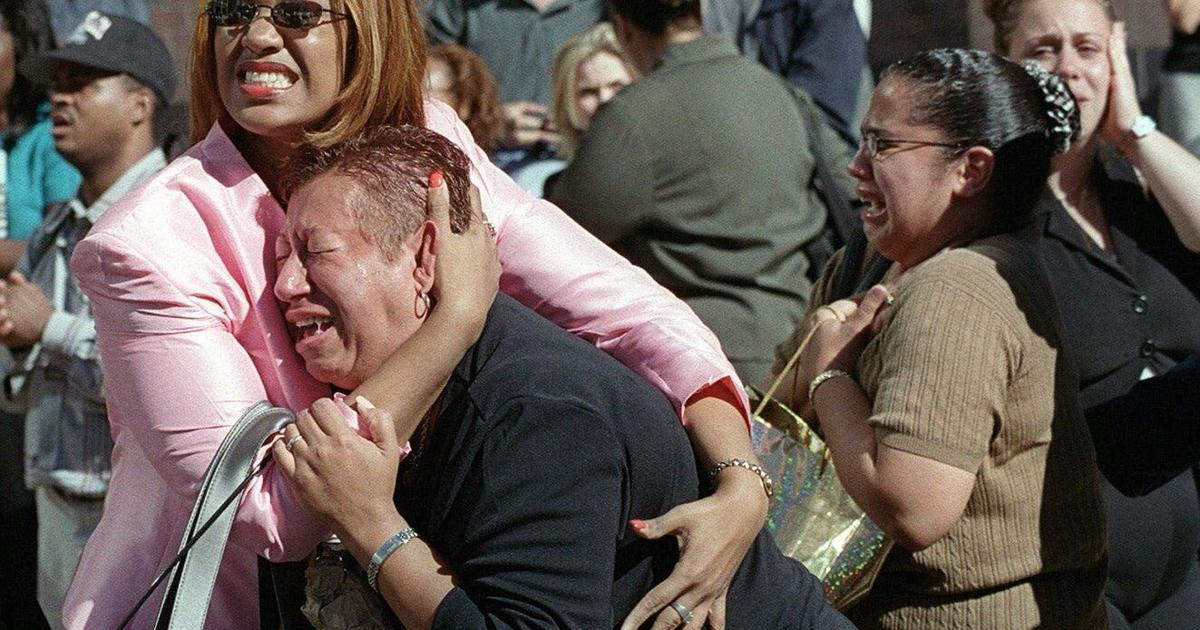
Hearts were broken across the nation, not just of those who lost their loved ones but among strangers who mourned for them, the Sept. 11 attacks leaving no one unaffected in an unwanted moment of horrifying togetherness. asserted
attacks → break → togetherness
A quarter of a century later, the effects linger. asserted
effects → linger → century
We all live in a post-9/11 world, with its security strictures and surveillance. asserted
We → live → strictures
But here’s the thing: Americans don’t all live in the SAME one. asserted
Americans → ’ → one
What the attacks and their aftermath have come to mean isn’t a single viewpoint shared by everyone, for reasons chronological, political and personal. asserted
come → come → reasons
It’s a tapestry of meaning and grief as varied as the nation in which 9/11 took place. asserted
9/11 → ’ → place
So many things affect our understanding It’s somewhat inevitable. asserted
It → affect → understanding
After all, the mere passage of time means tens of millions of young Americans have been born since then. asserted
millions → mean → Americans
For them, 9/11 is something to learn about in history lessons. asserted
9/11 → learn → lessons
But people’s views of 9/11 and its aftermath have also been shaped by human factors like policies and actions taken by those in power. asserted
views → shape → power
And the America that was attacked was already a nation with its own history and tensions, with stress points of dispute and disagreement put under additional strain by the catastrophic event. asserted
points → attack → event
“The same event, whether it’s a disaster or a shock or even the recovery process is completely different depending on your network,” says Daniel Aldrich, a professor at Northeastern University who studies communities and resilience. asserted
who → ’ → communities
Those networks can exist in a range of ways and layers. asserted
networks → exist → ways
Among them: those who lost loved ones; those who spent months clearing the rubble and debris from ground zero; those who were motivated to join the military; those who lost jobs in hard-hit industries like tourism and air transportation; those who came from certain countries and communities viewed with heightened suspicion after the attacks. asserted
who → lose → attacks
Different networks overlap in Jenna McPartland’s family. asserted
networks → overlap → family
She was expecting her first child with her husband, Ariel Jacobs, who was killed at the World Trade Center. asserted
who → expect → Center
She gave birth days later to their son, Gabriel, whose life was irrevocably altered by an event he didn’t experience. asserted
he → give → event
In the years since, McPartland remarried twice, had two younger sons with no biological tie to their older brother’s dad and has been a stepmom to two teenagers for the last decade. asserted
McPartland → remarry → decade
Even as she added new chapters to her life, she made sure Gabi was connected to his father’s family, and that her younger sons also knew that Sept. 11 was part of their larger family story. asserted
Sept. → add → story
“My middle boy wrote his college entrance essay on being the child of a 9/11 family, but not being the 9/11 kid. asserted
boy → write → family
And how he wouldn’t exist had his brother’s dad not died,” says McPartland, 52, a chef and restaurant owner in Fairfield, Connecticut. asserted
McPartland → exist → Fairfield
“They all acknowledge it in different ways, they feel it in different ways, they sense it in their lives in different ways.” asserted
they → acknowledge → ways
Varied events play a role in the impact on people Also playing a role in the impact, and even grief, caused by 9/11: choices that were made after the attacks by the U.S. government like the restructuring of government agencies and the creation of the Department of Homeland Security, along with foreign policy decisions like the invasion of Afghanistan. asserted
that → play → Afghanistan
Immigration had already been a contentious issue before the attack: Who should be allowed to come? Who could stay? What did it mean to be American, and who could claim it? uncertain
who → allow → it
After Sept. 11, it took on another dimension of added fear and suspicion. asserted
it → take → fear
And much of it fell on people of Muslim faith or coming from Muslim-majority parts of the world. asserted
much → fall → world
For example, in 2002, the federal government implemented the National Security Entry-Exit Registration System, which required non-U.S. citizen males over 16 from 25 countries, almost all of them Muslim-majority, to register at certain ports of entry or at immigration offices if they were already in the country. asserted
they → implement → country
Critics condemned it as racial and religious profiling, and it was dismantled in the following decade. asserted
it → condemn → decade
“The idea that there’s this outside threat in the form of people who look like this or from particular countries really fueled the reorganization of the Department of Homeland Security and has continued to fuel the ways in which we’ve funded and contributed to the securitization of our immigration system and society more broadly,” says Jayesh Rathod, a professor at Georgetown Law. asserted
Rathod → ’ → Law
That lingers in the existence of the Transportation Security Administration and the general hardening of security measures in society overall. asserted
That → linger → society
“The idea that we need to do everything possible to protect ourselves from whatever this threat is, amorphous threat, has become totally normalized,” Rathod says. asserted
Rathod → need → threat
The post-9/11 environment also saw the creation of Immigration and Customs Enforcement, which is now part of the public’s awareness as the agency carrying out aggressive and highly controversial immigration crackdowns under the Trump administration. asserted
which → see → administration
And in a land where racism, xenophobia and stereotypes were part of the landscape, people in other communities felt it too, like Balbir Singh Sodhi, the Arizona gas station owner shot and killed four days after the 9/11 attacks. asserted
people → feel → attacks
His assailant killed Sodhi, a bearded and turbaned member of the Sikh faith, assuming he was Arab. asserted
he → kill → faith
The impact felt by Muslim Americans and others has been part of what Vida Lashgari has learned about the attacks that took place a few years before she was born. asserted
she → feel → place
Raised in California, her mom Mexican and her dad Persian, the 21-year-old says she “grew up learning about how 9/11 particularly impacted Middle Easterners, Sikhs, brown people as a whole and how that kind of changed their everyday life.” asserted
that → raise → life
Her father, she says, and “many Middle Easterners, became more hyper-aware of their appearance, their difference in the way they spoke and dressed in the U.S. after 9/11. asserted
they → say → 9/11
And that kind of fear, I think, has carried throughout the Middle Eastern community since then. asserted
I → think → community
…and 13 more, not listed.

💬 Give feedback
🕘 History 🎫 Support