- Published
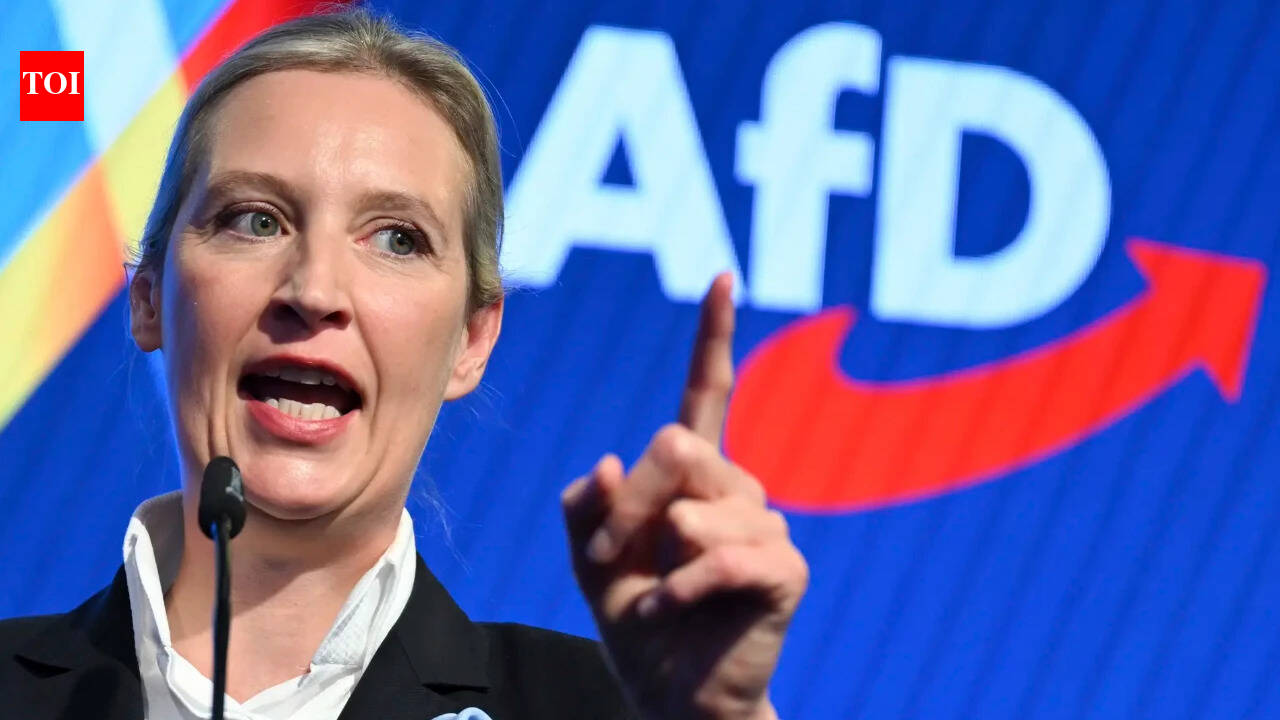
The far-right Alternative for Germany (AfD) is "very, very close" to taking power, its deputy parliamentary leader has told the BBC, after a historic victory in elections for the eastern state of Saxony-Anhalt.
asserted
leader → publish → Anhalt
Sunday's preliminary results show it fell three seats short of an outright majority, with 43.8% of the vote.
asserted
it → show → vote
It is now seeking support from other parties or individuals in order to govern.
asserted
It → seek → parties
While most German political parties refuse to work with the AfD, Beatrix von Storch called for its opponents to enter talks and said: "You cannot say I do not accept the vote of the people".
asserted
I → refuse → people
Germany's Chancellor Friedrich Merz said he was "deeply shocked" by the result, describing it as "seismic... not just in the country but also in my own political party and I take that very seriously".
asserted
I → say → that
His party, the conservative CDU, saw its share of the vote almost halved to 17.2% in the state's preliminary results.
asserted
share → see → results
Merz said it was not possible to return to "business as usual", adding that the country needed "profound reforms" and the CDU needed to "reach people at an emotional level.
"This election result is a seismic result not just in the country but also in my own political party and I take that very seriously," he said.
asserted
he → say → that
No far-right party has controlled a German state since World War Two, and governing at state level would mean powers over policing and local education.
asserted
governing → control → policing
Von Storch said the state's results "were on the table and now democrats have to talk to [one] another.
asserted
democrats → say → one
This is what democracy demands".
asserted
democracy → demand → what
She added that if parties refused to work with the AfD, "then we might end up in severe chaos and maybe we have a new election".
uncertain
we → add → election
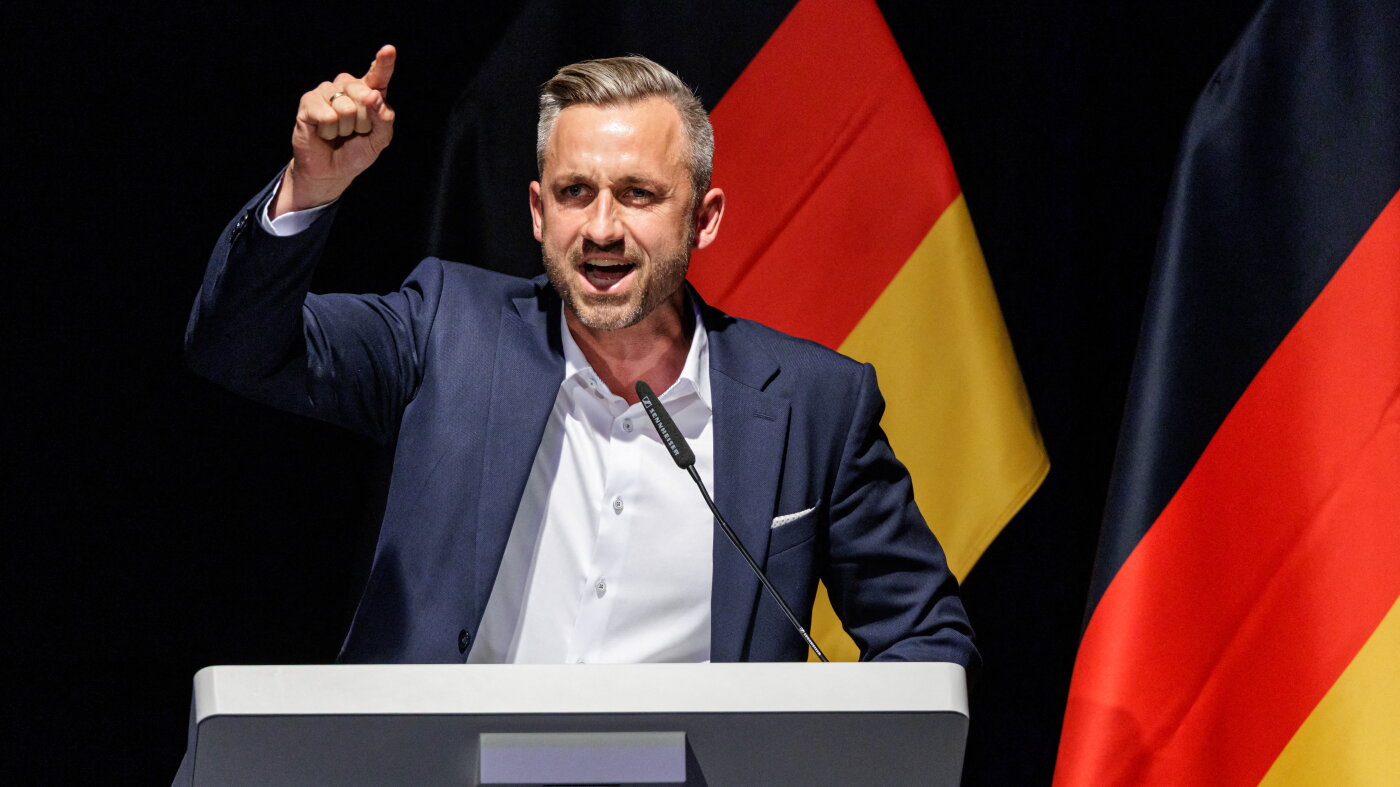
Her comments were echoed by AfD's leader in Saxony-Anhalt, Ulrich Siegmund, who told a news conference on Monday that the party had won a "clear mandate to govern".
asserted
party → echo → mandate
The state's defeated premier, the CDU's Sven Schulze, also said the mandate to govern Saxony-Anhalt "now lies with the AfD".
asserted
mandate → defeat → AfD
Saxony-Anhalt has a small population of 2.1 million and the AfD in the state is assessed by domestic intelligence as "right-wing extremist", a classification rejected by Siegmund, 35.
asserted
AfD → have → Siegmund
The party's plans for Saxony-Anhalt, which include segregating child refugees into special classes and setting up a task-force to help detain and deport migrants who no longer have the right to be in the state, are highly controversial within Germany.
asserted
who → include → Germany
Siegmund said discussions with other parties were initiated on Sunday night and could potentially take days or weeks to conclude.
uncertain
discussions → say → days
"We reach out to everybody first, we will have consultations and then we'll see whether [there are] individual parliamentary groups or MPs who would be willing to help us," he added.
asserted
he → reach → us
The AfD is currently heading for 39 seats in the 83-seat state parliament instead of the 42 needed for an outright majority, although the result has not yet been finalised.
asserted
result → head → majority
Von Storch told the BBC the AfD was talking to individuals within the CDU group - the largest party in both the state's outgoing coalition and Germany's government - because they were "very, very unhappy with their own party".
asserted
they → tell → party
One idea being floated is whether there could be informal deal whereby a small party - the BSW - could give their tacit support to allow the AfD to form a minority government.
uncertain
AfD → float → government
The left-wing populist BSW, which is set to win five seats, is also tough on migration and backs importing Russian gas.
asserted
which → set → gas
The AfD has signalled an openness to talk with other parties but all - apart from the BSW - refuse to co-operate with the far-right.
asserted
all → signal → right
The AfD leads the opinion polls nationally, ahead of the ruling conservatives of Merz and the Social Democrats, but their heartland lies in the eastern states.
asserted
heartland → lead → states
They also won the 2024 state election in neighbouring Thuringia, but failed to secure enough seats to win power.
asserted
They → win → power
Among the AfD's policies is a highly controversial plan for "remigration", which is widely understood to mean mass deportations of migrants, although the party says it refers to deporting criminals and those in the country illegally.
asserted
it → understand → country
Commentators and political opponents called AfD's victory a watershed and break with the past.
asserted
Commentators → call → past
"This isn't just about Saxony-Anhalt," Siegmund told supporters overnight.
asserted
Siegmund → tell → supporters
On Sunday, US President Donald Trump posted a screenshot of the state's projected results on his Truth Social platform.
asserted
Trump → post → platform
Russian presidential envoy Kirill Dmitriev then took a screengrab of Trump's post and praised a "historic win for the pragmatic AfD".
asserted
Dmitriev → take → AfD
Dmitriev had earlier praised the Russia-friendly AfD as "the party of hope and reason, co-operation truth and hope for Germany".
asserted
Dmitriev → praise → Germany
Ahead of Germany's federal election last year, US Vice-President JD Vance endorsed the party, in a move criticised in Germany as political interference.
asserted
Vance → endorse → interference
Polish centre-right Prime Minister Donald Tusk saw the result very differently, saying "in Poland only idiots and traitors can rejoice at the triumph of the AfD".
asserted
idiots → see → AfD
Asked about those who had expressed fears over the far-right party gaining power in the state, deputy parliamentary leader Beatrix von Storch told the BBC that its supporters were afraid of "losing our economy, they are afraid of losing our inner security".
asserted
they → ask → security
She said conservative voters were turning to alternative political parties because they were not being listened to".
asserted
they → say → parties
She added that the party's detractors should: "Wake up and realise what happened in several other European states...
asserted
what → add → states
The conservative parties will disappear from the landscape as it happened in Italy, as it's about to happen in the UK, as it might also happen in France".
uncertain
it → disappear → France
 The Aporia