Germany's far-right AfD party is poised for power in a state election
asserted
party → poise → election
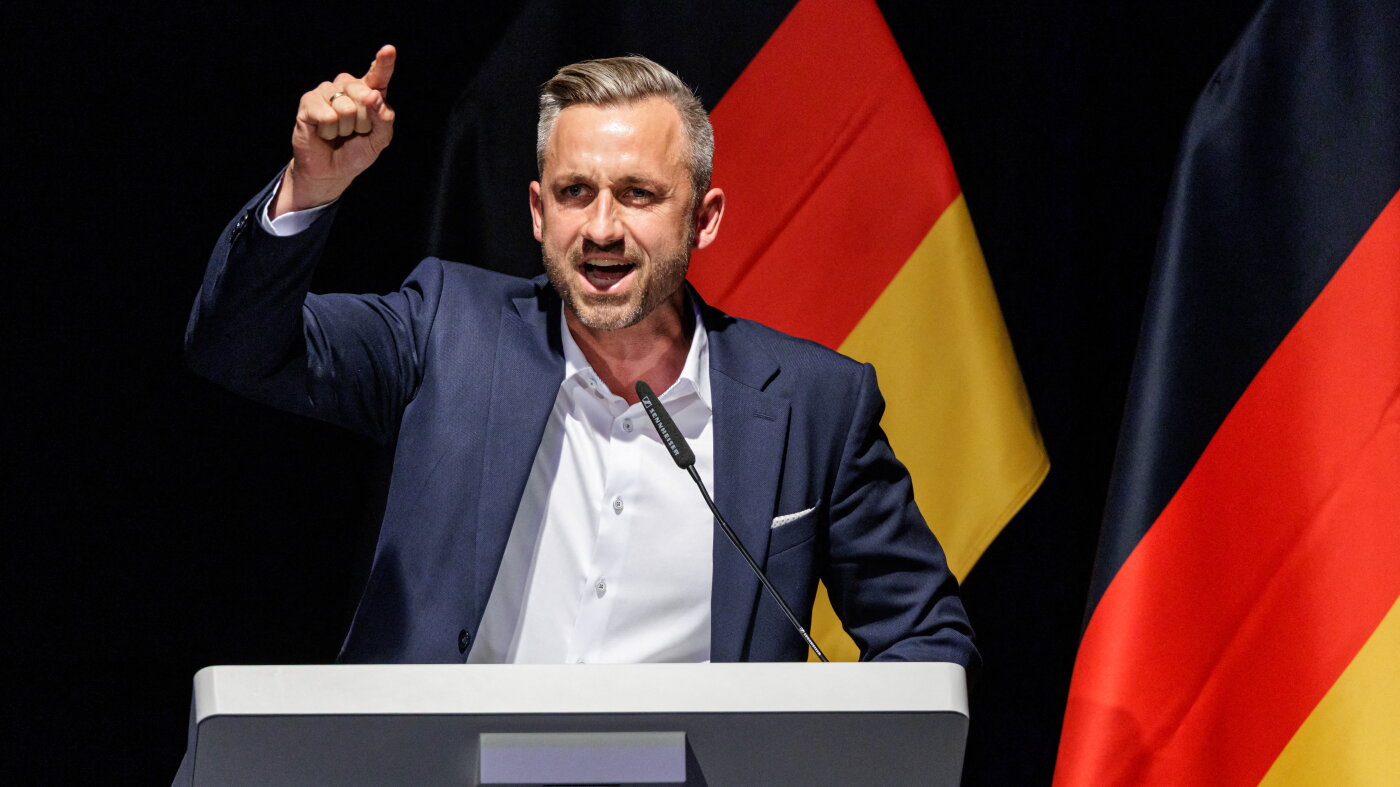
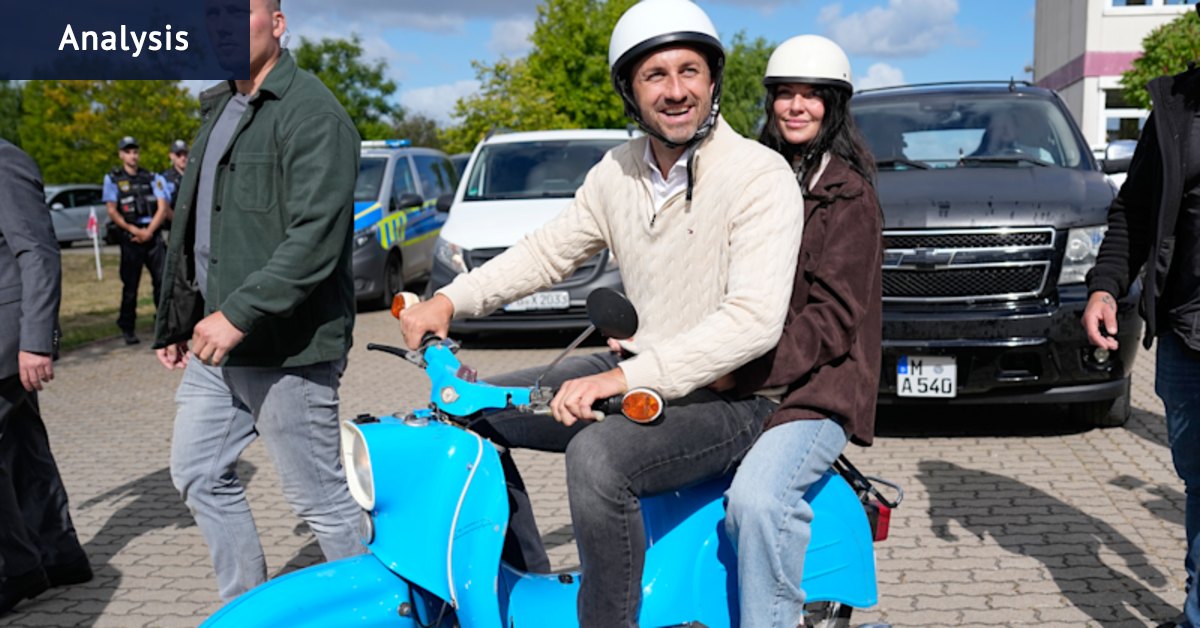
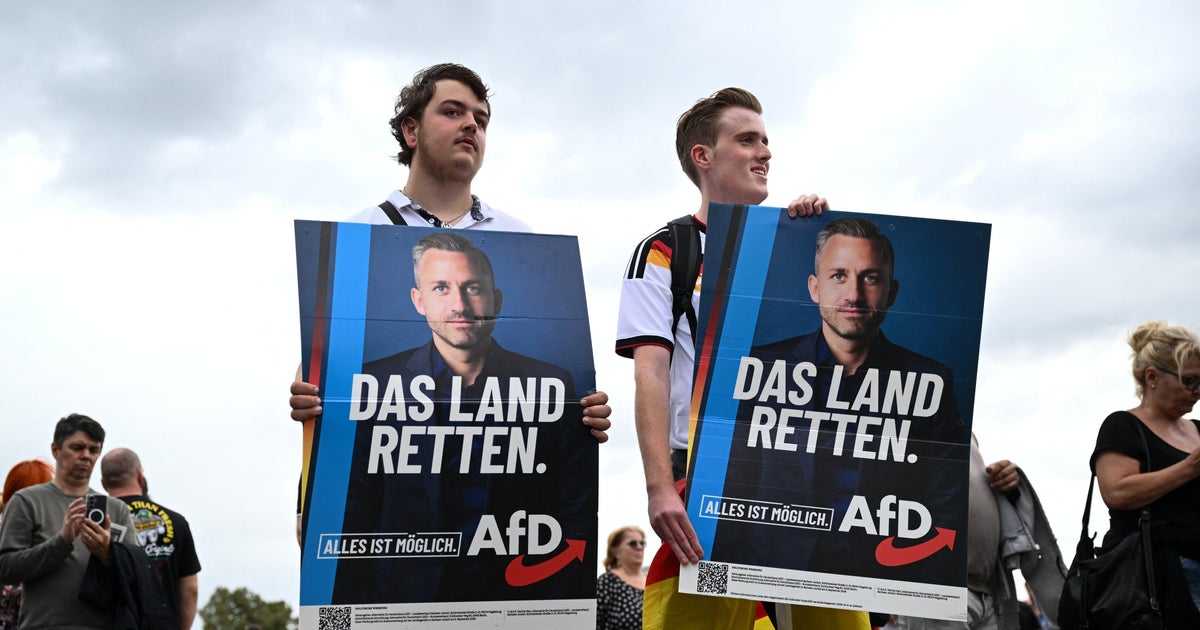
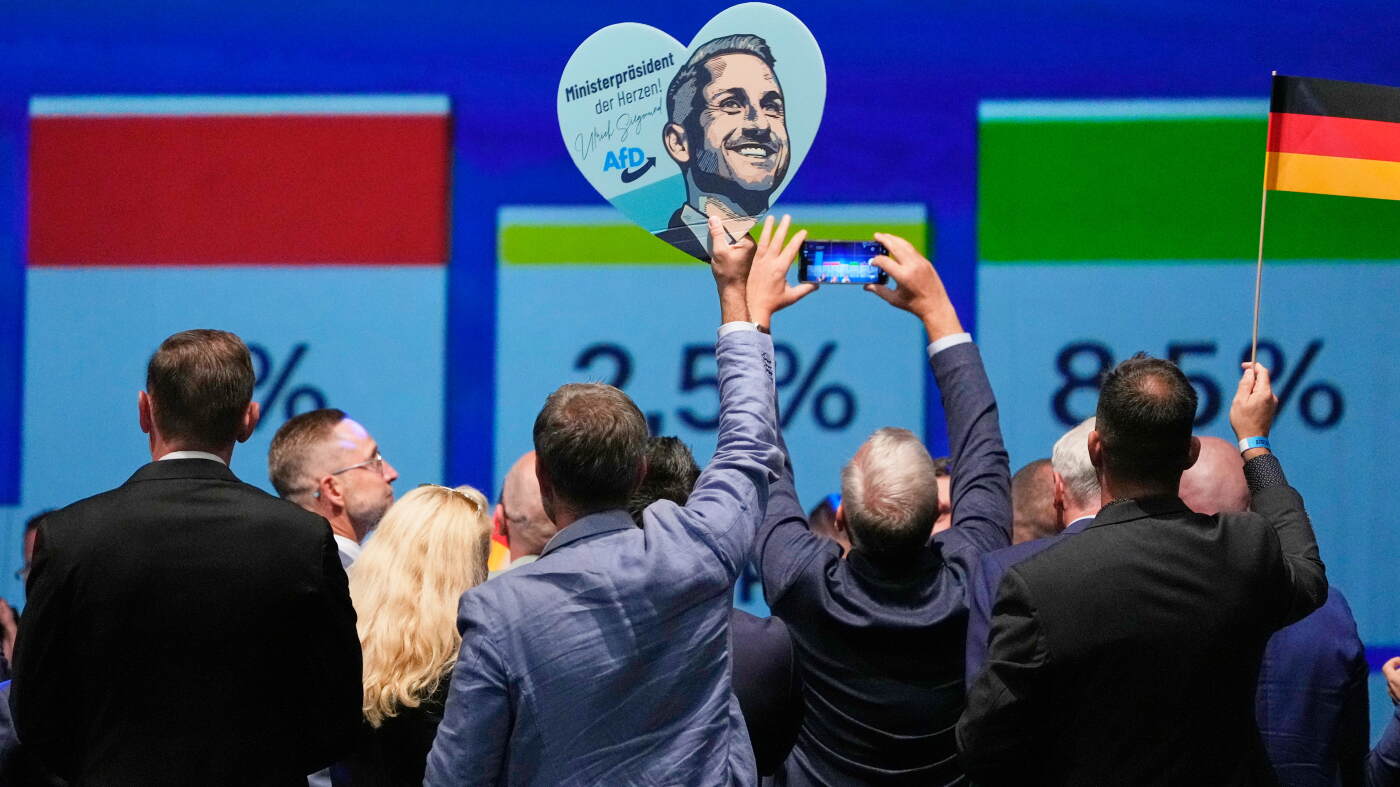
HALLE, Germany — Everywhere Ulrich Siegmund goes, an influencer follows — streaming live from the campaign trail.
asserted
influencer → go → trail
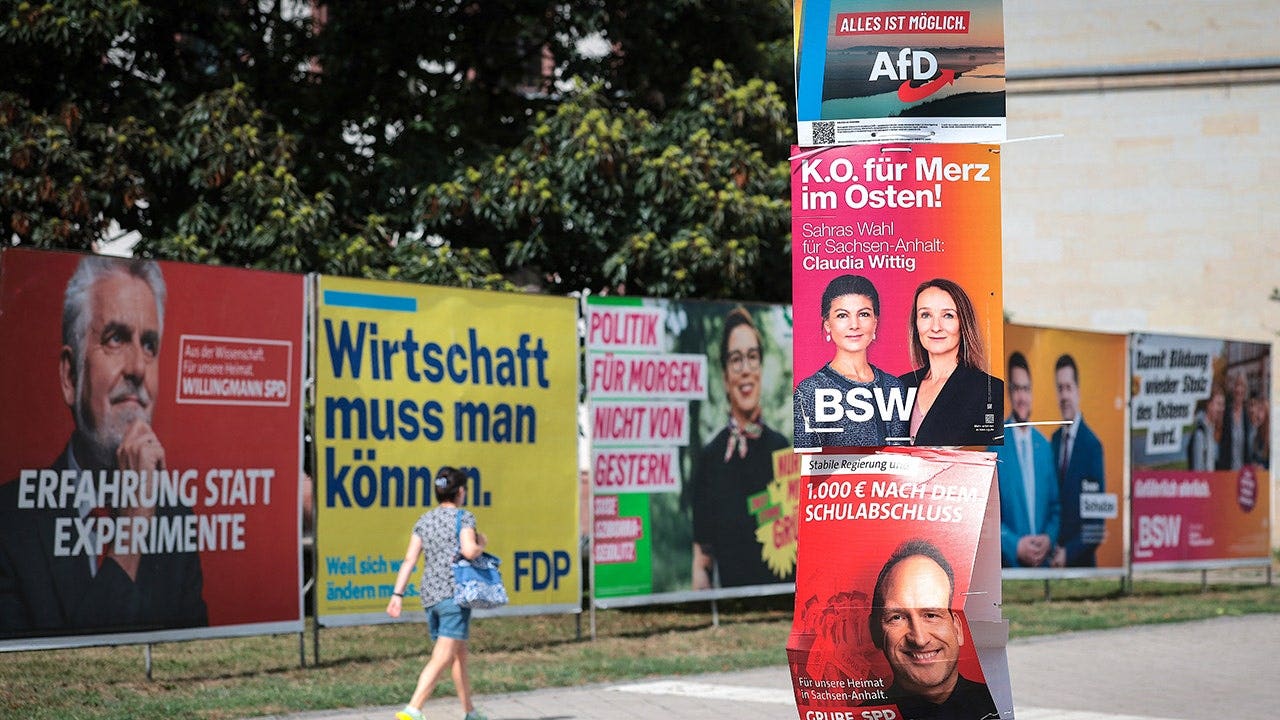
Siegmund is the far-right Alternative for Germany (AfD) candidate running for governor in the eastern state of Saxony-Anhalt.
asserted
Siegmund → run → Anhalt
But Siegmund needs neither influencers nor journalists.
asserted
Siegmund → need → influencers
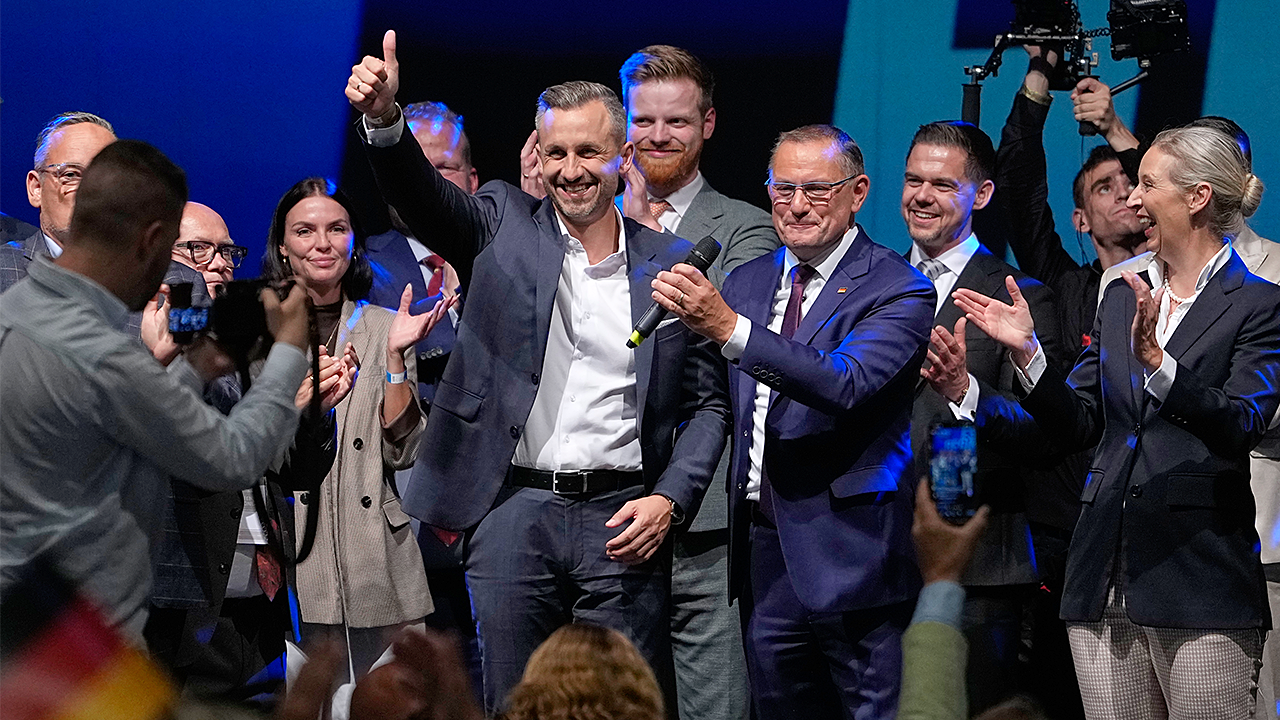
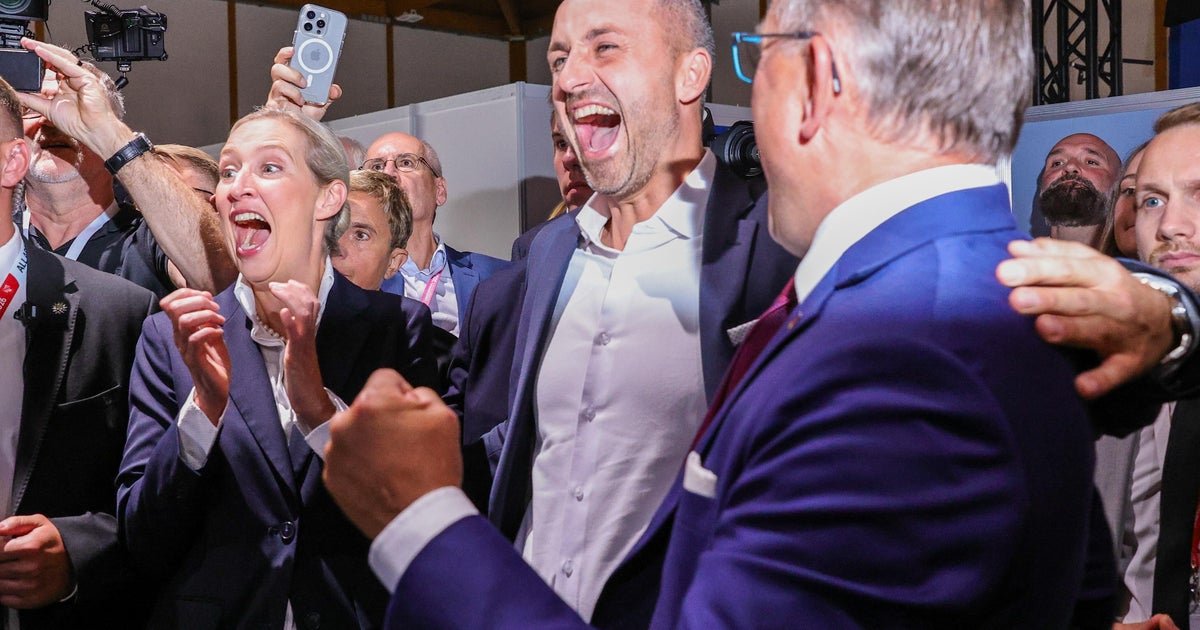
The 35-year-old former marketing man is a TikTok star in his own right and his party is comfortably leading polls Sunday's state election, which could make the AfD the first far-right party to lead a German state government since World War II.
uncertain
AfD → lead → II
Siegmund has almost half as many followers on the platform as people eligible to vote in this small state.
asserted
Siegmund → have → state
He makes a point of taking time to answer their questions personally, often from the comfort of his back porch.
asserted
He → make → porch
In every video, he's dressed in a flawlessly ironed white polo shirt or starched white dress shirt — the uniform of Germany's newly professionalized far-right.
asserted
he → dress → right
His carefully coiffed side parting is as immaculate as his smile, something which distinguishes him from the rest of his party whose members tend to grimace rather than grin.
asserted
members → coif → party
But Siegmund's broad smile rarely cracks, even when he speaks his mind about the party's biggest issue, immigration and the mass deportation of migrants.
asserted
he → crack → migrants
In a recent TikTok post, Siegmund asserts that it is "unacceptable that our doctors are leaving for Switzerland, Norway, or elsewhere because they cannot tolerate the conditions here, while we bring in doctors from India or other places to replace them.
asserted
we → assert → them
The AfD's platform states that "culturally foreign" health workers often fail to meet German medical standards and "endanger patient well-being."
asserted
workers → state → being
Siegmund refrains from going into such detail on camera and he keeps his campaign speeches snappy — full of pep talk rather than policy.
asserted
he → refrain → talk
The real detail is something former AfD supporter Hannes Kreschel addresses instead.
asserted
Kreschel → address → ?
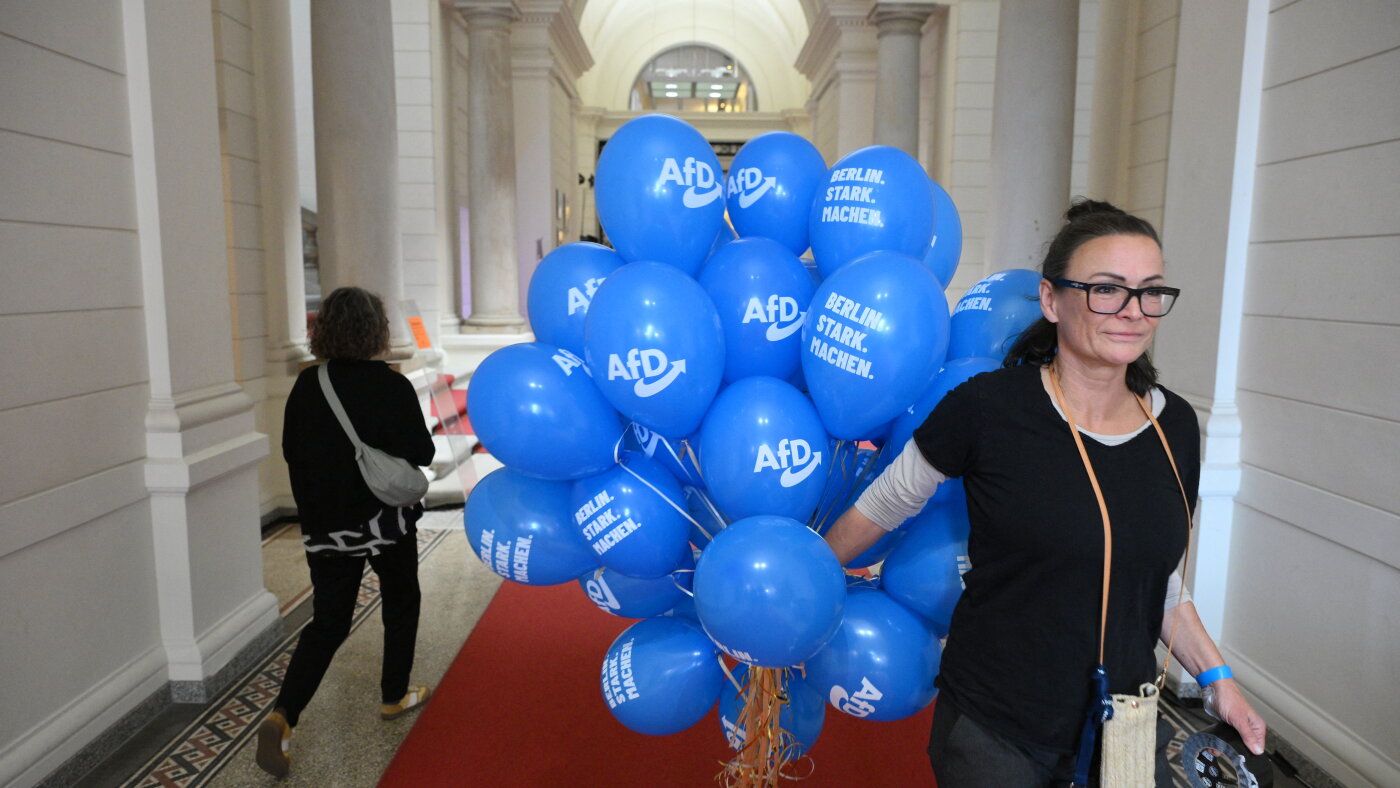
The 23-year-old law student attends AfD election rallies to talk to voters on camera.
asserted
student → attend → camera
Over a beer and bratwurst, he points out disparities between the AfD's carefully crafted campaign and its actual policies, particularly its economic policies which, he argues, only add up for the financially well-off.
asserted
he → point → off
Some chats are more constructive than others, he says.
asserted
he → say → others
"They try to hit the microphone and they try to hit me," Kreschel says.
asserted
Kreschel → try → me
"Of course we're confronting them with facts, but I try to be nice because I think you should separate the people from their talking points."
asserted
you → confront → points
Kreschel posts the exchanges on his own channels which, while popular, do not get the same traffic as the AfD candidate.
asserted
which → post → candidate
But he's convinced that if he can change his mind about the AfD, others can too.
asserted
others → convince → AfD
Kreschel voted for the AfD in the past to stick it to those in power.
asserted
Kreschel → vote → power
But when he read their policies, he realized the Alternative for Germany is not a viable alternative for him.
asserted
Alternative → read → him
"I figured out that this is not the country I would like to live in," Kreschel explains in reference to the Alternative for Germany's anti-immigration, nationalistic vision.
asserted
Kreschel → figure → vision
"I would like to live in an open country which is friendly and not full of hate."
But other voters in the city of Halle, where Kreschel lives, don't see hate; they see reason and hope.
asserted
they → like → reason
Waiting in line to grab lunch at a market stall on the city's main square, Alexander Winsek says he's weighing up whether to vote for the AfD, adding that it would be his first time.
"I think the AfD has some very good ideas, like limiting the influx of migrants," Winsek says.
asserted
Winsek → wait → migrants
But the 49-year-old aviation engineer says he doesn't agree with all of the AfD's positions: "I'd like to stay in NATO, I'd like to keep the euro, and I'm not exactly pro-Russia", he stresses.
asserted
he → say → euro
But Winsek says Ulrich Siegmund may swing it for him because he's significantly different from others in the AfD who, he points out, are all doom, gloom and threats.
uncertain
he → say → AfD
Siegmund, he says, is can-do and refreshingly optimistic.
asserted
he → say → ?
"He's younger than all the others and stands out from the crowd," adding that Siegmund is the breath of fresh air democracy needs.
asserted
democracy → stand → air
At the Martin Luther University Halle-Wittenberg, Marcel Lewandowsky researches what makes a democracy resilient and is the author of the book What Populists Want.
Lewandowsky says it's wrong to assume that AfD voters want an autocratic leader.
asserted
voters → research → leader
"We can see in the polls that the greatest share of AfD voters is pro-democracy," he points out, adding that the same share of AfD voters "also believes democracy is not functioning in Germany."
asserted
democracy → see → Germany
He says the AfD promises its voters "real" democracy — a pledge, he adds, with which other political parties struggle to compete.
asserted
parties → say → which
"The more they want to defend democracy against the AfD," Lewandowsky argues "the more they seem like the establishment that doesn't want to share their state, their government, their institutions with the silent majority which the AfD claims to represent.
uncertain
AfD → want → which
And the AfD's anti-establishment appeal is no longer confined to eastern Germany; at the federal level, the party is also polling first.
asserted
party → confine → level
A win in Saxony-Anhalt would be a major breakthrough for a party that has been classified as right-wing extremist by domestic intelligence authorities in several German states.
asserted
that → classify → states
But influencer Kreschel, who recently posted a video of AfD campaigners asking him to leave an election rally, says the party's promise to give voice to ordinary Germans does not extend to those who disagree with it.
asserted
who → post → it
 The Aporia