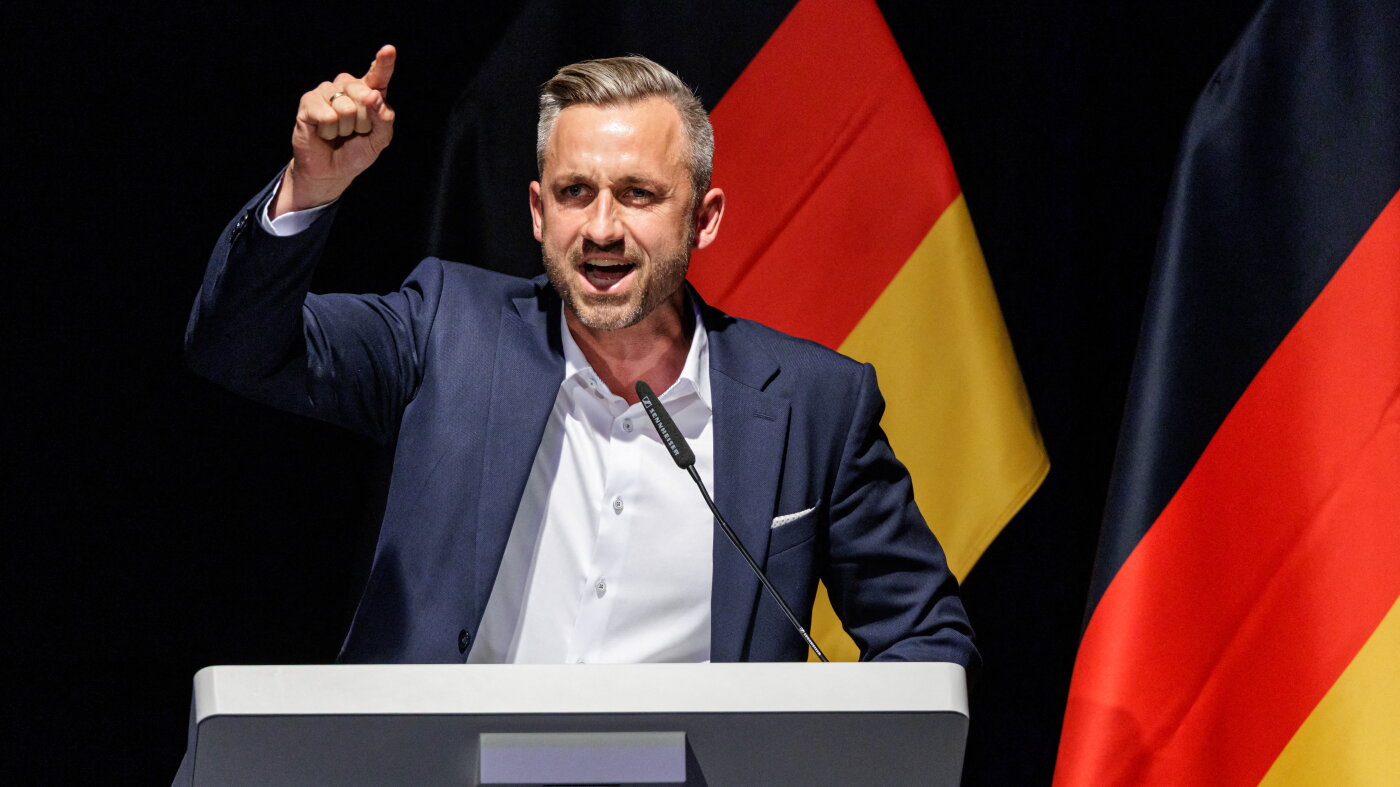
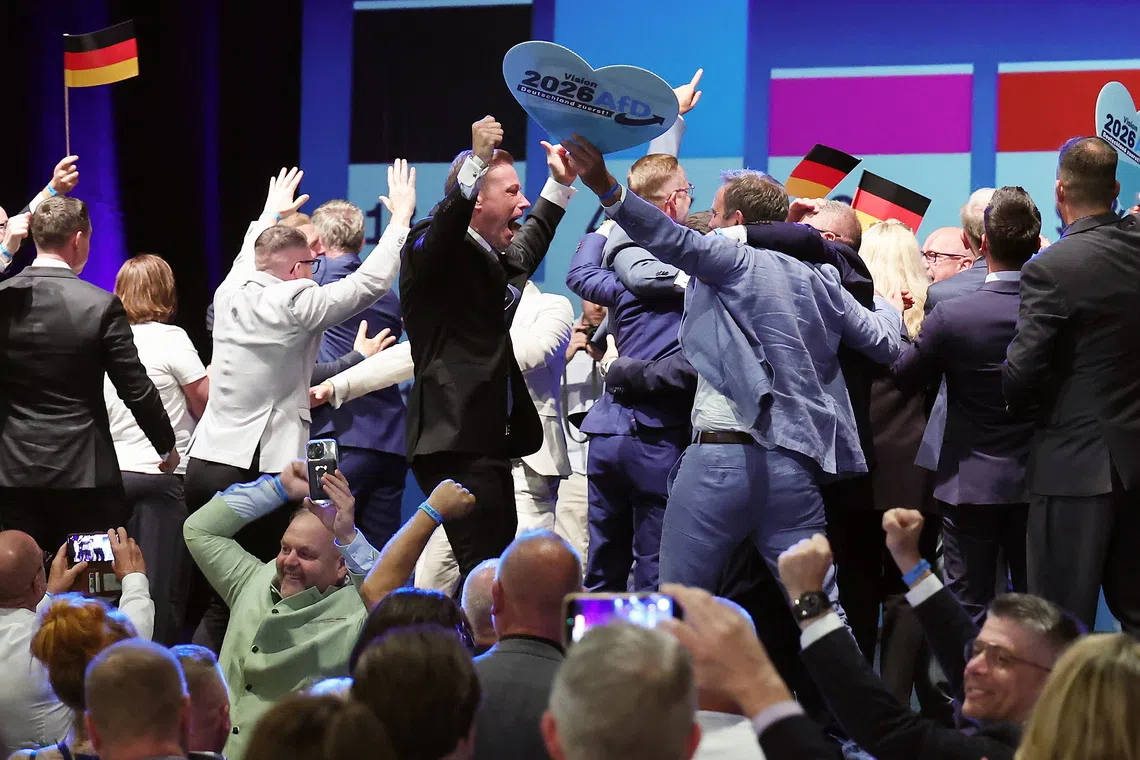
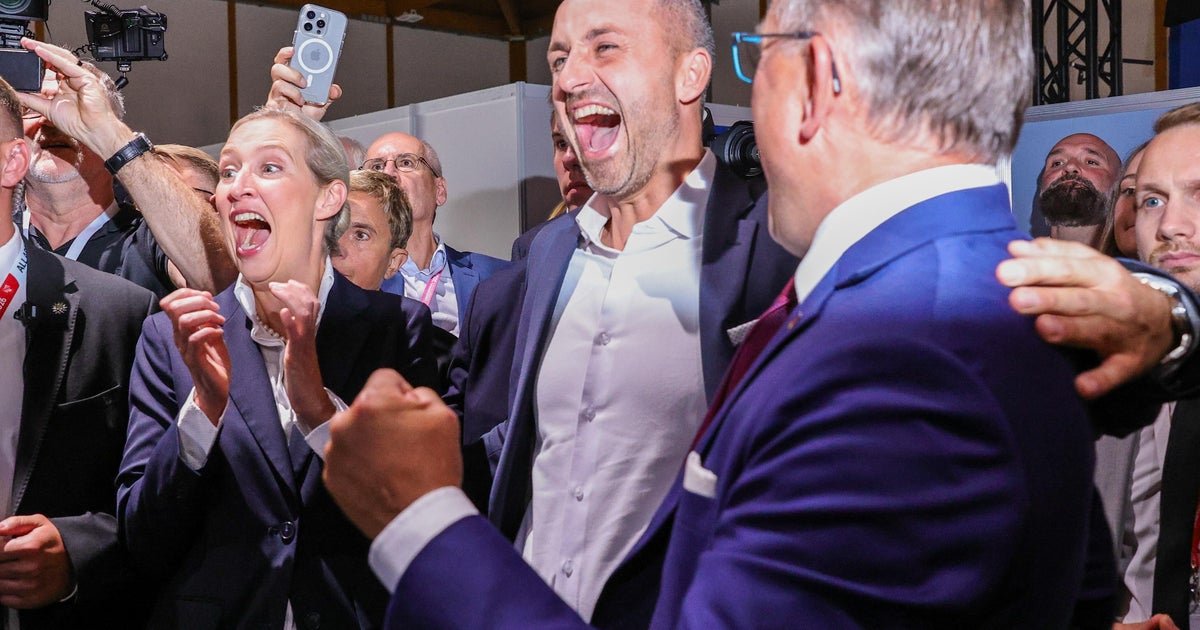
German politician Ulrich Siegmund has surged to success with a simple promise to return his community to the more comfortable times of the past.
asserted
Siegmund → surge → past
“We want our good, old, safe Germany back at last,” was one of his most common refrains when urging voters to back him to lead the eastern German state of Saxony-Anhalt.
asserted
We → want → Anhalt
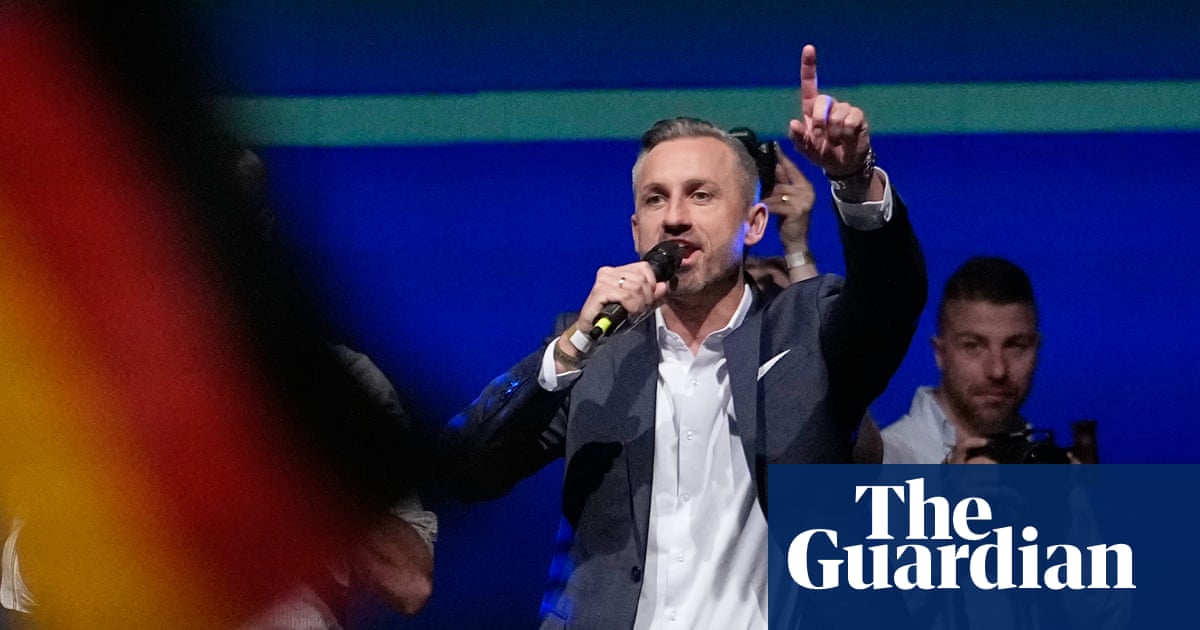
Voters responded with a thumping endorsement for Siegmund and the party he leads, the Alternative für Deutschland (Alternative for Germany), known as the AfD.
Interim results showed the AfD won 44 per cent of the vote, although it is not yet clear whether this will be enough to install Siegmund in power.
asserted
this → respond → power
The projected results show the AfD on course to win 39 seats in the 83-seat state parliament – three short of the 42 required for an overall majority.
asserted
AfD → project → majority
If he does fall short, he would need to form a coalition with minor parties to form a government – though several have ruled out working with the AfD. Siegmund has so far said he is unwilling to lead a minority government, though other AfD figures have suggested it as a possibility.
uncertain
figures → fall → possibility
Whatever the outcome in Saxony-Anhalt, the result leaves no doubt about the rise of the AfD, given that the next major contender won just 17 per cent of the vote.
asserted
contender → leave → vote
It was another sign of how the public has turned against the CDU’s national leader, Chancellor Friedrich Merz, as he struggles to deliver on promises to bring better times to the country.
asserted
he → turn → country
In promising to bring back the good times by looking to the past, Siegmund looks dangerous and divisive to opponents, who believe the AfD leans so far to the right that it is akin to a Nazi party.
asserted
it → promise → party
A telegenic former salesman, 35-year-old Siegmund looks nothing like the extremists of the past who have frightened voters with their black shirts and Nazi salutes.
asserted
who → look → shirts
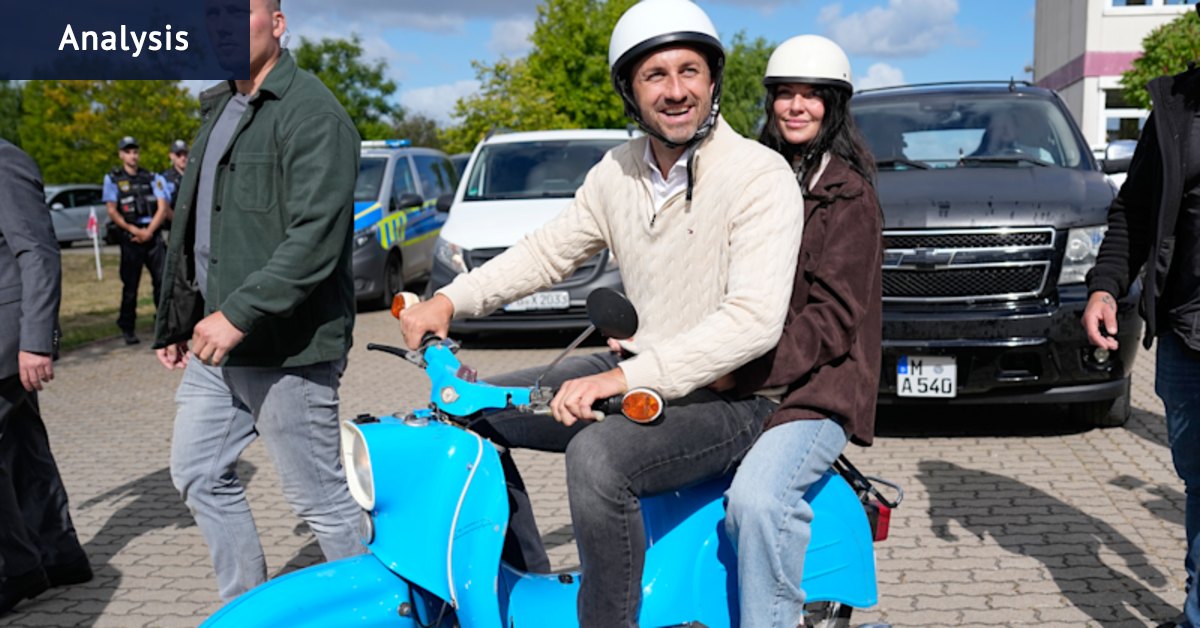
He was often photographed during the campaign with a smile on his face at campaign stops when he turned up on a blue scooter.
asserted
he → photograph → scooter
The scooter, a model made in former East Germany, embodied what Germans call ostalgie: nostalgia for times before the fall of the Berlin Wall.
asserted
Germans → make → Wall
His policies, however, offer radical change when Germany is divided over migration and national security, while suffering from slow growth and long-term threats to giant manufacturing businesses such as carmakers.
asserted
Germany → offer → carmakers
The AfD agenda includes the deportation of refugees who do not have approval to stay in the country, free childcare and tax incentives to encourage larger families and boost the native population, and the restoration of trade with Russia to allow imports of oil and gas.
asserted
who → include → oil
It also wants to cut aid to Ukraine in its war with Russia; a halt to funding for public broadcasters, a ban on gay pride flags at schools, and funding cuts for teaching “woke” subjects.
asserted
It → want → subjects
With his record victory on Sunday, Siegmund has become the most successful hard-right politician in Germany since the country formed its modern democracy from the ashes of the Second World War and the destruction of the National Socialist party and its leader, Adolf Hitler.
asserted
country → become → party
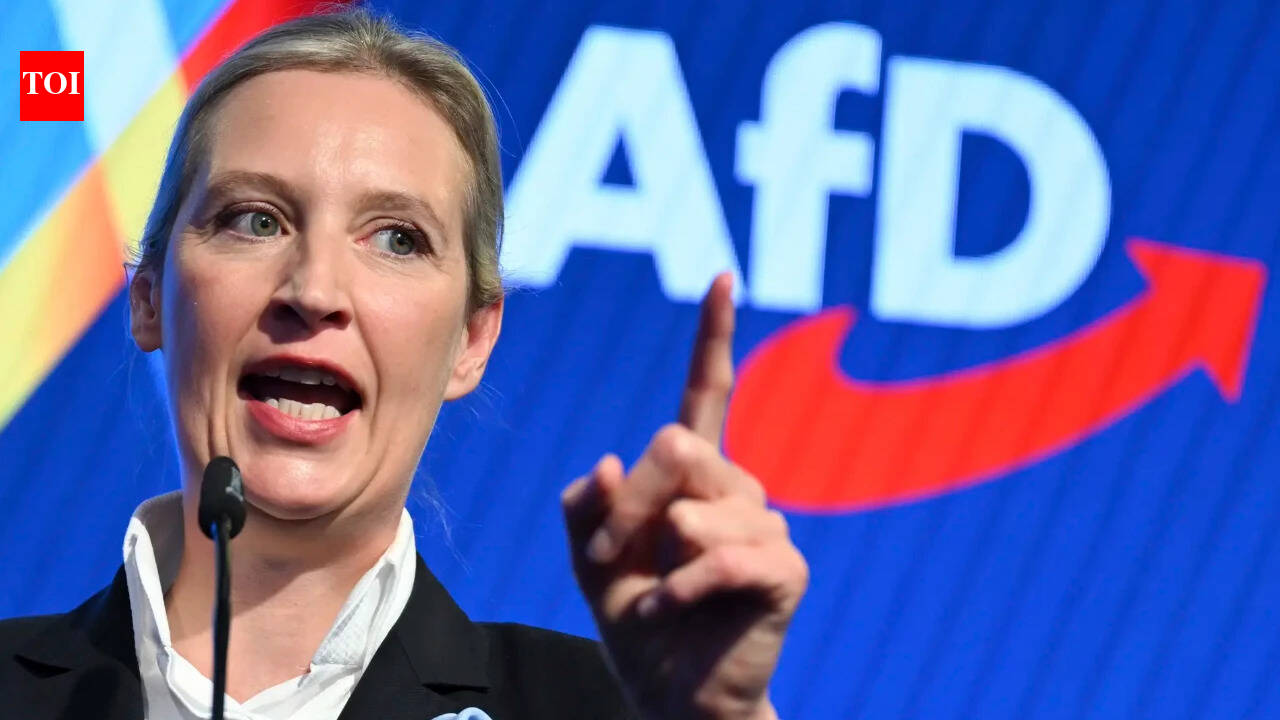
The federal AfD co-leader, Alice Weidel, took the party to 20.8 per cent of the vote in the national elections of February 2025, but the CDU gained 28.5 per cent under Merz.
asserted
CDU → take → Merz
In Saxony-Anhalt, however, the AfD has more than doubled its vote since the last state election in 2021, when it finished second with 20.8 per cent.
asserted
it → double → cent
Germany’s domestic intelligence agency labelled the AfD an extremist organisation in May last year, but the party challenged the ruling in court and gained an injunction in February this year to pause the classification until a final legal decision on the dispute.
uncertain
party → label → dispute
Some of the party’s early leaders have been exposed for their previous links to a neo-Nazi group.
asserted
Some → expose → group
Asked about the murders of 6 million Jews during the Holocaust, some AfD figures have hedged in their language rather than categorically denounce the crimes of the past.
asserted
figures → ask → past
When Siegmund was asked about the Holocaust by news site Politico earlier this year, he said he could not “presume to judge” whether it was humanity’s worst-ever crime.
uncertain
it → ask → Politico
One of Germany’s biggest magazines, Der Spiegel, called Siegmund “the most dangerous man in Germany” in a cover story in August.
Siegmund was born in East Germany in 1990 and moved to Berlin in his early years, where he set up a business selling household air fresheners.
His first move into politics was to join the CDU, but he shifted to the hard right in 2014 by joining the AfD, then in an early phase when it was commonly dismissed as a minor party with neo-Nazi leanings and therefore unelectable as a major political force.
asserted
it → call → force
The COVID-19 pandemic increased Siegmund’s profile when he became popular on social media with his complaints about social restrictions.
asserted
he → increase → restrictions
The election outcome is a serious blow to Merz, though not a surprise given his poor personal polling over the past year.
asserted
outcome → give → year
Siegmund has described Merz as an asset for the AfD.
“A very good campaigner for us in this election campaign was Friedrich Merz.
asserted
campaigner → describe → campaign
Every day this man is in the chancellery is one too many,” he said.
asserted
he → say → chancellery
The next step for the CDU is to take stock and consider whether Merz should remain leader, but Germany’s next national election is not due until 2029.
asserted
election → take → 2029
The state, part of what was East Germany, is relatively small, with only about 1.7 million registered voters.
asserted
what → register → voters
Almost 60 million people were registered to vote nationwide in the election of the German parliament, or Bundestag.
asserted
people → register → parliament
For the AfD, the next step is to seek to form a government.
asserted
step → seek → government
If it does, the country will have a hard-right government, albeit at state level, for the first time in its post-war era.
asserted
country → do → era
Dismissed as a minor party for so long, the AfD has confirmed its power as a major force – with Siegmund as its smiling face.
asserted
AfD → dismiss → face
The upheaval in Germany may have only just begun.
uncertain
upheaval → begin → Germany
Get a note directly from our foreign correspondents on what’s making headlines around the world.
asserted
what → get → world
 The Aporia