Germany’s far-right AfD wins key Saxony-Anhalt election by landslide
BERLIN –
asserted
AfD → win → landslide
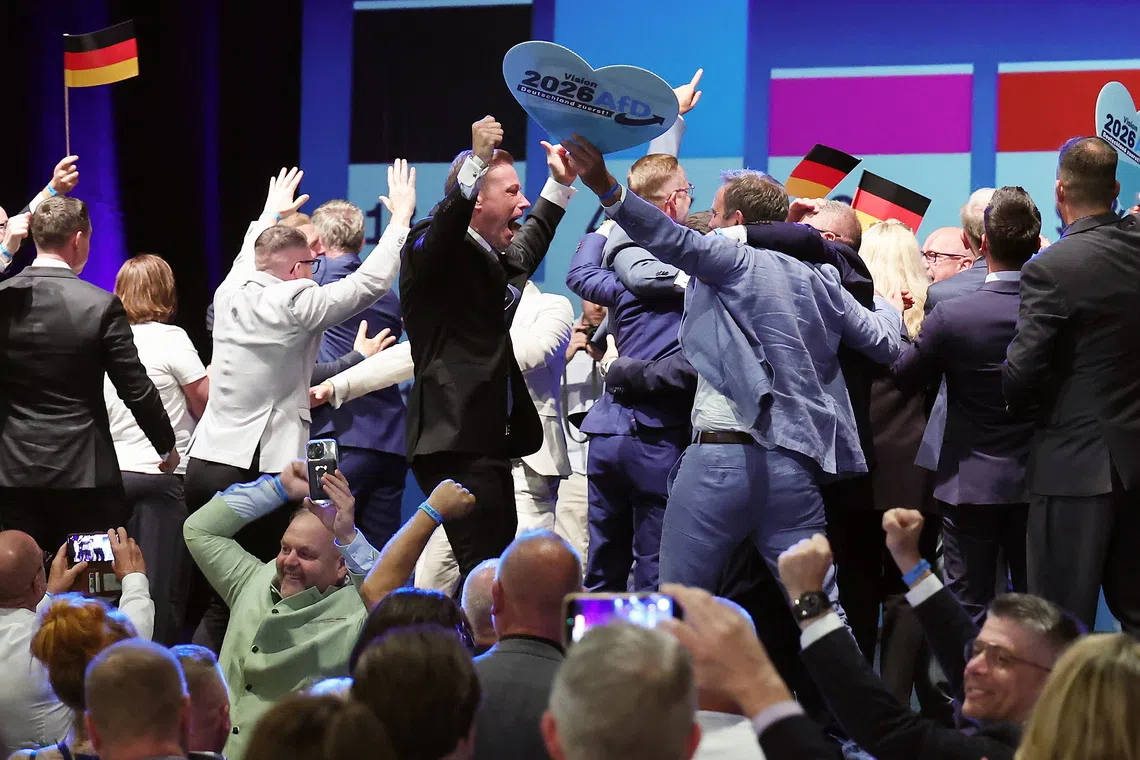
Germany’s far-right AfD won a landslide victory in a key regional election on Sept 6 in the former communist east, a result seen as a stinging rebuke for Chancellor Friedrich Merz, but looked set to miss out on an absolute majority to govern alone.
asserted
AfD → win → majority
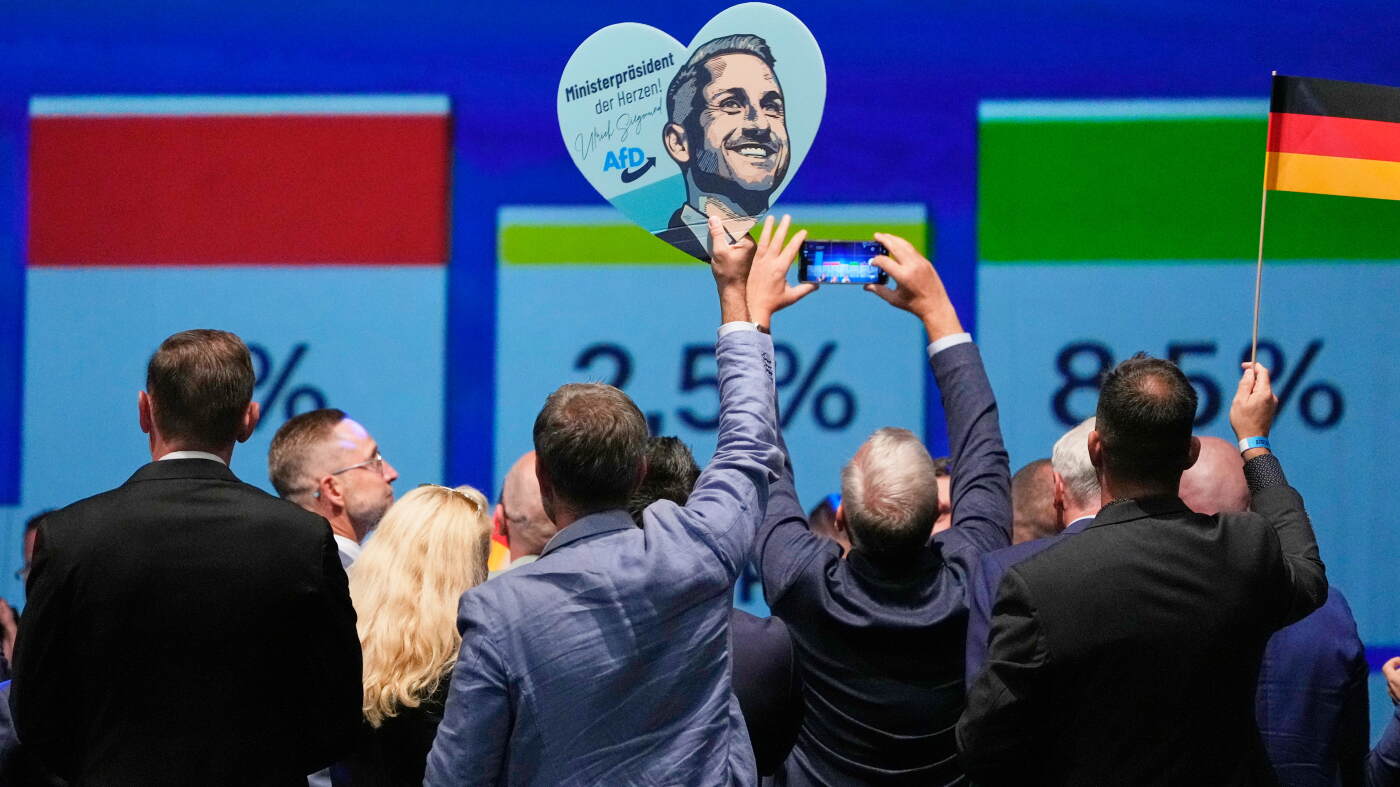
“We have made history today,” said a jubilant Ulrich Siegmund, the 35-year-old lead candidate of the anti-immigration Alternative for Germany party in Saxony-Anhalt state, as the vote count continued.
asserted
count → make → state
The AfD won 44 per cent, more than doubling its support, and far ahead of the around 18 per cent for the centre-right Christian Democratic Union (CDU) of Merz, according to projections by public broadcasters ARD and ZDF.
uncertain
AfD → win → ARD
The CDU’s state premier Sven Schulze called the outcome “a severe blow”, but said he will stay on as caretaker leader during what could be a long and painful process towards a new state government.
uncertain
what → call → government
All major parties have agreed on a “firewall” of non-cooperation with the AfD, whose state branch is categorised as “right-wing extremist” by Germany’s domestic intelligence agency.
asserted
branch → agree → agency
The AfD’s national co-leader Alice Weidel – who has long condemned the “firewall” concept as undemocratic – praised her party’s result as “sensational” and said the party had “received a very clear mandate to govern” in Saxony-Anhalt.
However, it remains far from clear who will eventually rule, as the AfD gained just less than half of parliamentary seats.
asserted
AfD → condemn → seats
The CDU had hoped to cobble together a multi-party coalition to cling to power, but would still lack a majority even if it teamed up with the centre-left Social Democratic Party, Greens and the far-left Die Linke.
asserted
it → hop → Party
The AfD meanwhile may hope to win the support of the small pro-Russian BSW party – a leftist group that is tough on immigration, and which was expected to just scrape into Parliament with 5 per cent.
uncertain
which → hope → cent
Weidel said that “naturally, a government scenario involving the BSW is very interesting for us”.
asserted
scenario → say → us
A first-ever AfD state government would be a shock for many in Germany, which has been at pains to atone for its dark history of World War II and the Holocaust and so far kept extremist parties at bay.
asserted
which → atone → bay
“I am personally appalled by this election result,” said Josef Schuster, president of the Central Council of Jews.
asserted
Schuster → appal → Jews
The spectre of a far-right state government drew thousands of the AfD’s opponents to a rally on Sept 5 in the regional capital Magdeburg, with banners saying “life is better without Nazis”.
asserted
life → draw → Nazis
“I’m very worried,” demonstrator Laura Saalfeld told AFP, fearing a change in atmosphere.
“Far-right sympathisers will show themselves more openly on the streets,” she said.
asserted
she → ’m → streets
Siegmund has ambitions to become state premier and lead a political revolution from Saxony-Anhalt that would propel the party to national victory in 2029.
asserted
that → have → 2029
On the campaign trail, Siegmund – a former entrepreneur with a sharp undercut hairstyle and a huge social media following – has been mobbed by adoring fans, many wearing T-shirts bearing his likeness.
asserted
many → mob → likeness
The party has tapped a sense of nostalgia for communist East Germany as well as lingering resentment about an enduring wealth gap with the west decades after the 1989 fall of the Berlin Wall.
asserted
party → tap → Wall
In line with the sometimes defiant sense of local “Ossie pride”, Siegmund has often ridden the iconic local Simson bike, including to the polling booth Sept 6 in his home town of Tangermuende.
asserted
Siegmund → ride → Tangermuende
While Siegmund has been dubbed the friendly face of the AfD, his campaign promises have been radical, including targeting irregular migrants with a “remigration and deportation offensive” from day one.
asserted
promises → dub → day
The party’s anti-“woke” agenda also includes vows to replace LGBTQ pride rainbow flags at public schools with the German standard, and to lessen the emphasis on the Third Reich in history teaching.
asserted
agenda → include → teaching
The German Economic Institute has warned that the AfD’s immigration policy would be “ruinous” for Saxony-Anhalt, which is highly reliant on foreign-born workers, especially in the health sector.
asserted
which → warn → sector
The AfD win heaps pressure on Merz, who has vowed to reboot a stagnant economy and restrict irregular immigration, but has seen his party beaten by the AfD in national surveys too.
asserted
party → heap → surveys
“The result is even worse than what opinion polls had suggested beforehand,” wrote Holger Schmieding of Berenberg bank.
uncertain
Schmieding → suggest → bank
“This will most likely trigger a period of serious and potentially noisy soul-searching within the CDU.
asserted
This → trigger → CDU
“A major reason for the AfD success seems to be that the federal government under Merz has become deeply unpopular.”
asserted
government → seem → Merz
 The Aporia