Photo via Dawn

Nepal's grim DNA puzzle to identify flood dead

Read the original at Dawn ↗
Cite

AFP. (2026, October 2). Nepal's grim DNA puzzle to identify flood dead. Dawn. https://www.dawn.com/news/2034210/nepals-grim-dna-puzzle-to-identify-flood-dead

Dated when The Aporia collected the article, usually within hours of publication. Check the original for its exact date and byline.

Dawn · collected 2026-10-02 · by AFP

Quick Summary

Nepal faces the monumental task of identifying victims following catastrophic floods triggered by glacial collapse on August 26. Disaster authorities have recovered 1,454 bodies, with only 112 identified and returned to families, leaving thousands more missing or unaccounted for. DNA testing is the primary method used, but limited technical capacity and manpower mean identification could take weeks. Nepal's two forensic laboratories are processing thousands of samples, far exceeding their usual annual workload of 1,000-1,500 cases, complicating efforts to match bodies with families due to the extensive geographical spread of remains.
Written by AI on 2026-10-02, from this article's own text only (the story summary below draws on all the coverage).
See how they differ ↓

AI analysis

Story summary

Nepal ended search and rescue operations on October 5, 2026, more than a month after devastating floods that killed at least 1,455 people and left over 5,285 missing. The National Disaster Risk Reduction and Management Authority (NDRRMA) chief, Dharam Raj Uprety, stated that while active searches would stop, authorities will still recover remains or property found during the rehabilitation process. Prime Minister Balendra Shah's office officially suspended non-essential search operations, shifting focus to reconstruction and rehabilitation efforts. The government plans to amend laws to facilitate death registration for those missing, allowing families access to relief funds and compensation. Survivors like Madan Lal Lawat in Kathmandu are now forced to honor the dead through symbolic rituals due to the inability to recover bodies or declare deaths legally within Nepal's 12-year presumption period.

Written for “Nepal Flood Recovery Efforts” on 2026-11-18, grounded in this article and the 6 other(s) covering the same event.

How they differ

7 outlets covered “Nepal Flood Recovery Efforts”.

What each outlet says

One AI summary per outlet of its latest article on this story, written from that article alone and checked against it. Open the article for the outlet's own words.

DawnThis outlet2 Oct

Nepal faces the monumental task of identifying victims following catastrophic floods triggered by glacial collapse on August 26. Disaster authorities have recovered 1,454 bodies, with only 112 identified and returned to families, leaving thousands more missing or unaccounted for. DNA testing is the primary method used, but limited technical capacity and manpower mean identification could take weeks. Nepal's two…

Nepal's grim DNA puzzle to identify flood dead (this article)
New York Post5 Oct

Nepal has ceased its search and rescue operations following a devastating August flood that killed at least 1,455 people. Officials now plan to focus on rehabilitation efforts, including legal processes to declare missing individuals deceased, allowing families to handle insurance and banking formalities. Phanindra Paudel, chief of the National Emergency Operation Centre, stated that while active searches are…

Nepal ends search and rescue efforts after flood, focuses on rehabilitation →
ABC News (AU)5 Oct

Nepal has concluded its search and rescue efforts following August’s devastating floods and now plans to help families of those missing by allowing them to declare their loved ones deceased for legal purposes. The country also aims to mitigate future flood risks by starting a process to drain four glacial lakes in the mountains.

Nepal focuses on rehabilitation as it ends search and rescue after flood →
Times of India6 Oct

Nepal has suspended search operations for those missing after the Aug 26 floods, which claimed 1,455 lives and left 5,285 people unaccounted for, including 189 Indians. The decision to halt searches was made at a meeting chaired by Prime Minister Balendra Shah and follows recommendations from various committees and inspection teams. With the shift towards reconstruction and rehabilitation efforts, Nepal plans to…

Nepal ends flood search with over 5,000 still missing, including 189 Indians →
BBC6 Oct

At Pashupatinath temple in Kathmandu, Nepali families honor relatives who are missing after a flood near the China-Nepal border last month. With over 5,000 people still unaccounted for and no bodies recovered, families cannot obtain death certificates needed to claim compensation or settle inheritance issues. Nepal’s Civil Code requires 12 years of disappearance before declaring someone dead, which complicates…

Many Nepalis swept away in the floods aren't officially dead, leaving families in limbo →
CBC7 Oct

The Nepalese government has officially ended its search for missing individuals following catastrophic flash floods on August 26, with nearly 5,300 people still unaccounted for. This decision has led to mixed reactions from families; some protest the halt in rescue efforts while others seek death certificates for insurance and burial purposes. The Prime Minister's office stated that focus will now shift towards…

Nepal search for missing after flash floods officially ends, with nearly 5,300 people still unaccounted for →
Show 1 more outlets
The Hindu7 Oct

Nepal is amending two laws to facilitate death registration for 5,285 people who remain missing after devastating August 26 floods that killed at least 1,455 others. The government ended its search and rescue operation on October 5, 2026, shifting focus to rehabilitation and reconstruction. Officials stated the amendments will help families access relief, compensation, and other legal benefits, addressing…

Nepal moves to amend laws to facilitate death registration of 5,285 still missing after August 26 floods →

Where they agree and split

The full story: what happened, how it changed, and all 7 articles →

Compared with similar articles

This article reads unscored and hedges 14% of its claims. Each row says how that neighbour differs.
BBC News
Hedges 4 of 60 claims Outlet record 65/100
Al Jazeera
Hedges 1 of 2 claims Outlet record 60/100
“While both articles discuss the floods in Nepal, Article A describes the immediate impact of the disaster, while Article B focuses on the aftermath and efforts to identify victims using DNA testing.”
The Hindu
Leans left Hedges 2 of 88 claims Outlet record 60/100
ABC News (AU)
Hedges 6 of 22 claims Outlet record 67/100
“The articles discuss different aspects of the flood aftermath; one focuses on DNA testing for identification and individual search efforts, while the other reports on Nepal's plans to drain glacial lakes to mitigate future risks.”
ABC News (AU)
Hedges 0 of 3 claims Outlet record 67/100
“While both articles discuss the aftermath of the catastrophic Himalayan floods in Nepal, they describe different stages and aspects of the recovery process.”
Times of India
Hedges 3 of 49 claims Outlet record 59/100
“While both articles are about floods in Nepal, they describe different stages of the disaster: Article A reports immediate casualties and evacuations from recent severe rain (September 24-27), while Article B discusses a more extensive DNA identification effort following earlier catastrophic Himalayan floods triggered by glacial collapse on August 26.”
Deutsche Welle
Hedges 3 of 37 claims Outlet record 95/100
“The articles describe different aspects of the flood disaster, one focusing on displacement and housing issues for survivors, and the other on efforts to identify victims using DNA testing.”
The Independent
Hedges 5 of 39 claims Outlet record 59/100
“While both articles discuss the floods in Nepal resulting from the same initial incident (glacial and rock collapse), they describe different aspects of it - one focusing on its economic impact, the other on efforts to identify victims.”
Al Jazeera
Hedges 4 of 53 claims Outlet record 60/100
“The articles discuss different aspects of the flood disaster in Nepal, with Article A focusing on its impact on tourism and business closures, while Article B focuses on the use of DNA testing to identify victims. Though both refer to the same flooding incident, they describe distinct consequences happening at different times.”
The Hindu
Leans left Hedges 8 of 92 claims Outlet record 60/100
“Article A discusses the need for regional disaster preparedness in light of recent floods, while Article B specifically focuses on DNA testing efforts to identify victims from a particular flood incident.”

Story

Nepal Flood Recovery Efforts
World · 7 article(s) covering the same event. Compare every outlet's account →
How this article was measured signals, leaning charts, publisher record, byline, topics and claims

Signals How these are calculated →

Claims extracted
29
sentences that state something as happening or true
Uncertain
14%
4 of 29 hedged ("reportedly", "may", "according to")
Leaning
not political
takes no side on a contested political question
Publisher signals
67/100
Dawn's corrections and hedging, across everything collected from it. Not a measure of accuracy.
Outlets on this story
7
World
Same framing elsewhere
1
articles that frame the event the way this one does
Analyzed 2026-10-02 · how these are computed

How this is being covered How these are calculated →

Article leaning vs. publisher reliability
Source leaning vs. consistency

Publisher

Dawn · 3393 article(s) · 5 correction(s) detected
Running correction rate · 5 correction(s)

Who wrote this

AFP
1274 article(s) here · 1 carrying a prediction
Chinese President Xi Jinping personally greeted Donald Trump at the airport as the US leader arrived Wednesday ahead of a trilateral meeting in Shenzhen that will also include Russia’s Vladimir Putin, AFP footage showed.
Bahrain's armed forces said they "confronted, intercepted and destroyed a number of treacherous Iranian aerial attacks today... before they could achieve their objectives", while Iran's Revolutionary Guards said they targeted a U.S.-operated radar system.
Jones said measles patients are usually “extremely miserable”, adding “it is often the worst illness the child will have ever gone through in their life”. Jessica Ericson, a pediatric infectious disease physician at a children’s hospital in Pennsylvania, has seen around 30 measles patients arrive in her department since the spring. This year more than 1,500 cases have been reported in Pennsylvania, which has a large Amish population that avoids vaccinations on religious grounds. Seven cases have been fatal — all in unvaccinated patients. “The fevers do tend to be more extreme than most viruses,” she told AFP, adding that they are “much, much higher than we’re accustomed to seeing with a typical illness”.
Cricket Australia (CA) on Wednesday ruled out reopening an investigation into the 2018 ball-tampering scandal but will launch an independent forum for players to share their version of events as a “circuit breaker”.
Thursday’s trilateral has triggered fears that the three powerful men could decide the fate of Ukraine over the heads of Kyiv and Europe, and seek to carve up the world into 21st-century spheres of influence.
Thursday's (November 19) trilateral has triggered fears that the three powerful men could decide the fate of Ukraine over the heads of Kyiv and Europe, and seek to carve up the world into 21st-century spheres of influence.
“And to be frank, that is unfortunately what the draft cover decision is doing,” he said, warning ministers assembled in Antalya that it could make the process “untenable”.
2026-11-18 · assertive framing · Tensions rise over proposed deal at COP31
“If there is (such a threat), they will pay a price the likes of which no other country has ever paid before,” Trump said, adding: “I hope it’s not, but we take it very seriously because they happen to be crazy.”
2026-11-18 · assertive framing · Gulf nations on alert after U.S. strikes Iranian island
Recommended Stories list of 3 items- list 1 of 3Turkiye pushes electrification top of climate agenda as COP31 set to open - list 2 of 3Which countries and industries emit the most greenhouse gases? - list 3 of 3COP31 opens amid energy crisis as activists demand climate action The draft, as written, could make the negotiations “untenable”, said Wopke Hoekstra, the European Union’s climate envoy, adding that “the cover decision does not go in the right direction and needs significant change”. “It’s very easy to draw red lines at the start of the process,” said Joao Paulo Capobianco, Brazil’s environment minister, adding that deadlocks can be overcome through “an adjustment in the wording” in the draft.
2026-11-17 · assertive framing · Tensions rise over draft climate deal at COP31
Reuters could not immediately determine whether the malicious code had been successfully used in each case or the extent of any resulting compromises.
Wire or desk byline, not an individual reporter.
Also by AFP
Nothing else under this byline is closely related to this article, so these are simply their most recent.
All 1274 articles by AFP →

Topics

AFP China Nepal Nepali the National Forensic Science Laboratory

Subjects

Nepal GPE · 7× China GPE · 3× Thapa PERSON · 3× AFP ORG · 2× Nepali NORP · 2× Ram PERSON · 2× the National Forensic Science Laboratory ORG · 2× Betrawati GPE · 1× Rajesh Ram PERSON · 1× Suroj Kumar PERSON · 1×

Narrative

At Nepal’s two forensic laboratories, both in Kathmandu, experts are working to profile samples and build a database on a scale they have never handled before. “In a year we would analyse 1,000-1,500 samples, often in case of paternity or crime scenes,” said Mukul Pradhan, chief scientific officer at the National Forensic Science Laboratory.
framing: assertive · carried by 1 article(s) · first seen 2026-10-02
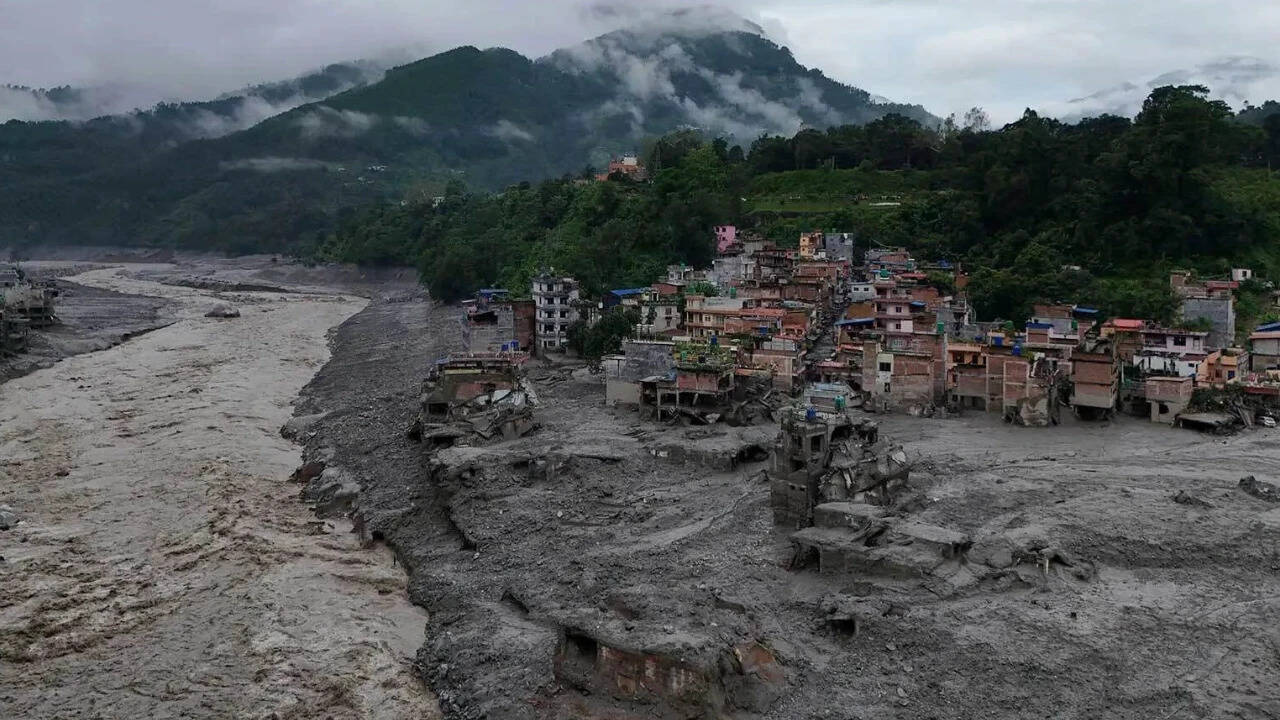
“I searched for him everywhere, but I could not find his body,” 53-year-old Ram told AFP, still waiting for answers about his son Suroj Kumar, a garage mechanic in Betrawati, which was swamped by the floods.
2026-10-02 · Dawn
Nepal's grim DNA puzzle to identify flood dead · assertive framing

Claims (29 extracted, 4 hedged)

Clutching a photograph of his missing son, Rajesh Ram is pinning his hopes on DNA testing — like thousands of others desperately seeking relatives swept away by Nepal’s catastrophic Himalayan floods. asserted
Ram → clutch → floods
“I searched for him everywhere, but I could not find his body,” 53-year-old Ram told AFP, still waiting for answers about his son Suroj Kumar, a garage mechanic in Betrawati, which was swamped by the floods. uncertain
which → search → floods
Nepal was overwhelmed by the sheer scale of destruction from the tsunami-like wall of freezing water and debris triggered by a glacial and rock collapse on the Nepal-China border on August 26. asserted
Nepal → overwhelm → August
With thousands of DNA profiles to process, fragmented remains and limited technical capacity and manpower, experts warn matching bodies to families could take weeks. uncertain
matching → process → weeks
Nepali disaster authorities have recovered 1,454 bodies — but around a third of those are only partial remains. asserted
third → recover → those
Just 112 bodies have been identified and returned to their families. asserted
bodies → identify → families
A further 5,285 people are missing in Nepal, including hundreds of foreigners. asserted
people → miss → foreigners
In China, the toll is 43 dead and 519 missing, according to state media — taking the combined toll to nearly 1,500 dead and 5,800 missing. uncertain
toll → miss → 1,500
At Nepal’s two forensic laboratories, both in Kathmandu, experts are working to profile samples and build a database on a scale they have never handled before. “In a year we would analyse 1,000-1,500 samples, often in case of paternity or crime scenes,” said Mukul Pradhan, chief scientific officer at the National Forensic Science Laboratory. asserted
Pradhan → work → Laboratory
“We are now processing thousands of samples.” asserted
We → process → samples
‘Pain’ A total of 3,685 forensic samples are undergoing DNA testing, including more than 1,300 collected from recovered bodies. asserted
total → undergo → bodies
Blood samples are easier to profile, but those taken from teeth or bones can take several days to process. asserted
those → profile → days
Nepal has buried more than 1,200 bodies, carefully numbering and tagging them so they can be retrieved if a DNA match is found. asserted
match → bury → them
“A large number of people are missing, and the bodies that have been found they are difficult to identify,” said Nepali police spokesman Abi Narayan Kafle. asserted
Kafle → miss → people
“We understand the pain people are in, and our teams are working diligently. asserted
teams → understand → pain
Some bodies were carried far downstream by the floodwaters, further complicating the task, said Nirajan Thapa, Chief of Biology section at the National Forensic Science Laboratory. asserted
Thapa → carry → Laboratory
“In an earthquake or an accident, people are recovered in a specific area, so we work in a closed scenario — the body’s DNA has to be compared to a limited number of samples,” Thapa said. asserted
Thapa → recover → samples
“But that scale has now become very large.” DNA alone cannot identify a body without a reference sample from a relative. asserted
DNA → become → relative
“Just by extracting a DNA profile is not enough to identify someone,” Thapa said. asserted
Thapa → extract → someone
“We have to extract a DNA profile from their relatives and then compare. asserted
We → have → relatives
That means authorities must process samples from both unidentified remains and thousands of relatives before they can establish matches. asserted
they → mean → matches
Several countries have sent in support teams, including neighbouring India and China, as well as South Korea. asserted
countries → send → India
Fingerprint experts from the United States and Singapore are also assisting. asserted
experts → assist → States
Thapa said that with that help, matching could begin within a few weeks. uncertain
matching → say → weeks
But until the results come, the families behind those samples face a painful limbo. asserted
families → come → limbo
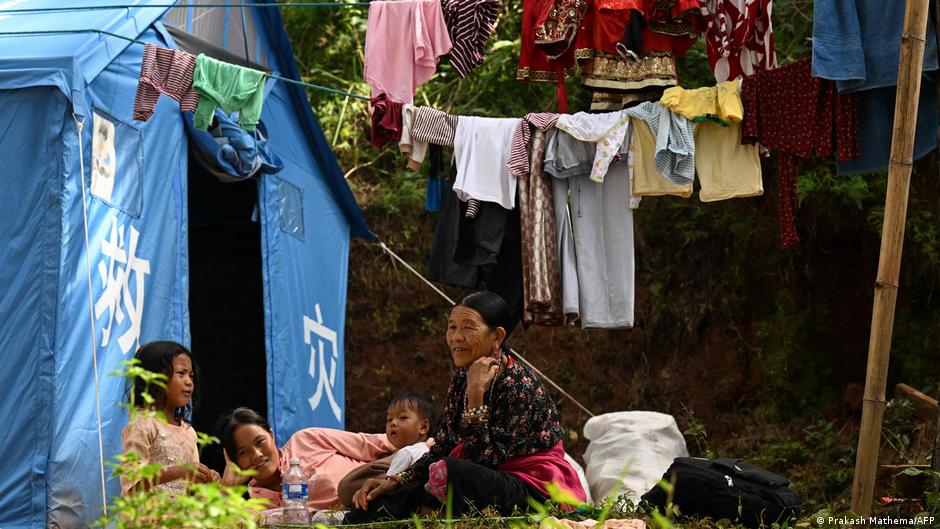
Some families have held symbolic cremation funerals for the missing. asserted
families → hold → missing
Ram wonders if he will ever get any answers. asserted
he → wonder → answers
“I am waiting if I can find any remains of my son,” he said. asserted
he → wait → son
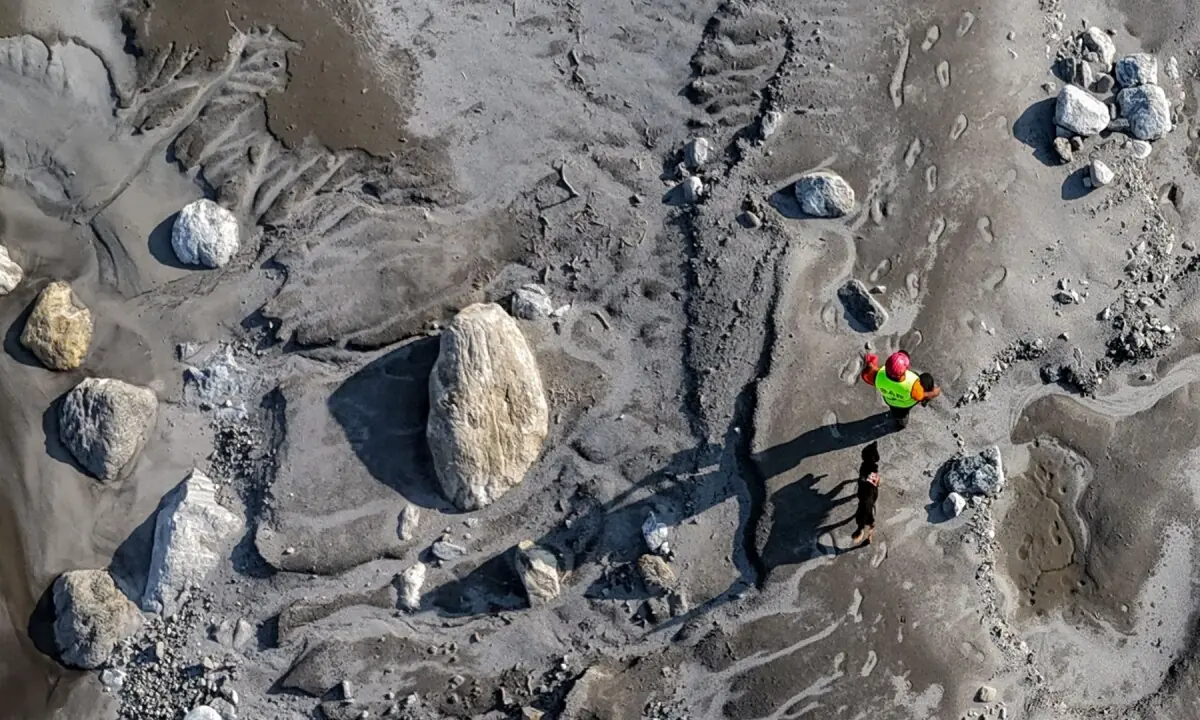
Header image: An aerial view shows a search and rescue team member, along with a sniffer dog, looks for missing people following the August 26 flash flood, on the banks of the Trishuli River in Nepal’s Nuwakot district on September 30, 2026. asserted
member → show → September
Give feedback · no sign-in needed

No sign-in needed for now. Your note is sent without a name, so it cannot be answered.

History Support