At the Pashupatinath temple, on the banks of the Bagmati River in Kathmandu, Madan Lal Lawat joined other families in honouring loved ones who were lost when a deadly flood tore through the China-Nepal border last month.
asserted
flood → join → border
In Hindu tradition, when a body cannot be recovered, a symbolic effigy is made from sacred "kusha" grass to represent the dead, allowing relatives to perform last rites.
asserted
relatives → recover → rites
With more than 5,000 people still missing and the government ending rescue operations, this is the only way people like Lawat can honour the dead.
asserted
people → miss → dead
Five of his relatives - including his brother - were caught in the water's onslaught and are still missing.
asserted
Five → include → onslaught
Lawat survived because he was driving his bus outside his village, Betrawati.
asserted
he → survive → village
The last Lawat heard from survivors is that his brother Mangal died while going door-to-door, trying to warn others to leave.
"I don't know how to start over.
asserted
I → hear → others
Police say they're still searching for the bodies, but I'm not sure they'll ever be found," Lawat says.
asserted
Lawat → say → bodies
He has little doubt they are dead.
asserted
they → have → doubt
In Nepal, a missing person is only presumed dead after 12 years.
asserted
person → miss → years
Section 40 of Nepal's Civil Code does allow for some exceptions, but it does not have a provision for disasters like the flood witnessed last month.
asserted
it → allow → flood
Families like Lawat's have told the BBC they are struggling to obtain death certificates, affecting everything from accessing flood compensation to the transfer of properties and even inheritance.
asserted
they → tell → properties
Relatives can receive up to 25,000 rupees (£122; $162) for funeral costs, in addition to about 200,000 rupees (£981; $1,302) in bereavement compensation for the first relative who died, and 100,000 rupees (£491; $651) for each additional death.
asserted
who → receive → death
But this is only possible once they submit a death certificate.
asserted
they → submit → certificate
So as families try to rebuild their lives, many are now caught in an administrative nightmare.
asserted
many → try → nightmare
"In view of the current disaster, the law is outdated," says constitutional law expert, Bipin Adhikari.
asserted
expert → say → disaster
He explains the law was meant to account for people who travelled abroad and weren't heard from for years.
asserted
who → explain → years
"But technology has advanced now, it isn't as difficult to send or receive information," he argues.
asserted
he → advance → information
For Lawat, the legal minefield has made an already devastating loss even harder to navigate.
asserted
loss → make → Lawat
When he tried to obtain a death certificate last week, officials at the local municipality office turned him away.
asserted
officials → try → him
"They said they're still discussing the death certificate issue.
asserted
they → say → issue
We aren't sure what to do now.
asserted
We → do → what
There's so much uncertainty," he tells us.
asserted
he → be → us
Even when bodies are recovered, identifying their identities is a slow and challenging task.
asserted
identifying → recover → identities
More than 1,400 bodies have been recovered so far, and Nepal has little experience in processing DNA at such scale.
asserted
Nepal → recover → scale
In some cases, authorities have taken DNA samples, then buried the bodies with markers in the ground, should families claim them.
uncertain
families → take → them
Given the scale of damage and loss, families say compensation is desperately needed.
asserted
compensation → give → damage
Nepal's latest assessment counts 7,570 private buildings damaged or destroyed, home to nearly 33,000 people based on census data.
asserted
assessment → count → data
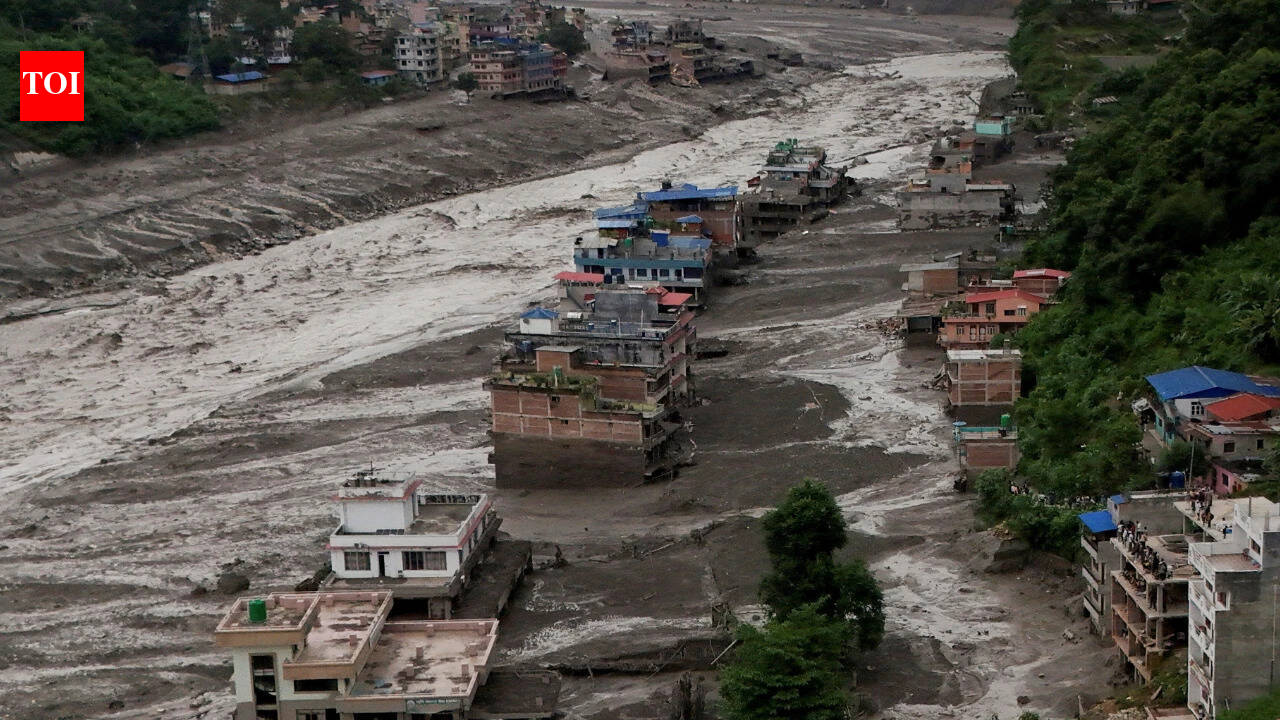
The BBC visited Lawat's village Betrawati just days after the disaster, once the roads to the district of Rasuwa had been cleared.
asserted
roads → visit → Rasuwa
For days, this area had been cut off from the capital Kathmandu, and struggling with a shortage of basic supplies including petrol.
asserted
area → cut → petrol
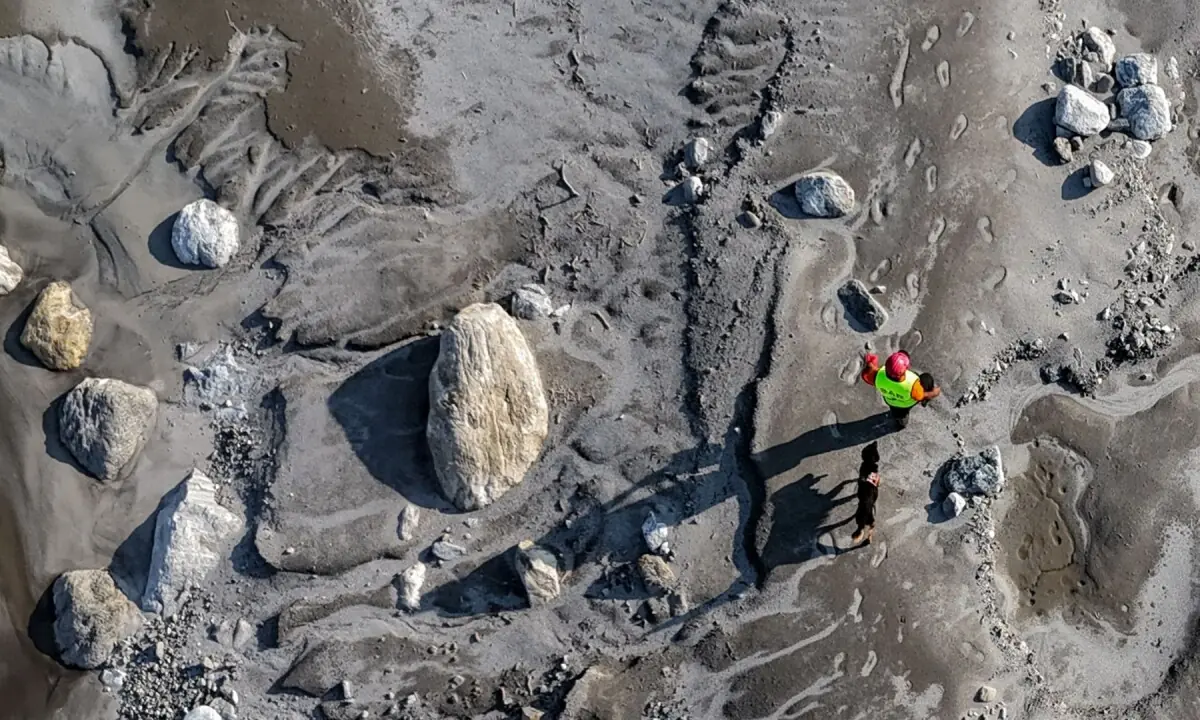
The ground was nothing but hardened mud and silt.
asserted
ground → harden → mud
Footage of the flood showed it had swallowed most of the village in just minutes.
asserted
it → show → minutes
There was no sign of its bustling market, the local Uttargaya School was in ruins, the houses swept away, and school buses were turned over.
asserted
buses → be → ruins
Betrawati straddles flood-devastated Rasuwa and Nuwakot, and is part of the Bidur municipality, where the government estimates more than 3,000 buildings have been damaged or destroyed.
asserted
buildings → straddle → municipality
Local governments are now urging the prime minister's office to figure out a way to resolve the death confirmation issue.
asserted
governments → urge → issue
"Everything is on hold," Bidur's Mayor, Rajan Shrestha, told the BBC.
asserted
Mayor → tell → BBC
He said it could take up to 12 years for relatives to access the funds they are entitled to.
uncertain
they → say → funds
For one of South Asia's smallest economies, finding money for compensation is a challenge, and the sums on offer are small when compared with the scale of the losses.
asserted
sums → find → losses
The government puts damage to personal belongings alone at £123 million ($165 million) across more than 8,300 households.
asserted
government → put → households
This implies losses of about £14,800 ($20,000) on average per household, though this figure is only based on census data and modelling, and doesn't represent the exact cost per family.
asserted
figure → imply → family
The financial toll makes the death certificates vital for families trying to recover from the disaster.
asserted
certificates → make → disaster
…and 20 more, not listed.
 The Aporia