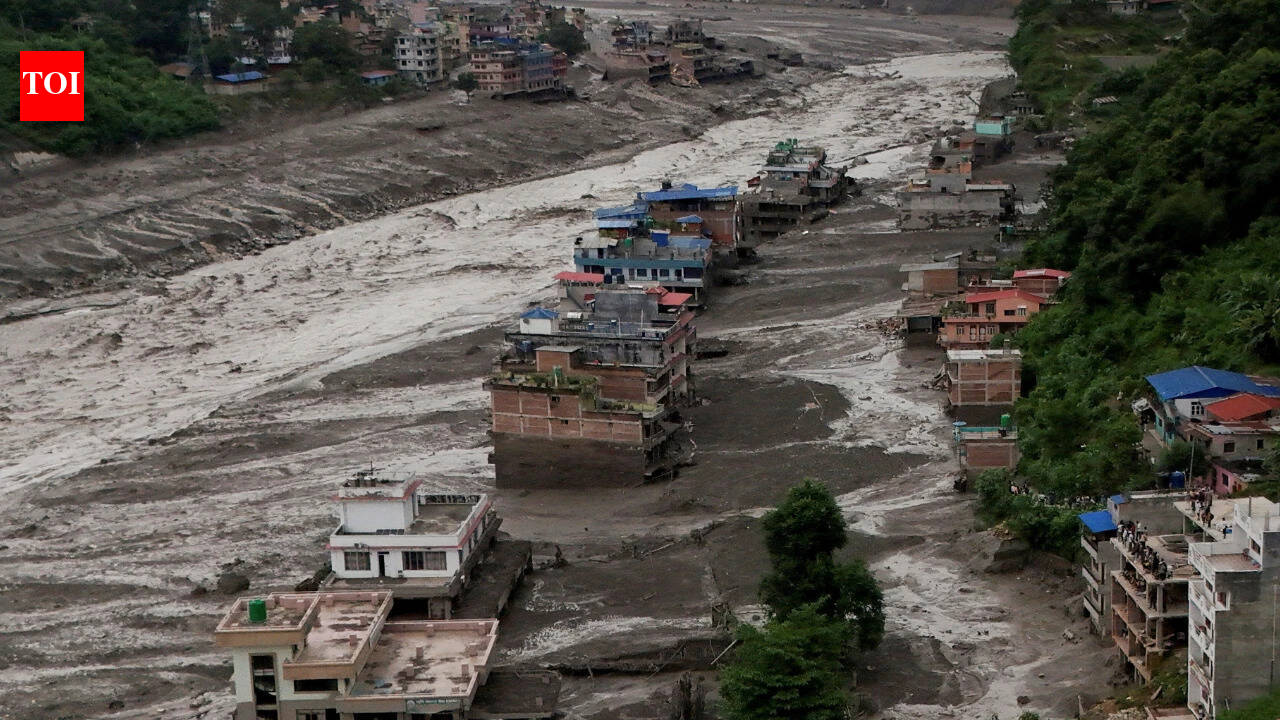
The Nepalese government has officially ended its search for missing individuals following catastrophic flash floods on August 26, with nearly 5,300 people still unaccounted for. This decision has led to mixed reactions from families; some protest the halt in rescue efforts while others seek death certificates for insurance and burial purposes. The Prime Minister's office stated that focus will now shift towards rehabilitation and reconstruction of damaged infrastructure, especially in remote areas where aid delivery has been challenging due to destroyed roads and bridges.
Written locally by qwen2.5:14b on 2026-10-07,
using this article's own text rather than the other coverage of the
same event (that is the story summary below).
Story summary
Nepal has ended its search and rescue operations for victims of a devastating flood that occurred on August 26, with at least 1,455 people confirmed dead and over 5,285 missing. The decision to shift focus from search efforts to rehabilitation was made after 40 days of continuous work. Authorities will now concentrate on recovery and reconstruction, including restoring damaged infrastructure like roads and bridges, especially in remote areas.
Dharam Raj Uprety, chief of the National Disaster Risk Reduction and Management Authority (NDRRMA), stated that while active searches for missing individuals would cease, remains or property discovered during rehabilitation efforts will still be retrieved. The government is also considering how to legally declare those who are officially missing as deceased to assist families in completing insurance claims, banking formalities, and other legal processes.
The flood affected thousands of people across the country, including 189 Indians and citizens from several other nations such as Americans, Malaysians, Ukrainians, Chinese, Australians, Latvians, among others. Nepal's Prime Minister Balendra Shah chaired a National Council meeting to address the situation, approving Nepalese Rs 559 billion (approximately Rs 35,000 crore) for reconstruction and rehabilitation programs.
Despite mixed reactions from families of missing individuals, authorities are moving forward with plans to drain four glacial lakes high in the mountains to mitigate future flood risks. This decision aims at long-term disaster risk reduction while addressing immediate needs such as legal declarations and compensations for affected families.
Written for “Nepal Flood Recovery” on 2026-10-07,
grounded in this article and the 5 other(s) covering the same event.
Nepal search for missing after flash floods officially ends, with nearly 5,300 people still unaccounted for
While many families are upset by decision, others need death certificates for insurance, other purposes
The families of thousands of people who remain missing in Nepal weeks after catastrophic floods devastated the country have expressed mixed feelings after the government said this week that it is stopping the search for victims.
asserted
it → miss → victims
The office of Prime Minister Balendra Shah decided on Monday that search and rescue operations for victims of the Aug. 26 floods will cease.
asserted
operations → decide → floods
Instead, authorities will concentrate on rehabilitation and reconstruction, including restoring roads and bridges cut off by floods, particularly in remote areas where damaged infrastructure has made aid deliveries difficult.
asserted
deliveries → concentrate → areas
Rescuers have so far recovered the bodies of at least 1,455 people, but 5,285 others remain missing, including hundreds of foreign nationals.
asserted
others → recover → nationals
Two weeks ago, Global Affairs Canada told CBC News that it was aware of 29 Canadians and permanent residents in Nepal and the Tibet autonomous region whose whereabouts and well-being after the flash floods have not yet been confirmed, but cautioned that the number could fluctuate based on new information.
uncertain
number → tell → information
CBC News has requested an update from the department, but did not immediately hear back.
asserted
News → request → department
Hopes for finding survivors were briefly revived after two Nepalese workers were rescued from an underground tunnel at the Trishuli hydropower project on Sept. 4, and again two days later when rescuers found a Chinese man at the same location.
asserted
rescuers → find → location
Families of victims have held protests and vigils in Nepal, calling for search efforts to be improved.
asserted
efforts → hold → Nepal
"I am so angry at the government for giving up on search and rescue with thousands of people still missing.
asserted
thousands → give → people
I just don't understand how they can do that when we still have hope left that our loved one can still be found," said Usha Khatri, who has spent days searching for her husband in multiple towns where the river flows and bodies have been recovered.
asserted
bodies → understand → towns
A general view on Sept. 28 shows damaged houses covered in sludge in the aftermath of the Aug. 26 flash flood, at Betrawati Bazaar in Nepal's Rasuwa district.
asserted
view → show → district
During her ongoing search, she has checked photos of bodies that were recovered but buried for preservation until identification is made.
asserted
identification → check → preservation
"Either they have to give up the body or show some solid proof that my husband is gone, and only then can they declare him dead," Khatri said.
asserted
Khatri → have → proof
"They have abandoned us and they should not have stopped the search," said Mahesh Shrestha, whose brother was an engineer at a hydropower plant that was hit.
asserted
that → abandon → plant
"Our family demands they continue looking for him."
asserted
they → demand → him
Others welcomed the decision and said they are seeking government-issued death certificates.
asserted
they → welcome → certificates
We are sure that none of our family members survived and we are just looking for a closure," said Nirajan Poudel, who lost five family members in the flood.
asserted
who → survive → flood
Several people whose relatives remain missing have performed symbolic funerals.
asserted
relatives → remain → funerals
Cremation is an important final rite in the Hindu tradition and performing the ceremony even without a body provides a sense of spiritual release for some families.
asserted
performing → perform → families
Poudel said the government has so far refused to issue death certificates, saying laws need to be amended first.
asserted
laws → say → certificates
Death certificates are necessary in Nepal for families to receive compensation, insurance and inherit properties.
asserted
families → receive → properties
Nepal's government did not immediately respond to a request by The Associated Press for more information about the death certificates.
asserted
government → respond → certificates
The government estimates reconstruction and recovery will cost $4.77 billion US.
asserted
reconstruction → estimate → US
Nearly 33,000 people have been affected and about 7,500 homes were damaged or destroyed.
asserted
homes → affect → ?
 The Aporia