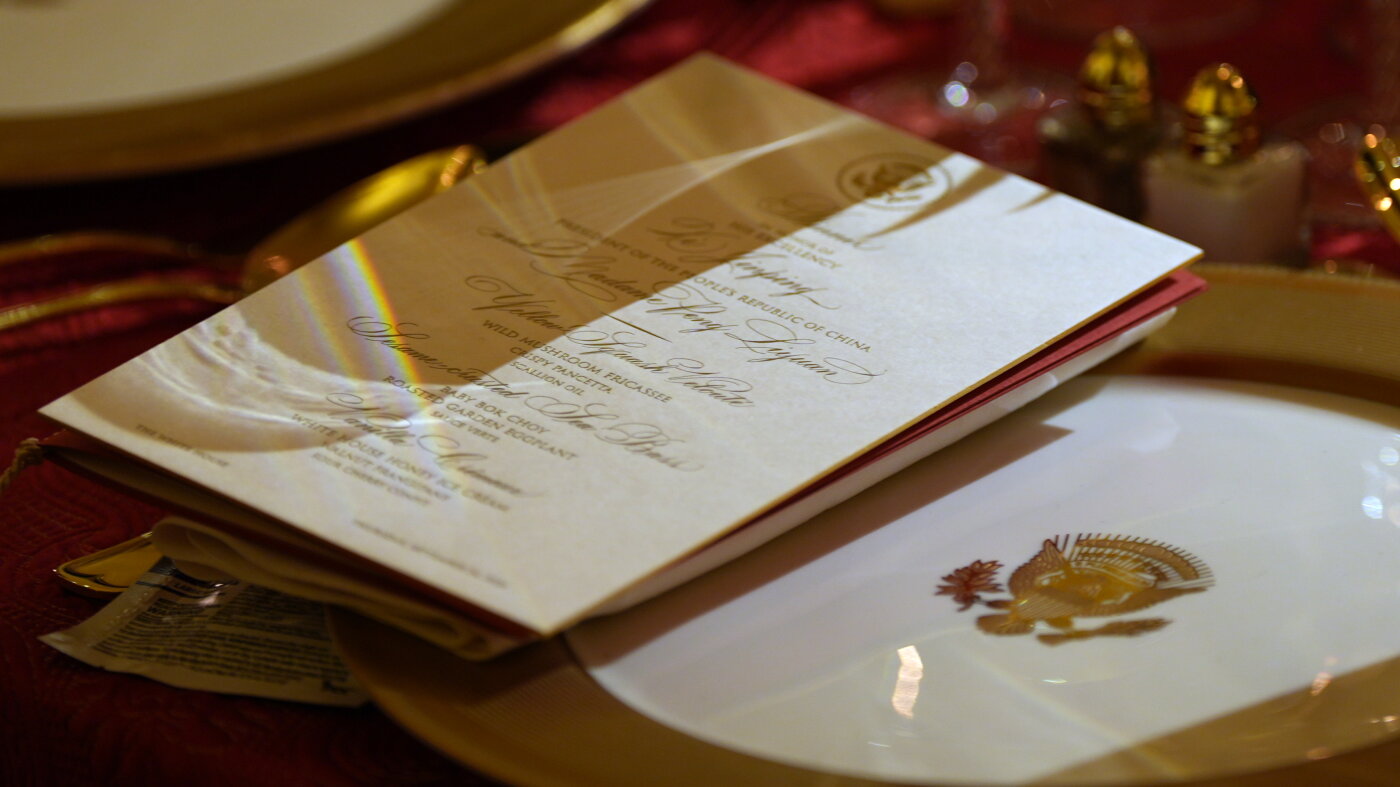
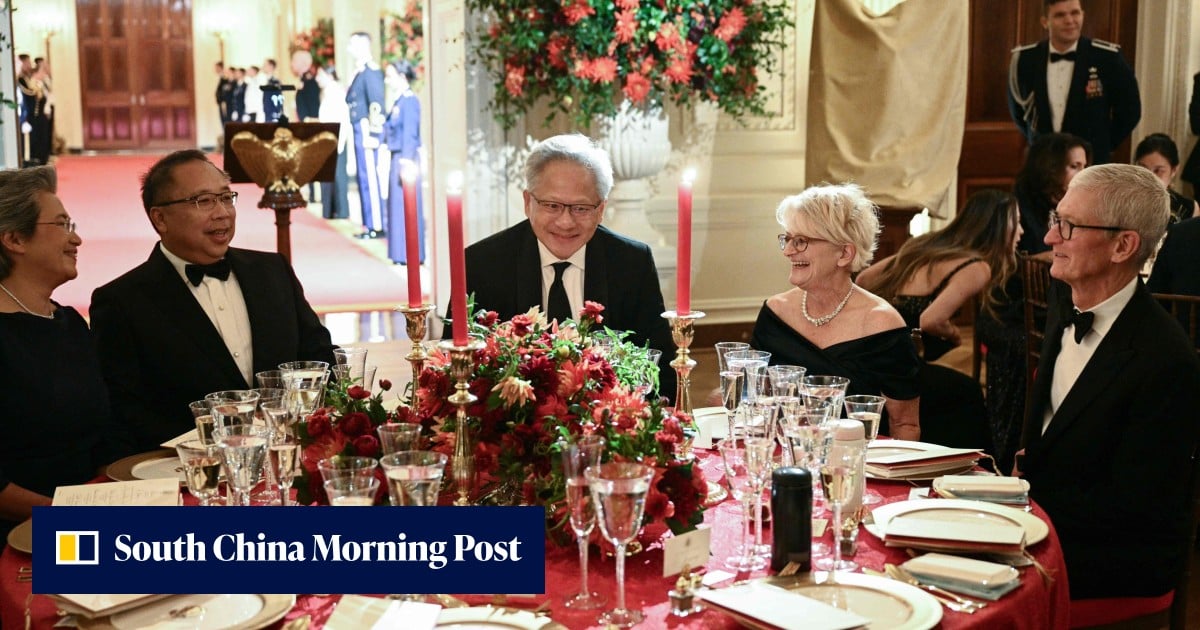
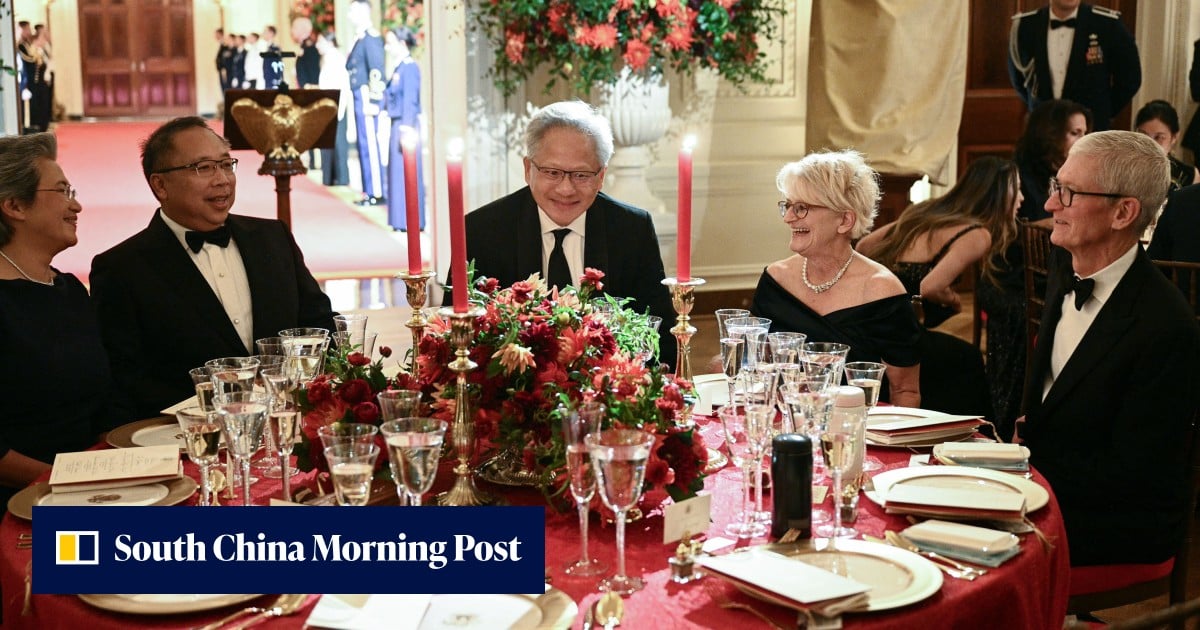
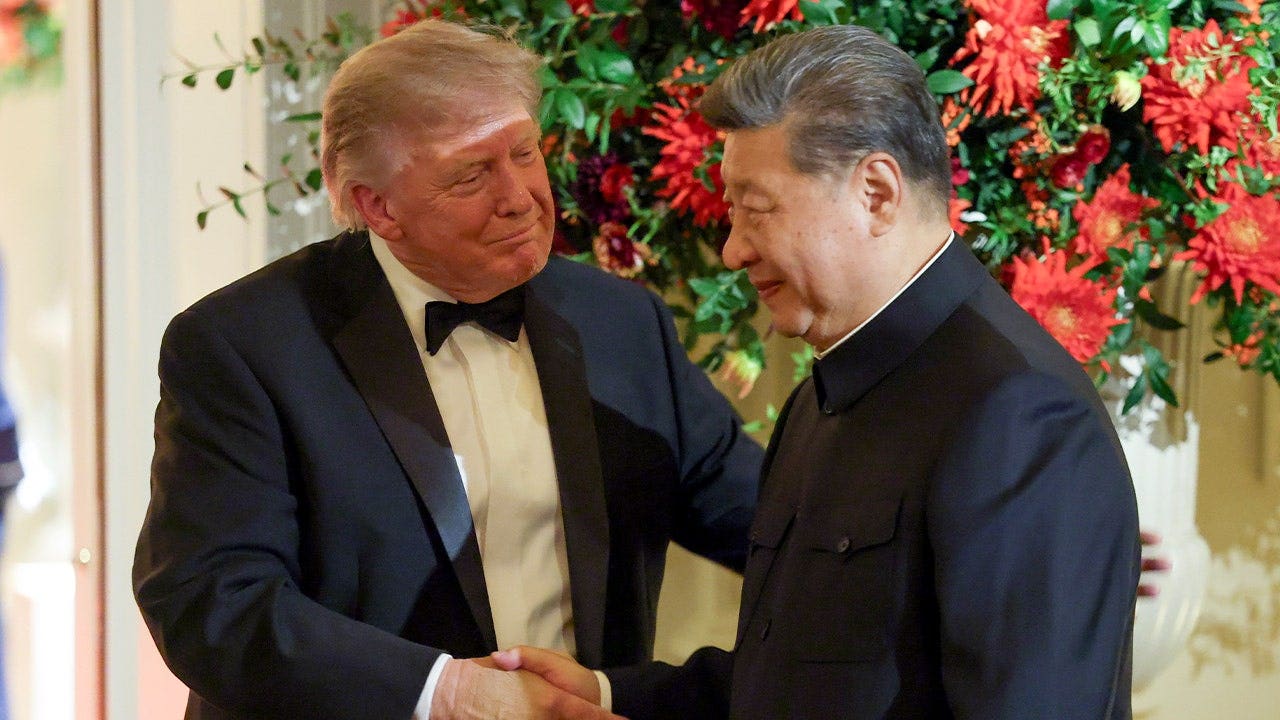
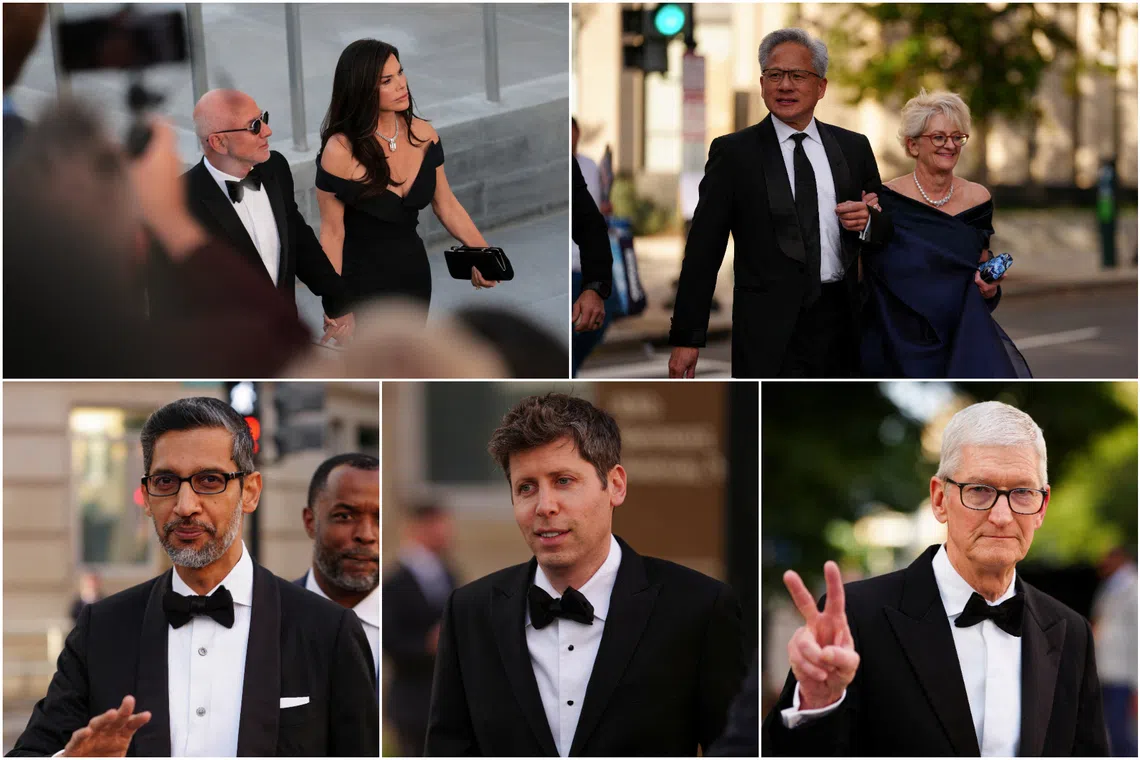
At the high point of the White House state dinner, the hierarchy of the world’s two great powers was laid bare.
asserted
hierarchy → lay → powers
Around the head table at the centre of the room sat two of the most powerful leaders, Xi Jinping and Donald Trump, alongside some of the most influential figures in American technology: Elon Musk, Tim Cook and Taiwanese-born leaders of two of the world's most important chipmakers, Jensen Huang and Lisa Su.
asserted
two → sit → chipmakers
On one side was Beijing's political apparatus: Xi's closest diplomats, political architects and economic executors who help consolidate his authority and power.
asserted
who → help → authority
On the other were the people steering America's capital and technological revolution in AI.
asserted
people → steer → AI
This was unprecedented and shows Beijing's determination to understand its rival and give the US access to its most powerful political elites.
asserted
This → show → elites
There was no obvious indication that any of them was being positioned as Xi's successor.
asserted
any → be → successor
But their presence added another layer of political weight to an evening already marked by tensions between the two sides and the quiet shift Xi was projecting to the rest of the world.
asserted
Xi → add → world
The US is no longer at centre of Xi's strategy
Forty years of reform and opening up transformed China into a manufacturing powerhouse and one of the world's largest economies.
asserted
years → transform → economies
When China was keeping a relatively low profile and seeking as many orders from the West as possible for its economic gain, the US had been a dominant force in the international system and central to Beijing's developmental calculations.
That relationship has changed in Xi's era.
asserted
relationship → keep → era
He has placed greater emphasis on strategic autonomy and technological self-reliance, reducing China's vulnerability to a US-dominated system.
asserted
He → place → system
When Xi and Trump both agreed to engage constructively based on respect, fairness and equality, it showed how the relationship has evolved since Xi's first term.
asserted
relationship → agree → term
Xi and Trump don't just share the same birth date but also made their political ambitions highly visible.
But Xi has an advantage that Trump as a democratically elected president does not have — time.
asserted
Trump → share → president
For Beijing, a longer political lead time may make it possible to pursue mechanisms that do not lead to an immediate breakthrough but could provide continuity as Trump steps closer to the next election.
uncertain
Trump → make → election
By considering each other as equal, both leaders created a strategic framework in which Trump sees Xi as a peer rather than a submissive competitor.
asserted
Trump → consider → peer
For Xi, as long as the US is clear of Taiwan and South China Sea, mechanisms around AI, trade, fentanyl and Iran's nuclear program could be established to manage the stalemate between the two great powers.
uncertain
mechanisms → establish → powers
These arrangements, including dialogues, third-party platforms and bilateral boards, could eventually develop into permanent channels, even though strategic competitions will be inevitable.
Xi is taking one step back, so is Trump.
uncertain
Trump → include → channels
It appears to be intentional that larger strategic disagreements and systemic differences remain unresolved.
asserted
disagreements → appear → ?
"The thinking in Beijing may be that while the US remains critical, it need not always be at the centre of China's foreign policy," said Han Lin, Shanghai-based China managing director of American strategic advisory firm The Asia Group.
uncertain
Lin → remain → Group
Xi's projection beyond the bilateral
Since day one of his presidential term in 2013, Xi has increasingly emphasised running the country not solely on Washington's terms.
asserted
Xi → emphasise → terms
He has presented China's rise as part of a broader transformation in the global order, expanding Beijing's centralised systems on diplomacy.
asserted
He → present → diplomacy
Despite two trade-wars and accusations on national securities from both sides, Xi has sought to manage the fundamental differences between Beijing and Washington to prevent another cold war that could constrain China's growth.
uncertain
that → seek → growth
Chinese public's resentment of how the country continuously in building diplomatic capacity is also a factor that Xi knows that Beijing cannot justify its global dominance while millions still live just above the poverty line.
asserted
millions → build → line
Outside the US-dominated networks, Xi has sought to build coalitions and economic partners across Asia and the Global South, seeking greater influence in institutions that the US does not have a say.
asserted
US → dominate → say
Xi doesn't want China to replace America, he told Trump in Washington again last week.
asserted
he → want → Washington
He believes the world can have two great powers on equal terms, allowing both countries to pursue their national interests in different regions.
asserted
countries → believe → regions
If this can reduce the risk of a direct conflict between Beijing and Washington, the "constructive strategic stability" relationship, which Xi and Trump agreed to form in Beijing earlier this year, could provide both sides with a framework form managing competition without sparking confrontations.
uncertain
Xi → reduce → confrontations
It could be an attractive solution to the tech giants and policymakers at the White House, where Xi's initiative can appeal to Americans by providing tangible transactions that can manage disagreement.
uncertain
that → appeal → disagreement
What Xi wants to realise, on his ultimate political wish list, is a dominant China in Asia and Pacific.
asserted
wants → want → Asia
Xi sees it as China's neighbourhood, so he will spare no expense to make sure Washington's strategic presence can be diluted.
asserted
presence → see → expense
Xi's projection of his ambition in Asia Pacific becomes stronger as he walks into new presidential terms — where analysts believe it will happen next year.
asserted
it → become → terms
His effort in expending China's power alongside his unprecedented authority within the communist party is more obvious through his diplomatic trajectory this year — from the trip to the US, engagement with India through BRICS, and Central Asia for the Shanghai Cooperation Organization.
"
asserted
effort → expend → Organization
It is building coalitions abroad and it's also applying pressure including on America's allies," said Mikko Huotari, executive director of the German-based Mercator Institute for China Studies (MERICS).
asserted
Huotari → build → Studies
"China and the US will hold each other in check for the foreseeable future.
"
asserted
China → hold → future
Xi really doesn't need a breakthrough in Washington.
asserted
Xi → need → Washington
He needs more time and the same is true for Washington."
asserted
same → need → Washington
 The Aporia