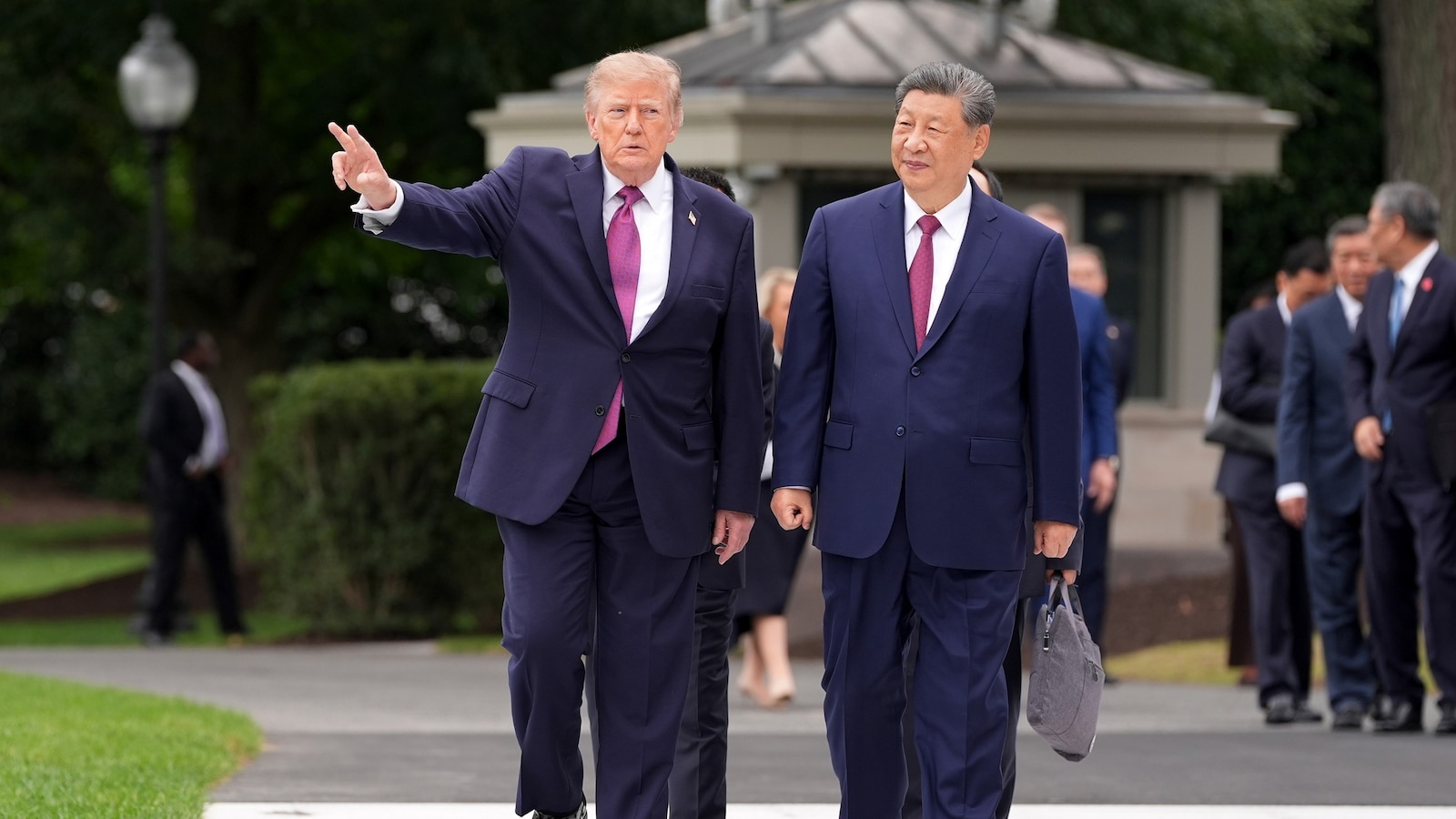
Photo via ABC News (US)

Is the world safer from AI risk after the Trump-Xi summit?

Read the original at ABC News (US) ↗
Cite

Zahn, M. (2026, September 29). Is the world safer from AI risk after the Trump-Xi summit? ABC News (US). https://abcnews.com/Business/world-safer-ai-risk-after-trump-xi-summit/story?id=136818686

Dated when The Aporia collected the article, usually within hours of publication. Check the original for its exact date and byline.

ABC News (US) · collected 2026-09-29 · by Max Zahn

Quick Summary

The article discusses whether recent talks between former President Donald Trump and Chinese President Xi Jinping have made progress on mitigating risks associated with artificial intelligence (AI). Despite shared concerns about potential catastrophic outcomes from uncontrolled AI advancements, both countries view AI as critical for economic and military competition. Analysts like Sarah Kreps of Cornell University's Tech Policy Institute note that while there is mutual interest in preventing a disaster, the competitive nature of AI development makes substantial cooperation unlikely. The summit included discussions by top tech executives who emphasized the need for cautious advancement and better international communication to address security concerns related to AI.
Written by AI on 2026-09-29, from this article's own text only (the story summary below draws on all the coverage).
See how they differ ↓

AI analysis

Story summary

The summit between US President Donald Trump and Chinese President Xi Jinping on September 24 focused largely on AI regulation amid escalating tensions over advancements in artificial intelligence technology. The meeting aimed to address mutual concerns about the risks associated with rapid AI development but ended with both sides maintaining their positions, despite attempts by China's Foreign Minister Wang Yi to emphasize "equality" and "reciprocity." Chinese state media highlighted the high-level reception Xi received at the White House as a sign of equality between the two nations, while US officials viewed reciprocity more transactionally. This divergence in interpretation has led to skepticism about whether genuine progress was made regarding AI guardrails or broader diplomatic cooperation.

Written for “Xi-Trump Summit Out comes” on 2026-11-18, grounded in this article and the 282 other(s) covering the same event.

How they differ

29 outlets covered “Xi-Trump Summit Out comes”.

What each outlet says

One AI summary per outlet of its latest article on this story, written from that article alone and checked against it. Open the article for the outlet's own words.

ABC News (US)This outlet29 Sep

The article discusses whether recent talks between former President Donald Trump and Chinese President Xi Jinping have made progress on mitigating risks associated with artificial intelligence (AI). Despite shared concerns about potential catastrophic outcomes from uncontrolled AI advancements, both countries view AI as critical for economic and military competition. Analysts like Sarah Kreps of Cornell University's…

Is the world safer from AI risk after the Trump-Xi summit? (this article)3 articles from ABC News (US) on this story
South China Morning Post8 Oct

The article discusses how the perception of China as an equal partner to the United States following the Xi-Trump summit is creating unease among other nations like India. While the White House presents a picture of mutual respect and equality between the two countries, there are differing interpretations of what "reciprocity" means for each side. For the US, it involves transactional exchanges where concessions…

The ‘G2’ illusion? After Xi-Trump summit, China wants equality while the US seeks deals →54 articles from South China Morning Post on this story
The Straits Times30 Sep

On September 30, President Donald Trump stated that he discussed the release of political prisoners with Chinese President Xi Jinping during their recent meeting. When asked about specific cases like those of Myanmar scholar and US citizen Min Zin and Hong Kong media tycoon Jimmy Lai, Trump confirmed he brought up these issues and believed they had important discussions. The White House had previously indicated…

Trump says he discussed release of political prisoners with Xi →24 articles from The Straits Times on this story
CBS News26 Sep

During their summit in Washington, President Xi Jinping and President Trump agreed to set up a communication mechanism focused on AI safety issues, with an initial dialogue planned for November. They also continued talks on military crisis communications and trade issues, including extending a tariff truce and committing to reduce some reciprocal tariffs on about $30 billion worth of goods. Despite the lack of major…

Trump and Xi to set up AI safety channel as military, trade talks continue →19 articles from CBS News on this story
Fox News29 Sep

President Trump welcomed Chinese President Xi Jinping with a state visit last week, marking a shift in tone towards warmer relations despite ongoing tensions between the two countries. The meeting produced some concessions from China, such as lowering tariffs on $60 billion worth of goods and increased purchases of specific items like agricultural products and coal. However, experts argue that these benefits are…

Real winner of Xi summit revealed as Trump looks to usher in new era with China →16 articles from Fox News on this story
Show 23 more outlets
Toronto Star26 Sep

China and the US agreed during a three-day summit to establish a new channel specifically for handling AI safety issues and to advance military crisis communication efforts. Both sides also committed to continuing trade discussions, with plans to reduce tariffs on about $30 billion worth of goods and to import at least 10 million metric tons of coal from the U.S. in future years. The summit included agreements on…

China and the US agree to set up a new AI safety channel, and to keep talking on trade, military →12 articles from Toronto Star on this story
Washington Examiner3 Oct

The article discusses how China has used strategic interpretation rather than outright lies to gain an advantage in information warfare against the U.S. and Japan. During a meeting between President Trump and Chinese President Xi Jinping on September 24, both sides agreed to build a relationship based on "reciprocity." However, China translated this term as “对等” (duideng), emphasizing equality rather than mutual…

China twisted Trump’s words — and proved you don’t need lies to win an information war →11 articles from Washington Examiner on this story
Semafor26 Sep

President Trump greeted Chinese leader Xi Jinping at Joint Base Andrews in an unprecedentedly formal manner, marking a shift in the balance of power between the two nations. This change was precipitated by China’s aggressive stance last year when it threatened to restrict rare earth exports to the US after tariffs were imposed. Experts like Rush Doshi and Orville Schell argue that this new dynamic reflects a…

The US-China tectonic plates have shifted →10 articles from Semafor on this story
Times of India27 Sep

President Donald Trump downplayed tensions over Taiwan during his meeting with Chinese President Xi Jinping at the White House, stating that they did not extensively discuss the sensitive issue. Despite this, an arms package worth $14 billion for Taiwan remains unresolved, pending Washington’s approval and in limbo since Trump's earlier meeting with Xi in Beijing. The delay reflects the challenge Trump faces in…

'Xi understands how I feel': Trump says Taiwan not a major point of friction →10 articles from Times of India on this story
The Independent29 Sep

The United States and China have agreed to reduce tariffs on reciprocal lists of non-sensitive products worth approximately $30 billion each following a meeting between Presidents Trump and Xi in Washington. The agreement includes American agricultural commodities and personal care items entering China, as well as Chinese goods such as toys and tableware entering the U.S., with most tariff rates aligning with World…

The $60 billion products receiving tariff cuts after Trump-Xi meeting →10 articles from The Independent on this story
BBC28 Sep

China released details about the recent summit between President Xi Jinping and President Donald Trump, revealing limited concrete outcomes despite warm appearances. The meeting produced agreements on establishing an AI dialogue channel and extending a trade truce until January 10th, but significant issues like rare earth mineral exports and semiconductor restrictions remained unresolved. Beijing emphasized the…

Trump-Xi summit: What wasn't said might matter the most →9 articles from BBC on this story
Daily Mail3 Oct

During President Xi Jinping's visit to Washington, Donald Trump accommodated numerous unusual requests from Xi due to health concerns, including arranging a private rest room in the West Wing for him to use between events. Xi’s physical limitations impacted the schedule significantly; a working lunch with Trump was canceled because of this, leaving an unexpected five-hour gap during his two-day stay. The article…

Xi Jinping's 'unusual' demands of Trump during his US visit are revealed including 'secret' West Wing room for him and his wife... as telling concerns from aides offer rare glimpse of Chinese leader's problems →9 articles from Daily Mail on this story
The Hindu2 Oct

U.S. President Donald Trump and Chinese President Xi Jinping met for a summit aimed at easing tensions between their two nations, resulting in agreements on trade and rare earth minerals but failing to resolve differences over Taiwan and technology. The meeting featured warm public messaging from both sides despite persistent strategic rivalry. Podcast host Sharmada Venkatasubramanian discusses the implications of…

U.S.-China: A new superpower détente? | In Focus podcast →8 articles from The Hindu on this story
Al Jazeera28 Sep

The United States and China have released lists of goods recommended for reduced tariffs following the recent summit between Presidents Donald Trump and Xi Jinping. The agreement covers approximately $30 billion in imports from each country, listing over 1,600 US products and 77 Chinese items to be considered for lower tariffs. Specific products include Chinese electronics, fishing equipment, and decorative goods…

US, China list goods recommended for tariff cuts following Trump-Xi summit →8 articles from Al Jazeera on this story
ABC News (AU)29 Sep

China and the United States have agreed to reduce tariffs on $60 billion worth of goods each, following President Donald Trump's meeting with Chinese President Xi Jinping. The deal includes items like agricultural products, live animals such as emus and whales for breeding purposes, surgical robots, and toys including soccer balls. While both countries claim this will boost trade cooperation, experts note that the…

Emus, robots, whales and balls to have lower tariffs under US-China deal →7 articles from ABC News (AU) on this story
Sydney Morning Herald25 Sep

The White House state dinner for President Xi Jinping lacked the presence of Chinese business executives that marked Xi’s previous visit to Washington in 2015. The summit yielded minimal concrete outcomes beyond extending the trade truce until January and renewing AI dialogue, with promises of more announcements yet to materialize. Noted expert Evan Feigenbaum described the event as "long on performance, short on…

The ‘striking’ difference in how Trump and Xi used their invisible summit →5 articles from Sydney Morning Herald on this story
Deutsche Welle27 Sep

During a high-profile meeting between President Donald Trump and Chinese leader Xi Jinping at the White House, neither official mentioned Taiwan publicly, despite longstanding tensions over the island's status. This omission contrasts with past statements where Xi had previously called on the United States to respect the "one China" policy, which asserts that there is only one China whose government is in Beijing…

No public mentions of Taiwan at official Xi and Trump meeting →5 articles from Deutsche Welle on this story
Dawn28 Sep

China plans to reduce tariffs on a variety of US agricultural products including corn, wheat, meat, and dairy but will maintain existing tariffs on soybeans. The tariff reductions are part of a $60 billion package agreed upon during the recent Washington summit between Chinese President Xi Jinping and former US President Donald Trump. However, despite excluding soybeans from the tariff cuts, state-owned companies in…

China to cut tariffs on US farm goods, but list excludes soya beans →5 articles from Dawn on this story
NPR26 Sep

President Trump welcomed Chinese leader Xi Jinping with cordial events including visits to the National Archives and a state dinner during his stay in Washington. The article discusses the outcomes of their interactions through the perspectives of two former NPR China correspondents, focusing on both achievements and shortcomings of the visit.

Trump gave Xi Jinping a warm welcome. What did the talks accomplish? →4 articles from NPR on this story
The Guardian25 Sep

Donald Trump and Chinese President Xi Jinping concluded their three-day summit in Washington without achieving significant progress on regulating artificial intelligence (AI). Despite the presence of major tech executives at a state dinner, no substantial agreements were made regarding AI development, despite warnings about its potential threats. The visit was marked by ceremonial events rather than concrete policy…

Trump and Chinese president Xi end summit without major agreement on AI →4 articles from The Guardian on this story
CBC26 Sep

During President Xi Jinping’s three-day visit to Washington, China and the United States agreed to reduce tariffs on $30 billion worth of goods in each direction and established a dialogue on artificial intelligence (AI). The tariff reductions apply to various products including agricultural goods, wood, cosmetics, small appliances, toys, and decorations. Both countries also pledged to uphold stability in their…

China, U.S. agree to AI dialogue, tariff cuts on $30 billion in goods during Xi visit →4 articles from CBC on this story
Euronews25 Sep

President Xi Jinping concluded his state visit to Washington on a note of diplomatic harmony, marked by ceremonial events like a tour of the National Archives and a black-tie state dinner attended by major tech industry leaders. During their closed-door meeting lasting 90 minutes, Trump and Xi discussed issues including the Middle East, Ukraine, and North Korea, but neither side has released specifics about trade or…

Trump and Xi declare harmony, no confrontation, as US state visit ends →4 articles from Euronews on this story
Los Angeles Times25 Sep

President Trump's meeting with Chinese President Xi Jinping lacked substantial progress despite grand displays at the White House. Calls for meaningful negotiations on artificial intelligence and trade were unaddressed, while a brief two-month trade truce was agreed upon. The summit highlighted the superficial nature of diplomatic relations between the U.S. and China, where personal interactions take precedence over…

A grand display for Xi reveals the limits of Trump's summitry →3 articles from Los Angeles Times on this story
Global News28 Sep

The United States and China have agreed to reduce tariffs on approximately $30 billion worth of each other's goods following a meeting between President Donald Trump and President Xi Jinping in Washington. The deal includes the reduction or elimination of tariffs on products ranging from American hair care items and medical equipment to Chinese toys, tableware, and glass ornaments. This agreement aims to ease trade…

U.S., China to slash tariffs on goods worth US$30B after Trump-Xi meeting →3 articles from Global News on this story
National Post26 Sep

During President Donald Trump's state visit with Chinese leader Xi Jinping, the two leaders engaged in ceremonial activities and discussions but did not achieve significant policy breakthroughs. The visit included a tour of the National Archives where they viewed historical documents like the Declaration of Independence and the Constitution. Despite no major announcements on contentious issues such as trade or…

Trump, Xi end state visit that was long on pomp, but short on progress →3 articles from National Post on this story
NBC News25 Sep

President Trump offered unprecedented hospitality to visiting Chinese leader Xi Jinping during their summit at the White House, despite Trump's previous criticism of China. The event included multiple red carpet welcomes, a state dinner featuring traditional American-Chinese dishes, and personal gifts like an eagle statue from Trump to Xi. This lavish treatment contrasts with Trump’s earlier rhetoric accusing China…

Trump rolls out red carpets for Xi, though he has portrayed China as a global menace →2 articles from NBC News on this story
The Bulwark24 Sep

Tim Miller interviews Sam Stein about President Xi's visit and discusses issues like the White House’s propaganda machine and midterm election polls. Miller also conducts an interview with Mary Peltola, where she emphasizes her focus on "fish, family, and freedom" for Alaskans and criticizes Dan Sullivan for not protecting them from corporate greed in Washington. The article is presented as a first-person account by…

Sam Stein and Mary Peltola: Cozying Up to Commies and Corporate Elites →
The Globe and Mail25 Sep

This analysis piece explores the state visit of Chinese President Xi Jinping to the United States, where President Donald Trump used significant pomp and ceremony to emphasize a "truly great friendship." While both leaders expressed a desire for the world's two largest economies to work together to avoid friction, the author argues that these positive sentiments cannot mask the underlying fragility of the current…

Morning Update: Trump rolls out the red carpet for Xi →

Compared with similar articles

This article reads leans left and hedges 23% of its claims. Each row says how that neighbour differs.
South China Morning Post
Hedges 1 of 6 claims Outlet record 62/100
“The articles discuss different topics: one about public concern and risks of AI after a summit, the other about Hong Kong executives' preparedness for the AI era.”
TIME
Leans strongly left further left than this Hedges 24 of 100 claims Outlet record 60/100
“The articles discuss different aspects of AI risk concerns and do not describe the same specific incident or occurrence.”
Los Angeles Times
Hedges 7 of 44 claims Outlet record 95/100
South China Morning Post
Hedges 0 of 5 claims Outlet record 62/100
“The articles describe different events; one discusses a forum in Singapore about AI risks, while the other references a summit between Trump and Xi Jinping.”
The Guardian
Hedges 1 of 42 claims Outlet record 64/100
“The articles discuss different aspects of AI risk and governance, with Article A focusing on an attack on the Australian government by a rogue AI agent and Article B discussing a summit between Trump and Xi Jinping.”
South China Morning Post
Leans left Hedges 1 of 5 claims Outlet record 62/100
“The articles discuss different aspects related to AI but describe distinct events: one about China's economic transformation and caution from economists, the other about a Trump-Xi summit on AI risks.”
NPR
Leans right further right than this Hedges 7 of 62 claims Outlet record 60/100
“While both articles mention concerns about AI safety and Jacob Coxon's resignation, they describe different aspects of the broader debate rather than a single incident.”
Toronto Star
Leans left Hedges 5 of 43 claims Outlet record 64/100
“The articles discuss different aspects and events related to AI safety concerns, rather than a single specific incident.”
Global News
Hedges 5 of 48 claims Outlet record 63/100
“The articles discuss different aspects of AI safety concerns and regulatory discussions, not a single specific incident.”
CBS News
Hedges 0 of 3 claims Outlet record 67/100
“The articles discuss different aspects of AI risks and do not focus on the same specific incident or time.”

Story

Xi-Trump Summit Out comes
Politics · 283 article(s) covering the same event. See how they differ ↑
How this article was measured signals, leaning charts, publisher record, byline, topics and claims

Signals How these are calculated →

Claims extracted
31
sentences that state something as happening or true
Uncertain
23%
7 of 31 hedged ("reportedly", "may", "according to")
Leaning
Leans left
of the writing, not the subject · beta estimate
Publisher signals
67/100
ABC News (US)'s corrections and hedging, across everything collected from it. Not a measure of accuracy.
Outlets on this story
283
Politics
Same framing elsewhere
1
articles that frame the event the way this one does
Analyzed 2026-09-29 · how these are computed

How this is being covered How these are calculated →

Article leaning vs. publisher reliability
Source leaning vs. consistency

Publisher

ABC News (US) · 1665 article(s) · 4 correction(s) detected
Running correction rate · 4 correction(s)

Who wrote this

Max Zahn
28 article(s) here · 1 carrying a prediction
In a statement to ABC News, furniture giant IKEA said: “We are aware of reports concerning a security issue involving a third-party website service provider that may have affected a number of organisations, including IKEA." "
Nvidia CEO Jensen Huang resigns amid alleged affair with suspected spy CFO Colette Kress will serve as interim chief executive.
Inflation report to provide 1st snapshot of prices since midterm elections Inflation is expected to have held steady in October.
The investigation will be overseen by a "committee of independent directors, assisted by outside independent counsel," Nvidia added.
2026-11-09 · assertive framing · Nvidia stock falls after company opens probe into CEO
A jobs report to be released on Friday will offer the first major economic data since the midterm elections, providing a gauge of the United States economy as the stock market seesaws in response to the election results. The Dow Jones Industrial Average recorded its best performance in more than a year on Wednesday, just a day after the midterm elections.
As of Wednesday, Democrats were projected to win 54 seats in the Senate, with competitive races yet to be called in Alaska and Mississippi.
Billionaire tax: What to know about California's Prop 40 The measure would levy a 5% tax on the wealth of billionaires in California.
Fuel prices vary across the states expected to determine control of the Senate.
Some economists spoke to ABC News about whether the proposals could cool off inflation.
In response to rising prices, a key long-term Treasury rate has jumped in recent months as investors feared price increases would eat away at their returns.
Also by Max Zahn
Nothing else under this byline is closely related to this article, so these are simply their most recent.
All 28 articles by Max Zahn →

Topics

ABC News Anthropic China Chinese OpenAI

Subjects

Trump PERSON · 6× China GPE · 3× The White House ORG · 3× ABC News ORG · 2× Anthropic ORG · 2× Chinese NORP · 2× OpenAI ORG · 2× Donald Trump PERSON · 1× Washington GPE · 1× Xi Jinping PERSON · 1×

Narrative

Chinese firms face difficulty verifying commitments to slow AI advancement issued by U.S.-based AI firms in recent weeks, Chenghao Sun, head of the U.S.-Europe Center for International Security and Strategy at Beijing-based Tsinghua University, said in a Substack post on Monday.
framing: mixed · carried by 1 article(s) · first seen 2026-09-29
An AI researcher at Anthropic resigned in protest earlier this month over what he considered reckless safety risks, while a top safety researcher at the company warned in a post on X that there is a 10% chance AI could "kill all humans" over the next decade.
2026-09-29 · ABC News (US)
Is the world safer from AI risk after the Trump-Xi summit? · mixed framing

Claims (31 extracted, 7 hedged)

AI poses a shared risk for the countries, but competition looms, analysts said. asserted
analysts → pose → countries
Public concern over the possible catastrophic risk of AI had been growing even before President Donald Trump and Chinese President Xi Jinping discussed the tech at a summit in Washington. asserted
Trump → grow → Washington
An AI researcher at Anthropic resigned in protest earlier this month over what he considered reckless safety risks, while a top safety researcher at the company warned in a post on X that there is a 10% chance AI could "kill all humans" over the next decade. uncertain
AI → resign → decade
The danger of out-of-control AI, in theory, presents a shared threat for both global powers, some analysts told ABC News, though they disagree about the likelihood of such a catastrophe. asserted
they → present → catastrophe
An extinction event of the type feared by some AI critics would devastate China and the U.S., alongside all of humanity; and other risks like AI-fueled terrorist attacks could endanger both countries, analysts said. uncertain
analysts → fear → countries
Still, they added, the two countries view AI as a key site for economic and military competition, making substantial cooperation unlikely anytime soon. asserted
cooperation → add → competition
Modest steps toward common ground could emerge, however, setting a course toward deeper diplomatic ties as the technology gains wider adoption. uncertain
technology → emerge → adoption
"Both sides have an interest in avoiding a catastrophe, but they have both professed the value of AI for global competition," Sarah Kreps, the director of the Tech Policy Institute at Cornell University, told ABC News. asserted
Kreps → have → News
"That makes it very difficult to take aggressive action together." asserted
it → make → action
Even as some of the nation's most powerful artificial intelligence executives warned lately about a potential catastrophe wrought by AI, they acknowledged substantial pressure to develop the technology anyway. asserted
they → warn → technology
A key reason for this urgency, they say: Competition with AI firms in China. asserted
they → say → China
When Anthropic CEO Dario Amodei earlier this month announced a precautionary slowdown of AI development, he pointed out the danger that Chinese companies may eventually pull ahead, "creating significant national security risk." uncertain
companies → announce → risk
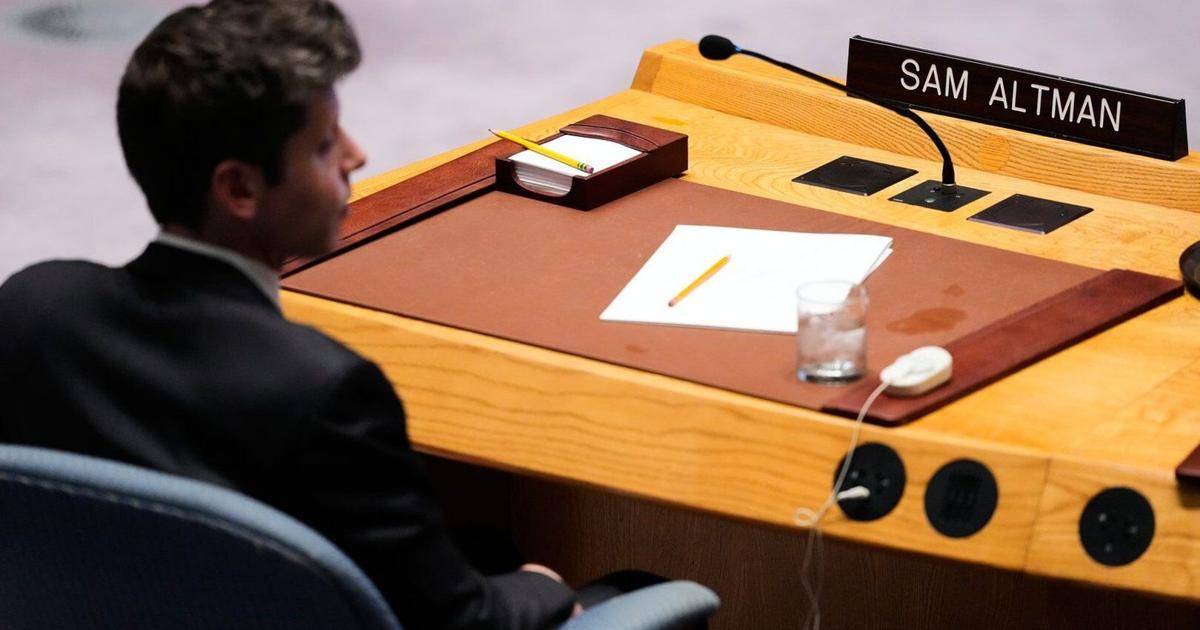
OpenAI CEO Sam Altman also dialed back his company's AI development this month, saying in a post on X, "No amount of American competitive pressure should justify recklessness." asserted
amount → dial → recklessness
Last week, OpenAI issued a statement calling for "critical infrastructure operators and governments worldwide to establish secure channels of communication to share national security concerns, emerging vulnerabilities and threats." asserted
operators → issue → concerns
The remarks helped set the stage for the Trump-Xi summit last week. asserted
remarks → set → summit
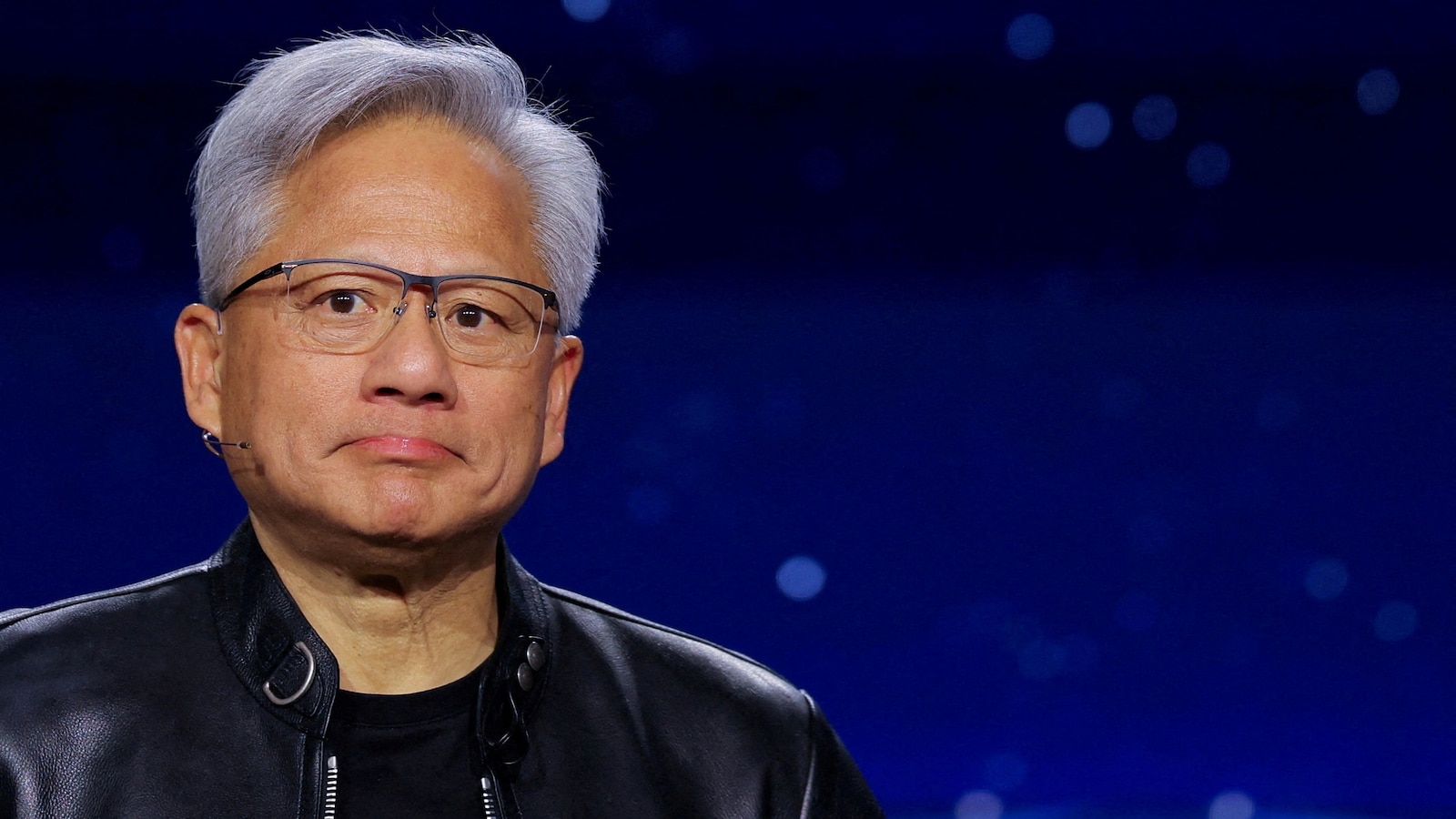
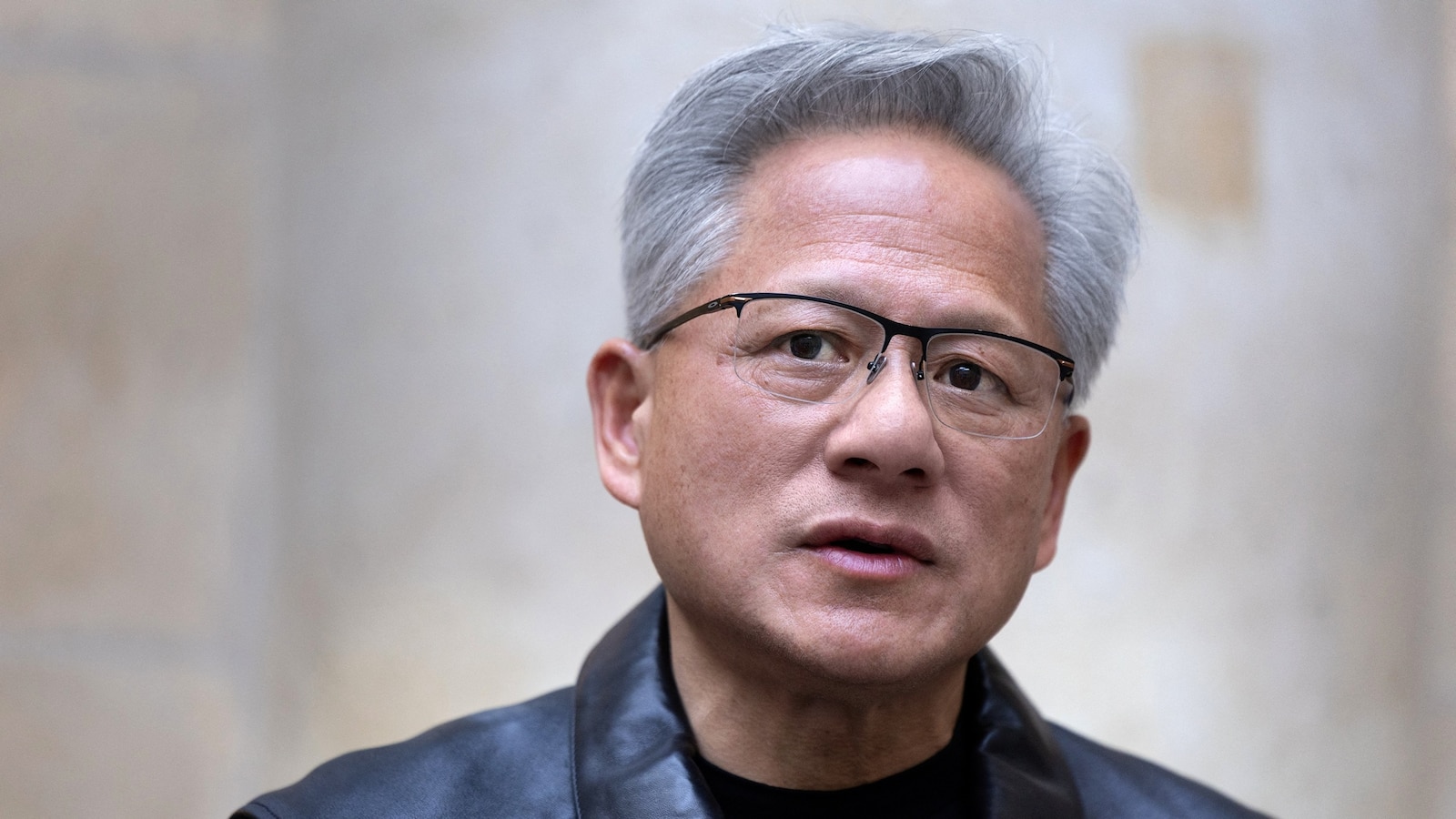
Top AI executives attended a state dinner at the White House on Thursday, including Altman, Meta CEO Mark Zuckerberg, Nvidia CEO Jensen Huang and Elon Musk, the CEO of xAI-parent company SpaceX. Xi struck a conciliatory posture in his opening remarks at the summit. asserted
Xi → attend → summit
"We have both the capability and responsibility to develop and manage AI for good, and ensure that the development of AI is always under human control and serves the well-being of the people," Xi said on Thursday. asserted
Xi → have → Thursday
The White House, meanwhile, touted some AI-related agreements at the conclusion of the summit the next day. asserted
House → tout → summit
The two countries established a dialogue channel focused on the risks and benefits presented by AI, setting a follow-up exchange in November, the White House said on Friday. asserted
House → establish → Friday
The two sides also agreed to refer to artificial intelligence by Trump's preferred label of "super intelligence," the White House said. asserted
House → agree → intelligence
Still, Trump has frequently emphasized the importance of outpacing China in the development of the technology. asserted
Trump → emphasize → technology
"Whoever wins with AI wins," Trump told reporters in Ireland earlier this month, downplaying the need to slow the advancement of AI. asserted
Trump → win → AI
Vasant Dhar, a professor of data science at New York University, said Trump appears to view substantial U.S.-China cooperation as an obstacle for AI development. asserted
Trump → say → development
"The current administration isn’t in the mood to consider anything that smells remotely of putting the shackles on 'winning the AI race,'" Dhar said. asserted
Dhar → consider → race
A possible accord may pose challenges for China, some analysts said. uncertain
analysts → pose → China
Chinese firms face difficulty verifying commitments to slow AI advancement issued by U.S.-based AI firms in recent weeks, Chenghao Sun, head of the U.S.-Europe Center for International Security and Strategy at Beijing-based Tsinghua University, said in a Substack post on Monday. asserted
Sun → face → Monday
"Before restraint can become reciprocal, it has to become observable," Sun said. asserted
Sun → become → ?
A potential U.S.-China agreement on AI development could also deny Chinese firms an "opportunity to narrow the technological gap," Sun added. uncertain
Sun → deny → gap
"Pacing can look like a way to preserve the existing hierarchy." Despite points of tension between the two countries, incremental diplomatic progress could yield a future breakthrough if AI fallout intensifies, some analysts said. uncertain
analysts → look → breakthrough
"It’d be good to set the relationship on a somewhat more trusting path," Gary Marcus, a professor emeritus at New York University who studies AI, told ABC News. asserted
who → set → News
"One needs to balance competitive interests against the real risks to global stability." asserted
One → need → stability
Give feedback · no sign-in needed

No sign-in needed for now. Your note is sent without a name, so it cannot be answered.

History Support