The Guardian
· collected 2026-09-28 · by Daniel Boffey Chief reporter
Story summary
On September 27, the Parades Commission allowed the Orange Order's Drumcree parade to proceed along Garvaghy Road for the first time in almost 30 years. The commission restricted the number of participants to 35 people, starting at 8 am, and required them to disperse by 9:30 am from Carleton Street Orange Hall, with only the Portadown District banner allowed during this stretch. No supporters or bands were permitted along the parade route near residents' homes on Dungannon Road and Drumcree Road.
The decision drew mixed reactions; DUP hailed it as a breakthrough while Sinn Féin condemned it strongly, viewing it as forcing an Orange march through the community. Garvaghy Road residents had been vehemently opposed to such parades during the 1990s Troubles era, leading to violent clashes and political tension necessitating significant security measures.
Following an unprecedented late-night court hearing concluding at 2:15 am, Justice Michael Humphreys upheld the commission's ruling. Crowds gathered in Portadown early Sunday morning, with many wearing balaclavas, awaiting the parade amidst heavy rain and tense conditions. The hearing acknowledged the unusual circumstances but maintained respect for public bodies' decisions.
Concerns were raised that this go-ahead could disrupt agreements at other flashpoint areas across Northern Ireland, signaling potential challenges to maintaining peace in former conflict zones.
Written for “Drumcree Parade Decision” on 2026-10-05,
grounded in this article and the 59 other(s) covering the same event.
Three decades ago, it took the deaths of three Roman Catholic children – the Quinn brothers, Jason, nine, Mark, 10, and 11-year-old Richard – in a petrol bomb attack to bring an end to the Drumcree dispute.
asserted
it → take → dispute
“No road is worth a life, let alone the lives of three little boys,” the Orange Order’s County Armagh chaplain said at the time.
asserted
chaplain → let → time
It is perhaps extraordinary to think that this could ever have needed saying – but that was then.
uncertain
that → think → ?
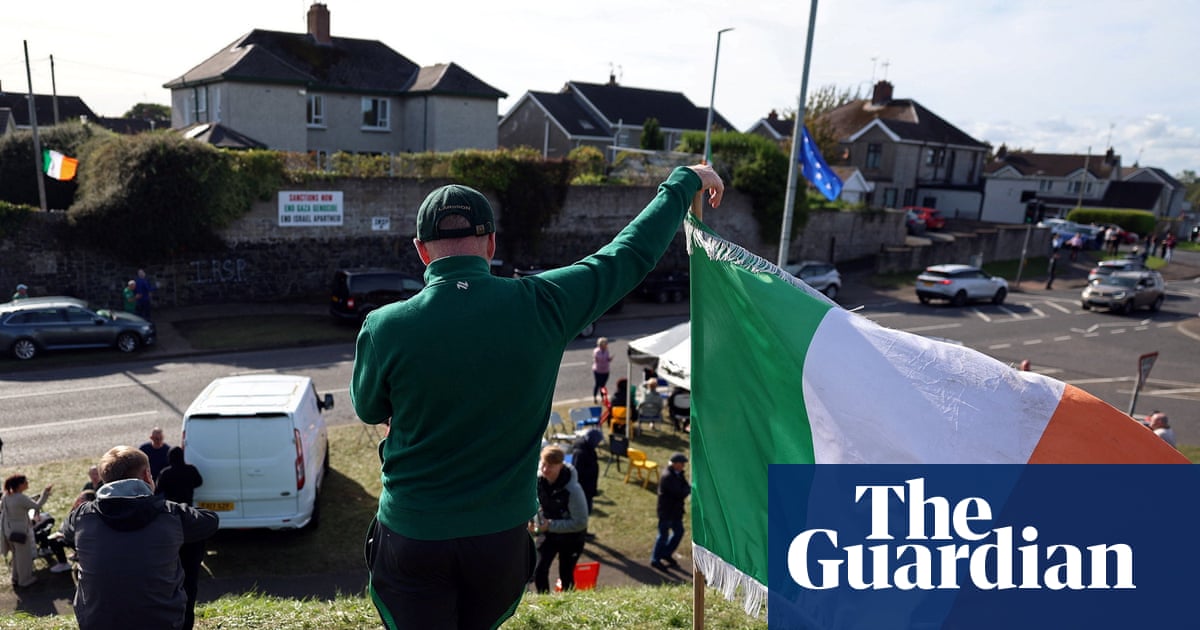
Passions are running high, but the attempt by 35 members of the Protestant Orange Order to walk down Garvaghy Road, a main thoroughfare in a predominantly nationalist part of Drumcree in Portadown, County Armagh, did not lead to violence on Sunday or Monday.
asserted
attempt → run → Sunday
Faced with thousands of members of the nationalist community standing in their way and a police line ordering them back, Orange Order district master Nigel Dawson concluded: “There’s no point getting wet unnecessarily,” as he instructed members of the order back inside the church hall to shelter from the rain.
asserted
he → face → rain
Every half-hour on Monday, the Orange Order members walked up to police lines only to be turned back by Supt Brendan Green, but the process was peaceful and respectful.
asserted
process → walk → Green
The blessed absence of the old ways does not make what is happening at Drumcree any less significant, however.
asserted
happening → make → Drumcree
History doesn’t repeat itself, and although hope and history sometimes rhyme, more often we hear echoes of history returning to us.
asserted
echoes → repeat → us
The divisions and tendency towards cynical political posturing in Northern Ireland, papered over by the 1998 Good Friday agreement – when all sides were exhausted by the hate and misery of the three decades of Troubles – have been all too evident of late.
asserted
sides → paper → Troubles
This particular dispute can be reasonably argued either way.
asserted
dispute → argue → ?
The independent Parades Commission has ruled that the march down the Garvaghy Road is permissible.
asserted
march → rule → Road
The marchers are simply taking advantage of their rights, it may be said.
uncertain
it → take → rights
But is it really necessary to take this road after 28 years of the march being banned?
asserted
march → take → years
Who is served by the provocation?
asserted
Who → serve → provocation
The detail of the argument is perhaps less important than the fact that it is happening, and what that says about Northern Ireland today, and what it may mean for the future.
uncertain
it → happen → future
This was only inflated by Donald Trump’s recent suggestion that a unified Ireland should happen sooner rather than later.
asserted
Ireland → inflate → suggestion
“The days of unionist supremacy and domination are gone,” said the first minister, Michelle O’Neill of Sinn Féin, on Monday after appearing herself in Drumcree.
asserted
minister → go → Drumcree
“We will not be going backwards.”
asserted
We → go → ?
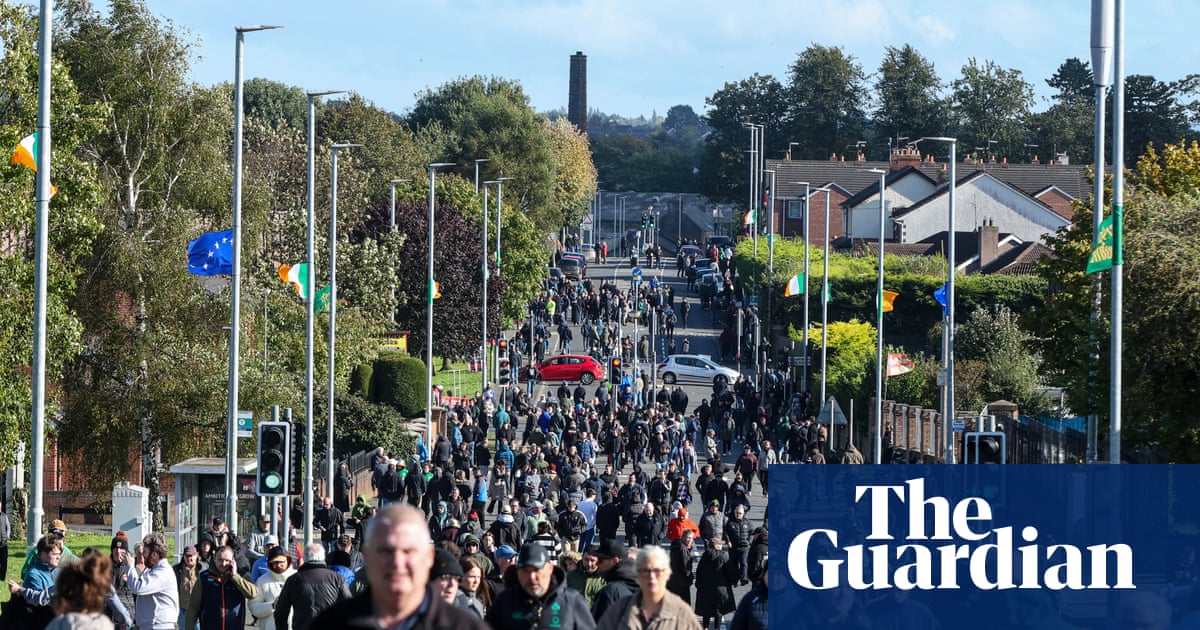
The numbers gathering from the nationalist community, some of whom were bussed in from Belfast and Derry, appeared to surprise the Police Service of Northern Ireland.
asserted
some → gather → Ireland
It was a moment of unity within an often fractured nationalist community.
asserted
It → fracture → community
Those in attendance included Colin Duffy and his brother Paul, who were both acquitted of terror charges in 2015, along with the SDLP party leader Claire Hanna, a vehement critic of those who reach for violence as an answer.
asserted
who → include → answer
Meanwhile, for the unionists, the changed relationship with the rest of the UK brought about by the Brexit deal and changing demographics has arguably engendered a distinct lack of confidence about the future.
asserted
relationship → change → future
Gavin Robinson, the leader of the Democratic Unionist party (DUP), the largest unionist party, claimed on Monday that “standards have been shattered” by the presence of the first minister with the protesters in Drumcree.
asserted
standards → claim → Drumcree
When O’Neill and Mary Lou McDonald, the leader of Sinn Féin in the Republic of Ireland, arrived at the protest, it was to chants of “bring it down” and “fuck Stormont”, in reference to power-sharing arrangements in Northern Ireland, structured to make unionists and nationalists work together.
asserted
unionists → arrive → Ireland
“How we can go forward when there is such a level of disdain for the simple fundamental democratic principles of society?” asked Robinson of the attempt by the first minister to block a lawful march.
asserted
Robinson → go → march
It is likely that the prospect of elections for the Northern Ireland assembly next year, and the need to rally the faithful to their respective cause, is not helping to calm the rhetoric.
asserted
prospect → rally → rhetoric
In Stormont, the speaker, Edwin Poots, a former leader of the DUP, condemned the first minister for her “gross discourtesy” and “contempt” in not coming to answer an urgent question about the crisis.
asserted
speaker → condemn → crisis
In this context, there is concern that even if Sinn Féin’s leaders, with the crowds’ chants ringing in their ears, do not walk out of the Northern Ireland executive, that the DUP could well do so.
uncertain
DUP → be → executive
After a prolonged period in which agreement on a budget for Northern Ireland’s collapsing public services has not been found with Westminster, such further fracturing risks a whole new level of instability.
asserted
fracturing → collapse → instability
The Northern Ireland secretary, Chris Bryant, spoke to Breandán Mac Cionnaith, from the Garvaghy Road Residents’ Coalition, on Monday.
asserted
secretary → speak → Monday
The possibility of mediation was discussed, Mac Cionnaith said.
asserted
Cionnaith → discuss → mediation
Speaking in the Republic, Micheál Martin, the taoiseach, called for cool heads.
asserted
Martin → speak → heads
“No one wants to go back to the past divisions, to past trauma that we experienced at Garvaghy Road, Drumcree, in the past,” he said.
asserted
he → want → past
“I would say to Sinn Féin and to everybody else: time to dial back now and time to engage in dialogue, and to work this out in a sensible, community-based way.”
asserted
I → say → way
 The Aporia