That is 0 articles you have read today.
The Aporia is free and carries no advertising, so readers are the only
thing paying for it. If you are getting this much out of it, a small
donation is what keeps it independent.
Daily limit reached
You have read 0 articles today.
That is more than the 15 a day The Aporia gives away,
and well past what it can carry on nothing. Your allowance resets at
midnight.
There is no advertising here and nothing about you is sold, so readers
are the only thing paying for it. If the site is worth this much of
your day, it is worth a few dollars.
Everything else stays open: the
maps, the
directory and
search do
not count against this, and neither does re-opening something you have
already read today.
Tensions escalated in Portadown, Northern Ireland, after a late-night decision by the High Court allowed an Orange Order parade to proceed down Garvaghy Road for the first time in nearly three decades. This move has ignited protests from local residents who oppose the march and have blocked the street. British Prime Minister Andy Burnham urged calm, while Police Service of Northern Ireland's head Jon Boutcher appealed for compliance with the law. Politicians representing Irish nationalists and unionists expressed opposing views on the matter, highlighting ongoing tensions regarding Northern Ireland's identity and governance.
Written locally by qwen2.5:14b on 2026-10-02,
using this article's own text rather than the other coverage of the
same event (that is the story summary below).
Story summary
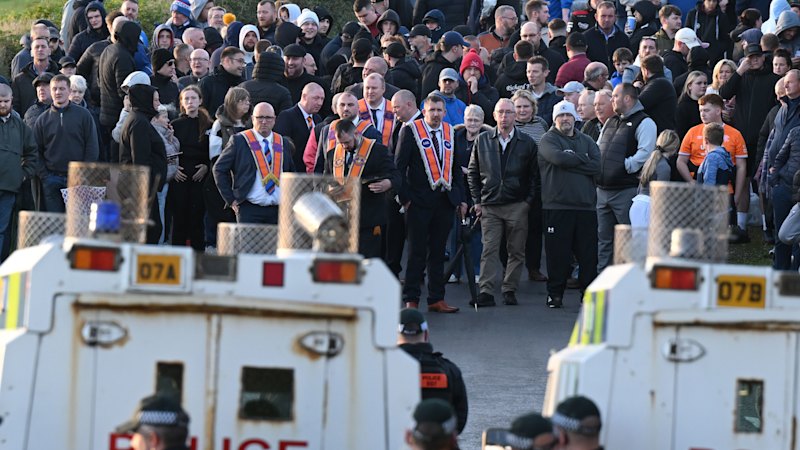
On September 27, the Parades Commission allowed the Orange Order's Drumcree parade to proceed along Garvaghy Road for the first time in almost 30 years. The commission restricted the number of participants to 35 people, starting at 8 am, and required them to disperse by 9:30 am from Carleton Street Orange Hall, with only the Portadown District banner allowed during this stretch. No supporters or bands were permitted along the parade route near residents' homes on Dungannon Road and Drumcree Road.
The decision drew mixed reactions; DUP hailed it as a breakthrough while Sinn Féin condemned it strongly, viewing it as forcing an Orange march through the community. Garvaghy Road residents had been vehemently opposed to such parades during the 1990s Troubles era, leading to violent clashes and political tension necessitating significant security measures.
Following an unprecedented late-night court hearing concluding at 2:15 am, Justice Michael Humphreys upheld the commission's ruling. Crowds gathered in Portadown early Sunday morning, with many wearing balaclavas, awaiting the parade amidst heavy rain and tense conditions. The hearing acknowledged the unusual circumstances but maintained respect for public bodies' decisions.
Concerns were raised that this go-ahead could disrupt agreements at other flashpoint areas across Northern Ireland, signaling potential challenges to maintaining peace in former conflict zones.
Written for “Drumcree Parade Decision” on 2026-10-05,
grounded in this article and the 59 other(s) covering the same event.
Tensions run high in Northern Ireland after contentious march given go-ahead
First time in decades Orange Order parade has been allowed to go down Garvaghy Road
British Prime Minister Andy Burnham called for calm in Northern Ireland on Sunday after a contentious parade was given the go-ahead by the High Court in Belfast in a late-night sitting.
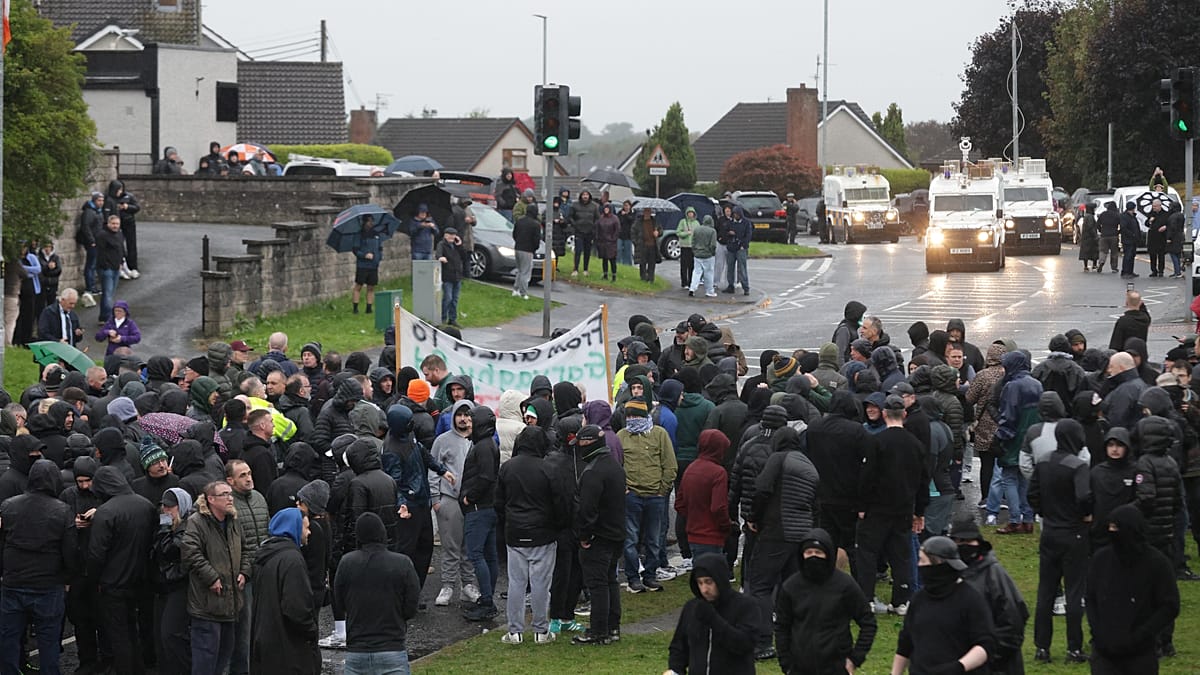
Thousands of protesters, many wearing balaclavas, gathered to block the marchers from the Orange Order, a group hugely supportive of Northern Ireland being part of the U.K., from proceeding down a street in the town of Portadown, where many favour unification with the Republic of Ireland.
asserted
many → run → Ireland
It's the first time in nearly 30 years that the Orange Order parade has been allowed to go down the Garvaghy Road, which had been a notorious flashpoint between the communities in the years before the Good Friday Agreement of 1998 largely ended the bloodshed in Northern Ireland.
asserted
Agreement → allow → Ireland
During the so-called Troubles, some 3,600 people were killed while some 50,000 were wounded.
asserted
50,000 → call → Troubles
Ending the Troubles meant balancing competing identities in Northern Ireland, which remained in the United Kingdom when the rest of Ireland won independence.
asserted
rest → end → independence
Irish nationalists in the north — most of them Catholic — seek union with the Republic of Ireland, while largely Protestant unionists want to stay part of the U.K.
Burnham appealed for "calm on all sides" over the parade, saying there have been "big gains made in Northern Ireland, and we don’t want to see things go backwards."
asserted
things → seek → Ireland
Jon Boutcher, the head of the Police Service of Northern Ireland, called for "those with influence to encourage people to comply with the law," referring to a large protest blocking the Garvaghy Road.
asserted
those → call → Road
He said there has been no signs of violence or disorder.
asserted
He → say → violence
"Police are engaging and working with all parties and will continue to do so.
asserted
Police → engage → parties
It is incumbent on us all to come together at times like this to do all we can to preserve a peaceful Northern Ireland."
asserted
we → come → Ireland
Politicians representing the two sides were opposed in their viewpoints on whether the march should go ahead.
asserted
march → represent → viewpoints
Trump's call for united Ireland draws swift rejection from pro-British unionists
Thousands rally in Northern Ireland to condemn anti-immigration rioting
Northern Ireland First Minister Michelle O'Neill, who represents Sinn Fein, the party historically linked to the Irish Republican Army, said the decision to give the march the go-ahead "brings into question how this whole peace process works.
asserted
process → draw → question
"The progress of the last 28 years have been brought into question by the actions of the Orange Order and those within political unionism that want to drag us backwards," she said while attending the counter-protest on the Garvaghy Road.
asserted
she → bring → Road
Gavin Robinson, the leader of the Democrat Unionist Party, the largest pro-U.K. party in Northern Ireland, called out Sinn Fein leaders for inflaming the situation.
asserted
Robinson → call → situation
"The rule of law cannot apply only when Sinn Fein likes the outcome," he said.
asserted
he → apply → outcome
"Our institutions are founded on respect for the police, the courts and the rule of law.
asserted
institutions → found → law
The march was given the final go-ahead at a court hearing concluded at 2:15 a.m. local time on Sunday.
asserted
march → give → Sunday
The Orange Order is named after William of Orange, a Protestant prince of Holland who defeated the Catholic King James to take over the British throne in the 17th century.
asserted
who → name → century
 The Aporia