That is 0 articles you have read today.
The Aporia is free and carries no advertising, so readers are the only
thing paying for it. If you are getting this much out of it, a small
donation is what keeps it independent.
Daily limit reached
You have read 0 articles today.
That is more than the 15 a day The Aporia gives away,
and well past what it can carry on nothing. Your allowance resets at
midnight.
There is no advertising here and nothing about you is sold, so readers
are the only thing paying for it. If the site is worth this much of
your day, it is worth a few dollars.
Everything else stays open: the
maps, the
directory and
search do
not count against this, and neither does re-opening something you have
already read today.
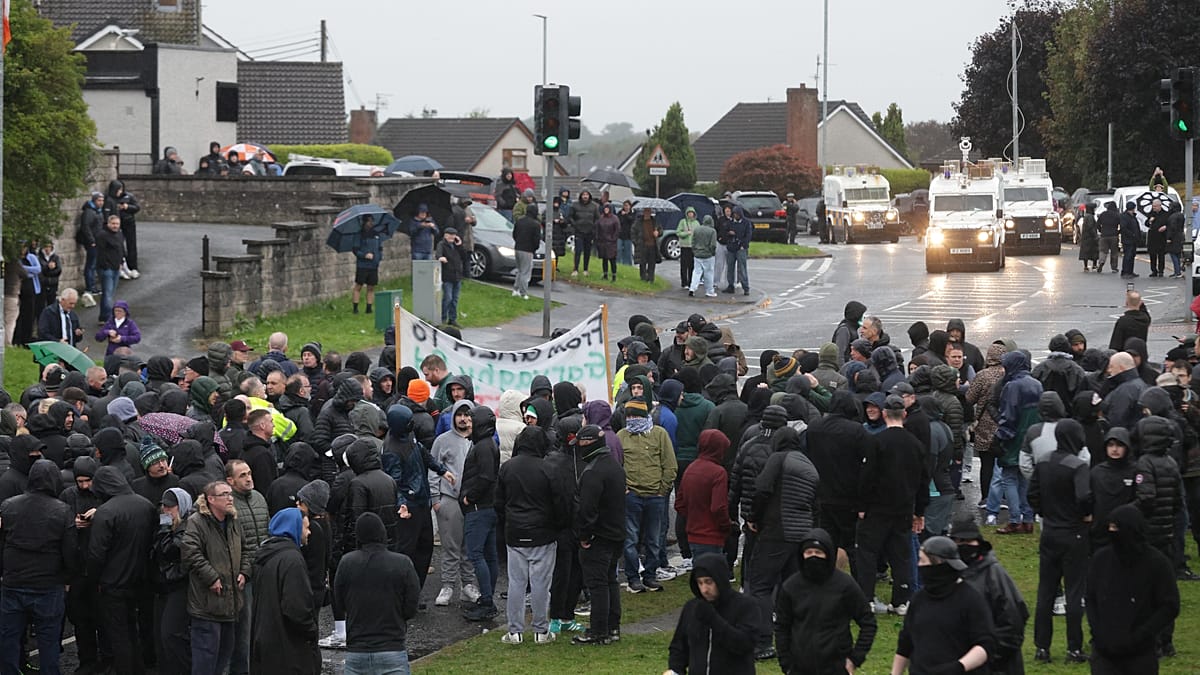
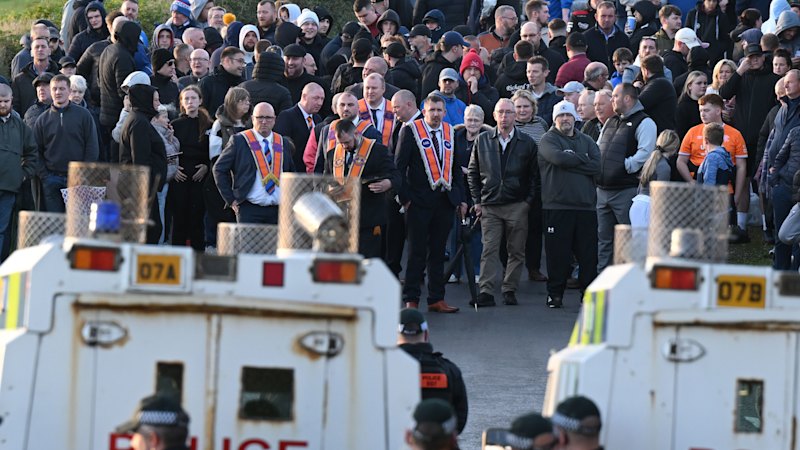
On Sunday morning in Portadown, Northern Ireland, about 2,000 protesters gathered to block an Orange Order march that was allowed by court order but controversially restricted after earlier legal challenges. Despite a Court of Appeal ruling permitting the limited parade without bands or supporters, police halted it due to safety concerns amid the large protest crowd. Nationalist leaders criticized the decision to allow the march, while Prime Minister Andy Burnham called for calm and urged that progress since the Good Friday Agreement be protected.
Written locally by qwen2.5:14b on 2026-09-28,
using this article's own text rather than the other coverage of the
same event (that is the story summary below).
Story summary
On September 27, the Parades Commission allowed the Orange Order's Drumcree parade to proceed along Garvaghy Road for the first time in almost 30 years. The commission restricted the number of participants to 35 people, starting at 8 am, and required them to disperse by 9:30 am from Carleton Street Orange Hall, with only the Portadown District banner allowed during this stretch. No supporters or bands were permitted along the parade route near residents' homes on Dungannon Road and Drumcree Road.
The decision drew mixed reactions; DUP hailed it as a breakthrough while Sinn Féin condemned it strongly, viewing it as forcing an Orange march through the community. Garvaghy Road residents had been vehemently opposed to such parades during the 1990s Troubles era, leading to violent clashes and political tension necessitating significant security measures.
Following an unprecedented late-night court hearing concluding at 2:15 am, Justice Michael Humphreys upheld the commission's ruling. Crowds gathered in Portadown early Sunday morning, with many wearing balaclavas, awaiting the parade amidst heavy rain and tense conditions. The hearing acknowledged the unusual circumstances but maintained respect for public bodies' decisions.
Concerns were raised that this go-ahead could disrupt agreements at other flashpoint areas across Northern Ireland, signaling potential challenges to maintaining peace in former conflict zones.
Written for “Drumcree Parade Decision” on 2026-10-05,
grounded in this article and the 59 other(s) covering the same event.
Claims extracted
12
claim-shaped sentences
Uncertain
0%
0 of 12 hedged
Leaning
Leans left
of the writing, not the subject · beta estimate
Correction & hedging signals
60.1
corrections and hedging in what we collected;
not a measure of accuracy
Outlets on this story
60
Politics
Narrative spread
1
articles carrying this framing
Around 2,000 people gathered despite heavy rain, while police monitored the scene with vehicles and a helicopter.
asserted
police → gather → vehicles
The 35 Orange Order members authorised to take part remained inside a nearby church as the route was blocked.
asserted
route → authorise → church
The limited parade was due to pass along the road without bands or supporters, in what would have been the first such procession there since 1998.
asserted
what → pass → 1998
The standoff followed a late-night legal battle.
asserted
standoff → follow → battle
A High Court judge initially halted the parade on Saturday, saying the long-running dispute had the potential to escalate.
asserted
dispute → halt → potential
But the Court of Appeal overturned the ruling shortly before midnight, with Chief Justice Siobhan Keegan saying the judge had “unfortunately erred in law”.
asserted
judge → overturn → law
A subsequent High Court challenge was dismissed in the early hours of Sunday.
asserted
challenge → dismiss → Sunday
The procession was scheduled to leave at 8am and finish by 9.30am, but the PSNI said the road was not clear, delaying the march.
asserted
road → schedule → march
The decision has triggered strong criticism from nationalist leaders.
asserted
decision → trigger → leaders
First Minister Michelle O’Neill questioned why the route had been reopened after 28 years, while Sinn Féin president Mary Lou McDonald called for the British government and police to stop the parade.
asserted
government → question → parade
Prime Minister Andy Burnham appealed for calm, saying the gains made since the Good Friday Agreement must not be undone.
asserted
gains → appeal → Agreement
The confrontation revives memories of the Drumcree dispute, when the Garvaghy Road became a major flashpoint during the Troubles.
asserted
Road → revive → Troubles
 The Aporia