Orange Order members remain at Drumcree Parish Church in Portadown, maintaining their stance despite protests from nationalist residents on the Garvaghy Road who are preventing a contentious parade. The Police Service of Northern Ireland (PSNI) is facilitating negotiations between both sides for a resolution, with planned meetings scheduled for Monday involving local leaders and political figures like Northern Ireland Secretary Sir Chris Bryant.
Written locally by qwen2.5:14b on 2026-09-28,
using this article's own text rather than the other coverage of the
same event (that is the story summary below).
Story summary
On September 27, the Parades Commission allowed the Orange Order's Drumcree parade to proceed along Garvaghy Road for the first time in almost 30 years. The commission restricted the number of participants to 35 people, starting at 8 am, and required them to disperse by 9:30 am from Carleton Street Orange Hall, with only the Portadown District banner allowed during this stretch. No supporters or bands were permitted along the parade route near residents' homes on Dungannon Road and Drumcree Road.
The decision drew mixed reactions; DUP hailed it as a breakthrough while Sinn Féin condemned it strongly, viewing it as forcing an Orange march through the community. Garvaghy Road residents had been vehemently opposed to such parades during the 1990s Troubles era, leading to violent clashes and political tension necessitating significant security measures.
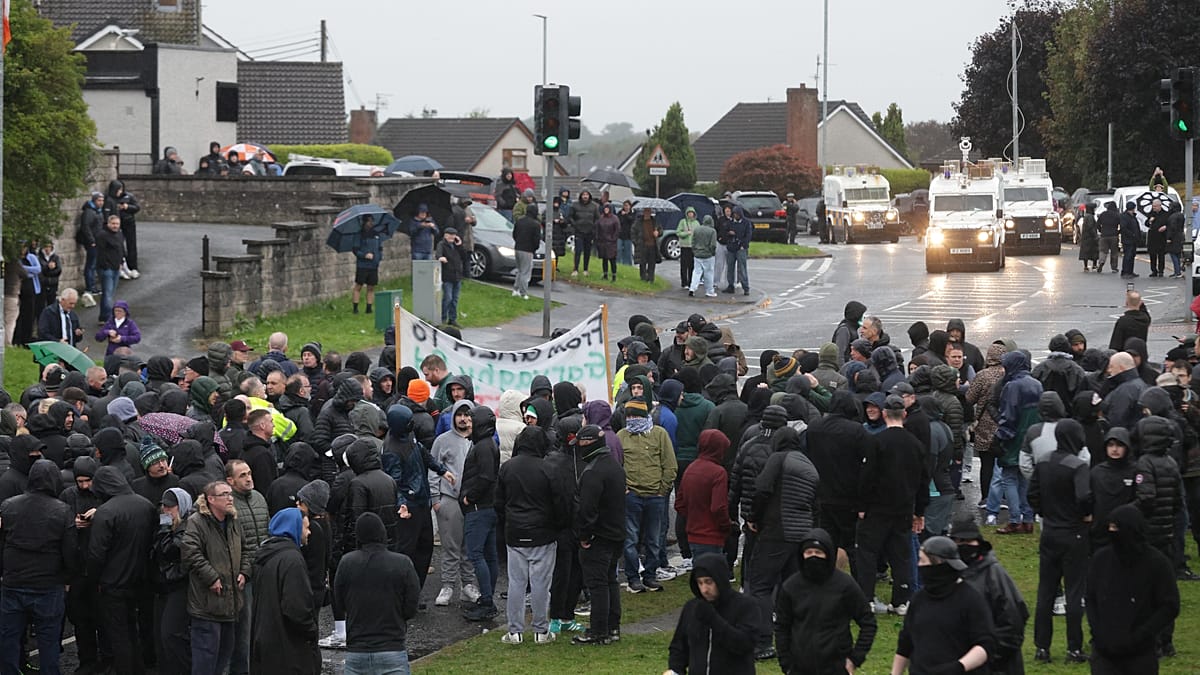
Following an unprecedented late-night court hearing concluding at 2:15 am, Justice Michael Humphreys upheld the commission's ruling. Crowds gathered in Portadown early Sunday morning, with many wearing balaclavas, awaiting the parade amidst heavy rain and tense conditions. The hearing acknowledged the unusual circumstances but maintained respect for public bodies' decisions.
Concerns were raised that this go-ahead could disrupt agreements at other flashpoint areas across Northern Ireland, signaling potential challenges to maintaining peace in former conflict zones.
Written for “Drumcree Parade Decision” on 2026-10-05,
grounded in this article and the 59 other(s) covering the same event.
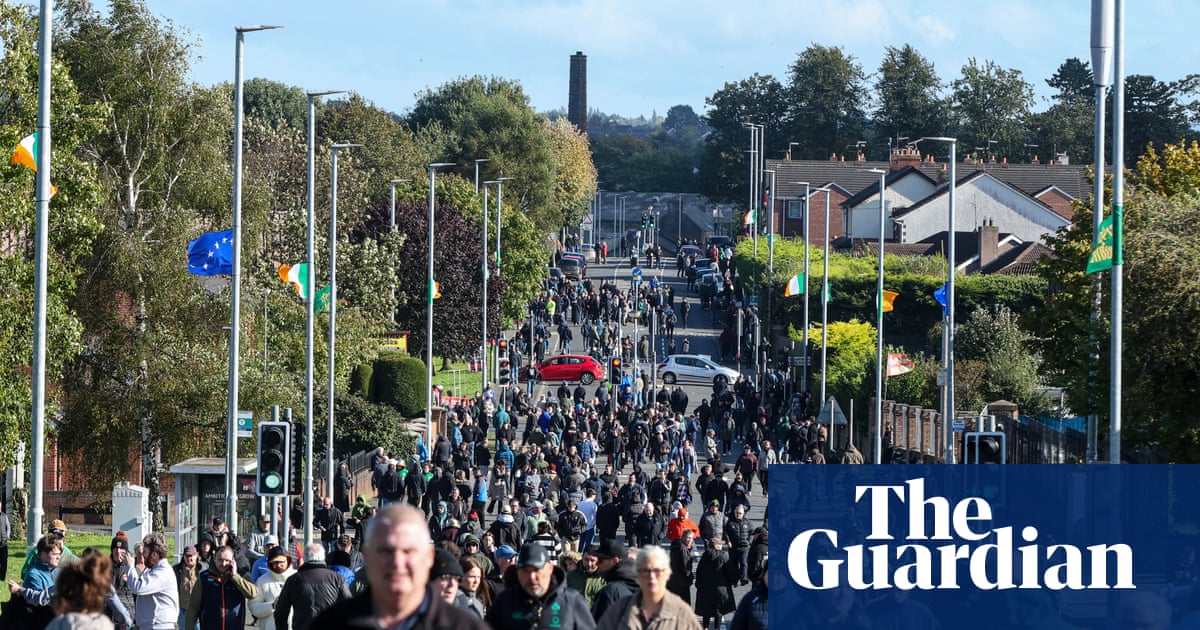
Orange Order members remain at Drumcree in Portadown with efforts set to intensify on Monday to find a political solution to a contentious parade which brought thousands of protesters on to the streets.
asserted
which → remain → streets
The Police Service of Northern Ireland (PSNI) is maintaining a low-key presence near Drumcree Parish Church where a number of loyal order members stayed overnight in the expectation of completing their march through the Co Armagh town.
asserted
number → maintain → town
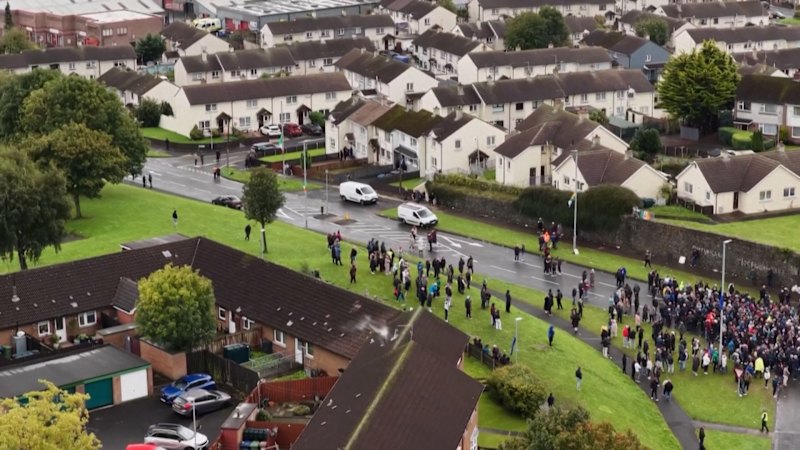
However, at the height of the blockade on Sunday, thousands of people gathered on the road to prevent the parade from the nearby Drumcree Church from passing along the route.
asserted
thousands → gather → route
It was organised after Orangemen managed to overturn a long ban on them parading down the predominantly nationalist road.
asserted
them → organise → road
The blockade continued through the day and late into the night, as Orangemen assembled at Drumcree Church around a mile from the road waited to commence their parade.
Orange members made a number of attempts to begin their march, including in the early hours of Monday, but were prevented by police.
asserted
members → continue → police
With tensions still high in the area, Breandán Mac Cionnaith from the Garvaghy Road Residents’ Coalition, said he would meet Northern Ireland Secretary Sir Chris Bryant and PSNI Chief Constable Jon Boutcher on Monday morning for talks on the Drumcree parade.
asserted
he → say → parade
On his planned meetings on Monday, he said: “That process starts tomorrow when we go in and meet the chief constable and we’ll meet the secretary of state.
asserted
we → plan → state
“We’re not going in to do deals with them, or to take half measures with them.
asserted
We → go → them
“We said the other day, and we said yesterday, and the day before – we’re not going back, we’re not turning the clock back.
asserted
we → say → clock
Read More
“We’re putting the clock forward.”
asserted
We → read → clock
The Drumcree dispute is also expected to feature heavily at Stormont on Monday, with relations between powersharing partners Sinn Féin and the DUP seriously damaged.
asserted
relations → expect → partners
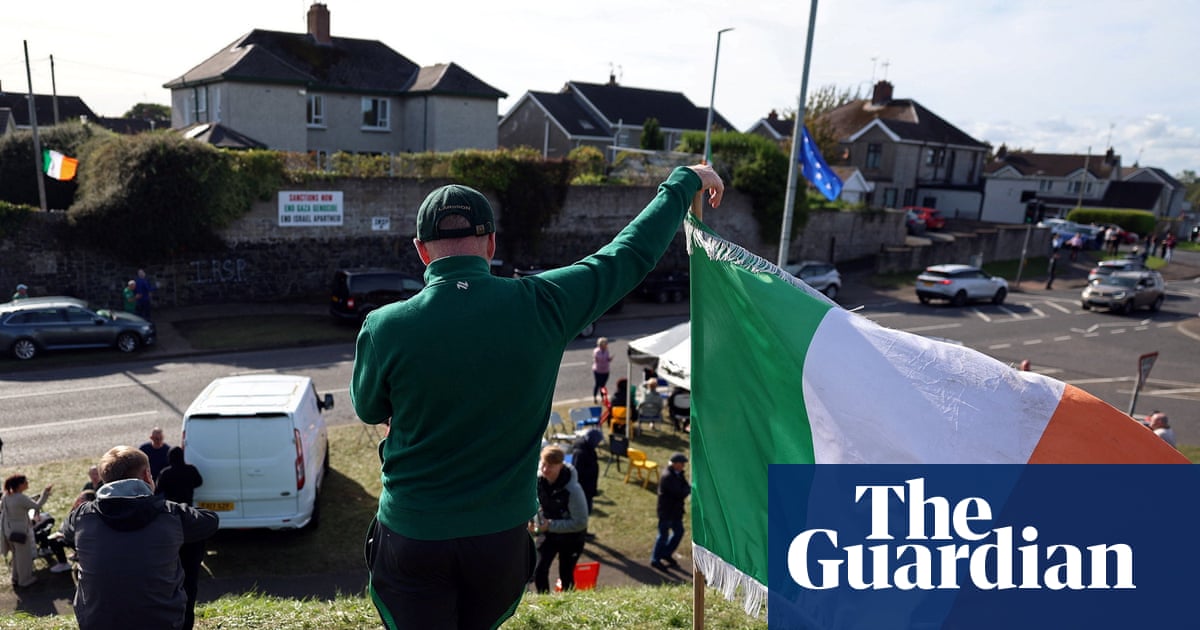
Northern Ireland First Minister and Sinn Féin vice president Ms O’Neill was among those on the Garvaghy Road on Sunday, which led DUP leader Gavin Robinson to accuse her of “breaking the law”.
asserted
which → lead → law
Ms O’Neill said: “This community do not want this, they do not want this march.”
asserted
they → say → march
Under parading legislation in the region, protests against parades must be notified and approved by the Parades Commission adjudication body.
asserted
protests → notify → body
Ms O’Neill and other ministers in the Stormont Executive are bound by a pledge of office that contains a commitment to uphold the law.
asserted
that → bind → law
Mr Robinson said Sinn Féin leaders needed to face consequences for their actions.
asserted
leaders → say → actions
“We can’t have a situation where people who have the privilege of holding high office in Northern Ireland so flagrantly disregard the pledge of office and statutory underpinnings of their office,” he said.
asserted
he → have → office
The Northern Ireland Secretary has appealed for calm and urged political and community leaders to reach for compromise.
asserted
Secretary → appeal → compromise
He held talks with political leaders on Sunday night, but no resolution emerged.
asserted
resolution → hold → night
A ruling by the Parades Commission permitting the Orange Order march from Drumcree Church and along the Garvaghy Road was upheld in an “unprecedented” late-night sitting of the High Court in Belfast in the early hours of Sunday morning.
asserted
ruling → permit → morning
The Drumcree parade, which was associated with violent clashes during the Troubles, has been banned since 1998.
asserted
which → associate → 1998
The stand-off at Drumcree made headlines in the 1990s, with nationalist residents of the Garvaghy Road opposed to the parade passing through the area, leading to violent clashes for several summers and political tension necessitating major security operations.
asserted
parade → make → operations
The Orange Order has unsuccessfully applied for more than a quarter of a century to complete its 1998 walk along its traditional route.
asserted
Order → apply → route
On Friday, the commission reversed its long-running determination and granted permission for the parade – a decision welcomed by unionist parties and met with outrage from nationalist and republican parties.
asserted
commission → reverse → parties
Permission was granted for a parade subject to strict restrictions, including a limit of 35 participants and an 8am start time.
asserted
Permission → grant → participants
 The Aporia