Story summary
On September 27, the Parades Commission allowed the Orange Order's Drumcree parade to proceed along Garvaghy Road for the first time in almost 30 years. The commission restricted the number of participants to 35 people, starting at 8 am, and required them to disperse by 9:30 am from Carleton Street Orange Hall, with only the Portadown District banner allowed during this stretch. No supporters or bands were permitted along the parade route near residents' homes on Dungannon Road and Drumcree Road.
The decision drew mixed reactions; DUP hailed it as a breakthrough while Sinn Féin condemned it strongly, viewing it as forcing an Orange march through the community. Garvaghy Road residents had been vehemently opposed to such parades during the 1990s Troubles era, leading to violent clashes and political tension necessitating significant security measures.
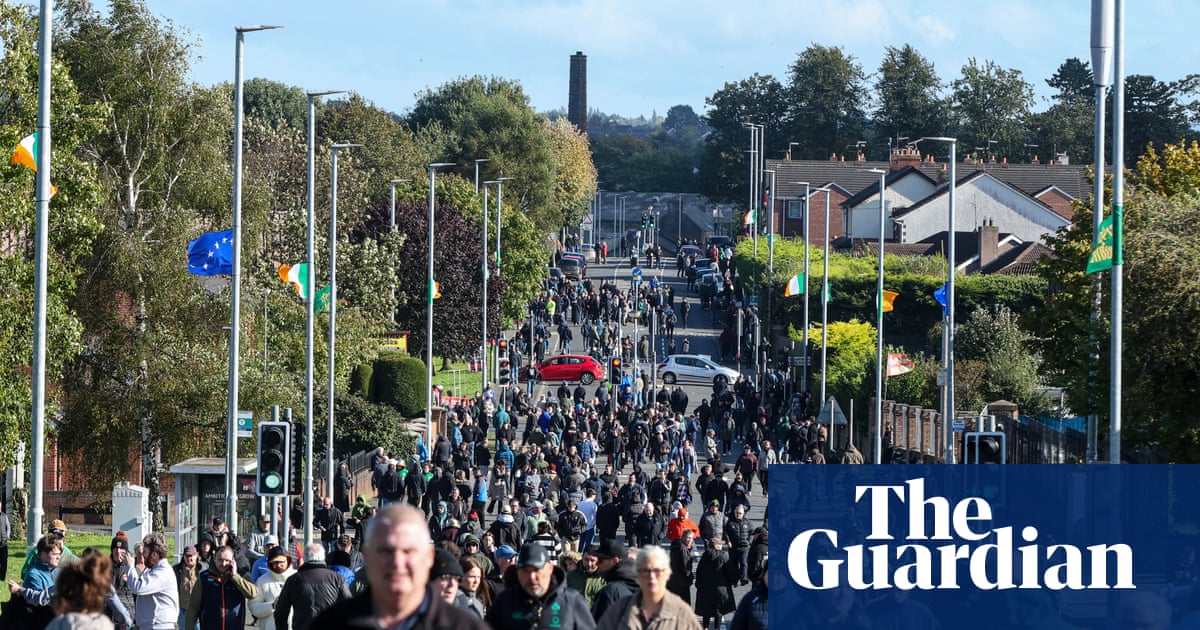
Following an unprecedented late-night court hearing concluding at 2:15 am, Justice Michael Humphreys upheld the commission's ruling. Crowds gathered in Portadown early Sunday morning, with many wearing balaclavas, awaiting the parade amidst heavy rain and tense conditions. The hearing acknowledged the unusual circumstances but maintained respect for public bodies' decisions.
Concerns were raised that this go-ahead could disrupt agreements at other flashpoint areas across Northern Ireland, signaling potential challenges to maintaining peace in former conflict zones.
Written for “Drumcree Parade Decision” on 2026-10-05,
grounded in this article and the 59 other(s) covering the same event.
He hailed the Parades Commission ruling to allow the completion of the Orange Order’s return parade along the Garvaghy Road for the first time in almost 30 years as a “significant moment”.
asserted
He → hail → moment
In his weekly email to DUP members, Mr Robinson commended Portadown District’s “patience, discipline and a commitment that has never wavered”.
asserted
that → commend → patience
He also described a “wider political lesson”.
asserted
He → describe → lesson
“The solidarity shown in Portadown reflects something important: unionism is at its strongest when it works together,” he said.
asserted
he → show → strongest
It comes after the last Assembly election in 2022 saw Sinn Féin make history by being the first non-unionist party to top the poll, and Michelle O’Neill becoming the first nationalist First Minister.
asserted
O’Neill → come → poll
Then, Sinn Féin (27 MLAs) finished two seats ahead of the DUP (25), which now has 26 Assembly seats following the co-option of Peter Martin after the election of independent Alex Easton to Westminster in 2024.
asserted
which → finish → 2024
At his party conference speech last week, Mr Robinson committed to working with other unionists to maximise unionist representation in the Assembly and local government.
“My door is open to every unionist leader – no preconditions, no ego and no grandstanding,” he said.
asserted
he → commit → leader
He referred to meeting with Ulster Unionist Party leader Jon Burrows over unionist co-operation, adding those discussions “are best conducted away from running media commentary”.
asserted
discussions → refer → commentary
Speaking separately, Mr Burrows said he wanted to see a stronger unionist turnout generally to increase the number of unionist MLAs in the Assembly, and less concern about the “bun fight for First Minister”.
asserted
he → speak → Minister
TUV leader Jim Allister said he had not been spoken to by Mr Robinson about unionist co-operation.
asserted
he → say → operation
“Unionist co-operation should be about preserving the Union, it’s not about preserving any particular unionist party,” he added.
asserted
he → preserve → party
Read More
Mr Robinson went on in his message to DUP members: “Let me be clear: I am committed to doing all that we can to make cooperation work.
asserted
cooperation → read → all
“Some within the unionist family argue that votes cannot be split in an Assembly election and that running candidates without a combined strategy carries no consequences.
asserted
running → argue → consequences
“The evidence demonstrates the folly of that argument.”
asserted
evidence → demonstrate → argument
Mr Robinson contended that unionism “rarely loses because it is outvoted”.
asserted
it → contend → ?
“It loses when it is out-organised,” he said.
asserted
he → lose → ?
At the last Assembly election, unionist candidates secured more than four quotas in first-preference votes, yet only three unionists were elected.
asserted
unionists → secure → votes
Alliance secured the final seat by just 288 votes.
asserted
Alliance → secure → votes
That seat contributed to Alliance having the numbers to take the Agriculture portfolio in the Executive.
asserted
Alliance → contribute → Executive
“There is an irony in hearing some of the Alliance Agriculture Minister’s harshest critics coming from the very quarters whose electoral choices helped put him there.
asserted
choices → be → him
“But this is not about settling old scores.
asserted
this → settle → scores
It is about learning from past mistakes.
asserted
It → learn → mistakes
It was the cost of division, poor organisation and a failure to promote transfers across the unionist family.
asserted
It → promote → family
“We cannot afford to repeat that mistake elsewhere.
asserted
We → afford → mistake
Unionist voters deserve a strategy that turns their votes into seats – and those seats into influence.
asserted
that → deserve → influence
I choose cooperation.”
asserted
I → choose → cooperation
 The Aporia