Story summary
US President Donald Trump met with Chinese President Xi Jinping, where Xi pressed Trump to adopt Beijing's stance against Taiwan independence, which Taiwan rejected outright. Meanwhile, Taiwan is crucial for global tech and economy due to its leading semiconductor production; TSMC alone produces the majority of advanced chips that power smartphones, AI systems, and more. As Stanford Hoover fellow Eyck Freymann noted, economic disruption from a conflict over Taiwan would be severe.
In unrelated developments, Iranian President Masoud Pezeshkian met with US media at the UN General Assembly, where he denied Iran's nuclear ambitions while offering to dilute its enriched uranium and allow inspections under international law. He also blamed Washington for ongoing conflicts in the Middle East. The International Atomic Energy Agency (IAEA) estimates that Iran has over 440 kilograms of uranium enriched up to 60%, raising concerns despite Pezeshkian's denials.
Taiwan's representative, Ambassador Alexander Yui, clarified during an interview on CBS’s "Face the Nation" that while Taiwan was discussed between Trump and Xi, it wasn't a major focus. He emphasized there has been no change in US policy towards Taiwan amid recent tensions with China.
Written for “Taiwan Iran Us Relations Midterms” on 2026-10-05,
grounded in this article and the 386 other(s) covering the same event.
In short:
Under protection of the US Secret Service, Iran's president has become the first world leader to address the UN in New York while his country is at war with the US.
asserted
country → become → US
He said his country had been "victims of terrorism" and would never "bend at the knee" in response to US-Israeli attacks or economic pressure.
asserted
country → say → attacks
Iran says it has exchanged messages with US officials via Qatari mediators, but has not confirmed US President Donald Trump's claim they held a meeting on the summit's sidelines.
uncertain
they → say → sidelines
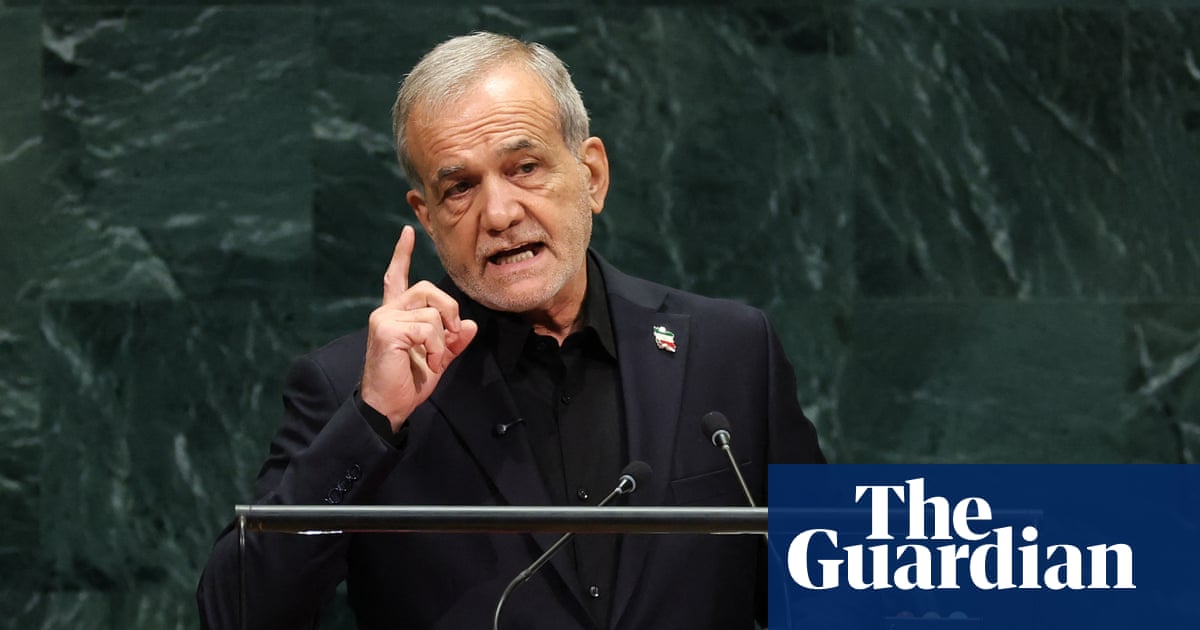
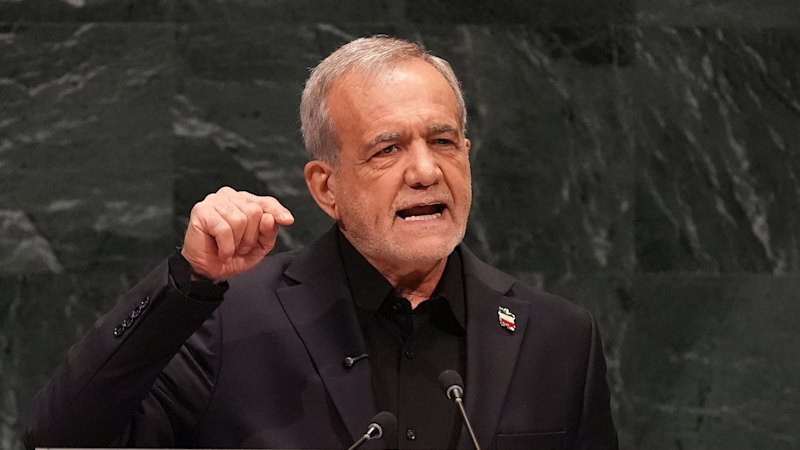
Iran's president has delivered an unyielding speech at the UN, describing his country as a "victim of terrorism" and declaring it will never surrender to US and Israeli aggression.
asserted
it → deliver → aggression
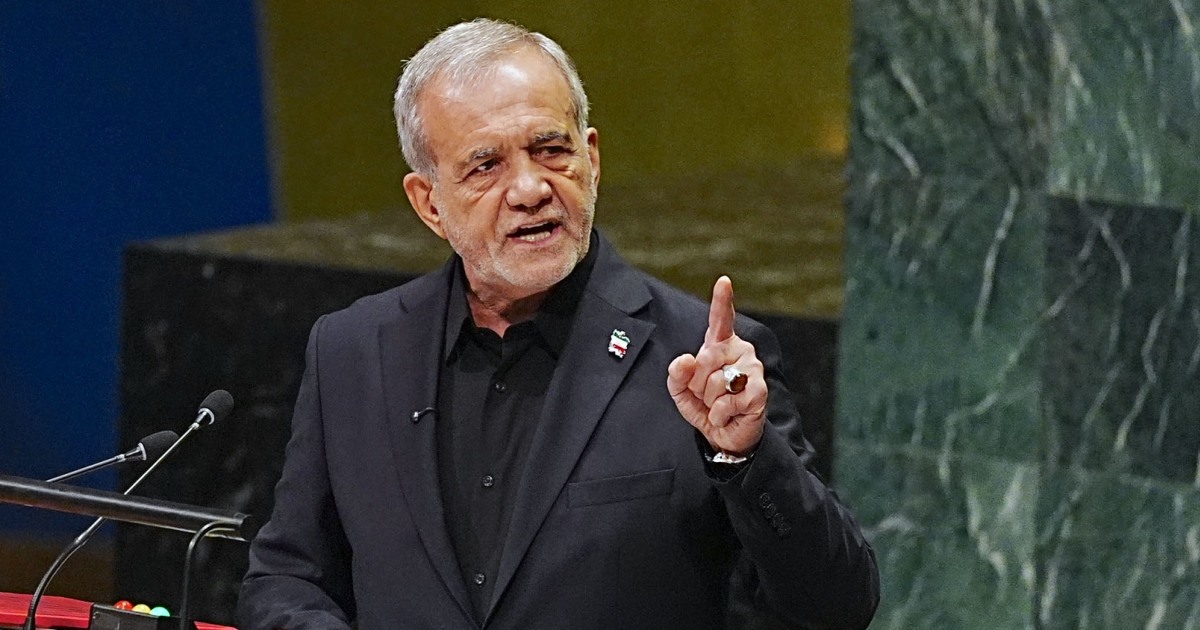
A day after US President Donald Trump suggested he could "annihilate" the Islamic Republic, Masoud Pezeshkian appeared in person at the UN's New York headquarters.
uncertain
Pezeshkian → suggest → headquarters
He has been afforded the protection of the US Secret Service, as is protocol for visiting leaders, and is believed to be the first world leader to address the UN assembly while at war with the host country.
asserted
protocol → afford → country
"Yesterday, the United States' president described us as terrorists," Mr Pezeshkian said, according to a live translation.
uncertain
Pezeshkian → describe → translation
"We have been the victims of terrorism."
The speech mainly comprised the arguments Iran has been putting forward publicly since the outbreak of war almost seven months ago: that Iran's nuclear research was for peaceful purposes, it would not accept limits on its nuclear program, and it would not succumb to military or economic pressure.
asserted
it → comprise → pressure
The only delegate in the US's seats in the assembly hall walked out as Mr Pezeshkian spoke.
asserted
Pezeshkian → walk → hall
"We will never bow or head our bend at the knee," Mr Pezeshkian said.
asserted
Pezeshkian → bow → knee
"Iran must be understood by Mr Trump and those who seek to bully us that we are ready for dialogue and diplomacy and negotiations without accepting the language of force."
The speech was a "reminder that the US military and economic pressure on Iran can create leverage but don't necessarily produce capitulation", said Ali Vaez, an Iran analyst at the International Crisis Group.
asserted
Vaez → understand → Group
"As long as there's a leadership in Tehran that believes its survival to be at stake, it'll opt for endurance rather than surrender," he said.
asserted
he → be → endurance
"But what happens in the corridors of the UN this week, in direct and indirect talks, matters more than what either side says at the podium."
Any deal will take work over time: Rubio
Despite the defiant speeches from both Mr Pezeshkian and Mr Trump, Iran's presence at summit appears to have opened the door to the resumption of some degree of negotiation, though there is no evidence of movement towards a breakthrough.
asserted
presence → happen → breakthrough
Mr Trump yesterday said US and Iranian officials had held a "very productive meeting" on the sidelines of the summit.
asserted
officials → say → summit
In his earlier speech, he predicted a deal would be reached after the midterm elections in November, though his many previous predictions of peace deals have not materialised.
asserted
predictions → predict → deals
Today, Iranian foreign ministry spokesman Esmaeil Baqaei said on social media that messages had been exchanged with the US via Qatari mediators.
asserted
messages → say → mediators
He said Iran had reiterated to the US that diplomacy would only be revived if the US met its conditions, including ending the war, ceasing its naval blockade and releasing frozen assets.
asserted
US → say → assets
Reuters, citing Iranian sources, reported that Iran's Supreme National Security Council had ordered the travelling delegation not meet the Americans face-to-face in New York.
asserted
delegation → cite → York
The council includes Iran's supreme leader, Ayatollah Mojtaba Khamenei.
asserted
council → include → leader
US Secretary of State Marco Rubio told reporters in New York that any deal with Iran would require "a lot of hard work over a period of time".
asserted
deal → tell → time
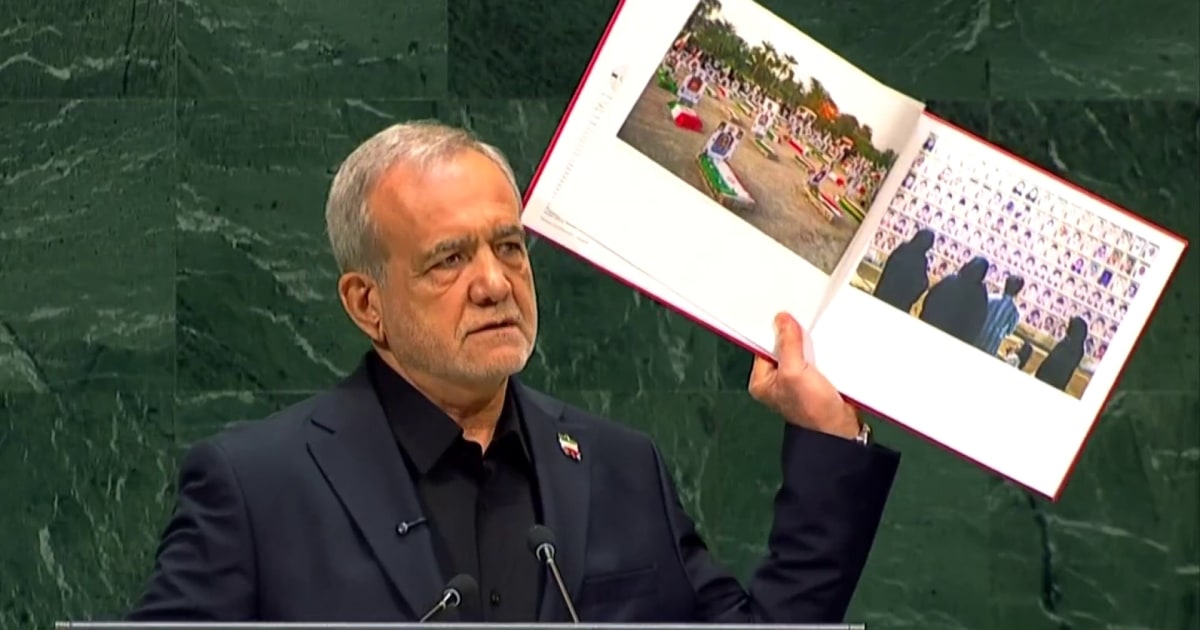
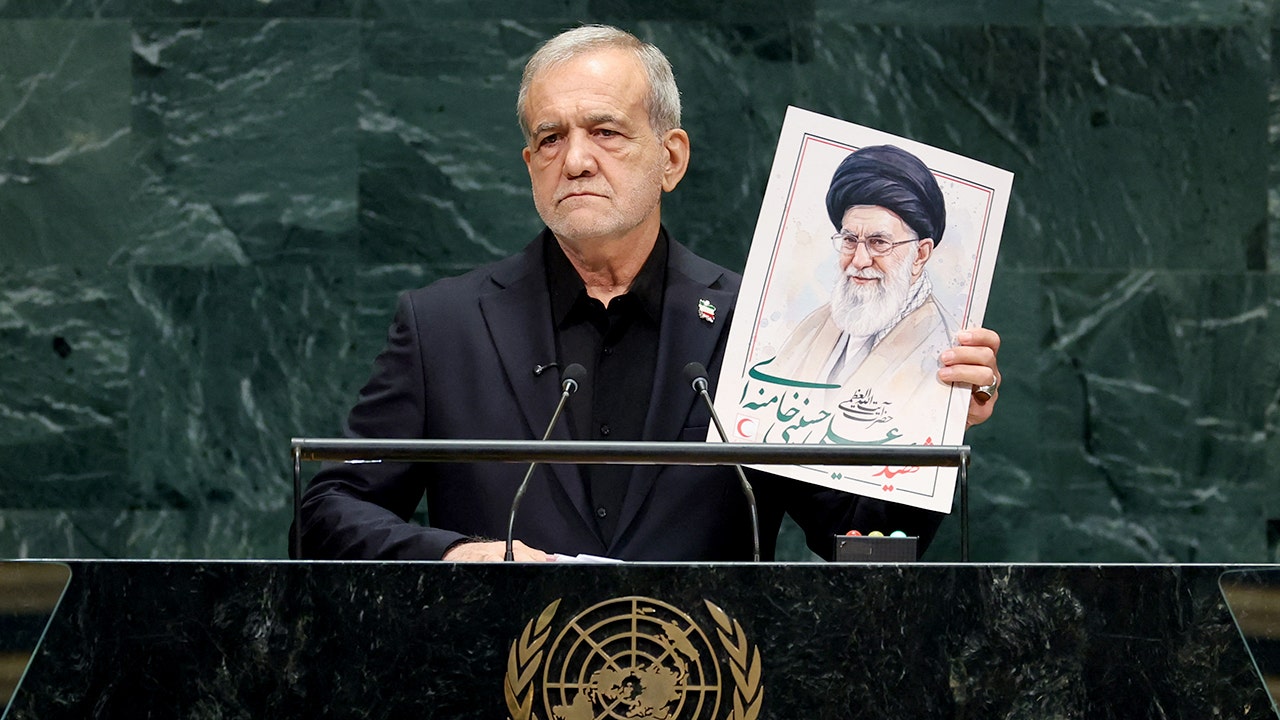
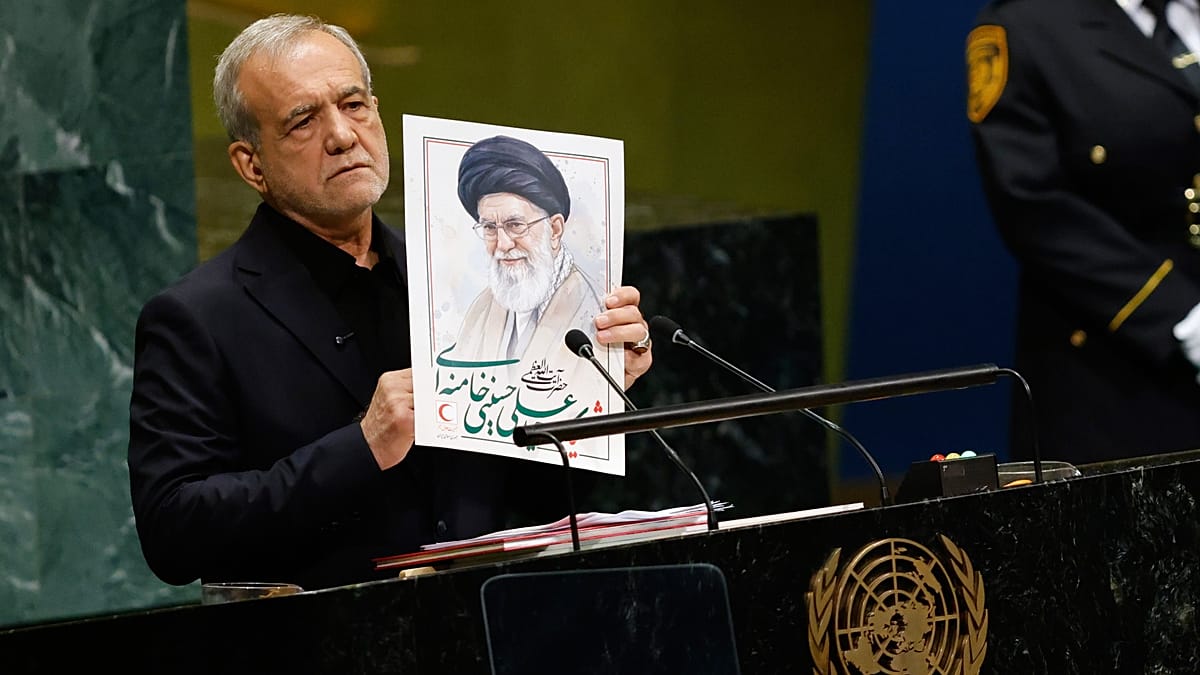
In his speech, Mr Pezeshkian spoke at length about Iranian casualties of US attacks, holding photos of civilian victims and pointing to the bombing of a school in February.
asserted
Pezeshkian → speak → February
A UN-backed fact-finding mission recently concluded there were "reasonable grounds" the US committed a war crime by bombing the school.
asserted
US → back → school
The US has not publicly taken responsibility.
asserted
US → take → responsibility
Mr Pezeshkian did not attempt to defend the Islamic Regime's well-documented violence towards its own people, including the killing of — by some credible estimates — tens of thousands of protesters earlier this year.
asserted
Pezeshkian → attempt → protesters
He said Iran posed no threat to neighbouring countries, but did not mention Iran-backed militant groups elsewhere in the Middle East.
asserted
Iran → say → East
"Iran has never, ever been an aggressor, has never started a war and has always shown her commitment to the negotiating table," he said.
asserted
he → start → table
"They imposed the war on us, but we have proven that we are not afraid of fighting a war that is defensive in nature and we will stand in defence of our beloved Iran, our homeland, until our last breath."
asserted
we → impose → breath
 The Aporia