That is 0 articles you have read today.
The Aporia is free and carries no advertising, so readers are the only
thing paying for it. If you are getting this much out of it, a small
donation is what keeps it independent.
Daily limit reached
You have read 0 articles today.
That is more than the 15 a day The Aporia gives away,
and well past what it can carry on nothing. Your allowance resets at
midnight.
There is no advertising here and nothing about you is sold, so readers
are the only thing paying for it. If the site is worth this much of
your day, it is worth a few dollars.
Everything else stays open: the
maps, the
directory and
search do
not count against this, and neither does re-opening something you have
already read today.
This opinion piece contrasts President Trump's recent U.N. speech with those of past presidents, highlighting a shift in rhetoric regarding nuclear weapons and their use. The author notes that while former leaders used strong but measured language when discussing the potential for nuclear conflict, Trump's speech included threats of annihilation without offering similar caution or diplomatic considerations.
Written locally by qwen2.5:14b on 2026-09-26,
using this article's own text rather than the other coverage of the
same event (that is the story summary below).
Story summary
US President Donald Trump met with Chinese President Xi Jinping, where Xi pressed Trump to adopt Beijing's stance against Taiwan independence, which Taiwan rejected outright. Meanwhile, Taiwan is crucial for global tech and economy due to its leading semiconductor production; TSMC alone produces the majority of advanced chips that power smartphones, AI systems, and more. As Stanford Hoover fellow Eyck Freymann noted, economic disruption from a conflict over Taiwan would be severe.
In unrelated developments, Iranian President Masoud Pezeshkian met with US media at the UN General Assembly, where he denied Iran's nuclear ambitions while offering to dilute its enriched uranium and allow inspections under international law. He also blamed Washington for ongoing conflicts in the Middle East. The International Atomic Energy Agency (IAEA) estimates that Iran has over 440 kilograms of uranium enriched up to 60%, raising concerns despite Pezeshkian's denials.
Taiwan's representative, Ambassador Alexander Yui, clarified during an interview on CBS’s "Face the Nation" that while Taiwan was discussed between Trump and Xi, it wasn't a major focus. He emphasized there has been no change in US policy towards Taiwan amid recent tensions with China.
Written for “Taiwan Iran Us Relations Midterms” on 2026-10-05,
grounded in this article and the 386 other(s) covering the same event.
Claims extracted
14
claim-shaped sentences
Uncertain
7%
1 of 14 hedged
Leaning
Leans left
of the writing, not the subject · beta estimate
Correction & hedging signals
59.6
corrections and hedging in what we collected;
not a measure of accuracy
Outlets on this story
387
Politics
Narrative spread
1
articles carrying this framing
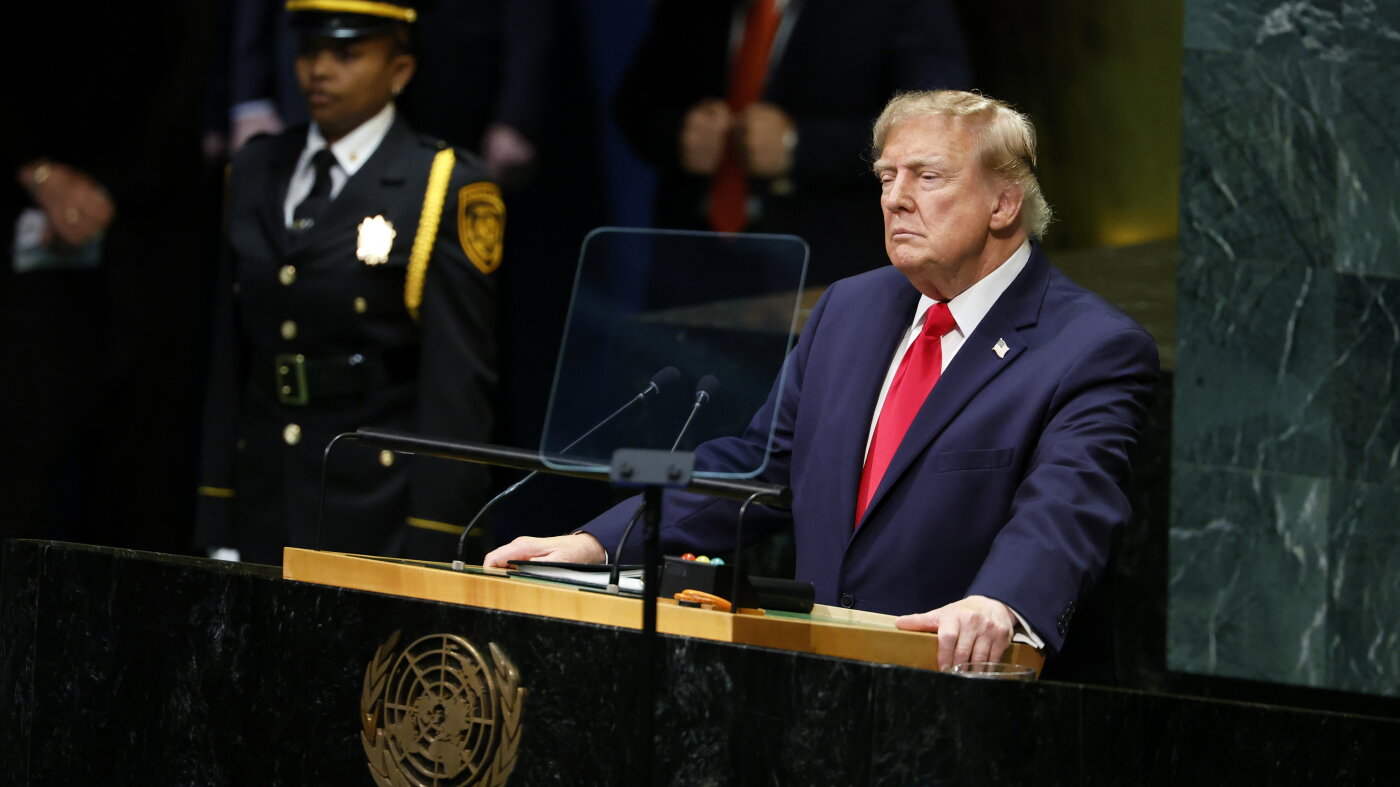
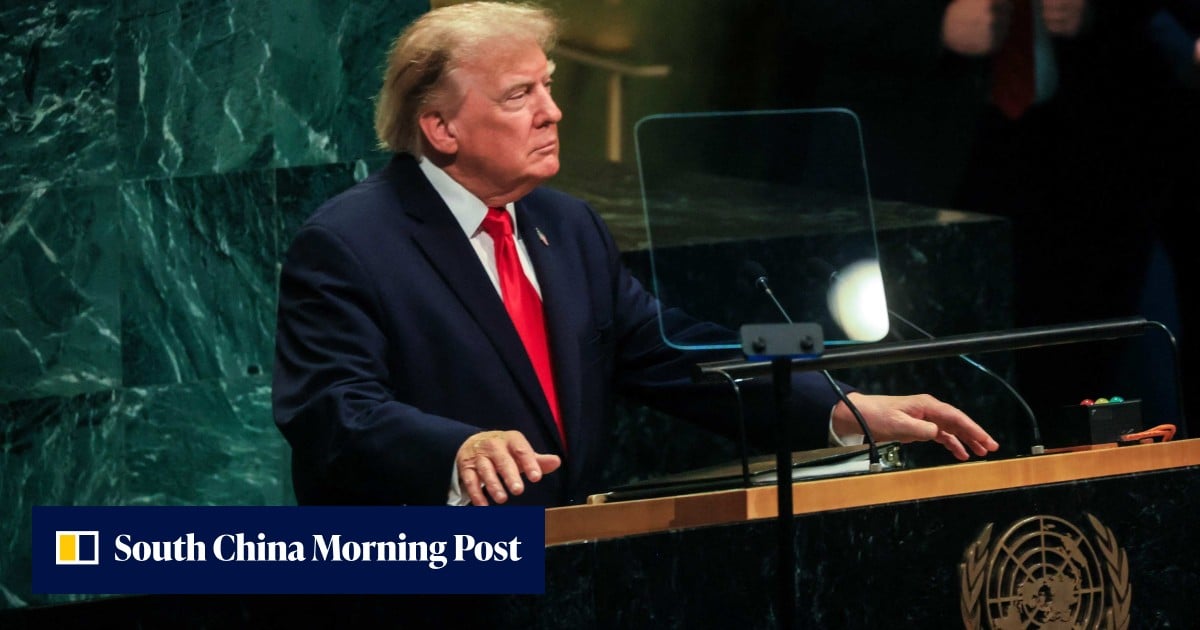
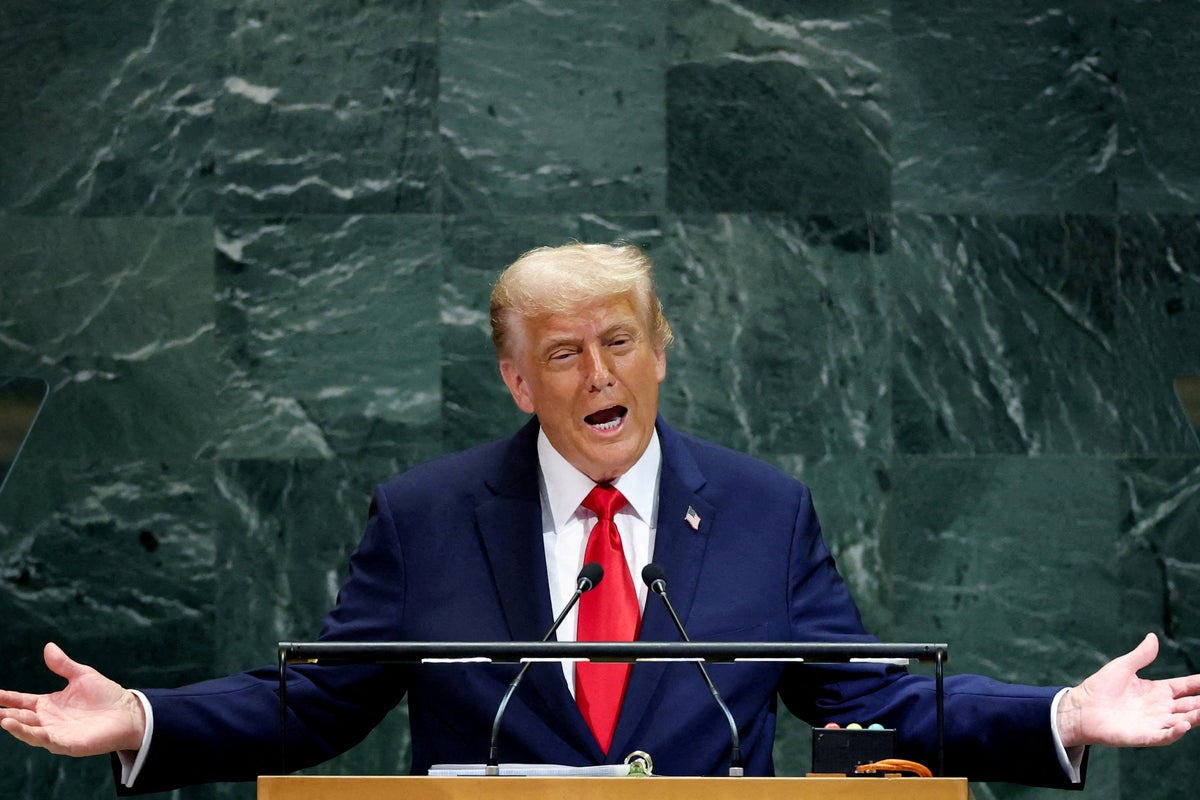
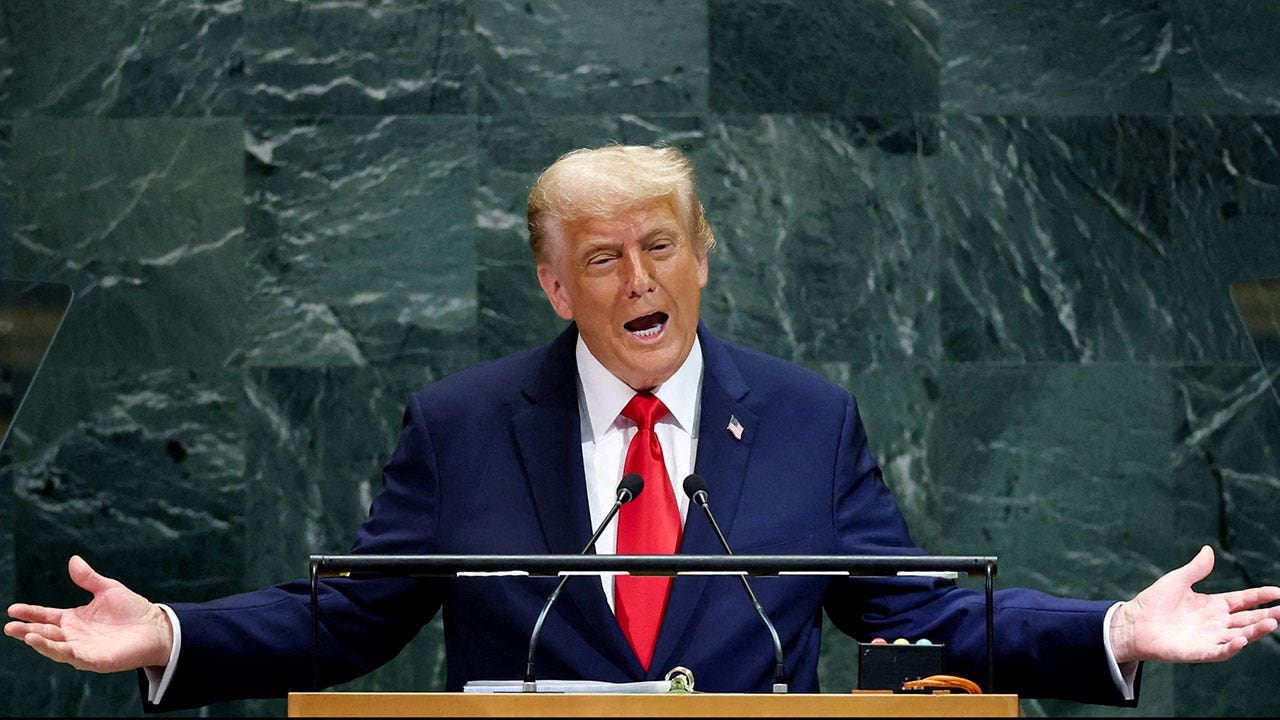
The world took note when President Trump told the United Nations General Assembly this week that he had asked himself whether to make a deal with Iran - or...
"Do I annihilate the Islamic Republic…
"Do I drive them into hell with no chance of survival and no hope of future greatness or generations?"
asserted
I → take → greatness
Those words seem especially forbidding from a leader who can command armies to march and missiles to fly.
asserted
who → seem → armies
On August 6, 1945, President Harry Truman told the world the United States had dropped the first atomic bomb, on Hiroshima, Japan.
asserted
States → tell → Hiroshima
It instantly killed an estimated 70,000 people.
asserted
It → kill → people
Some 40,000 more died days later in Nagasaki, and tens of thousands more from radiation illnesses in the days, weeks, months and years thereafter.
asserted
thousands → die → days
In his speech announcing the nuclear attack on Hiroshima, President Truman called it "a harnessing of the basic power of the universe," and added cautions about "protecting the world from the danger of sudden destruction."
Nuclear weapons have not been used in war since.
asserted
weapons → announce → war
And Truman's successors have been pointedly measured when they talk about them.
asserted
they → measure → them
As President Ronald Reagan put it, "a nuclear war cannot be won and must never be fought."
asserted
war → put → it
When President John F. Kennedy ordered US ships to blockade Cuba to prevent the Soviet Union from installing nuclear missiles in 1962, he told Americans, "We will not prematurely or unnecessarily risk the costs of worldwide nuclear war in which even the fruits of victory would be ashes in our mouth."
asserted
fruits → order → mouth
In 1974, President Gerald Ford told the U.N. General Assembly, "A very stark reality has tempered America's actions for decades and must now temper the actions of all nations.
asserted
reality → tell → nations
Prevention of full-scale warfare in the nuclear age has become everybody's responsibility.
asserted
Prevention → become → age
Today's regional conflict must not become tomorrow's world disaster.
asserted
conflict → become → ?
And in 2017, President Obama visited the Peace Park that now stands in Hiroshima and said, "Among those nations like my own that hold nuclear stockpiles, we must have the courage to escape the logic of fear and pursue a world without them."
asserted
we → visit → them
So strong and measured, they might have felt it wasn't necessary to add threats of annihilation, and "no chance of survival…"
uncertain
it → measure → survival
 The Aporia