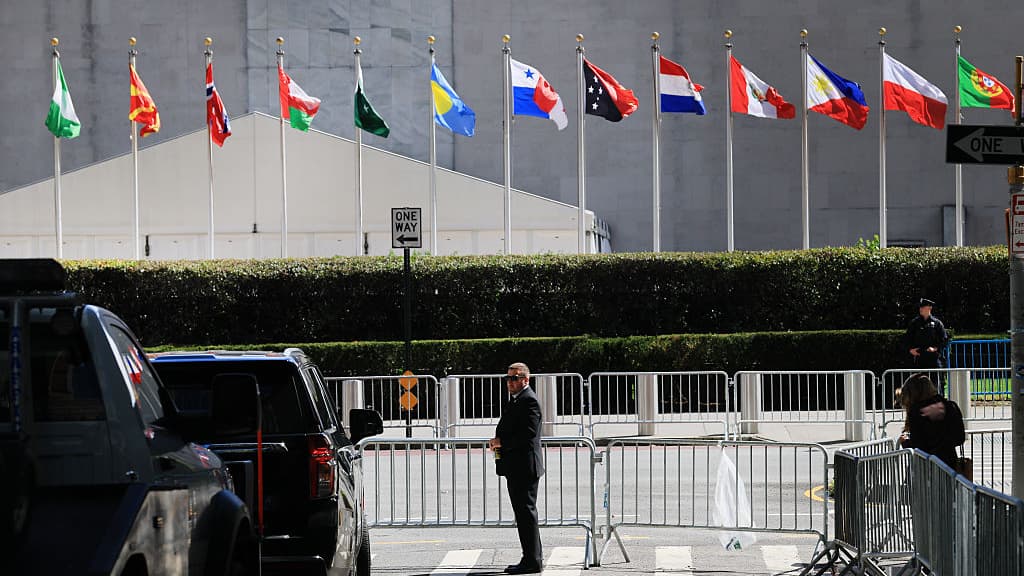
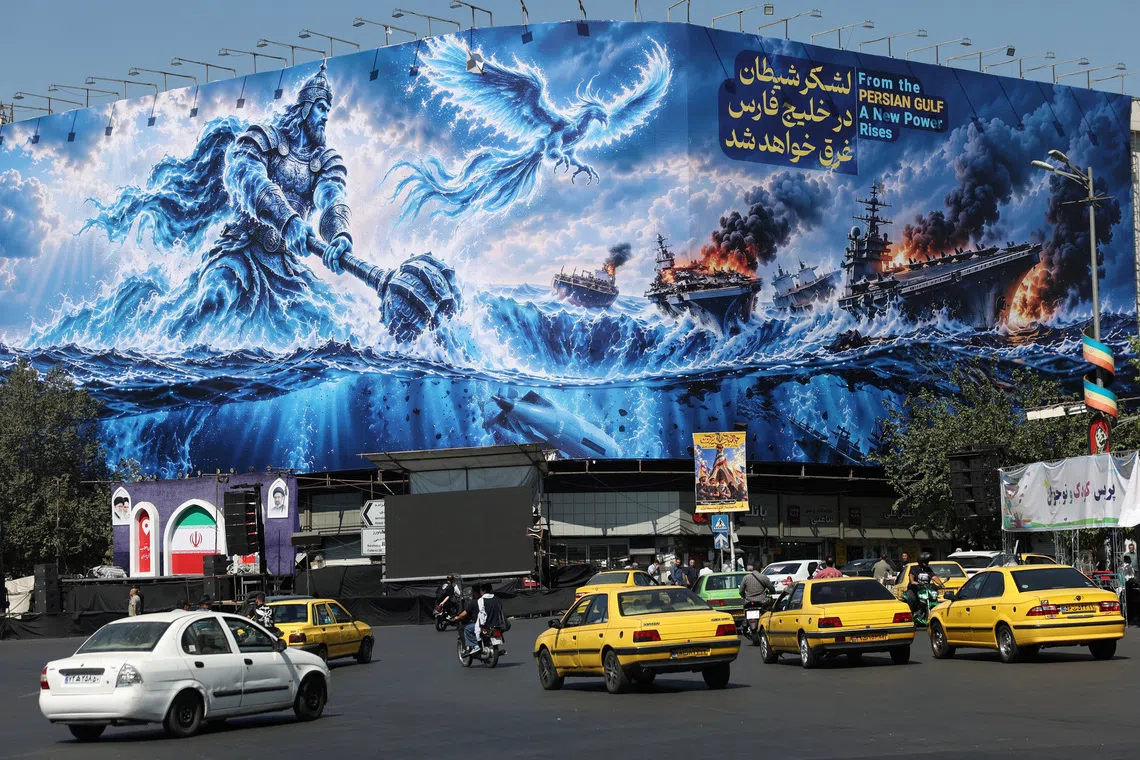
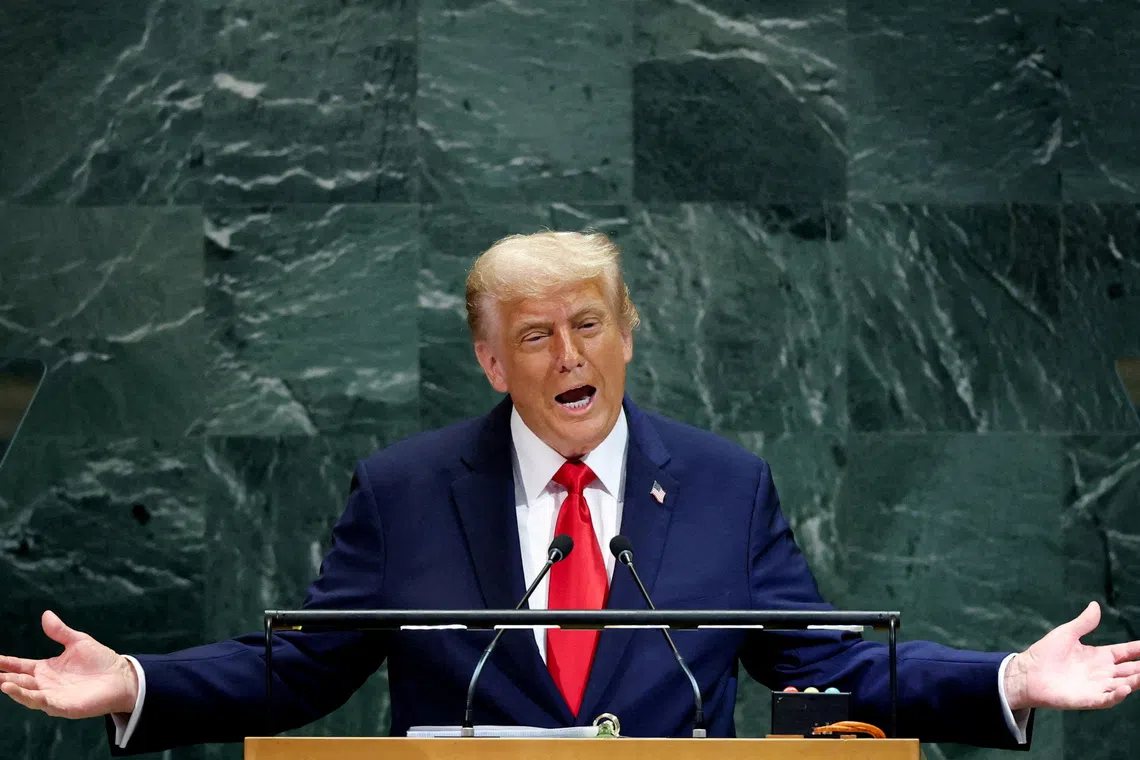
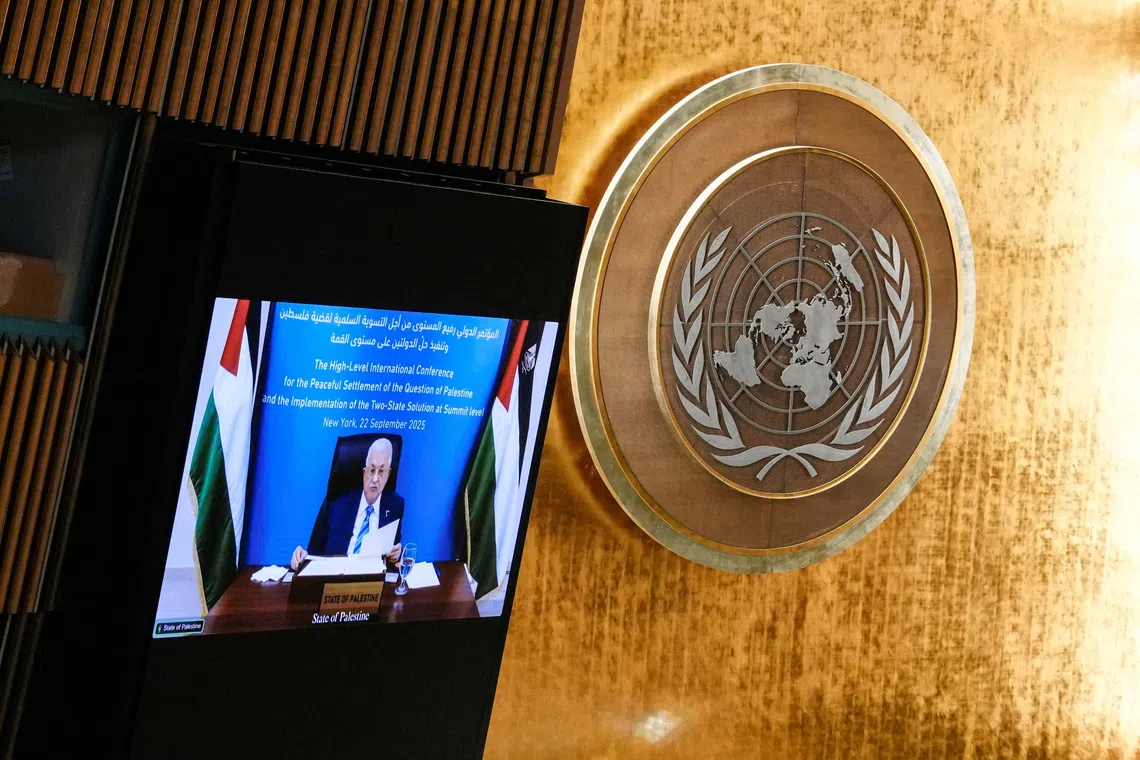
Delegations from the U.S. and Iran are traveling to New York for the world’s largest diplomatic gathering this week in what experts say could be a key moment for determining the direction of the Iran war nearly seven months in.
uncertain
experts → travel → war
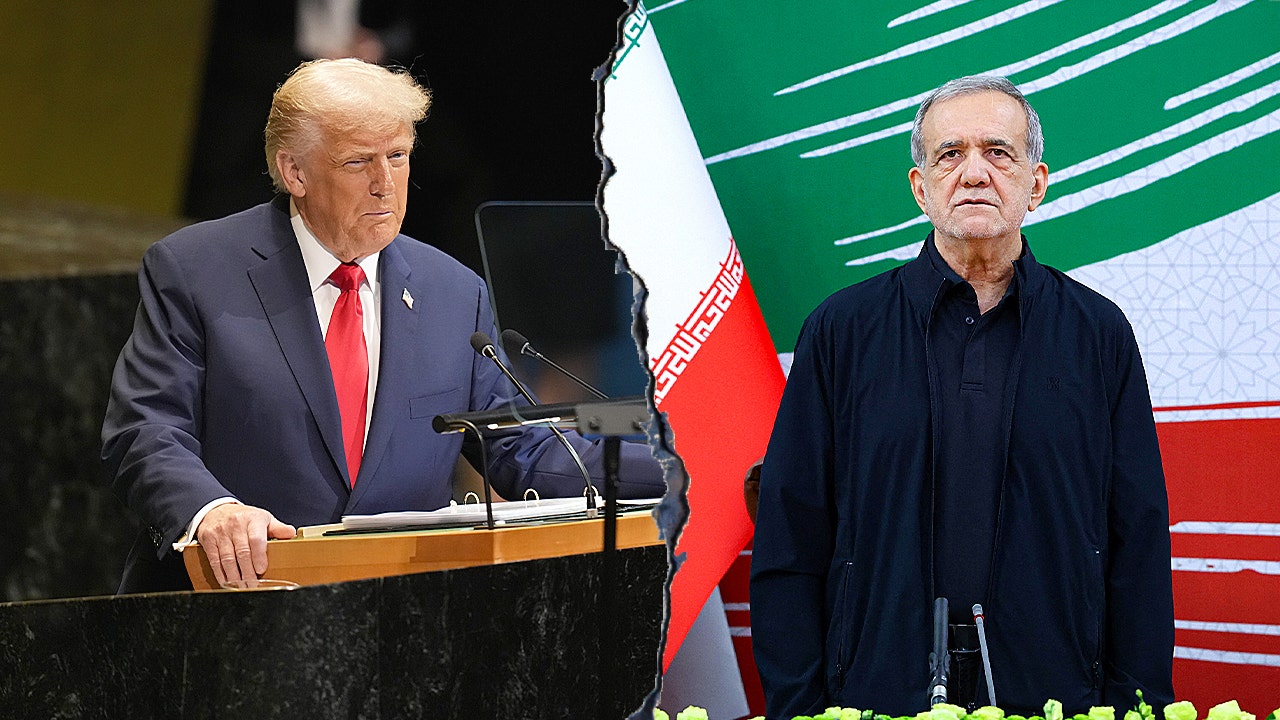
Tensions between the warring countries are mounting ahead of the United Nations General Assembly (UNGA), with Iranian leaders and President Donald Trump exchanging a fresh round of threats.
asserted
leaders → war → threats
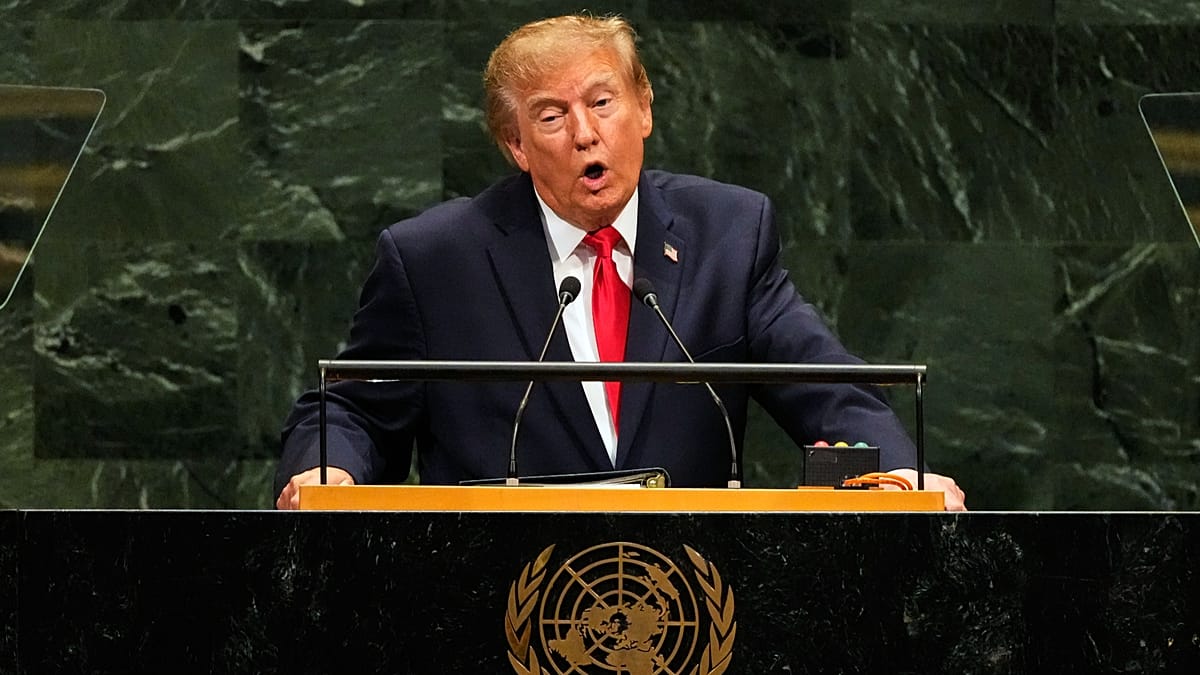
Trump on Sunday weighed whether he should “blow the entire nation up” in an interview with Fox News, warning that Iran “better behave” and saying that “very big things” would happen in the war, without offering more detail.
asserted
things → weigh → detail
According to the outlet, Trump described his options as “wiping Iran out, letting them rot economically, or making a deal.”
uncertain
them → accord → deal
A spokesperson for Iran’s Islamic Revolutionary Guard Corps (IRGC), Hossein Mohebbi, responded with a warning that if the U.S. were to launch fresh attacks against Iran, Tehran would use “new weapons and capabilities,” according to Iran's Fars news agency.
uncertain
Tehran → respond → agency
“If a new aggression takes place, we will definitely change the weapons and geography of the war,” Mohebbi said.
asserted
Mohebbi → take → war
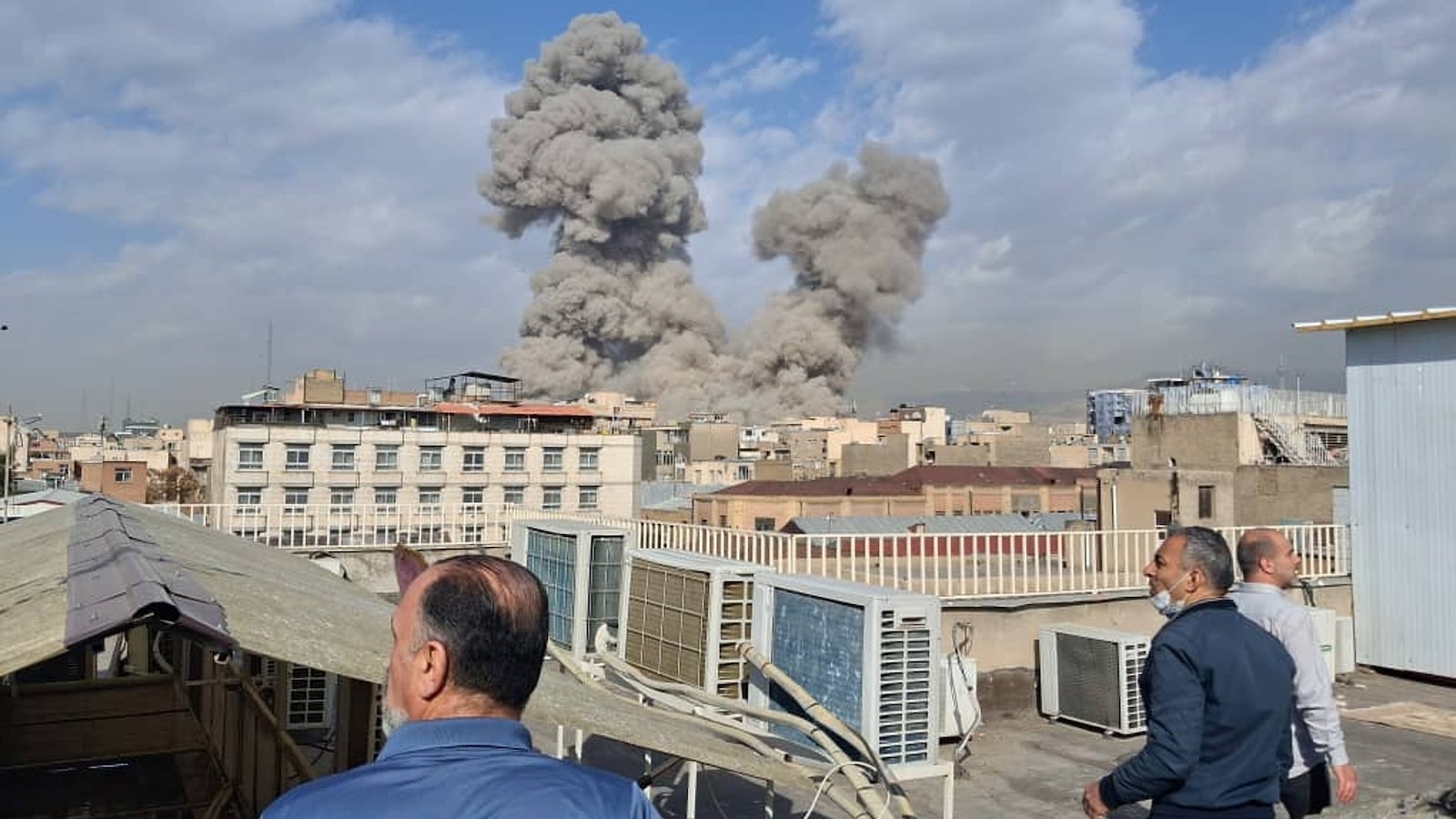
The threats come after active hostilities in the conflict resumed in the last month when the U.S. and Iran traded fresh strikes amid tensions over the Strait of Hormuz, a key waterway in the global oil market.
asserted
U.S. → come → market
Meaningful negotiations between the two countries have meanwhile been stalled for weeks following the breakdown of a memorandum of understanding leaders signed in June.
asserted
leaders → stall → June
And Yemen’s Iranian-backed Houthi rebels have further shaken the Gulf region by launching attacks against Saudi Arabia and capturing Perim Island, a strategic foothold in the Bab El-Mandeb Strait, another vital maritime trade route in the region.
asserted
rebels → back → region
Experts tell TIME that the U.N. General Assembly gathering, where delegations from Iran, the U.S., and key Gulf states will be in attendance, could offer a critical chance to deescalate the situation and attempt to revive peace efforts—although making progress in negotiations could be an uphill battle.
uncertain
making → tell → negotiations
“This week in New York, there is an opportunity, especially for the mediating countries, to try to prevent tensions from once again spiraling, and potentially this time spiraling out of control,” says Ali Vaez, the deputy program director for the Middle East and North Africa at the International Crisis Group.
asserted
Vaez → be → Group
“It's the last best opportunity to try to prevent an escalation either in October or in November.
asserted
It → try → November
What to expect at this week’s U.N. General Assembly
Top officials from the U.S. and Iran will be present at the U.N. meeting this week, including Trump, Secretary of State Marco Rubio, and U.S. ambassador to the U.N. Mike Waltz.
asserted
officials → expect → U.N.
Iranian President Masoud Pezeshkian and Foreign Minister Abbas Araghchi will be in attendance as part of a slimmed-down delegation from the country.
asserted
Pezeshkian → slimme → country
Both Trump and Pezeshkian are set to deliver addresses to the assembly.
asserted
Trump → set → assembly
Vaez says, however, that any effort to revive peace talks between the two countries during the event will largely rely on mediation by Gulf states.
asserted
effort → say → states
Trump is set to hold talks with leaders from the Gulf Cooperation Council—a regional alliance including Saudi Arabia, the United Arab Emirates, Qatar, Kuwait, Oman, and Bahrain—on the sidelines of the gathering in the coming days.
asserted
Trump → set → days
Sources with knowledge of the anticipated meeting told Axios, which first reported the news, that discussions are expected to concern next steps in the war with Iran, with a focus on U.S. ideas for a strategy after the conflict concludes.
asserted
conflict → anticipate → strategy
Vaez believes that the Qataris could play a leading role in mediation efforts, with the support of countries such as Saudi Arabia, Oman, Turkey, Pakistan, and Egypt.
uncertain
Qataris → believe → Arabia
“It all depends on whether the mediating countries would be able to find a mutually acceptable formula,” he says of the possibility of the U.S. and Iran coming to some kind of agreement.
asserted
U.S. → depend → agreement
“Because at this moment, both sides are in a zero-sum situation in which there is literally no overlap between what the Iranians demand and what the U.S. is seeking to achieve.
asserted
U.S. → be → what
Given what he characterized as maximalist demands from both the U.S. and Iran, Vaez contends that “some sort of a sweetener,” or incentive, must be given to each side for a deal to be reached, which he says may come in the form of revisions to the now-expired memorandum of understanding.
uncertain
he → give → understanding
Sanam Valki, director of the Middle East and North Africa Programme at the policy institute Chatham House, agrees that it is far more likely that Gulf states mediate between Iran and the U.S.
asserted
states → agree → Iran
But, she adds, a direct exchange between U.S. and Iranian delegations is also a possibility—albeit a very slim one.
asserted
exchange → add → one
“The big question out there is: Will there be some sort of surprise encounter between the Iranians and the U.S.?” Valki says.
asserted
Valki → say → Iranians
Trump told Fox News’ Trey Yingst on Sunday that he would be willing to meet with Pezeshkian during the U.N. gathering.
asserted
he → tell → gathering
Beyond either mediated or direct discussions during the event, another potential outcome of this week’s General Assembly meeting is a United Nations Security Council Resolution regarding the Iran conflict, Vaez says.
asserted
Vaez → mediate → conflict
Unlike a memorandum of understanding like the one the U.S. and Iran previously reached, a security resolution would be legally binding by international law and would compel both parties to abide by certain conditions in the war.
asserted
resolution → reach → war
Adopting a resolution would require the votes of at least nine out of the 15 members of the security council.
asserted
Adopting → adopt → council
And as a complicating factor, the U.S.—as well as the other four permanent members—would have the ability to defeat any such measure by casting a veto.
asserted
U.S.—as → complicate → veto
How could the U.N. meeting impact the Iran war moving forward?
uncertain
meeting → impact → war
“This is a very important week at UNGA for regional states, as well as the Iranians themselves, to try and roll back or manage how things evolve,” Valki tells TIME.
asserted
Valki → try → TIME
“The President is very clearly weighing and considering the military options that are on his desk, which include not just responding to the Houthis, but another round of serious and severe strikes against the Islamic Republic.
asserted
which → weigh → Republic
If a direct exchange between the U.S. and Iranian delegations does unexpectedly occur during the gathering, she says, “it's a big deal.
asserted
it → occur → gathering
It means that the Iranian president is willing to risk his standing at home, attacks at home, in order to stave off a serious military attack and build a direct lifeline to the Trump team.
asserted
president → mean → team
Up until now, both sides have sought “maximalist outcomes with minimal concessions,” Valki says.
asserted
Valki → seek → concessions
But Iran, through direct conversation with the U.S. delegation, could “signal a more transformational type of policy outreach, rather than the defensive reaction of traditional hardliners in the country.”
uncertain
Iran → signal → country
On Trump’s end, Vaez says the President could potentially make concessions to Iran by removing naval blockades on Iranian ports, rolling back sanctions against Tehran, or returning access to certain frozen assets.
uncertain
President → say → assets
“That's what the President can put on the table …
asserted
President → put → table
The most important thing for Iranians is economic reprieve and that's precisely where President Trump has tremendous leverage.”
asserted
Trump → have → leverage
…and 4 more, not listed.
 The Aporia