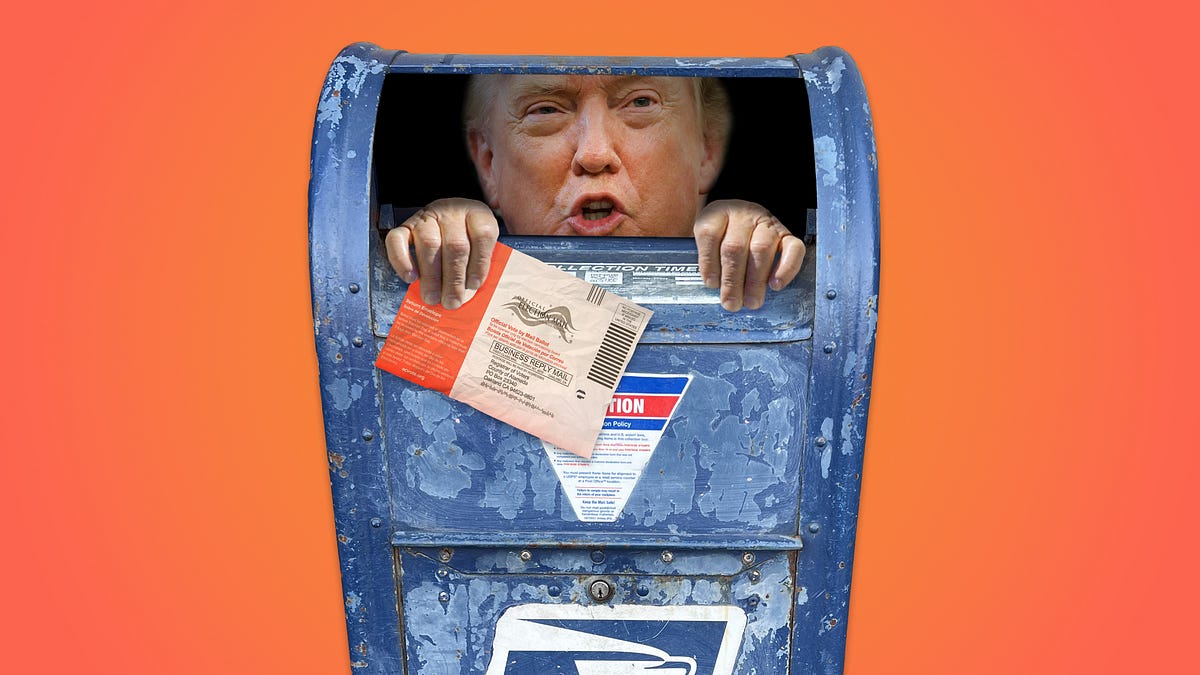
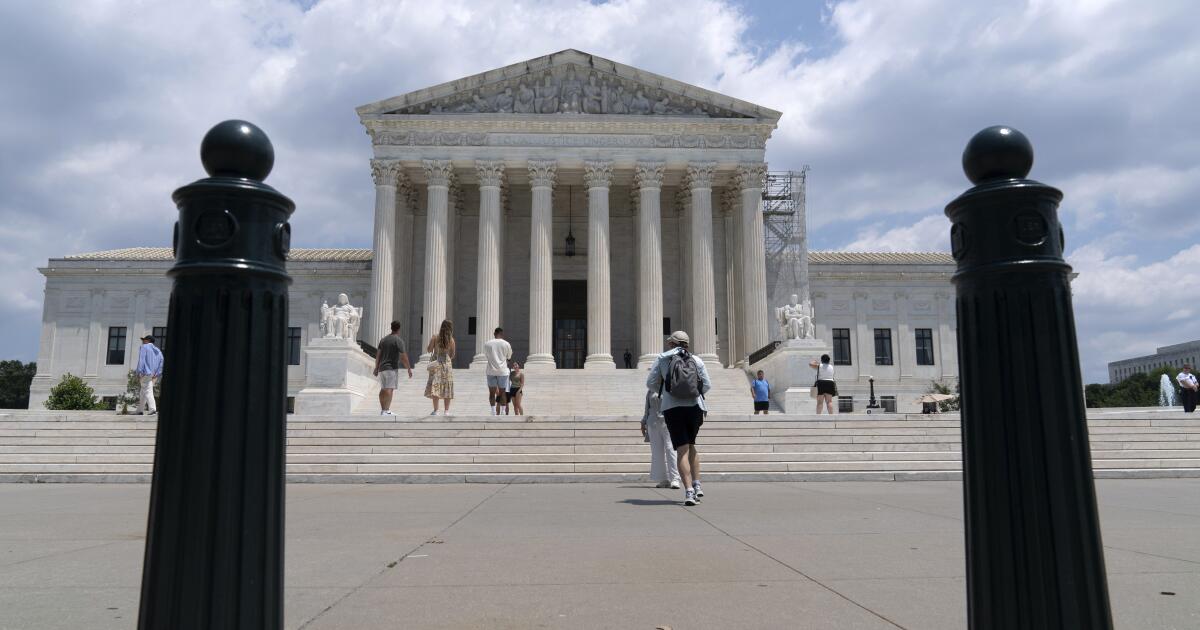
Supreme Court for now allows Trump to plan new mail ballot rules. California to sue again

Read the original at Los Angeles Times ↗
Cite

Rector, K., & Savage, D. G. (2026, August 25). Supreme Court for now allows Trump to plan new mail ballot rules. California to sue again. Los Angeles Times. https://www.latimes.com/politics/story/2026-08-24/supreme-court-allows-trumps-plan-to-regulate-but-not-block-use-of-mail-ballots

Dated when The Aporia collected the article, usually within hours of publication. Check the original for its exact date and byline.

Los Angeles Times · collected 2026-08-25 · by Kevin Rector, David G. Savage

Quick Summary

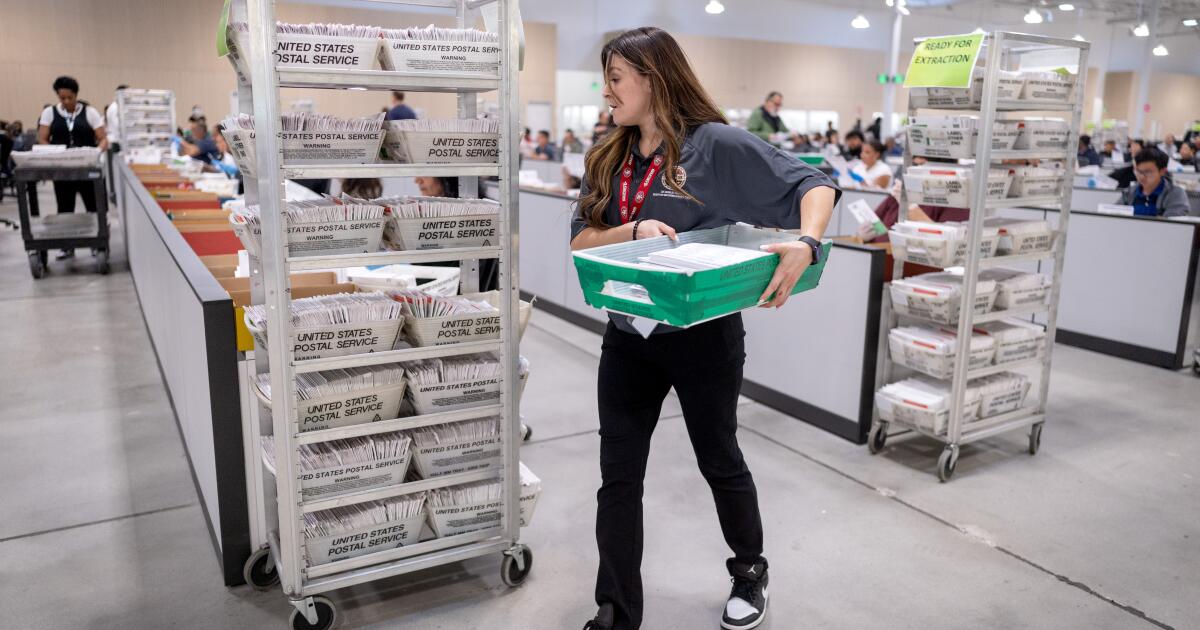
The US Supreme Court has temporarily allowed President Trump to move forward with planning new rules limiting mail ballot use, despite a lower court's previous block on federal agencies implementing these changes. The 6-3 vote allows the Department of Homeland Security and U.S. Postal Service to comply with Trump's executive order, which includes restricting mail ballot processing to only those submitted by individuals listed as eligible voters. California is expected to sue again within days to prevent the implementation of these rules, with Governor Gavin Newsom calling them "Orwellian" and aimed at disenfranchising voters. About 30% of US voters and 80% of Californians cast their ballots by mail in 2024 elections.
Written locally by qwen2.5:14b on 2026-08-25, using this article's own text rather than the other coverage of the same event (that is the story summary below).

AI analysis runs on qwen2.5:14b, locally

Story summary

The Trump Administration's Efforts to Restrict Mail-In Voting

President Donald Trump's executive order, issued on March 31, aimed to create a federal list of eligible voters and restrict mail-in voting by requiring states to use specific envelopes and barcodes. The US Postal Service (USPS) was instructed to deliver ballots only to those on the approved list.

However, this move was blocked by two court orders in Massachusetts, issued by Judge Indira Talwani on June 25 and August 11. These injunctions prevented the USPS from implementing the new rule before the midterm elections in November.

In response, the Trump administration appealed to the Supreme Court, which initially decided to allow the restriction of mail-in voting to proceed while the case was ongoing. This decision was seen as a preliminary victory for President Trump.

However, the Supreme Court's unsigned opinion did not declare the executive order lawful, and Democratic-led states argued that permitting the administration to push ahead with changes would contribute to pre-election chaos.

In response, California Governor Gavin Newsom announced that his state would sue again to block federal changes to mail voting. The California legislature also proposed two new laws that would make it a crime to interfere with the delivery of mail ballots, punishable by up to four years in prison.

The USPS has submitted a motion to dissolve one of the court injunctions blocking the implementation of the Trump administration's plan, and published new guidelines that could take effect if legal barriers are removed.

Written for “Trump's Mail Voting Restrictions” on 2026-10-16, grounded in this article and the 15 other(s) covering the same event.

Story

📰 Trump's Mail Voting Restrictions
Politics · 16 article(s) covering the same event. Compare every outlet's account →

Compared with similar articles

This article reads leans strongly left and hedges 7% of its claims. Each row says how that neighbour differs.
NBC News
⚖️ Leans right further right than this 🔴 4% hedged 1 of 26 📰 publisher trust 95
“Both articles describe the Supreme Court's decision on August 25, 2026, allowing Trump to plan new mail ballot rules, with identical dates and outcomes.”
NBC News
⚖️ leaning not scored 🔴 no claims extracted 📰 publisher trust 95
“Both articles report on the Supreme Court's decision allowing Trump to plan new mail ballot rules, dated August 25, 2026”
The Independent
⚖️ Leans left further right than this 🔴 10% hedged 4 of 41 📰 publisher trust 59
“Both articles report on the same Supreme Court decision allowing Trump to plan new mail ballot rules and California's intention to sue again, occurring on the same day.”
The Bulwark
⚖️ Leans right further right than this 🔴 0% hedged 0 of 4
“Both articles report on the Supreme Court's decision, dated August 25, 2026, allowing President Trump to plan new mail ballot rules.”
The Guardian
⚖️ leaning not scored 🔴 13% hedged 19 of 150 📰 publisher trust 68
“Both articles report on the Supreme Court decision allowing Trump's plan for mail ballot rules and California's intention to sue again, indicating they are covering the exact same occurrence.”
The Bulwark
⚖️ Leans strongly left 🔴 22% hedged 13 of 58
“Both articles describe the Supreme Court's temporary procedural decision to allow President Trump to continue seeking new limits on mail ballots, and California's intention to sue again, all happening around the same time.”
The Independent
⚖️ Leans strongly left 🔴 11% hedged 2 of 18 📰 publisher trust 59
“Both articles mention the Supreme Court allowing President Trump to plan new mail ballot rules and the reaction from California leaders, which indicates they are reporting on the same specific incident.”
Fox News
⚖️ Leans right further right than this 🔴 12% hedged 4 of 32 📰 publisher trust 67
“Both articles describe the Supreme Court's decision allowing Trump to plan new mail ballot rules, which is a clear reference to the same specific event and outcome”
Mother Jones
⚖️ Leans strongly left 🔴 18% hedged 7 of 39 📰 publisher trust 95
“Both articles report on the Supreme Court's decision issued on August 25, 2026, allowing Trump to plan new mail ballot rules, and both have identical timestamps, suggesting they are describing the same event.”
The Guardian
⚖️ Leans strongly left 🔴 13% hedged 23 of 175 📰 publisher trust 68
“Both articles report on the Supreme Court's decision allowing President Trump to plan new mail ballot rules and California's intention to sue again, which occurred within a day of each other.”
How this article was measured signals, leaning charts, publisher record, byline, topics and claims

Signals How these are calculated →

Claims extracted
54
sentences that state something as happening or true
Uncertain
7%
4 of 54 hedged ("reportedly", "may", "according to")
Leaning
Leans strongly left
of the writing, not the subject · beta estimate
Publisher signals
95/100
Los Angeles Times's corrections and hedging, across everything collected from it. Not a measure of accuracy.
Outlets on this story
16
Politics
Same framing elsewhere
1
articles that frame the event the way this one does
Analyzed 2026-08-25 · how these are computed

How this is being covered How these are calculated →

Article leaning vs. publisher reliability
Source leaning vs. consistency

Publisher

Los Angeles Times · 208 article(s) · 0 correction(s) detected
No corrections detected for this publisher. That may mean careful reporting, or simply that nothing has been checked.

Who wrote this

Kevin Rector
12 article(s) here · 1 carrying a prediction
🔮 Trump was also able to appoint a host of loyalists with the help of the Republican-controlled Congress, who helped advance policies that less loyal agency heads would have balked at, and which were sure to draw additional legal challenges, experts said.
🔮 In a statement posted to social media, Guilfoyle said she will “forever be grateful” to Trump and Secretary of State Marco Rubio for trusting her to represent the U.S. abroad, remains “unwavering” in her support for them and “worked tirelessly to advance President Trump’s America First agenda, strengthen our strategic alliance with Greece, and deliver meaningful victories for the American people.”
🔮 The United Nations’ High Commissioner for Human Rights said that “the livestreaming of an execution is tantamount to a public execution and would breach the absolute prohibition of torture.”
🔮 Fewer than half of Americans believe the upcoming midterm elections will be “free and fair,” amid a broader decline in confidence in vote counts, according to a new nationwide poll.
🔮 - Click here to listen to this article - - The administration could try to impose new regulations for the 2028 elections.
🔮 California Atty. Gen. Rob Bonta, whose office is helping lead the states’ challenge, said the rule changes seek to “rewrite more than 100 years of law” by making even brief use of public benefits in years past grounds for the federal government to deny a person’s application for legal permanent residency in the future — which he said was clearly illegal and would push tremendous costs onto states, counties and cities.
🔮 - The Supreme Court is expected to rule relatively quickly, given the emergency nature of the appeal.
🔮 California has led the legal charge against the rules, arguing they could cause chaos and disenfranchise millions of voters.
🔮 A Postal Service whistleblower says a rushed, error-filled computer system tied to President Trump’s new mail voting order could delay or block ballots for millions of Americans this fall.
🔮 “This mail-in voting rule is an unlawful overreach that shows just how far President Trump will go to control elections, but as I’ve said before, this fight is far from over and we are confident that the facts and the law are on our side,” California Atty. Gen. Rob Bonta said.
Also by Kevin Rector
Nothing else under this byline is closely related to this article, so these are simply their most recent.
All 12 articles by Kevin Rector →
David G. Savage
10 article(s) here · 1 carrying a prediction
🔮 - Click here to listen to this article - - The Supreme Court gave political parties and their fundraising committees lower rates for broadcast campaign ads. - Justices Sonia Sotomayor and Ketanji Brown Jackson voted to deny the administration’s appeal.
🔮 Supreme Court sounds wary of state-based climate change suits against oil producers - Click here to listen to this article - - Several justices suggested that local and state claims against oil companies may be blocked by the federal Clean Air Act. -
🔮 In its new term, the court will also hear major cases on immigration and guns.
🔮 “At this late date, ordering reversion to the 2025 map in the midst of an ongoing election would usher in electoral chaos,” the justices wrote.
🔮 - The decision will aid states that seek to scrub their voter rolls and remove those who are not citizens.
🔮 - Click here to listen to this article - - The administration could try to impose new regulations for the 2028 elections.
🔮 Acting on his own, Trump had the East Wing of the White House torn down in October and ordered work to start on a massive new building that would dwarf the old executive mansion and seat 1,000 guests for dinner.
🔮 At issue is whether the president acting on his own may build a huge new ballroom complex that is expected to dwarf the historic Executive Mansion.
🔮 By a 5-4 vote, the justices granted an emergency appeal from Trump and his lawyers on Monday, setting aside a judge’s order that would stop the construction.
🔮 California leaders immediately noted the limits of the high court ruling and said they would file a lawsuit to prevent Trump’s desired changes from taking effect. “The Supreme Court just let the Trump administration move ahead (for now) with its plan to disenfranchise voters across the country.
Also by David G. Savage
Nothing else under this byline is closely related to this article, so these are simply their most recent.
All 10 articles by David G. Savage →

Topics

California Democratic Homeland Security Supreme Court The Supreme Court

Subjects

Trump PERSON · 12× California GPE · 7× Democratic NORP · 2× Homeland Security ORG · 2× Rob Bonta PERSON · 2× The Supreme Court ORG · 2× the Postal Service ORG · 2× Californians NORP · 1× Supreme Court ORG · 1× WASHINGTON GPE · 1×

Narrative

Across California and the nation, Democratic leaders and voting rights advocates are ramping up coordination and gaming out responses to a raft of potential actions by the Trump administration to subvert the November vote or deny its outcome. “The Court’s disposition of this application does not mean that any measure taken by the Government to implement the Order will necessarily be lawful.
framing: assertive · carried by 1 article(s) · first seen 2026-08-25
🔮 California leaders immediately noted the limits of the high court ruling and said they would file a lawsuit to prevent Trump’s desired changes from taking effect. “The Supreme Court just let the Trump administration move ahead (for now) with its plan to disenfranchise voters across the country.

Claims (54 extracted, 4 hedged)

Supreme Court for now allows Trump to plan new mail ballot rules. asserted
Trump → allow → rules
California to sue again asserted
California → sue → ?
- Click here to listen to this article - - California Atty. Gen. Rob Bonta said his office expects to sue again within days. - asserted
office → click → days
About 30% of the nation’s voters — and 80% of Californians — cast their ballots by mail in 2024. asserted
% → cast → 2024
The Supreme Court cleared the way Monday for President Trump to continue seeking new limits on the use of mail ballots, though their implementation remains in dispute as the November election rapidly approaches. asserted
election → clear → dispute
California leaders immediately noted the limits of the high court ruling and said they would file a lawsuit to prevent Trump’s desired changes from taking effect. “The Supreme Court just let the Trump administration move ahead (for now) with its plan to disenfranchise voters across the country. asserted
administration → note → country
California will be suing AGAIN to block these Orwellian rules from being implemented,” Gov. Gavin Newsom said in a statement. asserted
Newsom → sue → statement
Acting by a 6-3 vote, the court’s conservatives granted an emergency appeal from Trump’s lawyers and set aside a lower judge’s order that blocked federal agencies — including the Department of Homeland Security and the U.S. Postal Service — from advancing new federal regulations on states and their use of mail ballots. asserted
that → act → ballots
Trump called for those regulations in a March executive order directing Homeland Security to compile its own lists of eligible citizen voters in each state and the Postal Service to restrict its processing of mail ballots to those submitted by individuals on those Homeland Security lists. asserted
Service → call → lists
The high court’s ruling allows those agencies to move forward with their work to comply with Trump’s order, but reaches no conclusions as to the legality of those pending rules. asserted
agencies → allow → rules
Across California and the nation, Democratic leaders and voting rights advocates are ramping up coordination and gaming out responses to a raft of potential actions by the Trump administration to subvert the November vote or deny its outcome. “The Court’s disposition of this application does not mean that any measure taken by the Government to implement the Order will necessarily be lawful. asserted
measure → ramp → Order
On that score, time will tell,” the high court wrote. asserted
court → tell → score
The unsigned order spoke for the six Republican appointees. asserted
order → speak → appointees
The three liberals, all Democratic appointees, dissented in two separate opinions. asserted
liberals → dissent → opinions
Lauren Bis, a White House spokeswoman, called the ruling a “major win for the security of American elections” in a statement to The Times. asserted
Bis → call → Times
“These are commonsense measures that protect the security of mail-in ballots and ensure only Americans are electing American leaders,” Bis said. asserted
Bis → protect → leaders
“This Administration will continue to lawfully enact the agenda President Trump was elected on — which includes the safety and security of our elections.” asserted
which → continue → elections
California officials stressed that the court’s ruling does not allow final implementation of the rules requested by Trump. asserted
ruling → stress → Trump
California Atty. Gen. Rob Bonta, who helped lead the coalition of states challenging Trump’s order, called the ruling “somewhat disappointing” but “purely procedural” and far from the final word on the issue. asserted
who → lead → issue
“It doesn’t address the merits. asserted
It → address → merits
And we think that when the merits are addressed — and we will bring a lawsuit to address the merits of this case — that we will prevail, because the president has zero authority to determine the time, place and manner of elections, and he is through an executive order trying to exert a very significant amount of authority,” Bonta said. asserted
Bonta → think → authority
He said the court found the state’s lawsuit was not “ripe” to bring because there was no final Postal Service rule in place implementing new controls on mail ballots. asserted
lawsuit → say → ballots
He said the Postal Service issued a final rule Friday — and “now that the final rule’s in place, we’ll sue, and we’ll start from the beginning.” asserted
we → say → beginning
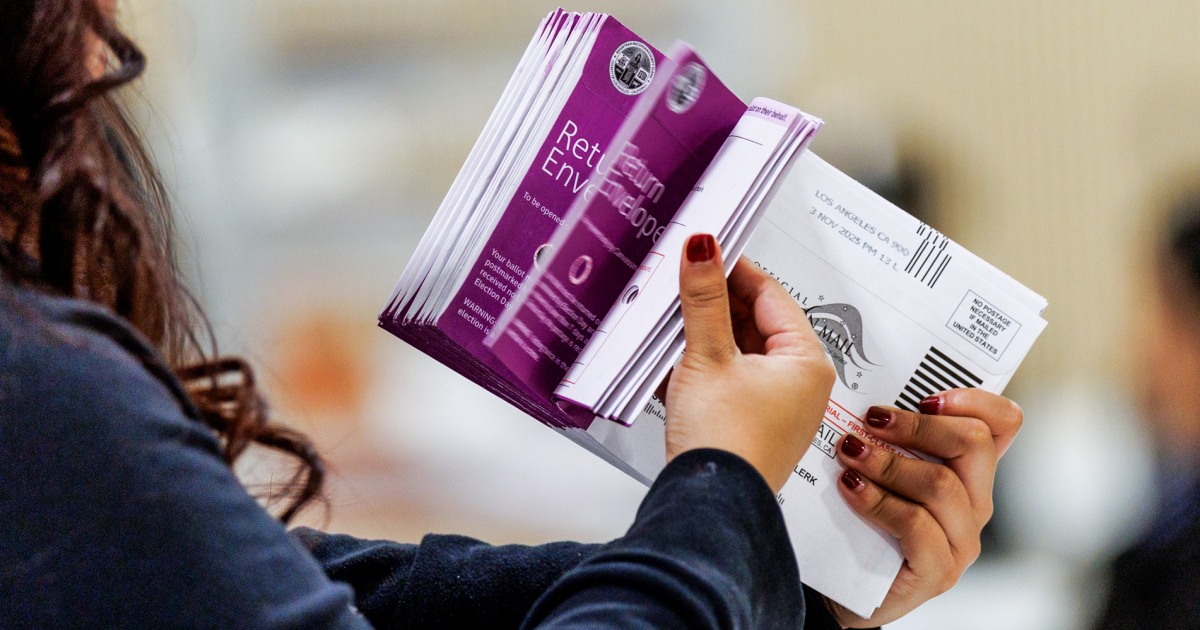
The 95-page new rule implements parts of Trump’s executive order by requiring a new design for mail ballots and the envelopes they go in, as well as procedures for how data are collected from them by the federal government. asserted
data → implement → government
Bonta said his office expects to sue again within days. asserted
office → say → days
He expects a lower court will block the Trump-ordered changes again, and for that ruling to stand through November. asserted
ruling → expect → November
He said if the high court does weigh in again before the midterms, he expects it to acknowledge that the president has no authority to dictate election policy. asserted
president → say → policy
Dean Logan, registrar-recorder and county clerk for Los Angeles County, also said the issue is far from settled. asserted
issue → say → County
“As we approach the issuance of the first ballots for the November General Election, it is important to recognize that these regulations are still subject to active litigation and interpretation,” Logan said in a statement to The Times. asserted
Logan → approach → Times
“In response, we will intensify our voter outreach and educational initiatives to ensure individuals are fully informed and aware of any adjustments to the voting process.” asserted
individuals → intensify → process
The Supreme Court found in part that the lower court order blocking the agencies from working toward Trump’s order was invalid because that work had yet to cause any harm to the states that sued, including California. asserted
that → find → California
It wrote that Trump’s executive order “is internal directive from the President to his subordinates mandating that certain agencies pursue certain policies. asserted
agencies → write → policies
It neither requires nor forbids anything of anyone outside the Executive Branch.” asserted
It → require → Branch
About 30% of the nation’s voters — and 80% of Californians — cast their ballots by mail in 2024. asserted
% → cast → 2024
Trump, however, has long maintained that voting by mail leads to fraud, including voting by noncitizens. asserted
voting → maintain → noncitizens
With the court’s ruling Monday, Homeland Security may compile state-by-state lists of citizens who are 18 and over and eligible to vote. uncertain
who → compile → citizens
However, California and other states “are not required to use the Lists,” the court said. asserted
court → require → Lists
The Trump administration has acknowledged potential law enforcement applications for the lists and warned state election officials across the country that they could face legal consequences if they don’t work to ensure that noncitizens aren’t able to vote in their elections. uncertain
noncitizens → acknowledge → elections
President Trump signed an executive order Tuesday purporting to place new federal controls on voting by mail in states such as California. asserted
Trump → sign → California
Such warnings from the administration were mentioned by Justice Sonia Sotomayor in her dissent as evidence of the harm suffered by the states already, and reason for the lower court’s ruling halting implementation to hold. asserted
ruling → mention → implementation
…and 14 more, not listed.

💬Give feedback
🕘History 🎫Support