Supreme Court sides with Republicans in dispute over cost of campaign ads

Read the original at Los Angeles Times ↗
Cite

Savage, D. G. (2026, October 14). Supreme Court sides with Republicans in dispute over cost of campaign ads. Los Angeles Times. https://www.latimes.com/politics/story/2026-10-14/supreme-court-sides-with-republicans-in-dispute-over-cost-of-campaign-ads

Dated from the outlet's own feed. Check the original for its byline.

Los Angeles Times · collected 2026-10-14 · by David G. Savage

Quick Summary

The Supreme Court ruled in favor of Republicans, allowing political parties and their fundraising committees to receive lower rates for broadcast campaign ads during the midterm election period. Justices Sotomayor and Jackson dissented, while the decision was based on a FCC ruling made under Republican control that did not provide public explanation or debate. This outcome is seen as providing an advantage to Republican candidates in the final weeks of campaigning.
Written locally by qwen2.5:14b on 2026-10-14, using this article's own text rather than the other coverage of the same event (that is the story summary below).

AI analysis runs on qwen2.5:14b, locally

Story summary

The Supreme Court ruled 7-2 on October 14, 2026, to halt a Fourth Circuit decision forcing the Federal Communications Commission (FCC) to finalize a rule allowing political parties and joint fundraising committees access to more favorable television advertising rates typically reserved for individual candidates. The case involved a dispute over whether these entities should be granted lower unit charges during election periods. Democrats challenging this revision argued it undermines their financial advantage, while Republicans supported the new rule due to their significant funding at the party level. Justices Sonia Sotomayor and Ketanji Brown Jackson dissented in favor of denying the administration’s appeal, but the majority decision solidified Republican candidates' edge in campaign advertising as midterms approached.

Written for “Supreme Court Rules On FCC Ad Rates” on 2026-10-14, grounded in this article and the 1 other(s) covering the same event.
Why this leaning score
The article's own words the score was based on. Each is quoted verbatim and was checked against the article text before being stored, so you can find it in the original.
Reading Leans left (beta estimate) Confidence medium
Leaning: leans left for article 80589 (medium confidence, 2 verified quotes) · logged 2026-10-14

Story

📰 Supreme Court Rules On FCC Ad Rates
Politics · 2 article(s) covering the same event. See how they differ ↓

Compared with similar articles

This article reads leans left and hedges 0% of its claims. Each row says how that neighbour differs.
The Straits Times
⚖️ Leans left 🔴 17% hedged 2 of 12 📰 publisher trust 59
“The articles describe different legal actions: an initial district court order to halt ads vs. a later Supreme Court decision regarding ad costs.”
The Guardian
⚖️ leaning not scored 🔴 5% hedged 1 of 20 📰 publisher trust 68
“The articles describe different legal actions: one is about a federal judge's temporary restraining order, while the other is about the Supreme Court's decision on ad rates.”
Washington Examiner
⚖️ leaning not scored 🔴 6% hedged 1 of 17 📰 publisher trust 68
“Both articles describe the Supreme Court's decision on October 14, 2026, that sided with political parties and joint fundraising committees in allowing them to access more favorable television advertisement rates.”
The Straits Times
⚖️ Leans left 🔴 17% hedged 2 of 12 📰 publisher trust 59
“Article A describes a judge blocking taxpayer-funded ads featuring Trump, while Article B reports on the Supreme Court's decision regarding lower rates for broadcast campaign ads in favor of Republicans.”
How this article was measured signals, leaning charts, publisher record, byline, topics and claims

Signals How these are calculated →

Claims extracted
31
sentences that state something as happening or true
Uncertain
0%
0 of 31 hedged ("reportedly", "may", "according to")
Leaning
Leans left
of the writing, not the subject · beta estimate
Publisher signals
95/100
Los Angeles Times's corrections and hedging, across everything collected from it. Not a measure of accuracy.
Outlets on this story
2
Politics
Same framing elsewhere
1
articles that frame the event the way this one does
Analyzed 2026-10-14 · how these are computed

How this is being covered How these are calculated →

Article leaning vs. publisher reliability
Source leaning vs. consistency

Publisher

Los Angeles Times · 205 article(s) · 0 correction(s) detected
No corrections detected for this publisher. That may mean careful reporting, or simply that nothing has been checked.

Who wrote this

David G. Savage
10 article(s) here · 1 carrying a prediction
🔮 - Click here to listen to this article - - The Supreme Court gave political parties and their fundraising committees lower rates for broadcast campaign ads. - Justices Sonia Sotomayor and Ketanji Brown Jackson voted to deny the administration’s appeal.
🔮 Supreme Court sounds wary of state-based climate change suits against oil producers - Click here to listen to this article - - Several justices suggested that local and state claims against oil companies may be blocked by the federal Clean Air Act. -
🔮 In its new term, the court will also hear major cases on immigration and guns.
🔮 “At this late date, ordering reversion to the 2025 map in the midst of an ongoing election would usher in electoral chaos,” the justices wrote.
🔮 - The decision will aid states that seek to scrub their voter rolls and remove those who are not citizens.
🔮 - Click here to listen to this article - - The administration could try to impose new regulations for the 2028 elections.
🔮 Acting on his own, Trump had the East Wing of the White House torn down in October and ordered work to start on a massive new building that would dwarf the old executive mansion and seat 1,000 guests for dinner.
🔮 At issue is whether the president acting on his own may build a huge new ballroom complex that is expected to dwarf the historic Executive Mansion.
🔮 By a 5-4 vote, the justices granted an emergency appeal from Trump and his lawyers on Monday, setting aside a judge’s order that would stop the construction.
🔮 California leaders immediately noted the limits of the high court ruling and said they would file a lawsuit to prevent Trump’s desired changes from taking effect. “The Supreme Court just let the Trump administration move ahead (for now) with its plan to disenfranchise voters across the country.
Also by David G. Savage
Nothing else under this byline is closely related to this article, so these are simply their most recent.
All 10 articles by David G. Savage →

Topics

Democratic FCC Republican Republicans The Supreme Court

Subjects

FCC ORG · 9× Republicans NORP · 5× The Supreme Court ORG · 3× the 4th Circuit ORG · 3× Democratic NORP · 2× Ketanji Brown Jackson PERSON · 2× Republican NORP · 2× Sonia Sotomayor PERSON · 2× Supreme Court ORG · 1× WASHINGTON GPE · 1×

Narrative

- Click here to listen to this article - - The Supreme Court gave political parties and their fundraising committees lower rates for broadcast campaign ads. - Justices Sonia Sotomayor and Ketanji Brown Jackson voted to deny the administration’s appeal.
framing: assertive · carried by 1 article(s) · first seen 2026-10-14
🔮 - Click here to listen to this article - - The Supreme Court gave political parties and their fundraising committees lower rates for broadcast campaign ads. - Justices Sonia Sotomayor and Ketanji Brown Jackson voted to deny the administration’s appeal.
2026-10-14 · Los Angeles Times
Supreme Court sides with Republicans in dispute over cost of campaign ads · assertive framing

Claims (31 extracted, 0 hedged)

Supreme Court sides with Republicans in dispute over cost of campaign ads asserted
Court → side → ads
- Click here to listen to this article - - The Supreme Court gave political parties and their fundraising committees lower rates for broadcast campaign ads. - Justices Sonia Sotomayor and Ketanji Brown Jackson voted to deny the administration’s appeal. asserted
Sotomayor → click → appeal
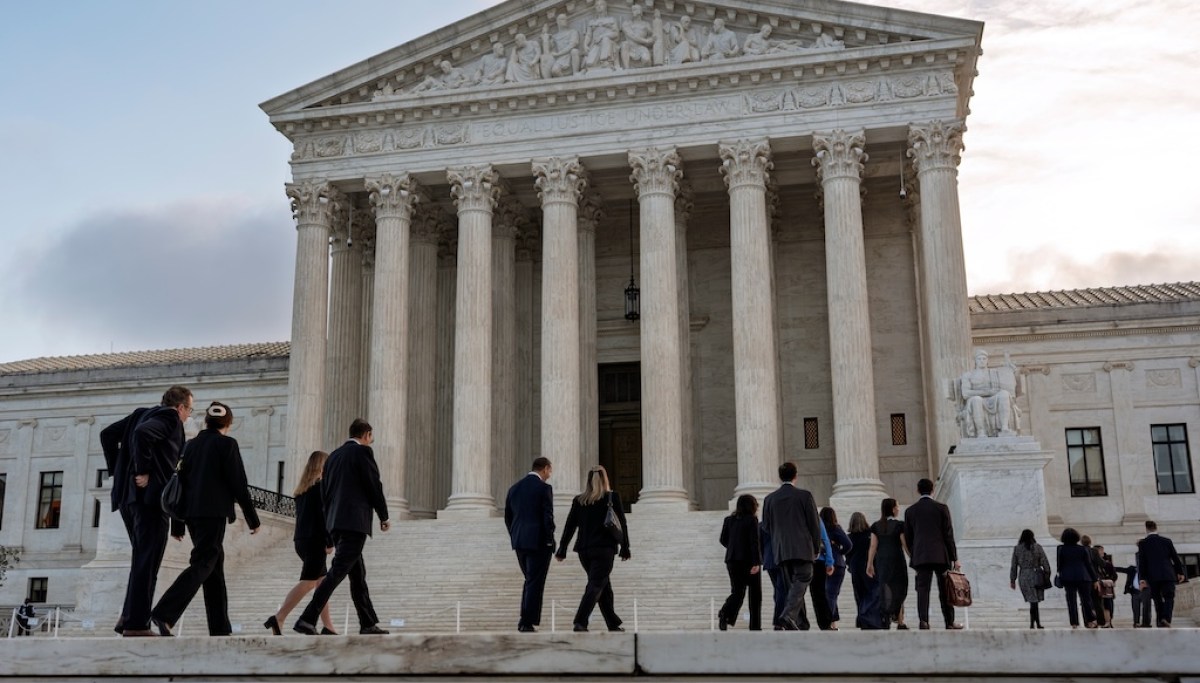
The Supreme Court sided with Republicans Wednesday and gave political parties and their fundraising committees lower rates for broadcast campaign ads. asserted
Court → side → ads
Over two dissents, the justices granted a fast-track appeal from the Trump administration and the National Republican Congressional Committee and upheld the use of the GOP-friendly rule in the midterm election. asserted
justices → grant → election
In a brief order, the court said the issue should be left to the Federal Communications Commission. asserted
issue → say → Commission
The outcome has given Republican candidates an advertising edge in the final weeks of the campaign. asserted
outcome → give → campaign
Federal law says a “legally qualified candidate” running for election is entitled to a “lower unit charge” for campaign ads in the 60 days prior to an election. asserted
candidate → say → election
However, on March 30, the FCC, under Republican control, announced that broadcasters must extend the lower rates to political parties and their joint fundraising committees. asserted
broadcasters → announce → parties
The FCC notice did not explain the basis for this change, and it refused to hold a commission hearing to debate the issue. asserted
it → explain → issue
But the change was seen as benefiting Republicans. asserted
change → see → Republicans
Democratic candidates have raised more money from direct but limited contributions from individuals, while Republicans have raised far more through party committees that are funded by wealthy donors. asserted
that → raise → donors
The non-partisan Campaign Legal Center said the FCC’s rule change was “contrary to the text and purpose of the federal statute and would effectively grant super PACs an advertising discount.” asserted
change → say → discount
Anna Gomez, the lone Democrat on the FCC, issued a statement objecting to the change. asserted
Gomez → issue → change
“The American public should not have sweeping election-year rule changes forced on them in the dark, on the eve of the election, without a single opportunity for public input,” she said. asserted
she → have → input
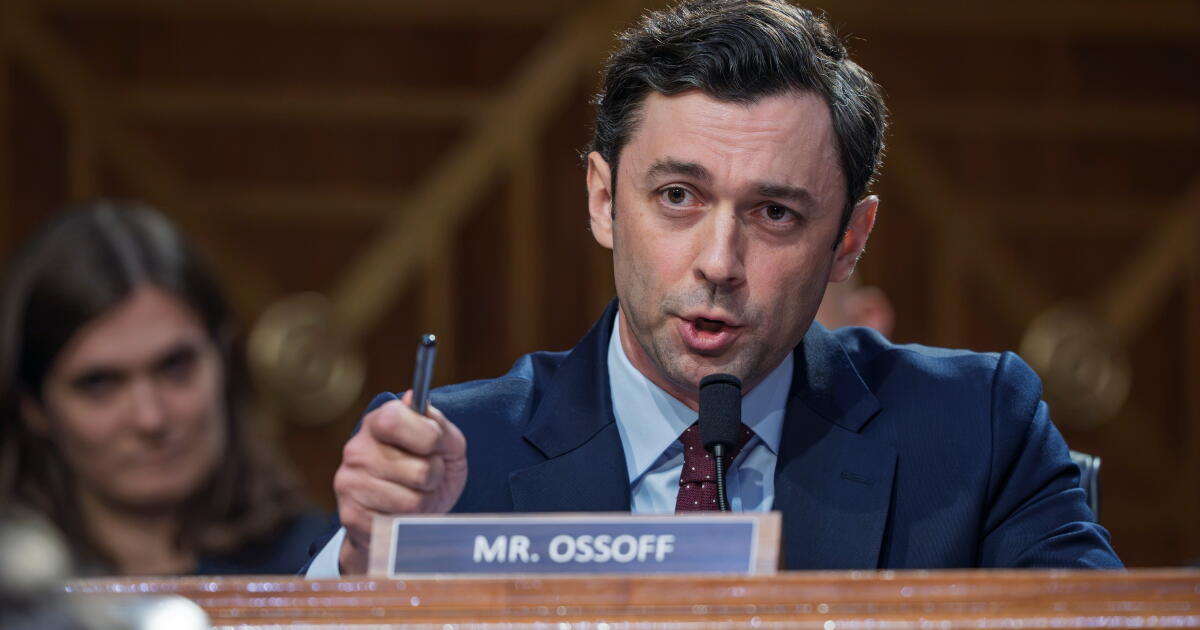
Democratic Senate candidates Sherrod Brown of Ohio, Jon Ossoff of Georgia and Roy Cooper from North Carolina objected to the FCC rule change in April and and asked for a review. asserted
candidates → object → review
When no action was taken, they filed suit in federal court. asserted
they → take → court
They argued the FCC had no authority to change the law that gave only candidates, not fundraising committees, the benefit of the lower ad rates. asserted
that → argue → rates
Since then, the two sides have gone back and forth in the courts, with both accusing the other of seeking a late change in the rules. asserted
both → go → rules
The U.S. 4th Circuit Court of Appeals in Virginia ruled for the Democrats in a pair of 2-1 decisions. asserted
Court → rule → decisions
“Suffice to say that any ‘chaos’ is the FCC’s fault, not ours,” Judge Robert B. King, a Clinton appointee, said on Oct. 7. asserted
King → suffice → Oct.
It “has endeavored to create from whole cloth a new rule entirely outside the purview of judicial review.” asserted
It → endeavor → review
But the Supreme Court stepped in twice to overturn the 4th Circuit and rule for the Republicans. asserted
Court → step → Republicans
In a Sept. 4 order, the court said in an unsigned order the 4th Circuit intervened too soon. asserted
Circuit → say → order
The law “makes clear that an aggrieved party must wait for the Commission to resolve its application for review by order before filing a petition for judicial review.” asserted
Commission → make → review
Only Justice Ketanji Brown Jackson dissented. asserted
Jackson → dissent → ?
In September, the FCC did nothing other than to ask for public comments on its March rule change. asserted
FCC → do → change
Frustrated with the delay, the 4th Circuit issued a second order requiring the FCC to act by Oct. 9. asserted
Circuit → frustrate → Oct.
Last week, in response to an appeal from Solicitor Gen. D. John Sauer, Chief Justice John G. Roberts put the 4th Circuit order on hold. asserted
Roberts → put → hold
On Wednesday, the full court said the 4th Circuit Court should have left the issue to the FCC. asserted
Court → say → FCC
“Our system of separation of powers does not allow the judiciary to meddle in the workings of a coordinate branch of the government in this manner,” the court said an unsigned opinion. asserted
opinion → allow → manner
In dissent, Jackson and Justice Sonia Sotomayor voted to deny the administration’s appeal. asserted
Jackson → vote → appeal

💬Give feedback
🕘History 🎫Support