That is 0 articles you have read today.
The Aporia is free and carries no advertising, so readers are the only
thing paying for it. If you are getting this much out of it, a small
donation is what keeps it independent.
Daily limit reached
You have read 0 articles today.
That is more than the 15 a day The Aporia gives away,
and well past what it can carry on nothing. Your allowance resets at
midnight.
There is no advertising here and nothing about you is sold, so readers
are the only thing paying for it. If the site is worth this much of
your day, it is worth a few dollars.
Everything else stays open: the
maps, the
directory and
search do
not count against this, and neither does re-opening something you have
already read today.
The Trump administration has granted visas to Iran's President Masoud Pezeshkian and Foreign Minister Abbas Araghchi for the upcoming UN General Assembly in New York despite ongoing conflict between the two countries. This decision is unusual given the current state of hostilities; previous years saw stricter restrictions on Iranian diplomats’ movements and access during such events. The U.S. has imposed travel limitations and bans on luxury goods purchases for this year's delegation, which is smaller compared to last year’s. In contrast, visa requests from Palestinian President Mahmoud Abbas were denied by the State Department shortly before the announcement regarding Iran.
Written locally by qwen2.5:14b on 2026-09-18,
using this article's own text rather than the other coverage of the
same event (that is the story summary below).
Story summary
US President Donald Trump met with Chinese President Xi Jinping, where Xi pressed Trump to adopt Beijing's stance against Taiwan independence, which Taiwan rejected outright. Meanwhile, Taiwan is crucial for global tech and economy due to its leading semiconductor production; TSMC alone produces the majority of advanced chips that power smartphones, AI systems, and more. As Stanford Hoover fellow Eyck Freymann noted, economic disruption from a conflict over Taiwan would be severe.
In unrelated developments, Iranian President Masoud Pezeshkian met with US media at the UN General Assembly, where he denied Iran's nuclear ambitions while offering to dilute its enriched uranium and allow inspections under international law. He also blamed Washington for ongoing conflicts in the Middle East. The International Atomic Energy Agency (IAEA) estimates that Iran has over 440 kilograms of uranium enriched up to 60%, raising concerns despite Pezeshkian's denials.
Taiwan's representative, Ambassador Alexander Yui, clarified during an interview on CBS’s "Face the Nation" that while Taiwan was discussed between Trump and Xi, it wasn't a major focus. He emphasized there has been no change in US policy towards Taiwan amid recent tensions with China.
Written for “Taiwan Iran Us Relations Midterms” on 2026-10-05,
grounded in this article and the 386 other(s) covering the same event.
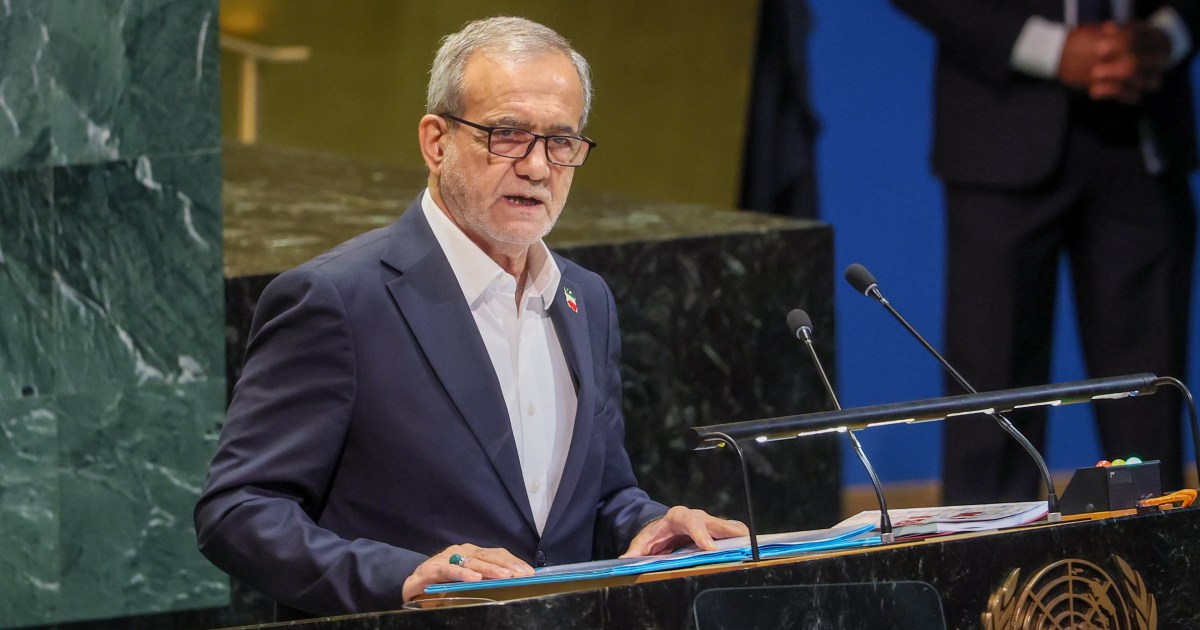
The Trump administration has approved visas for top Iranian officials, including the President and Foreign Minister, to attend next week's UN General Assembly high-level meeting in New York even as the two countries are locked in a stalemated war.
asserted
countries → approve → war
The State Department said on Thursday (September 17, 2026) that it had approved visas for Iran's “core delegation,” along with essential staffers to participate in the UN meetings.
asserted
it → say → meetings
The core delegation includes President Masoud Pezeshkian and Foreign Minister Abbas Araghchi, according to U.S. officials, who spoke on condition of anonymity due to visa privacy laws.
uncertain
who → include → laws
The move is unusual due to the more than six-month-long conflict between Iran and the United States and no sign that agreements to reopen the Strait of Hormuz or return to talks on Iran's nuclear program are close.
asserted
agreements → reopen → program
It also comes as Iranian-backed Houthi rebels in Yemen have stepped up attacks on Saudi infrastructure and shipping in the Red Sea, another major maritime route in the region where impediments have helped drive a surge in global oil prices.
asserted
impediments → come → prices
In addition, Iran remains the world's leading state sponsor of terrorism, according to the United States, which has imposed significant sanctions against the country and launched a new campaign in recent weeks aimed at severing “critical financial lifelines."
uncertain
which → remain → lifelines
As the host country for the United Nations headquarters, the U.S. is generally limited in what it can do to prevent foreign leaders from coming to the General Assembly.
asserted
it → limit → Assembly
However, it has in the past denied visas to — or discouraged applications from — leaders involved in active conflicts with the United States.
asserted
it → deny → States
For last year's UN meetings of world leaders — which took place before the Iran war began on Feb. 28 but after the U.S. and Israel launched air strikes on Iranian nuclear facilities in June 2025 — the State Department also approved a limited number of visas for Iranian diplomats but also imposed rigid restrictions on the delegation's movements.
asserted
Department → take → movements
Those included severe limitations on how far Iranian officials could travel in New York City from their UN mission and barred them from shopping at wholesale membership stores, such as Costco and Sam's Club.
uncertain
officials → include → Costco
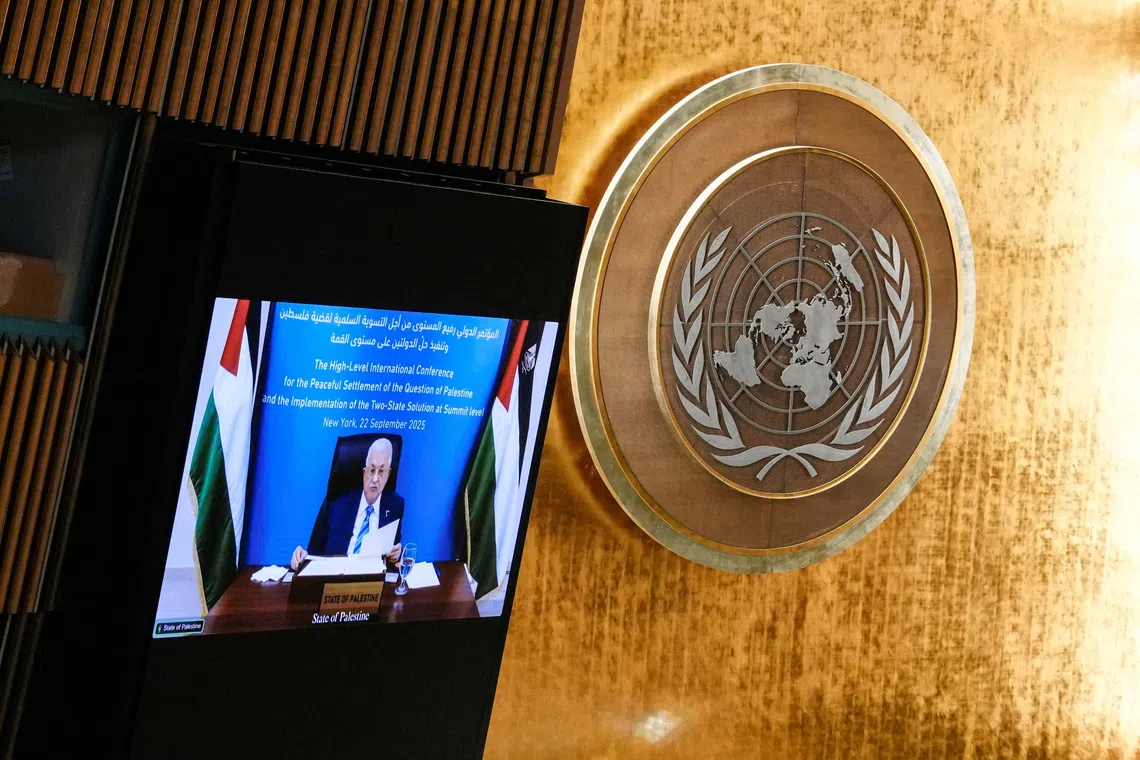
The decision on the Iranian visas was announced just a day after the State Department denied visas to Palestinian President Mahmoud Abbas and his delegation to come to the General Assembly.
asserted
Department → announce → Assembly
“Consistent with our host country obligations, the core delegation from the Iranian regime will be able to attend UN General Assembly High Level Week," the State Department said.
asserted
Department → attend → Week
"The delegation will be under travel restrictions and will face prohibitions on the purchase of luxury and other goods per our policy.
asserted
delegation → face → policy
 The Aporia