The Aporia
The Aporia
The Aporia

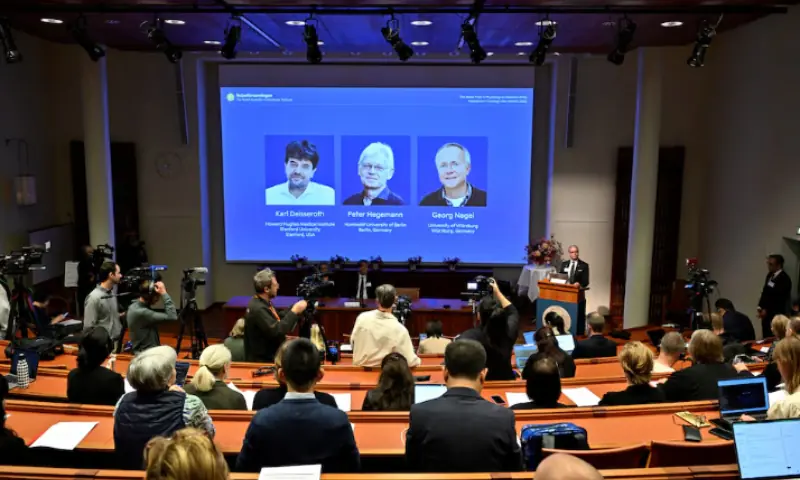
On October 5, 2026, the Nobel Prize in Physiology or Medicine was awarded at the Karolinska Institute in Stockholm to three scientists for their pioneering work on optogenetics: Karl Deisseroth (Stanford University), Peter Hegemann (Humboldt University of Berlin), and Georg Nagel (University of Würzburg). The trio received the prize "for their discoveries concerning light-gated ion channels and optogenetics," a method that uses light to control individual nerve cells, opening up new avenues in neuroscience. Each scientist will share a prize amounting to 12 million Swedish kronor ($1.2 million).
The research began with Dr. Hegemann’s study of algae proteins that convert light into electrical signals, leading to the development of channelrhodopsins, which are now widely used globally to explore brain functions and neurological disorders. This award marks a significant milestone in understanding neural circuits linked to specific memories, feelings, and behaviors relevant for treating neurological and psychiatric conditions.