That is 0 articles you have read today.
The Aporia is free and carries no advertising, so readers are the only
thing paying for it. If you are getting this much out of it, a small
donation is what keeps it independent.
Daily limit reached
You have read 0 articles today.
That is more than the 15 a day The Aporia gives away,
and well past what it can carry on nothing. Your allowance resets at
midnight.
There is no advertising here and nothing about you is sold, so readers
are the only thing paying for it. If the site is worth this much of
your day, it is worth a few dollars.
Everything else stays open: the
maps, the
directory and
search do
not count against this, and neither does re-opening something you have
already read today.
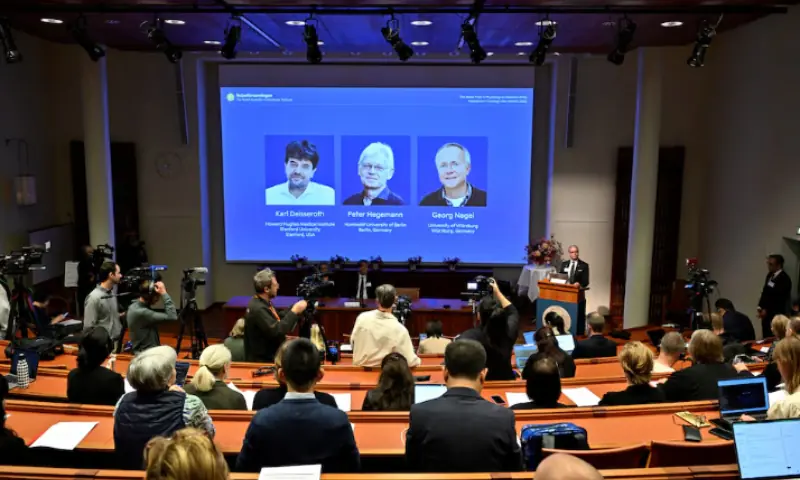
Karl Deisseroth from Stanford University and Germans Peter Hegemann and Georg Nagel won the 2026 Nobel Prize in Physiology or Medicine for their work on optogenetics. The trio were recognized "for their discovery of a molecular switch for nerve cells" that allows researchers to control neural activity using light, advancing understanding of brain functions related to learning, fear, addiction, and movement. Each scientist will receive one-third of the 12 million Swedish crowns ($1.2m) prize money.
Written locally by qwen2.5:14b on 2026-10-05,
using this article's own text rather than the other coverage of the
same event (that is the story summary below).
Story summary
On October 5, 2026, the Nobel Prize in Physiology or Medicine was awarded to Karl Deisseroth of Stanford University, Peter Hegemann of Humboldt University in Berlin, and Georg Nagel of the University of Würzburg for their groundbreaking work on optogenetics. The prize recognizes their research into light-gated ion channels that enable scientists to control individual nerve cells using light, advancing understanding of brain activity. The three researchers will share a prize of 12 million Swedish kronor (approximately $1.2 million). This award marks the beginning of Nobel Prize week in Stockholm, with subsequent prizes for physics, chemistry, literature, peace, and economics to be announced through October 12.
Written for “Nobel Prize Brain Research” on 2026-10-05,
grounded in this article and the 11 other(s) covering the same event.
Why this leaning score
This article does not take a side on a contested political
question, so it has no leaning score. That is an
answer rather than a gap: a match report or a rescue can be warmly
or critically written without being left or right, and scoring it
anyway is how approval of a subject gets recorded as a political
position.
No political leaning scored for article 57592 · logged 2026-10-05
American scientist Karl Deisseroth and Germans Peter Hegemann and Georg Nagel have won the 2026 Nobel Prize in Physiology or Medicine for their pioneering discoveries on light and optogenetics that have helped understand how the brain works.
asserted
brain → win → light
The Nobel Assembly of Sweden’s Karolinska Institute medical university said on Monday that Deisseroth, 54, Hegemann, 71, and Nagel, 73, were honoured “for their discovery of a molecular switch for nerve cells”.
asserted
Deisseroth → say → cells
list of 4 items- list 1 of 4‘I want to cry’: Afghan medical students in Pakistan face expulsion fear
- list 2 of 4The story of a book in Gaza: A treasured possession given new lease of life
- list 3 of 4HIV prevention drug hailed as breakthrough, but who gets access?
- list 4 of 4UN experts say Belarus justice system used to target Lukashenko opponents
Optogenetics involves controlling nerve signals with light, and helps researchers understand how specific cell types contribute to behaviours like learning, fear, addiction and movement.
“Optogenetics has fundamentally altered our understanding of the brain.
asserted
Optogenetics → want → brain
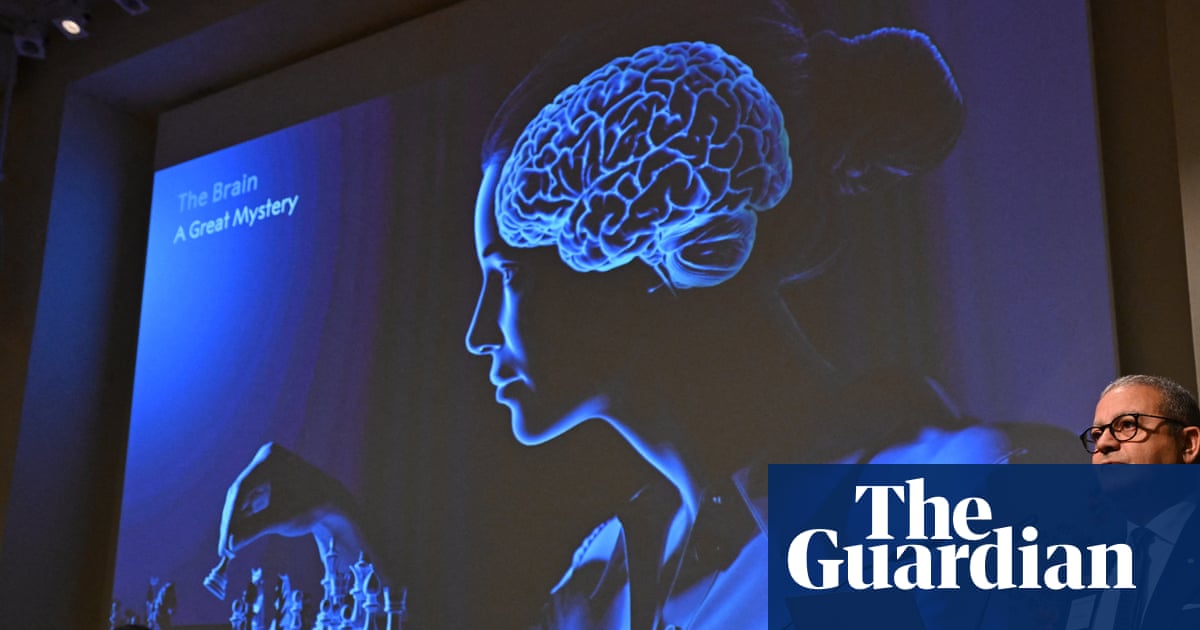
Every day brings new discoveries, helping to solve one of humanity’s great mysteries: how our incredible brain works,” the Nobel Assembly said.
asserted
Assembly → bring → mysteries
Thomas Perlmann, the secretary-general of the Nobel Assembly at Karolinska Institute, added that optogenetics “makes it possible to switch on, or off, the activity of individual nerve cells in a living brain”.
“This method is now being used in laboratories around the world to reveal the brain’s mysteries,” Perlmann added.
asserted
Perlmann → add → mysteries
“Optogenetics provides opportunities for mapping the brain in a way that we could once only dream of,” Per Svenningsson, chair of the Nobel committee, said in a statement.
uncertain
Svenningsson → provide → statement
Researchers also hope optogenetics could improve cochlear implants, allowing more precise stimulation of the auditory nerve than current electrical devices.
uncertain
optogenetics → hope → devices
The three of them will share a prize sum amounting to 12 million Swedish crowns ($1.2m).
asserted
three → share → crowns
“All three said the same thing: that they thought it was absolutely wonderful to receive the prize with the other two who they call their friends – that it’s such an honour to receive the prize together,” Perlmann said.
asserted
Perlmann → say → prize
Nobel laureates are chosen by expert committees appointed by the prize-awarding institutions.
asserted
laureates → choose → institutions
The physiology or medicine prize traditionally opens the annual Nobel announcements, with the Nobel Prize for physics announced on Tuesday, followed by the chemistry prize on Wednesday and the literature prize on Thursday.
asserted
Prize → open → Thursday
But perhaps the most keenly anticipated award is that due on Friday, the peace prize – the only Nobel to be awarded in Oslo.
asserted
award → anticipate → Oslo
Experts have suggested the jury could choose a laureate this year who enjoys broad consensus, after last year’s controversial winner, Venezuelan opposition leader Maria Corina Machado.
uncertain
who → suggest → winner
Laureates receive their awards on December 10, the anniversary of Nobel’s death, in ceremonies attended by Sweden’s and Norway’s royal families, with banquets held in their honour.
asserted
banquets → receive → honour
 The Aporia