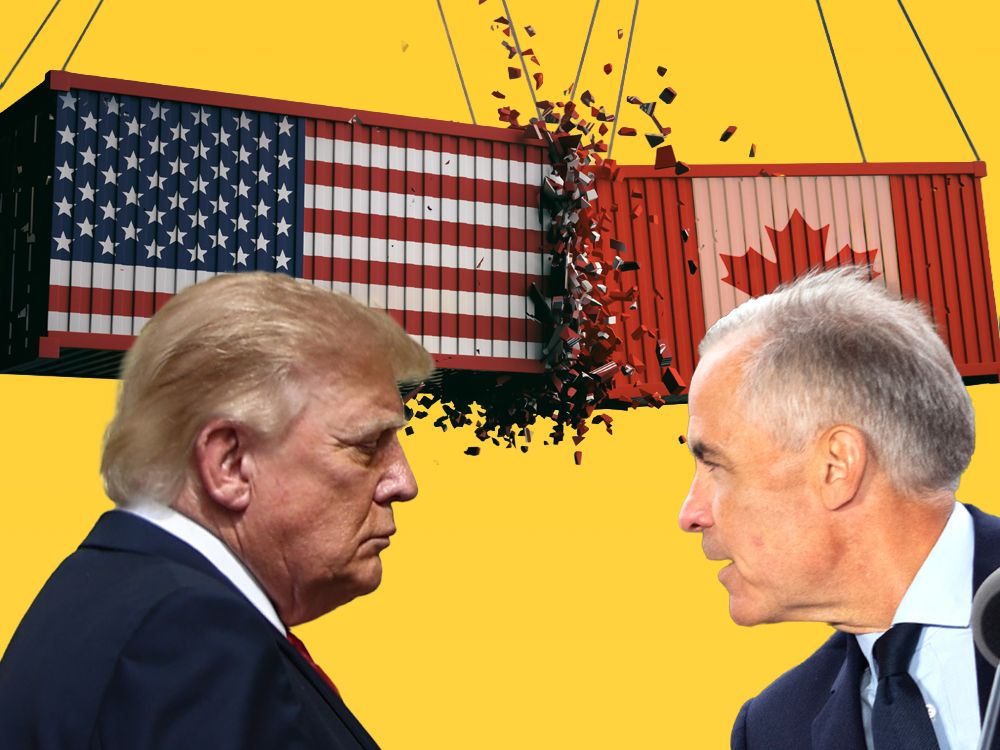
The United States and Canada have spent the past several months behaving like two people in a bad marriage: each is convinced the other is taking advantage, each is speaking loudly enough for the neighbors to hear, and neither seems willing to acknowledge how much is at stake if the relationship truly breaks down.
It is time to stop measuring each other's manhood across the border.
asserted
It → spend → border
Canada should return to the table.
asserted
Canada → return → table
It is not the 51st state, and no good can come from language that treats it as one.
asserted
that → come → one
America does not need a submissive Canada.
asserted
America → need → Canada
It needs a prosperous, capable, secure, and willing partner on its northern border—one that shares a continent, a NATO commitment, a vast energy system, critical supply chains, and values that are far more alike than different.
asserted
that → need → continent
If Canada wishes to preserve privileged access to the American market—and it should—then it must be willing to address the barriers that American businesses and workers reasonably see as one-sided.
asserted
businesses → wish → that
Banking, dairy, procurement, digital rules, industrial subsidies, and autos all belong on the table.
asserted
Banking → belong → table
But they should be resolved through reciprocity, not coercion.
asserted
they → resolve → reciprocity
Washington should stop treating Canada as a trophy to be won.
asserted
Washington → stop → trophy
Ottawa should stop treating distance from the United States as a measure of national success.
asserted
Ottawa → stop → success
The current approach has it backward.
asserted
it → have → ?
Washington has too often treated tariffs and public humiliation as a negotiating strategy.
asserted
Washington → treat → strategy
Ottawa, understandably angered by that treatment, has increasingly treated diversification away from the United States as a strategic end in itself.
asserted
Ottawa → anger → itself
Canada can and should diversify trade.
asserted
Canada → diversify → trade
A country that sends the overwhelming majority of its goods exports to one market should want alternatives.
asserted
that → send → alternatives
Europe, Britain, Japan, India, and other partners all have a role to play.
asserted
Europe → have → role
Canada will not replace North America with Europe, and it would be foolish to try.
asserted
it → replace → Europe
The fashionable idea that Canada should join the European Union is the clearest example of mistaking a political gesture for an economic plan.
asserted
Canada → join → plan
But even if Brussels chose to rewrite its treaties, full membership would be a terrible bargain for Canada.
asserted
membership → choose → Canada
Canada would trade its own commercial policy for the European Union’s common external tariff and regulatory system.
asserted
Canada → trade → system
It would risk erecting a customs and regulatory border with its largest customer, most important supplier, and closest industrial partner.
asserted
It → risk → customer
It would become a distant member of a bloc whose decisions are necessarily shaped by European geography, European politics, and European priorities.
asserted
decisions → become → geography
Canadian businesses would be subject to rules made thousands of miles away, while the factories, pipelines, farms, mines, and research centers that actually sustain the Canadian economy remain tied by roads, rails, grids, and pipelines to the United States.
asserted
that → make → States
It is outsourcing sovereignty.
asserted
It → outsource → sovereignty
Canada’s future lies in a deeper North American relationship—one that preserves Canadian political independence while recognizing the economic reality that the two countries already make things together.
asserted
countries → lie → things
A car assembled in Ontario or Michigan is not meaningfully "Canadian" or "American" in the old-fashioned sense.
asserted
car → assemble → sense
Its parts may cross the border several times before final assembly.
uncertain
parts → cross → assembly
Engineers, tooling companies, battery suppliers, semiconductor firms, steel producers, and logistics operators work on both sides.
asserted
Engineers → work → sides
The sensible goal is not to force Canadian manufacturing to become an appendage of American manufacturing, nor to let either country subsidize factories that merely displace the other’s workers.
asserted
that → force → workers
It is to create a common North American manufacturing zone in which both countries benefit from production, investment, and innovation.
asserted
countries → create → production
That means common rules of origin with real North American content; common standards for electric vehicles, batteries, and charging; mutually recognized safety and environmental rules; and incentive programs designed to reward continental production rather than trigger subsidy wars.
asserted
That → mean → wars
If a Canadian worker, American worker, and Mexican worker all contribute to a product made in North America, the system should favor that product over subsidized imports from strategic competitors—not turn the three partners against one another.
asserted
system → contribute → one
The same principle applies to energy.
asserted
principle → apply → energy
Canada has the resources.
asserted
Canada → have → resources
The United States has immense capital markets, demand, technology, and security capacity.
asserted
States → have → markets
Rather than squabble over tariffs and permits, the two countries should create a North American energy-security compact: shared infrastructure planning, accelerated cross-border approvals, joint critical-mineral processing, integrated grids, and long-term commitments to supply one another in a crisis.
asserted
countries → squabble → crisis
Canada has a stable banking system, but it is also one of the most protected financial markets in the developed world.
asserted
it → have → world
America should be entitled to ask for genuine reciprocity: fair access for qualified U.S. financial institutions, transparent rules, and a level playing field for cross-border capital.
asserted
America → entitle → capital
In return, Canada should receive dependable access to American capital markets and a commitment that U.S. policy will not casually punish Canadian institutions simply because they are Canadian.
asserted
they → receive → institutions
Reciprocity must run in both directions.
asserted
Reciprocity → run → directions
…and 16 more, not listed.
 The Aporia