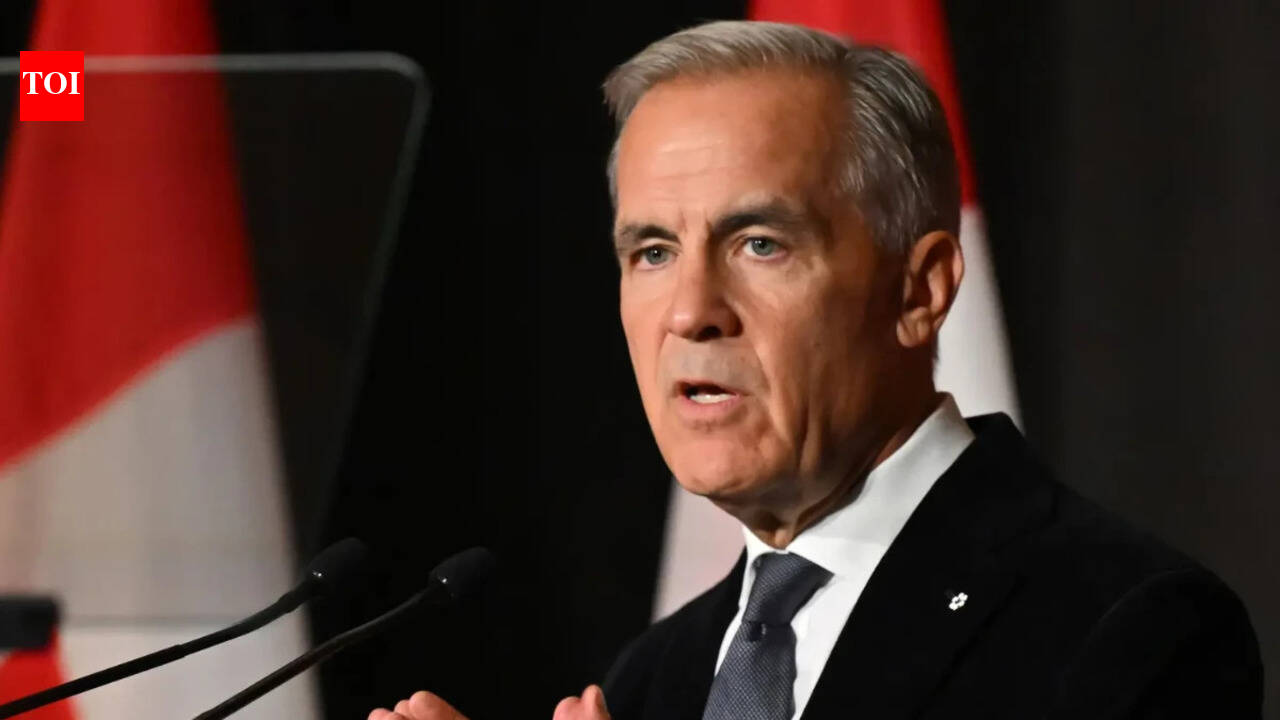
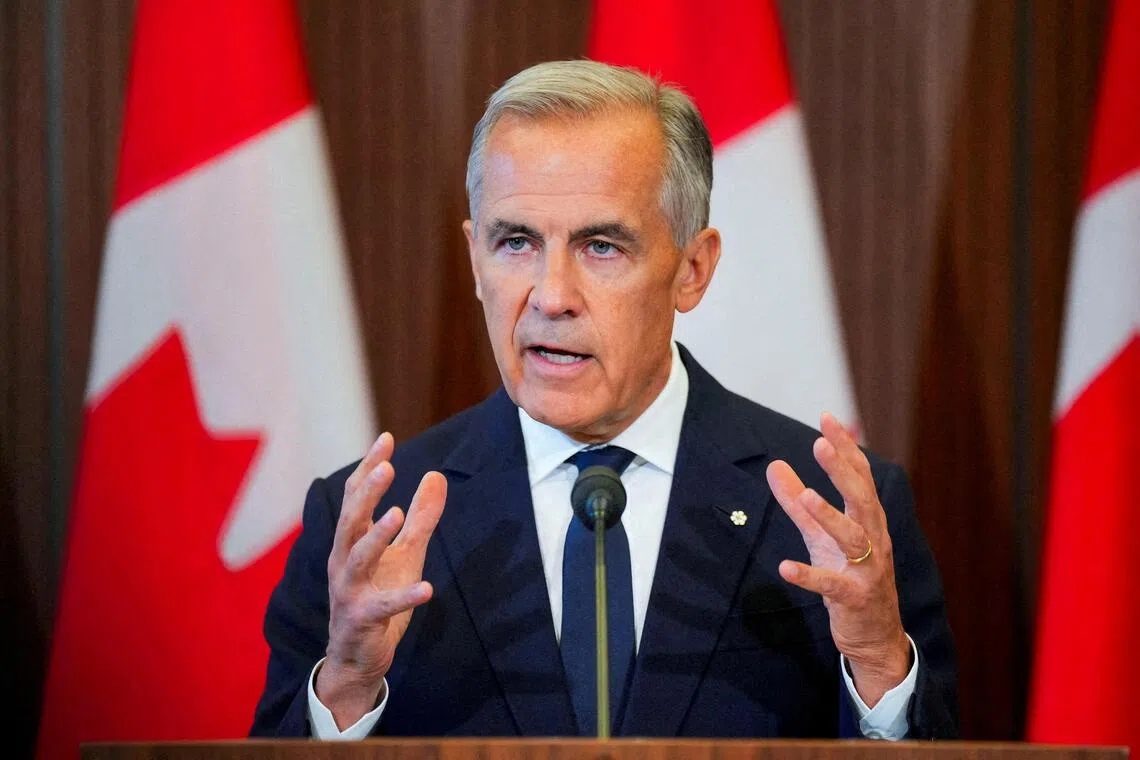
Canada is exploring deeper economic ties with the European Union to address deteriorating relations with the US. Mark Carney, Governor of the Bank of Canada, has discussed a form of "associate membership" that would allow easier movement and business activities between Canada and EU countries without full membership. Currently, Canadians can travel visa-free within the Schengen area for up to 90 days but need specific visas or permits from individual EU nations for longer stays, based on criteria such as employment, study, or family reunification.
Written by the local model on 2026-09-14,
using this article's own text rather than the other coverage of the
same event (that is the story summary below).
Story summary
Prime Minister Mark Carney is set to address the European Parliament in Strasbourg, France on Thursday, where he will pitch Canada's potential partnership with the EU. Media reports suggest that Carney has been pushing for a deeper relationship between Canada and the EU, including discussions about an undefined "associate member" status. However, Carney clarified during a speech at the Toronto International Film Festival that Canada is seeking to begin discussions for a "unique alliance" rather than full membership in the European Union.
Carney emphasized that while Canada shares values and priorities with the EU, it does not intend to become an official member of the bloc. The proposed unique alliance could involve enhanced economic ties, such as freer movement of goods, services, and workers across strategic sectors like defence, energy, AI, and critical minerals. This move comes amid deteriorating trade relations between Canada and the U.S., with Carney suggesting that closer EU ties could benefit Canada economically and strategically without compromising its sovereignty.
Written for “Canada EU Alliance Talks” on 2026-09-14,
grounded in this article and the 9 other(s) covering the same event.
Why this leaning score
This article does not take a side on a contested political
question, so it has no leaning score. That is an
answer rather than a gap: a match report or a rescue can be warmly
or critically written without being left or right, and scoring it
anyway is how approval of a subject gets recorded as a political
position.
No political leaning scored for article 8993 · logged 2026-09-14
Canada is exploring a much closer relationship with the European Union amid its worsening trade and political tensions with the US, with reports suggesting Ottawa is considering a new form of “associate membership” with the bloc.
asserted
Ottawa → explore → bloc
The proposal, reported by The Wall Street Journal, would seek deeper economic and strategic integration between Canada and the EU without Canada becoming a full EU member.
asserted
Canada → report → Canada
However, Canadian Prime Minister Mark Carney has stressed that Canada is not seeking EU membership.
asserted
Canada → stress → membership
He has described the proposed relationship as a “unique alliance” based on shared values, priorities and strengths.
asserted
He → describe → values
The idea is significant because a closer relationship could eventually make it easier for Canadians to do business, work, study and potentially move between Canada and European countries.
uncertain
Canadians → make → Canada
For now, however, Canadians remain non-EU nationals and do not have the automatic right to settle in any EU country.
"Wouldn’t it be lovely if Canada was the 28th state of the European Union rather than the 51st state of the United States?" asked Finnish President Alexander Stubb, who speaks regularly with Carney, as reported by WSJ.
asserted
who → remain → WSJ
Can Canadians currently move to Europe and settle?
asserted
Canadians → move → Europe
Canadian passport holders can travel to countries in the Schengen area without a visa for short stays of up to 90 days in any 180-day period.
asserted
holders → travel → period
That is a visitor entitlement, not a right to live or work permanently in Europe.
asserted
That → live → Europe
A Canadian who wants to stay in an EU country for longer than 90 days generally has to obtain the appropriate long-stay visa or residence permit from that country.
asserted
who → want → country
The rules are decided largely at the national level.
asserted
rules → decide → level
The European Union itself does not issue a single “EU residence visa” that allows a Canadian to simply settle anywhere in the bloc.
asserted
Canadian → issue → bloc
The European Commission specifically says applications for visas and residence permits must be made directly to the authorities of the EU country where the person intends to move.
asserted
person → say → country
That means a Canadian wanting to move to France, Germany, Spain, Italy or another EU country has to qualify under that country's immigration system.
asserted
Canadian → mean → system
How can a Canadian currently settle in an EU country?
asserted
Canadian → settle → country
The route depends on the individual's circumstances.
A Canadian may qualify for residence through employment, study, family reunification, highly skilled work, entrepreneurship or other national immigration programmes.
uncertain
Canadian → qualify → employment
For example, a Canadian who receives a qualifying job offer in an EU country may be able to obtain a work visa or residence permit.
uncertain
who → receive → visa
A student can apply for a student residence permit, while a person joining a qualifying family member can use family-reunification rules.
asserted
person → apply → rules
EU immigration rules cover categories including highly qualified workers, intra-company transferees, seasonal workers, researchers and students, but individual EU countries make the final decision on applications.
asserted
countries → cover → applications
A Canadian who legally lives in an EU country for a sufficiently long period may eventually qualify for long-term resident status.
uncertain
who → live → status
Under EU rules applicable in most member states, a non-EU national who has legally resided in an EU country for five years may be eligible for long-term resident status, subject to conditions such as sufficient financial resources and health insurance.
uncertain
who → reside → resources