US Supreme Court rejects Trump’s plans on postal ballots: Why it matters

Al Jazeera · collected 2026-09-15 · by Al Jazeera Staff
Read the original at Al Jazeera ↗

Summary

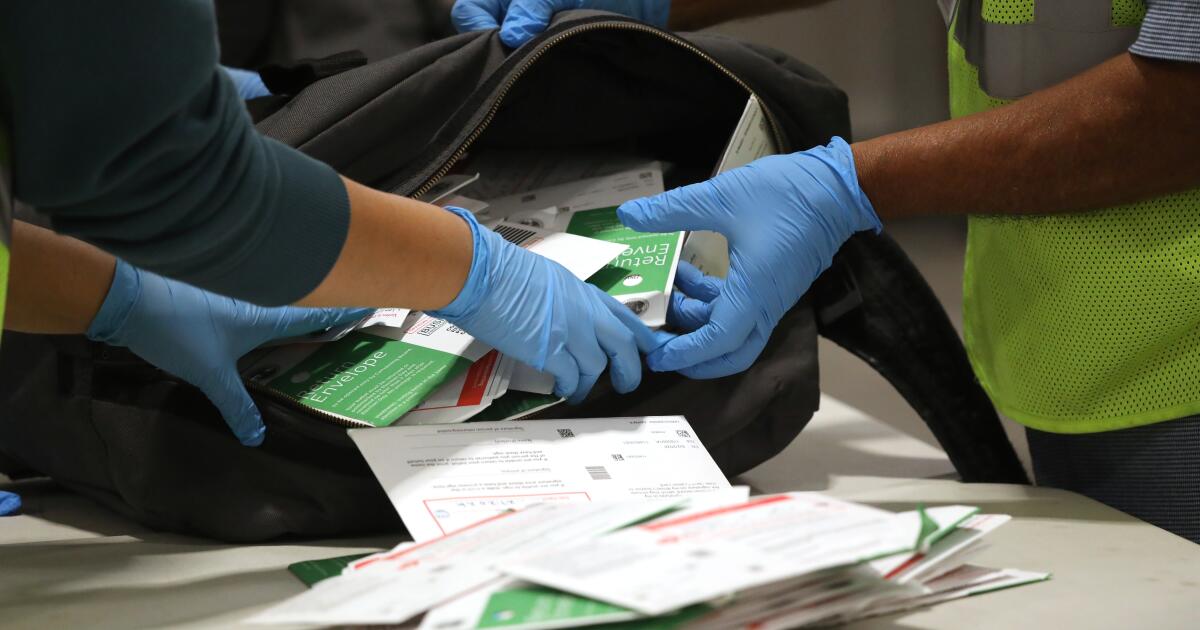
The U.S. Supreme Court has rejected former President Donald Trump's efforts to restrict voting by mail before the November midterm elections, allowing states to continue sending out mail ballots as usual. This decision by the conservative-majority court halts possible legal challenges from Trump aimed at stopping mail ballots and highlights ongoing disputes over election rules amid concerns about voter fraud, despite evidence showing minimal instances of such fraud. Mail-in voting has been in place for decades, increasing voter turnout, with one-third of all votes cast in recent elections being by mail.
Written by the local model on 2026-09-15, using this article's own text rather than the other coverage of the same event.

Signals How these are calculated →

Claims extracted
36
claim-shaped sentences
Uncertain
17%
6 of 36 hedged
Leaning
Leans left
of the writing, not the subject
Correction & hedging signals
95.8
corrections and hedging in what we collected; not a measure of accuracy
Outlets on this story
unclustered
not grouped into a story yet
Narrative spread
1
articles carrying this framing
Analyzed 2026-09-15 · how these are computed

AI analysis (generated at analysis time, not now)

Why this leaning score
The article's own words the score was based on. Each is quoted verbatim and was checked against the article text before being stored, so you can find it in the original.
Score -0.45 Confidence high
Leaning score -0.45 for article 9798 (high confidence, 3 verified quotes) · logged 2026-09-15

How this is being covered How these are calculated →

Article leaning vs. publisher reliability
Source leaning vs. consistency

Compared with similar articles

This article reads leans left and hedges 17% of its claims. Each row says how that neighbour differs.
ProPublica
⚖️ leaning not scored 🔴 17% hedged 5 of 29 📰 publisher trust 96
“The articles discuss different aspects of voting by mail; one covers an audit on how ballots were handled during primary elections, while the other reports on a Supreme Court decision regarding restrictions on mail ballots.”
The Guardian
⚖️ leaning not scored 🔴 4% hedged 1 of 24 📰 publisher trust 60
“The articles describe two different rulings by the US Supreme Court, one about congressional maps in Missouri and another about voting by mail, both related to Trump but distinct events.”
Los Angeles Times
⚖️ leaning not scored 🔴 22% hedged 7 of 32 📰 publisher trust 95
“The articles describe different phases of the same legal issue; Article A reports on warnings and appeals before a ruling, while Article B reports on the actual Supreme Court decision rejecting Trump's plans.”
Reason
⚖️ Leans strongly left further left than this 🔴 13% hedged 3 of 23 📰 publisher trust 92
“The first article discusses a First Circuit decision, while the second mentions the US Supreme Court's ruling on Trump's executive order. These are different judicial decisions at distinct levels of the court system.”
South China Morning Post
⚖️ Leans left 🔴 40% hedged 2 of 5 📰 publisher trust 94
“Article A describes a decision by Judge Carl Nichols, while Article B reports on a separate ruling from the US Supreme Court.”
The Guardian · 0.89 cosine similarity
⚖️ leaning not scored 🔴 5% hedged 1 of 19 📰 publisher trust 60
“The articles refer to different courts (appeals court vs. Supreme Court) making decisions on Trump's bid to restrict mail-in voting.”
The Guardian
⚖️ Leans left 🔴 13% hedged 7 of 52 📰 publisher trust 60
“Article A discusses Trump's rhetoric and legal challenges against voting by mail, while Article B reports on a specific court ruling rejecting Trump’s plans. These describe related but distinct events.”

Publisher

Al Jazeera · 529 article(s) · 0 correction(s) detected
No corrections detected for this publisher. That may mean careful reporting, or simply that nothing has been checked.

Who wrote this

Al Jazeera Staff
124 article(s) here · 1 carrying a prediction
🔮 German Foreign Minister Johann Wadephul laid the blame on Russia, saying that NATO members would not be intimidated.
🔮 US House Speaker Mike Johnson has rejected calls to pause artificial intelligence development, arguing that doing so could give China an advantage over the United States.
🔮 United States Attorney General Todd Blanche said the Trump administration would comply with the Supreme Court’s decision blocking new restrictions on mail-in voting, while defending US President Donald Trump’s criticism of the justices.
🔮 It could take seven years to clear the debris, the UN has estimated.
🔮 Despite Houthi assurances that maritime traffic in the Red Sea will not be affected, Saudi-linked ships have been targeted by the group in recent months.
🔮 “You could barely take your children and the fewest essentials with you,” he said.
🔮 Those behind it believed international pressure could force Doha to influence Hamas to secure the release of the 251 captives taken to Gaza on October 7, Haaretz said.
2026-09-15 · assertive framing · How an Israeli cell orchestrated an anti-Qatar campaign
🔮 Unofficial election results in the Muslim-majority autonomous region of Bangsamoro in the southern Philippines suggest no single party is on course to dominate parliament, meaning that coalition talks may be needed to choose the region’s first chief minister.
🔮 Recommended Stories list of 3 items- list 1 of 3US blocks Iran nuclear chief from attending key Vienna conference - list 2 of 3What could stop the Houthis’ advance across Yemen? - list 3 of 3Houthis say air strikes hit Yemen after Saudi Arabia vows ‘firm’ response The 10-year Treasury benchmark price influences the lending rate for nearly every asset in US financial markets, including consumer debt and home mortgages.
🔮 The Swedish Election Authority reported on Monday that the four opposition parties were projected to hold 176 seats in the 349-seat parliament, called the Riksdag, while the remaining 173 would go to four parties that make up or support the current conservative-led government.
Wire or desk byline, not an individual reporter.
More on this subject from Al Jazeera Staff
All 124 articles by Al Jazeera Staff →

Topics

Kennedy Center Supreme Court The United States Supreme Court Washington Post the US Postal Service

Subjects

Trump PERSON · 12× Supreme Court ORG · 2× the US Postal Service ORG · 2× California GPE · 1× Democratic NORP · 1× Donald Trump’s PERSON · 1× Kennedy Center ORG · 1× Michigan GPE · 1× The United States Supreme Court ORG · 1× Washington Post ORG · 1×

Narrative

In March 2026, Trump signed an executive order directing the US Postal Service to take control of mail voting by designing new envelopes with special barcodes that would allow the federal government to ensure ballots are only from eligible voters.
framing: assertive · carried by 1 article(s) · first seen 2026-09-15
🔮 The bill, passed in the House of Representatives in February, faces opposition over concerns that millions of voters will be disenfranchised.

Claims (36 extracted, 6 hedged)

The United States Supreme Court has rejected Donald Trump’s bid to restrict voting by mail ahead of the November midterm elections, in a setback to the US president’s efforts to change rules governing elections. asserted
Court → reject → elections
The ruling on Monday by the conservative supermajority court allows states to continue sending out mail ballots as they have done for years, dealing a blow to Trump’s plans to stop the ballots before the elections and halting possible last-minute legal actions as voting begins in some states. Recommended Stories list of 4 items- list 1 of 4US Supreme Court rejects Trump mail ballot restrictions ahead of midterms - list 2 of 4US Kennedy Center faces bankruptcy, Washington Post reports - list 3 of 4US court rejects Trump’s emergency order keeping Michigan coal plant open - list 4 of 4US court blocks Trump administration plan to cut disaster agency workforce Trump has repeatedly cast doubt on the security of mail-in voting, citing debunked claims of widespread election fraud associated with it. uncertain
Trump → allow → it
That is despite the president voting by mail himself, including during the 2024 election. asserted
president → vote → election
Mail ballots, in place for decades, have been found to increase voter turnout and currently account for a third of all votes cast in the US. asserted
ballots → find → US
Here’s what we know about the legal challenge to overturn them: asserted
we → ’ → them
What are mail-in votes? asserted
votes → mail → ?
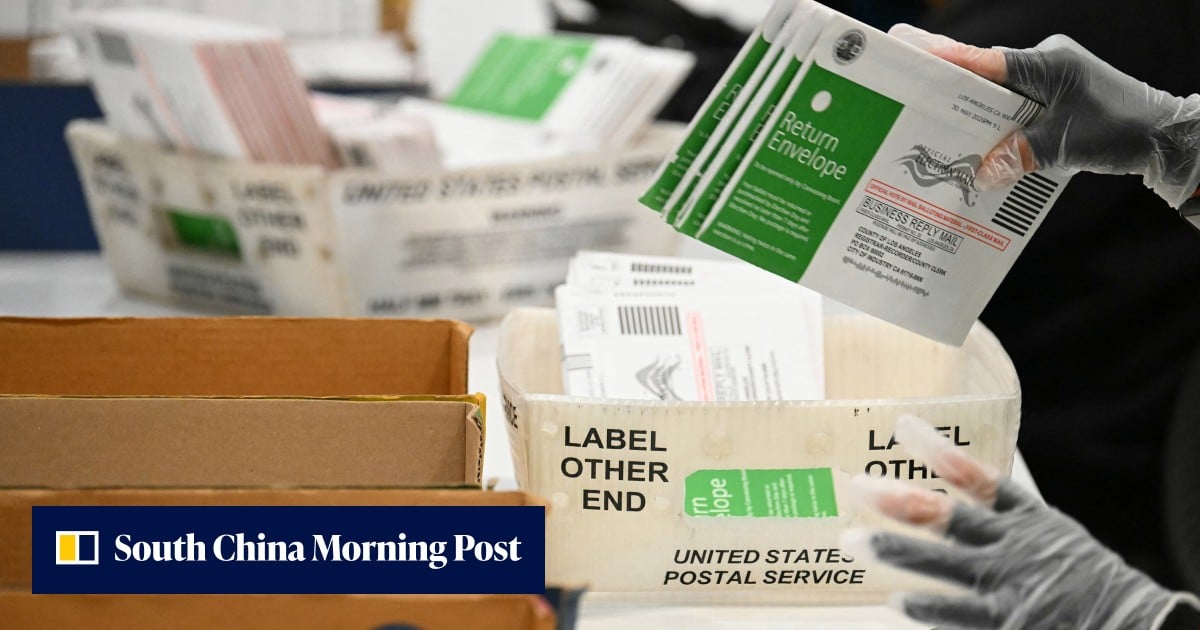
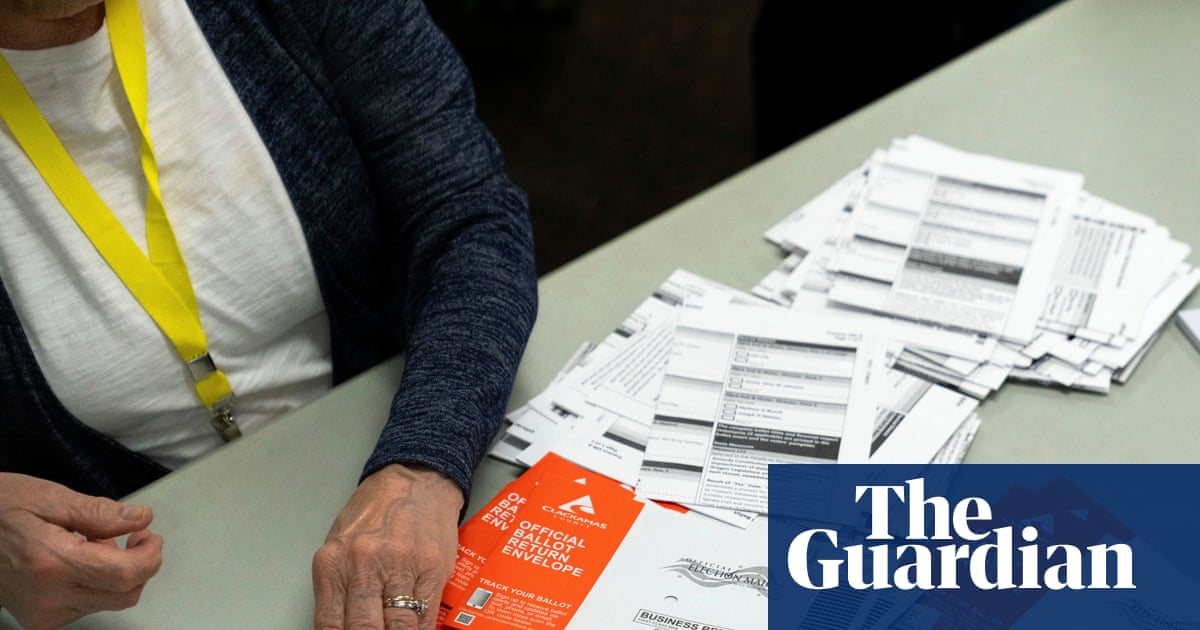
Voting by post works by sending ballots to the homes of registered voters, who then mail them back before a deadline. asserted
who → work → deadline
Eight states, several of them Democratic-leaning – California, Colorado, Hawaii, Nevada, Oregon, Utah, Vermont and Washington – as well as the District of Columbia, allow all elections to be conducted entirely by mail. asserted
elections → lean → mail
Others only allow smaller elections to be conducted by mail. asserted
elections → allow → mail
Although there are cases of forgery or repeat voting, they are rare and amount to just four in 10 million mailed votes, according to the Brookings Institution. uncertain
they → be → Institution
What has Trump said about the mail-in votes? asserted
Trump → say → votes
Trump falsely blamed his 2020 presidential election loss on mail-in voting fraud. asserted
Trump → blame → fraud
He and his supporters also opposed changes made during the COVID pandemic to expand mail-in voting. asserted
He → oppose → voting
During the 2020 Republican National Convention, Trump called mail-in voting changes “the greatest scam in the history of politics”. asserted
Trump → call → politics
His attempt to push the SAVE America Act, which calls for sweeping voting laws, has stalled in the US Senate. asserted
which → push → Senate
The bill, passed in the House of Representatives in February, faces opposition over concerns that millions of voters will be disenfranchised. asserted
millions → pass → voters
How did Trump target mail-in votes? asserted
Trump → target → votes
In March 2026, Trump signed an executive order directing the US Postal Service to take control of mail voting by designing new envelopes with special barcodes that would allow the federal government to ensure ballots are only from eligible voters. asserted
ballots → sign → voters
For the midterms, that move would force all states to adopt a uniform envelope style in a short time. asserted
move → force → time
The order also required states to provide the US Postal Service with a list of eligible voters ahead of elections. asserted
order → require → elections
Several government departments, including Homeland Security and US Citizenship and Immigration Services, would also have the voters’ lists. asserted
departments → include → lists
The postal agency was additionally empowered to deny mailed ballots if they did not comply with new standards or were not associated with registered voters on the states’ lists. asserted
they → empower → lists
What happened to the order? asserted
What → happen → order
Democrats and activists challenged the order in several courts, resulting in a series of back-and-forth rulings between May and August. uncertain
Democrats → challenge → May
US District Judge Indira Talwani imposed an injunction against the rule in June on the basis that it likely violated the US Constitution. asserted
it → impose → Constitution
Talwani also noted in her injunction that Trump’s executive order would be impossible to apply when the midterms were already so close. asserted
midterms → note → injunction
But her ruling was overturned by the conservative-majority Supreme Court in late August in a temporary judgement. asserted
ruling → overturn → judgement
The Supreme Court had not decided at the time whether Trump’s move was constitutionally legal. asserted
move → decide → time
Rather, it only sided with the Trump administration on procedural grounds after the administration argued that Democrats sued too soon. asserted
Democrats → side → grounds
What does the latest judgement mean? asserted
judgement → mean → What
In the latest and final decision, the Supreme Court refused to lift Judge Talwani’s injunction. asserted
Court → refuse → injunction
In a brief written order that did not go into detail, the court noted that the administration was likely to fail in its push to restrict mail-in votes ahead of the midterms. asserted
administration → write → midterms
Justice Brett Kavanaugh, who was appointed by Trump, voted with the majority against the administration, though he indicated he could support the policy at a later stage. uncertain
he → appoint → stage
Two judges, Samuel Alito and Clarence Thomas, dissented. asserted
judges → dissent → ?
Critics have long warned that restricting mail-in ballots could disenfranchise some voters who typically rely on this method. uncertain
who → warn → method
It could also disrupt the delivery of mailed votes, as some states, including Alabama, North Carolina and Wisconsin, have begun sending in midterm ballots. uncertain
states → disrupt → ballots

💬 Give feedback
🕘 History 🎫 Support