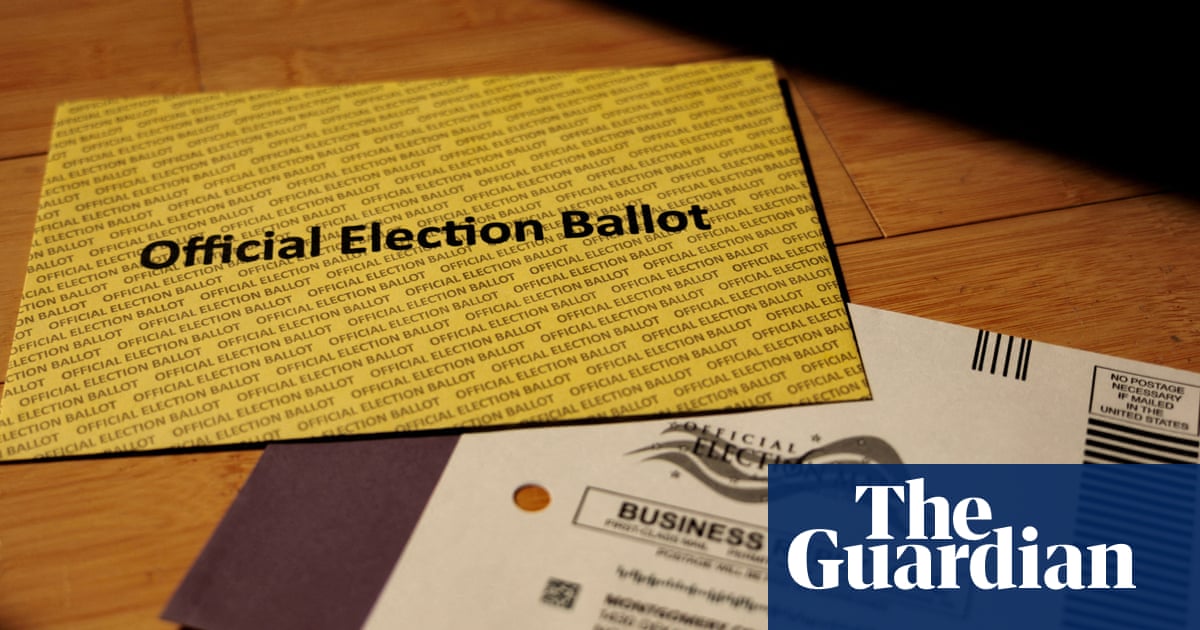
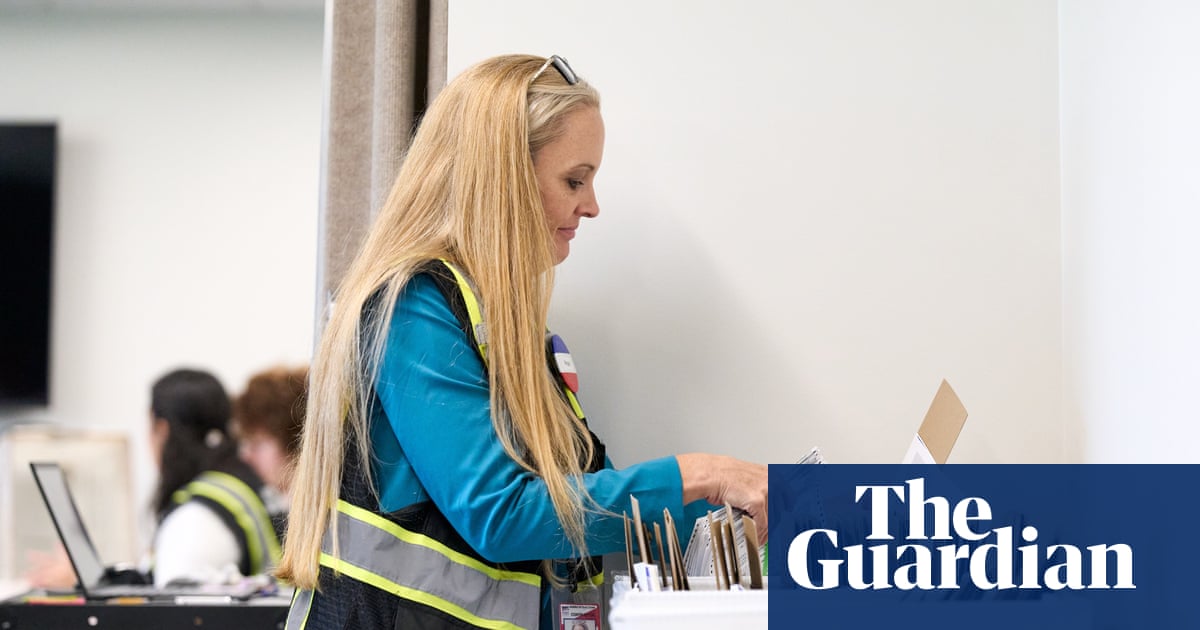
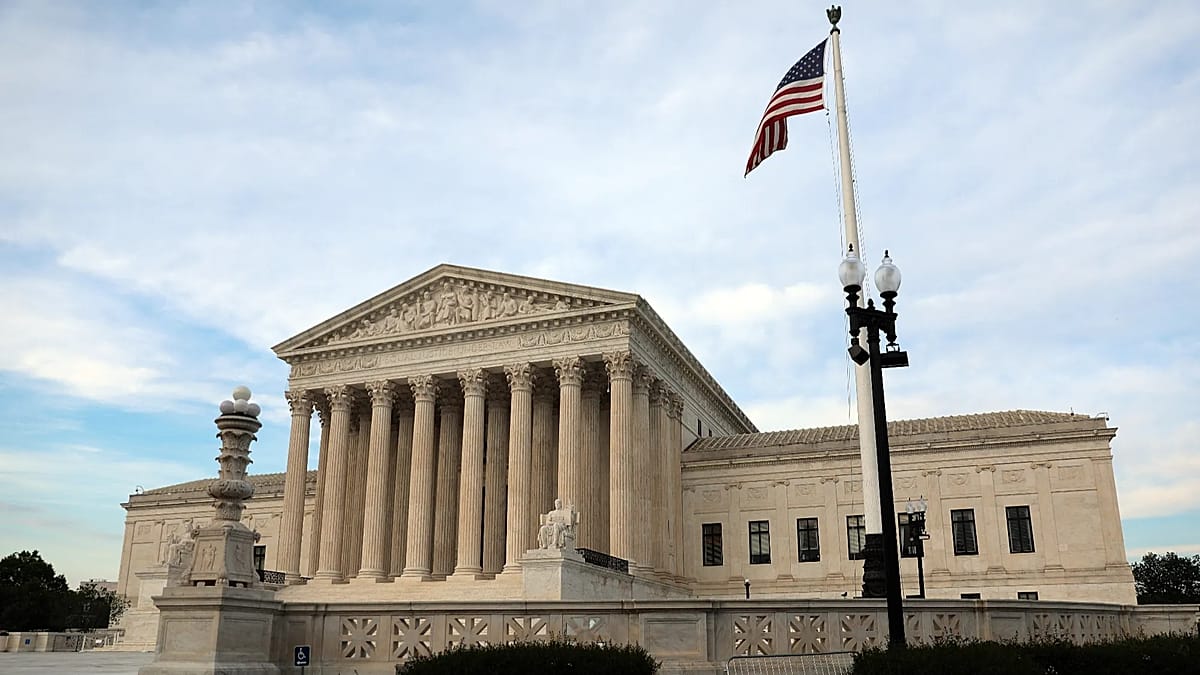
The U.S. Supreme Court refused a request by President Trump's Justice Department to allow the U.S. Postal Service to enforce new rules restricting mail-in ballots before November’s midterm elections, dealing a blow to efforts to limit voting by mail. The court rejected the move without comment, except for dissenting opinions from Justices Alito and Thomas, who criticized some of the legal challenges as unlikely to succeed. This decision affects all 50 states where mail-in voting is permitted in some form, with eight conducting elections entirely through this method. Critics argue that implementing these new rules so close to election day would disrupt ballot delivery processes and cause chaos, particularly since many states plan to send out ballots early for the November vote.
Written by the local model on 2026-09-16,
using this article's own text rather than the other coverage of the
same event (that is the story summary below).
U.S. Supreme Court rejects Trump's bid to restrict mail-in ballots ahead of November midterms
8 states conduct elections entirely by mail, while all 50 allow it in some form
The U.S. Supreme Court declined on Monday to let the U.S. Postal Service enforce a rule targeting mail-in ballots, dealing a setback to U.S. President Donald Trump's effort to restrict voting by mail ahead of November's midterm elections that will determine control of Congress.
asserted
that → reject → Congress
The justices denied the Justice Department's request to lift a ruling by U.S. District Judge Indira Talwani in Boston that blocked the U.S. Postal Service from enforcing the measure while legal challenges by states and voting-rights groups proceed.
asserted
challenges → deny → states
The agency adopted the measure after Trump issued a March executive order aimed at tightening rules governing mail voting.
asserted
Trump → adopt → voting
"The government is unlikely to succeed on the merits of its challenge to the District Court's preliminary injunction," the court said in its brief, one-paragraph order.
asserted
court → succeed → order
Justice Samuel Alito, joined by fellow conservative Justice Clarence Thomas, dissented from Monday's decision, comparing some of the challengers' claims to a "Hail Mary pass" that is "unlikely to be successfully completed," using a football analogy.
uncertain
that → join → analogy
"The Postal Service has broad authority to regulate the mail," Alito added.
asserted
Alito → have → mail
No other justice dissented publicly.
asserted
justice → dissent → ?
The court has a 6-3 conservative majority.
asserted
court → have → majority
Railing against the ruling on social media early on Tuesday, Trump took note of the fact that the two justices who dissented were already on the bench when he began his first term as president.
asserted
he → rail → president
Referring to the justices he subsequently nominated — Neil Gorsuch, Brett Kavanaugh and Amy Coney Barrett — Trump wrote, "These are not the people I interviewed to serve on the United States Supreme Court, they are merely a shell of their original selves."
Mail-in restrictions would likely benefit Republicans
Trump's fellow Republicans are locked in a tight battle to retain control of Congress in the midterms. Restricting mail-in ballots would stand to benefit Republicans, given that Democratic voters disproportionately use mail-in ballots, according to various surveys.
uncertain
voters → refer → surveys
Under the new rule, states must provide lists of mail ballot recipients to the Postal Service and use agency-approved outgoing and return ballot envelopes outfitted with unique barcodes.
asserted
states → provide → barcodes
The Postal Service could then refuse to send out ballots that do not comply with the new standards or are associated with voters who do not appear on the lists.
uncertain
who → refuse → lists
Critics have said the plan could disrupt the delivery of thousands of legitimate ballots as the November 3 midterm vote approaches and cause chaos, given imminent plans by many states to send out mail ballots to eligible voters.
uncertain
vote → say → voters
Talwani imposed an injunction on Sept. 4 blocking the rule, finding that it likely violated the U.S. Constitution, under which states administer elections.
asserted
states → impose → elections
Talwani also said it would be impossible for the states to comply given the rapidly approaching midterms.
asserted
states → say → midterms
Another federal judge, U.S. District Judge Carl Nichols in Washington, D.C., also ruled against the new rule on Sunday.
asserted
judge → rule → Sunday
'Testing the limits' of power
Sophia Lin Lakin, voting rights project director at the American Civil Liberties Union, which helped to represent some of the challengers to the USPS rule, welcomed Monday's decision.
asserted
which → test → decision
"This administration keeps testing the limits of its power, as if the rules governing our elections are merely suggestions to ignore when they don't suit the president's agenda. But the Constitution gives states and Congress the power to set the rules for federal elections — not the president, and not the Postal Service," she said.
asserted
she → test → elections
"Today is a good day for democracy, the rule of law and the American people looking to exercise their constitutional right to vote," said California Gov. Gavin Newsom, whose state led one of the lawsuits against the rule.
asserted
state → look → rule
"Trump's attacks on democracy these last 20 months have been nothing short of un-American."
Trump himself often votes by mail
Trump signed his executive order targeting mail-in ballots after years of casting doubt on their security, though he often votes by mail himself.
asserted
he → vote → mail
Trump has made false claims of widespread fraud in U.S. elections, including claims that fraud contributed to his 2020 loss to former Democratic president Joe Biden.
uncertain
fraud → make → Biden
The administration, in a Sept. 6 emergency request, urged the Supreme Court to allow it to implement an "important federal policy to protect the mails from being used to commit voter fraud."
asserted
it → urge → fraud
The 1st U.S. Circuit Court of Appeals in Boston refused last Thursday to put Talwani's order on hold.
asserted
Court → refuse → hold
The 1st Circuit said that the rule "will likely result in the disenfranchisement of millions of voters across the country while providing minimal — if any — gains in combating voter fraud."
asserted
rule → say → fraud
Nichols granted a request from the Democratic Party and groups including the NAACP for a preliminary injunction blocking the rule.
asserted
Nichols → grant → rule
Nichols wrote that the rule could make it harder for some people to vote by mail and that it exceeded the Postal Service's authority.
uncertain
it → write → authority
"No statute grants the Postal Service the power to issue key parts of the rule," Nichols wrote.
asserted
Nichols → grant → rule
All 50 states allow for some form of mail-in voting.
asserted
states → allow → voting
Of those, 29 states allow voters to request mail ballots without providing a reason, and eight conduct their elections entirely by mail.
asserted
eight → allow → mail
The battle over mail ballots is one in a series of efforts by the administration to boost federal involvement in voting ahead of the midterms.
asserted
battle → boost → midterms
On Aug. 24, the Supreme Court lifted an earlier injunction imposed by Talwani in June blocking Trump's executive order, including the USPS rule before it had been finalized.
asserted
it → lift → rule
 The Aporia