OTTAWA - American diplomat Baxter Hunt recalls showing up to work at the U.S. Embassy in Ottawa the morning after the 9/11 terrorist attacks and finding “a mountain of flowers” outside the building.
asserted
Hunt → recall → building
“It was just a day that none of us will ever forget,” said Hunt, now the U.S. consul general in Toronto.
asserted
Hunt → forget → Toronto
“What also stuck with me was the outpouring of support that we got from Canadians.”
asserted
we → stick → Canadians
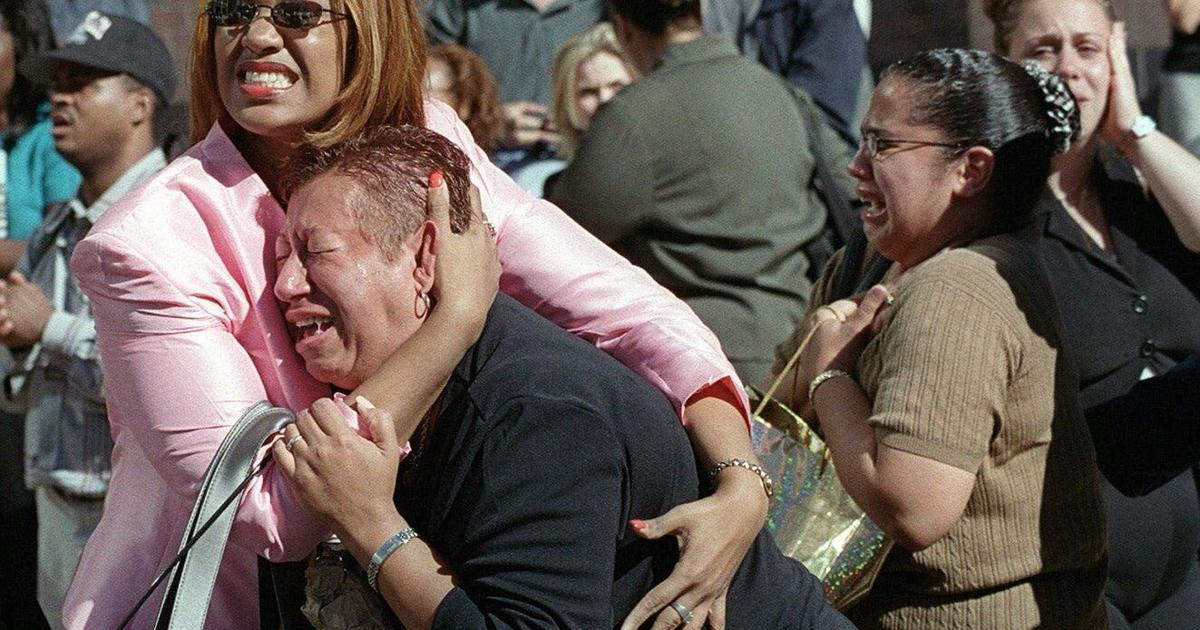
This Friday marks 25 years since nearly 3,000 people in the U.S. were killed when al-Qaeda hijackers slammed planes into the World Trade Center in New York and crashed into the Pentagon and a Pennsylvania field.
asserted
hijackers → mark → Pentagon
In the days that followed, Hunt witnessed many more displays of Canadian compassion and support for a grieving nation.
asserted
Hunt → follow → nation
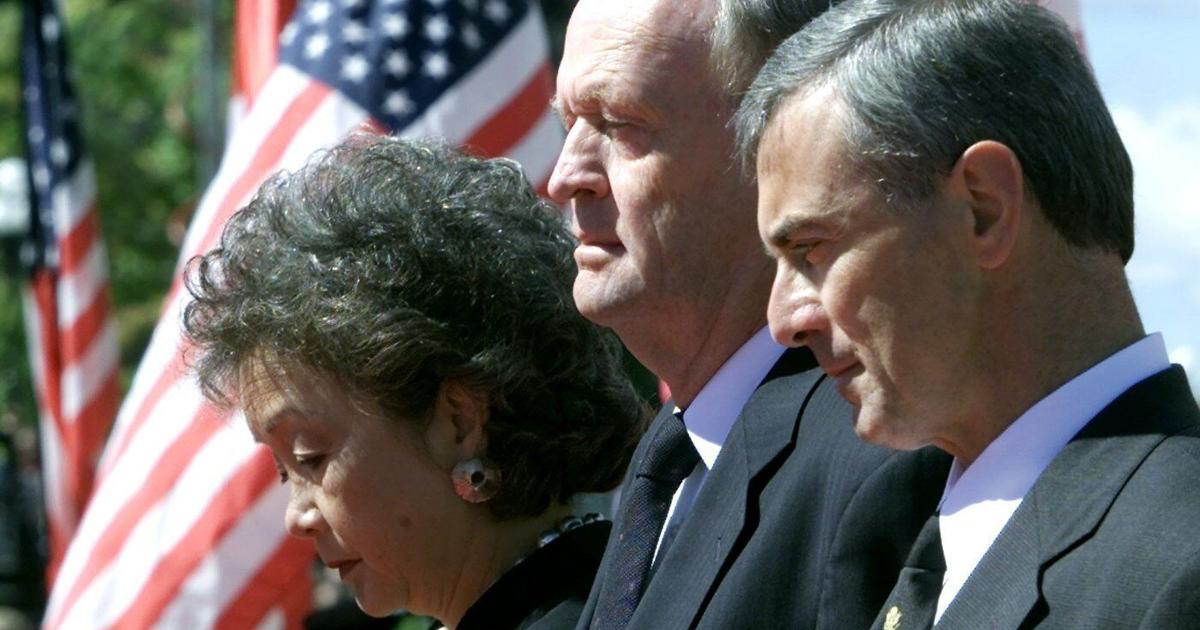
Three days after the attack, 80,000 people crowded Parliament Hill for a national day of mourning, according to an RCMP estimate reported by The Canadian Press that week.
uncertain
people → crowd → Press
’‘By their outpouring of concern, sympathy and help, the feelings and actions of Canadians have been clear,” then-prime minister Jean Chrétien told the crowd.
asserted
Chrétien → tell → crowd
‘And even as we grieve our own losses, the message they send to the American people is equally clear.
asserted
they → grieve → people
Similar moments of silence took place at provincial legislatures and even in the heart of Canada’s financial sector on Bay Street.
asserted
moments → take → Street
On the day of the attacks, the Newfoundland community of Gander famously took in 38 passenger planes carrying more than 6,500 travellers after officials closed U.S. airspace.
asserted
officials → take → airspace
“Just an incredible showing of compassion by those people for complete strangers, who needed them at that time,” Hunt said.
asserted
Hunt → need → time
“There were also many, many stranded passengers who went to other locations around Canada, about 33,000, I understand.”
asserted
I → be → Canada
Hunt was quick to mention the 24 Canadians who were killed in the attacks alongside other non-Americans.
asserted
who → mention → Americans
He was 38 and working as the embassy’s political-military officer on Sept. 11, 2001.
asserted
He → work → Sept.
American diplomats “naturally came together” with Canadian law enforcement and military officials to identify threats, he said.
asserted
he → come → threats
“No one knew initially exactly what else might happen.
uncertain
what → know → ?
And we wanted to make sure we weren’t vulnerable to other attacks,” Hunt said.
asserted
Hunt → want → attacks
“The response of Canadians at a time when we most needed it was incredible.”
asserted
we → need → it
Both countries standardized airport security.
asserted
countries → standardize → security
Allies took up air patrols around the U.S.
asserted
Allies → take → U.S.
The NATO military alliance invoked its collective security clause for the first time, sending Canadians and allied troops to fight the Taliban in Afghanistan.
asserted
alliance → invoke → Afghanistan
That war lasted for more than a dozen years and 165 Canadians — 158 soldiers and 7 civilians — died in the conflict.
asserted
Canadians → last → conflict
“It was an event that was a shift in how we perceived threats around the world, and something that happened in the homeland, which we really hadn’t seen before,” Hunt said.
asserted
Hunt → perceive → which
“It was something that just reinforced the need for us to work together.”
asserted
us → reinforce → need
Hunt spoke to The Canadian Press shortly before trade talks in Washington collapsed.
asserted
talks → speak → Washington
Prime Minister Mark Carney accused the U.S. of launching an economic “war” on its erstwhile ally and U.S. President Donald Trump moved to rename Lake Ontario as “Lake America.”
asserted
Trump → accuse → America
It’s getting harder to believe that the president is a symptom rather than the cause of what’s gone off the rails in the U.S., Susan Delacourt writes.
asserted
Delacourt → get → U.S.
It’s getting harder to believe that the president is a symptom rather than the cause of what’s gone off the rails in the U.S., Susan Delacourt writes.
asserted
Delacourt → get → U.S.
Hunt said the legacy of 9/11 is seen in the depth of the relationships between Canadians and Americans throughout the ups and downs in the bilateral relationship.
asserted
legacy → say → relationship
“That is something that we saw big time after the 9/11 attacks.
asserted
we → see → attacks
People just feeling like these are our friends and neighbours, and it is like an extended North American family.
asserted
it → feel → family
And that really came through.
asserted
that → come → ?
And that’s something that I believe is still very strong today,” he said.
asserted
he → ’ → ?
“It’s great to remember that as we approach the 25th anniversary, and be grateful that we have that close, close relationship.”
asserted
we → ’ → relationship
The Toronto consulate is holding events this month to commemorate the anniversary.
asserted
consulate → hold → anniversary
They include an ongoing exhibition at a Toronto arts centre of pen and ink drawings by Toronto-based artist John Coburn, who was in New York after the attacks.
asserted
who → include → attacks
Hunt said the exhibit includes interactive events with local college students, many of whom were born after the attacks.
asserted
many → say → attacks
On the Friday anniversary, the consulate will hold an event at the same art centre bringing together first responders and government officials to honour the victims.
asserted
consulate → hold → victims
That event will feature Maureen Basnicki, whose husband Ken was killed at the World Trade Center.
asserted
husband → feature → Center
Hunt will open the Toronto Stock Exchange that day to commemorate the city’s connections with New York.
asserted
Hunt → open → York
…and 2 more, not listed.
 The Aporia