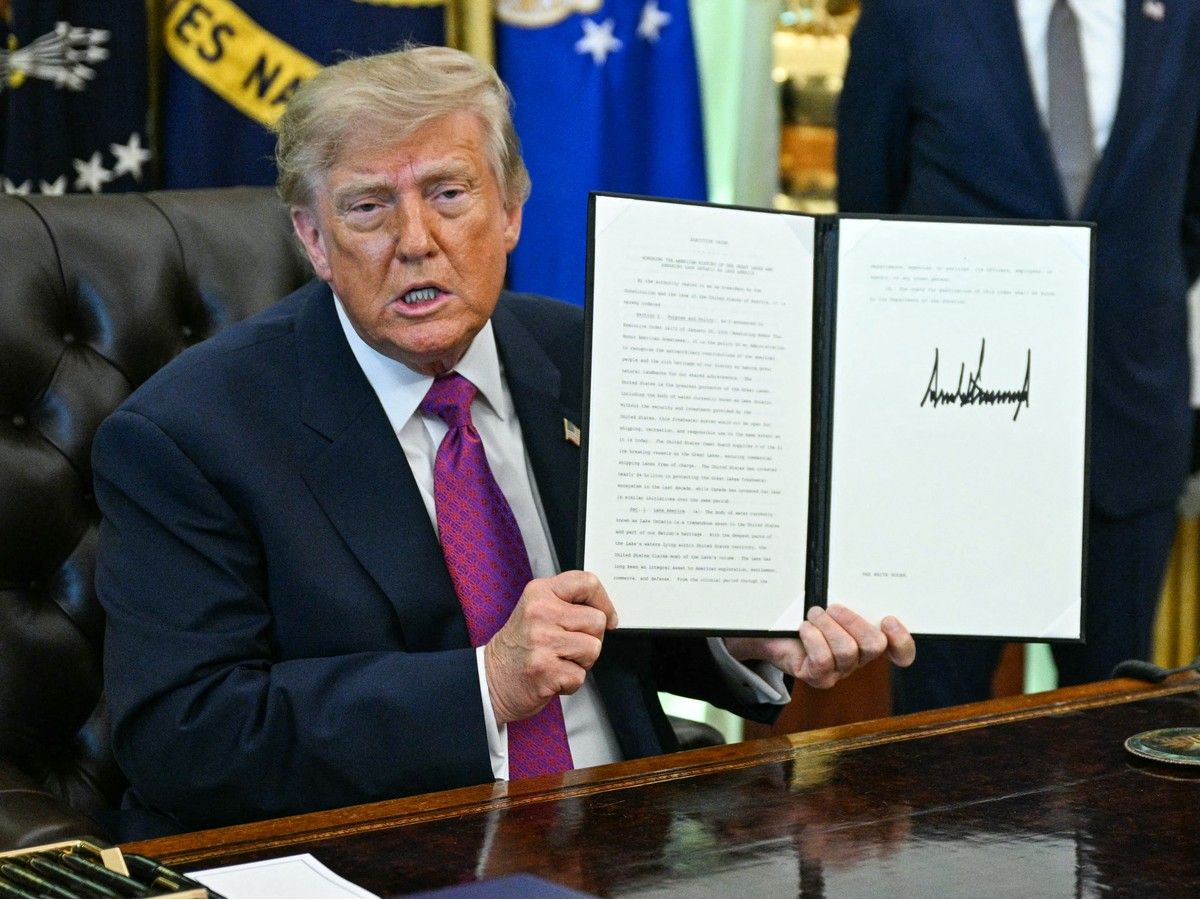
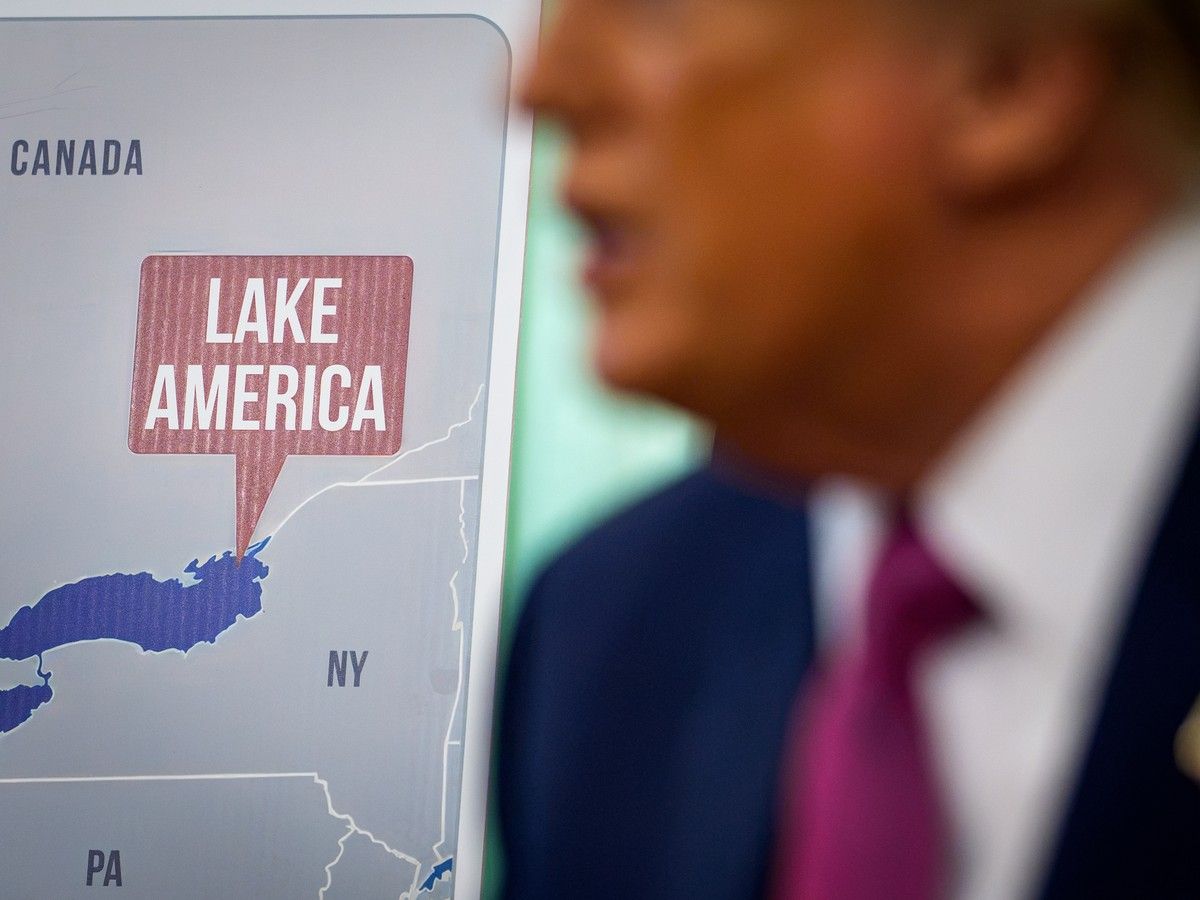
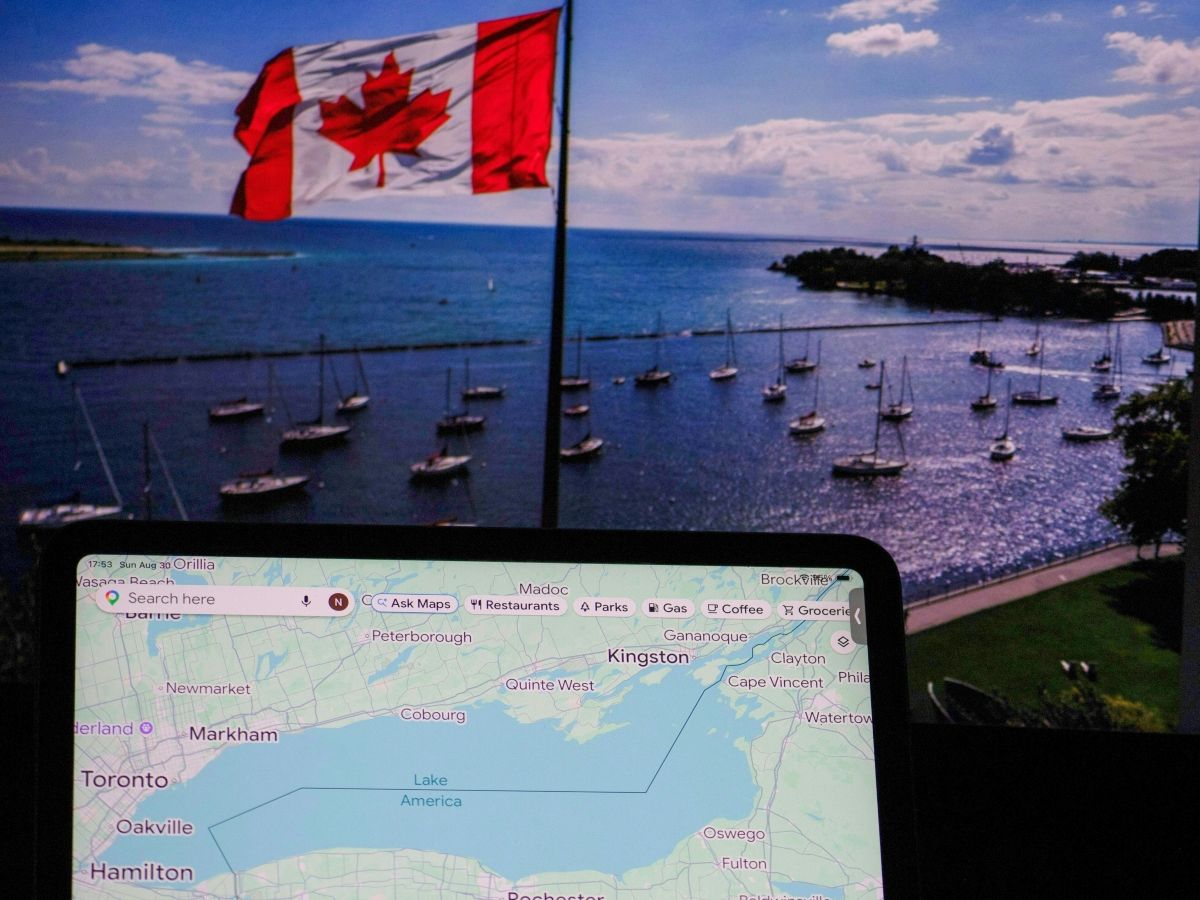
As most Canadians are aware, Donald Trump signed an executive order renaming Lake Ontario “Lake America,” the latest in his meme obsessed attempts to wage psychological war on Canadians.
asserted
Trump → sign → Canadians
The move elicited a range of reactions across Canada, from defiance to bewilderment to laughter at the move.
asserted
move → elicit → move
Many conservatives correctly pointed out, to all the people outraged at Trump’s move, that renaming objects and places for political ends was not unfamiliar to Canada.
asserted
renaming → point → Canada
Canadian progressives have spent the better part of a decade doing just that, think of the Langevin Block that became the Office of the Prime Minister, the now Toronto Metropolitan (formerly Ryerson) University, Sankofa square in Toronto (formerly Dundas), the Kichi Zībī Mīkan (formerly the Sir John A. Macdonald Parkway in Ottawa), and the list could go on.
uncertain
list → spend → Ottawa
Many conservatives, myself included, opposed these various name changes to serve ideological ends, and oppose the President’s latest troll as well.
asserted
myself → include → troll
But this reaction from some conservatives, must not lead into a misplaced national self-loathing.
asserted
reaction → lead → loathing
A small slice of the Canadian right, the part that has spent a year and a half insisting Trump is not really a threat or wrong in his insults, have revelled in Trump’s mockery of our country with an implicIt “we deserve it” attitude.
asserted
we → spend → attitude
Canada is a woke, weak, poor and pathetic country in the minds of some of these people that deserve what its getting.
asserted
its → deserve → what
The late conservative philosopher Roger Scruton decades ago coined a useful word for this.
asserted
philosopher → coin → this
But at the time, he was describing a habit prevalent amongst left wing intellectuals, not the right.
asserted
he → describe → intellectuals
The term is “oikophobia” which means “hatred of home.”
asserted
which → mean → home
In hisbook England and the Need for Nations, Scruton wrote:
“the seeming loss of national loyalty is a feature of our political élites … (who) have repudiated the national idea …
asserted
who → write → idea
No adequate word exists for this attitude, though its symptoms are instantly recognised: namely, the disposition, in any conflict, to side with ‘them’ against ‘us,’ and the felt need to denigrate the customs, culture and institutions that are identifiably ‘ours.’
asserted
that → exist → customs
Being the opposite of xenophobia I propose to call this state of mind oikophobia, by which I mean (stretching the Greek a little) the repudiation of inheritance and home.
asserted
I → propose → inheritance
Oikophobia is a stage through which the adolescent mind normally passes.
asserted
mind → pass → which
But it is a stage in which some people — intellectuals especially — tend to become arrested.
asserted
people → tend → which
As George Orwell pointed out, intellectuals on the Left are especially prone to it, and this has often made them willing agents of foreign powers.
asserted
them → point → powers
Scruton was writing about the contempt with which Britain’s left wing intellectuals had come to treat their own country, but the description of “the disposition, in any conflict, to side with ‘them’ against ‘us’” feels especially apt to describe this now latent right wing form of oikophobia.
asserted
description → write → oikophobia
Conservatives have been quoting that passage for decades, and it does capture the impulse behind toppling of statues, renouncing of national history and renaming anything that associates us with our history.
asserted
that → quote → history
So it is a genuine sad state of affairs that that last line quoting Orwell about this impulse to side with foreign powers now describes a small subset of conservatives in 2026.
asserted
line → quote → 2026
You can think this country has serious problems, that the last decade has been a lost one for younger Canadians, that Ottawa is dysfunctional, and that Carney’s government has mismanaged the relationship with Washington, and still want the place fixed precisely because you love your country and not the opposite.
asserted
you → think → country
Criticism of the government of the day or present state of affairs is not oikophobia, and the danger in times like the moment we are living in right now where passions are high is to create a binary where unless you are blindly uncritical of the government you are disloyal.
asserted
you → live → government
This is wrong, but conservatives must guard against the impulse to go further and sink into a national form of self-loathing that leads you to siding with a foreign president insulting and demeaning our country.
asserted
that → guard → country
They seem to think that somehow Prime Minister Mark Carney, because he responded to Trump’s tariffs with our own tariffs is responsible for starting this trade war.
asserted
he → seem → war
They argue that because the Liberals have spent the last while blocking Canada’s resource sector, pushing jobs and investment out of the country, and underinvesting in our military that Trump is right to mock, insult and attack us.
asserted
Trump → argue → us
But it goes deeper.
asserted
it → go → ?
For some of these people, they seem to positively delight in the treatment.
asserted
they → seem → treatment
The dumb things Trump and his sycophants say, especially on social media, should not ultimately concern us.
asserted
Trump → say → us
It’s designed to incite a reaction.
asserted
It → design → reaction
Last week Pete Hegseth, the U.S. Secretary of War, posted a picture of two young Canadian army cadets because of their weight, just saying “this is real.”
asserted
this → post → weight
The subtext was obvious and fits the now established anti-Canadian sentiment in MAGA land that views Canada as some sort of woke hellhole worthy of mockery.
asserted
that → fit → mockery
Hegseth was widely condemned but there was a subset of conservatives who delighted in seeing this mockery and cheering it on.
asserted
who → condemn → it
These people share the view that Canada is a country deserving of mockery.
asserted
Canada → share → mockery
In a way, it’s a bizarre example of horseshoe theory.
asserted
it → ’ → theory
The moralistic progressive who loathes Canada and its history, and cheers on renaming places and toppling statues, doesn’t, at first glance, have much in common with these right wing Canadian Trump fans, but what they do share is oikophobia.
asserted
share → loathe → what
They both see this country as a shameful embarrassment, and end up siding with “them,” against “us” as Scruton put it.
asserted
Scruton → see → it
The opposite of oikophobia for Scruton, is oikophilia, which means “love of home,” and for him this was the foundational basis of conservatism that comes prior to any partisan or policy beliefs.
asserted
that → mean → beliefs
More than anything else, conservatism is about the protection of the places, communities and particular things that ground us and give meaning and purpose to our lives, from our families to our countries.
asserted
that → grind → countries
This impulse should endure regardless of whether you agree with the particular policies of a government.
asserted
you → endure → government
It doesn’t mean you can’t or shouldn’t criticize things when they go wrong or lament their decline, but it should never turn into a rejection of our homes.
asserted
it → mean → homes
…and 3 more, not listed.
 The Aporia