Donald Trump is shamelessly trolling and manipulating Canadians, according to a bevy of experts who suggest a variety of strategies we can adopt in response.
uncertain
we → troll → response
“On the one hand, giving the trolling air time plays into Trump’s time-tax, the distraction of it all, taking one of our most precious resources: attention,” said Vass Bednar, managing director of the Canadian Shield Institute, a public policy think tank, said of a recent Trump social media post which portrayed Canada as part of the U.S.
“On the other hand, his immature aggression is a reminder that we are not dealing with a typical or predictable administration and need to act accordingly,” she said in an email to National Post.
asserted
she → give → Post
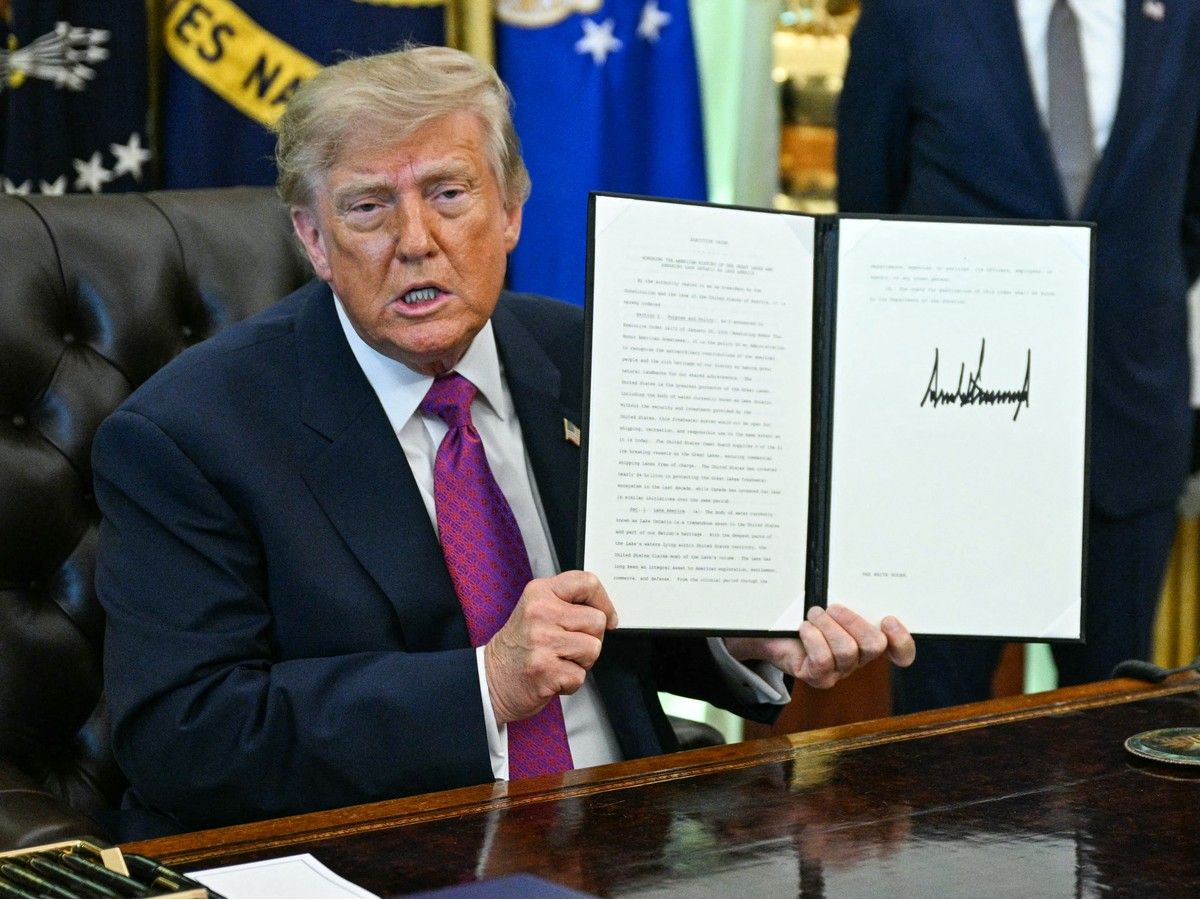
The Truth Social post made by Trump over the Labour Day weekend showed all of North America, Greenland, Iceland and the Caribbean illustrated with the U.S. Stars and Stripes.
asserted
post → make → Stars
It harkened to Trump’s rhetoric about Canada as the 51st state and his talk about a strategic need for the U.S. to take over Greenland.
asserted
U.S. → harken → Greenland
Peter Jones, University of Ottawa professor at the Graduate School of Public and International Affairs, told the Post that “it’s very difficult to know if (Trump is) just having his version of fun, or if there’s a rationale behind it, and that’s the problem.”
asserted
that → tell → it
He points out that when Trump first began referring to Canada as the 51st state, “many dismissed it as a sick joke.
asserted
many → point → joke
Certainly, Greenland and Denmark (and much of the EU) don’t dismiss his threats against that territory as a joke.
asserted
Greenland → dismiss → joke
They believe he is ready to move against them.”
asserted
he → believe → them
He suggests going back to Trump’s second inaugural address, when he laid out “a vision of America as a country which is still expanding, still planting its flag over new territories.
uncertain
which → go → territories
Many felt it was rhetoric, but it now seems he may have meant it.”
uncertain
he → feel → it
He notes Trump’s explicit mention of aiming to “take over through economic coercion, not military means.
asserted
He → note → coercion
I think we have to be prepared to take him at his word that this is what he really believes.”
asserted
he → think → what
As someone who grew up in Philadelphia, Carlo Dade, director of International Policy at the University of Calgary told National Post that Trump’s trolling reminds him of schoolyard tactics he grew up with.
asserted
he → grow → tactics
And, he says, it’s “a standard tactic in the business community … used enough to be immediately recognizable and generate an eye roll.”
asserted
it → say → roll
It done to “throw your opponent off, get under their skin, distract attention, occupy the public discourse.
asserted
It → do → discourse
If folks are talking about this, they’re talking about an agenda you’ve set, not something else.
asserted
you → talk → agenda
It’s a public negotiation tactic.
asserted
It → ’ → ?
However, Dade notes, “the twist with Trump is that through executive authority he can make good on some of his taunts, he can disrupt markets, etc.”
asserted
he → note → etc
Therefore, Dade advises, “the trick is to balance not encouraging him against not being dismissive.”
asserted
trick → advise → him
And that means not making any public comments, while privately preparing for the worst case.
asserted
that → mean → case
He says the best example of this may be Alberta Premier Danielle Smith dealing with this during her first Mar al Lago visit.
uncertain
Smith → say → visit
“When Trump brought up 51st state, her reported response was ‘Ha, ha, very funny, now about oil’.”
asserted
response → bring → oil
Brian Rathbun, professor of international relations and political science at the University of Toronto’s Munk School of Global Affairs and Public Policy, says: “Trump and strategy never belong in the same sentence.
asserted
Trump → say → sentence
This strikes me as the kind of trolling he likes to do as a kind of self-soothing when he is not really in control of a situation.”
asserted
he → strike → situation
Still, he told the Post that a U.S. president “who resorts to petty things like this is obviously a matter of concern for Canada because it shows his erratic and arbitrary character.
asserted
it → tell → character
And yet the retaliation to our retaliation announced today by the administration was pretty mild, so one could read this as the expression of a kind of frustration.”
uncertain
one → announce → frustration
Ann Fitz-Gerald, director of the Balsile School of International Affairs, emphasized the need to stay the course with civility.
asserted
Gerald → emphasize → civility
She told National Post in an email that diplomatic practice among allies depends on restraint and mutual respect for each other’s sovereignty.
asserted
practice → tell → sovereignty
So, when an American president “depicts an ally as American territory and publicly belittles its elected leader, those norms are weakened.
asserted
norms → depict → leader
The danger is that allies begin to conclude that they must protect themselves against this degree of unpredictability, and of course, persistent unpredictability eventually becomes an erosion of trust.
asserted
unpredictability → begin → trust
Without trust, even agreements reached between close allies become more difficult to negotiate and execute.”
asserted
agreements → reach → allies
Fitz-Gerald also pointed to Trump habitually using “sensationalized and combative political communication to mobilize political support.”
asserted
Trump → point → support
As a result, she says “what we are seeing now increasingly resembles a pep rally, or an effort to create a sense of confrontation and to rally the troops.”
asserted
seeing → say → troops
However, Fitz-Gerald cautions against identifying administration rhetoric with “the American people with whom we have generations of ties and friendships.”
asserted
we → caution → ties
She also advocates for a strategic reason not to respond in kind.
asserted
She → advocate → kind
“While a larger power can choose the tone of a confrontation, we as the smaller power don’t have to allow it to set our emotional tempo.
asserted
it → choose → tempo
We should not allow petty insults or uncivil behaviour to make us become something we are not.
asserted
we → allow → ?
An angry Canadian response simply makes it easier to construct a narrative of a hostile Canada that can then be used to justify harder measures against us.
asserted
that → make → us
Instead, she suggests Canada’s strongest response to Trump is confidence and restraint.
uncertain
response → suggest → Trump
 The Aporia