Terry Newman: Carney’s ‘war’ is good for political incumbents, but bad for Canadians

National Post · collected 2026-09-09 · by Terry Newman analysis
Read the original at National Post ↗

Summary

Finance Minister Bill Morneau's successor, Chrystia Freeland's replacement, and current Finance Minister is being referred to here but not directly quoted or named in the article as making any statements about Carney. The key numbers mentioned are 25% (tariff rate before change) and 35% (new tariff rate after Trump's executive order). This article takes an opinionated tone, with author Terry Newman arguing that Canadian Finance Minister Bill Morneau's successor Chrystia Freeland's replacement, the current finance minister, has engaged in a "war" with the US, which benefits political incumbents but harms Canadians.
Written by the local model on 2026-09-09, using this article's own text rather than the other coverage of the same event (that is the story summary below).

Signals How these are calculated →

Claims extracted
78
claim-shaped sentences
Uncertain
14%
11 of 78 hedged
Leaning
withheld
no quote in the article backed the model's score
Publisher trust
95.7
red-flag proxy, not a credibility rating
Outlets on this story
56
Politics
Narrative spread
1
articles carrying this framing
Analyzed 2026-09-09 · how these are computed

AI analysis (generated at analysis time, not now)

Story summary

The United States and Canada have been engaged in a trade war for several months. On Tuesday, Canadian retaliatory tariffs came into effect**, targeting U.S. goods worth $27.6 billion, with duties ranging from 15 to 50%. The move was in response to the Trump administration's imposition of tariffs on Canadian goods worth nearly $28 billion under Section 338 of the Tariff Act of 1930.

In response, the U.S. President Donald Trump banned the import of various Canadian products, including alcohol, motorcycles, and dairy products, starting from September 29. The ban also includes 50% tariffs on a series of other products, such as paper and wood products, aluminum products, furniture, and mattresses.

The trade war has led to a decline in tourism between the two countries, with Canadians choosing to avoid traveling to the U.S. due to the tensions. As one marketing executive based in Vancouver said, "It's such a big ask right now... It's just a wasted effort."

Canada's Prime Minister Mark Carney has defended the country's decision to retaliate against the Trump administration's tariffs, saying that Ottawa will not back down and warning of tough times ahead for Canadians. A recent poll found that 80% of respondents support or somewhat support dollar-for-dollar countertariffs.

The trade war between the U.S. and Canada is an escalation of tensions that began last month when trade talks collapsed. The dispute has led to economic pain on both sides, with Canadian businesses affected by the tariffs and American tourism organizations trying to woo Canadians back to visit the United States.

Written for “US Canada Trade War Escalation” on 2026-09-09, grounded in this article and the 55 other(s) covering the same event.
Why this leaning score
The model judged this article politically coded and scored it -0.35, but every quote it verified points right, so the score is not published.
Written under an earlier scoring contract, which gave a paragraph rather than checkable quotes. Re-analysing this article replaces it.
Leaning score withheld for article 7274: score contradicts its own evidence · logged 2026-09-09

Story

📰 US Canada Trade War Escalation
Politics · 56 article(s) covering the same event.

How this is being covered How these are calculated →

Article leaning vs. publisher reliability
Source leaning vs. consistency

Compared with similar articles

This article reads unscored and hedges 14% of its claims. Each row says how that neighbour differs.
National Post
⚖️ leaning not scored 🔴 17% hedged 10 of 58 📰 publisher trust 96
“Both articles describe a sequence of events in July-August 2025 related to US-Canada trade tensions and Trump's response to Canada's recognition of Palestine, which matches the timeline described in Article B”
National Post
⚖️ Leans strongly right 🔴 3% hedged 1 of 32 📰 publisher trust 96
“Both articles reference a series of events involving Trump and Canada in September 2025, including the recognition of Palestine as a state and subsequent trade actions.”
Toronto Star
⚖️ Leans left 🔴 7% hedged 4 of 58 📰 publisher trust 62
“Both articles describe a series of events in July and August 2025 involving President Trump's trade war with Canada over the recognition of Palestine as a state, including tariff increases and a response from Canadian officials.”
Semafor
⚖️ Leans right 🔴 0% hedged 0 of 4 📰 publisher trust 96
“Article A mentions a recent escalation in tariffs and trade war between US and Canada on September 9th, while Article B describes an earlier response to Canada's decision to recognize Palestine as a state in July 2025”
The Globe and Mail
⚖️ Centre 🔴 14% hedged 3 of 22 📰 publisher trust 40
“Article A discusses a hypothetical scenario about the effects of USMCA withdrawal on Canada's economy, while Article B describes real events in July-August 2025 regarding trade tariffs and Palestine recognition”
National Post
⚖️ Leans left 🔴 2% hedged 1 of 43 📰 publisher trust 96
“Article A discusses a hypothetical executive order by Trump renaming Lake Ontario 'Lake America', while Article B reports on real events involving Canada's recognition of Palestine and subsequent trade actions by Trump.”
Retaliation different event · 90%
Reason
⚖️ Leans right 🔴 7% hedged 3 of 43 📰 publisher trust 90
“Article B appears to be discussing a series of events and a previous trade agreement dispute between Canada and the US that occurred in July and August 2025, while Article A is about new retaliatory tariffs implemented by Canada on September 8, 2026”
BBC News
⚖️ Leans left 🔴 6% hedged 2 of 31 📰 publisher trust 96
“Article A describes counter-tariffs coming into effect on September 8, 2026, while Article B mentions a trade escalation that occurred in July and August 2025”
The Globe and Mail
⚖️ Leans left 🔴 10% hedged 3 of 30 📰 publisher trust 40
“The dates and content suggest two separate news events: one about election interference in Quebec (Article A) and another about trade tariffs with the US (Article B)”
National Post
⚖️ Leans left 🔴 9% hedged 3 of 34 📰 publisher trust 96
“Article A mentions US tariffs and counter-tariffs, while Article B describes a different sequence of events related to Canada-Palestine decision and subsequent Trump's executive order on tariffs”

Publisher

National Post · 149 article(s) · 0 correction(s) detected
No corrections detected for this publisher. That may mean careful reporting, or simply that nothing has been checked.

Who wrote this

Terry Newman
3 article(s) here · 1 carrying a prediction
🔮 That will make it very hard for us to make a Trade Deal with them.”
🔮 It also suggests that Hampstead Mayor Jeremy Levi is guilty of the “active advocacy and promotion of genocide” and should be imprisoned.
🔮 Beauregarde argues that the isolation this societal change has created has deeply affected generation Z. Plot twist: Beauregarde believes that this is precisely why it may be generation Z that saves the West by instituting the norms they never inherited but so deeply crave. National Post
Also by Terry Newman
Nothing else under this byline is closely related to this article, so these are simply their most recent.

Topics

CUSMA Canada Canadian Palestine U.S.

Subjects

U.S. GPE · 11× Canada GPE · 10× Carney PERSON · 10× Trump PERSON · 9× Canadian NORP · 2× Ontario GPE · 2× Palestine GPE · 2× CUSMA ORG · 1× Dominic LeBlanc PERSON · 1× the United States GPE · 1×

Narrative

July 31, 2025 Trump signed an executive order raising tariffs from 25 to 35 per cent (not affecting CUSMA products) as he had previously warned if Canada did not meet the deadline. Aug. 1, 2025 Aug. 21, 2025 Aug. 22, 2025 Carney announced that, as of Sept. 1, the Canadian government would “now match the United States by removing all of Canada’s tariffs on U.S. goods specifically covered under CUSMA.
framing: assertive · carried by 1 article(s) · first seen 2026-09-09
🔮 That will make it very hard for us to make a Trade Deal with them.”

Claims (78 extracted, 11 hedged)

Things appeared to escalate again, this time over Canada’s decision to recognize Palestine as a state. asserted
Things → appear → state
In response to this, Trump posted, “Wow! Canada has just announced that it is backing statehood for Palestine. asserted
it → post → Palestine
That will make it very hard for us to make a Trade Deal with them.” asserted
us → make → them
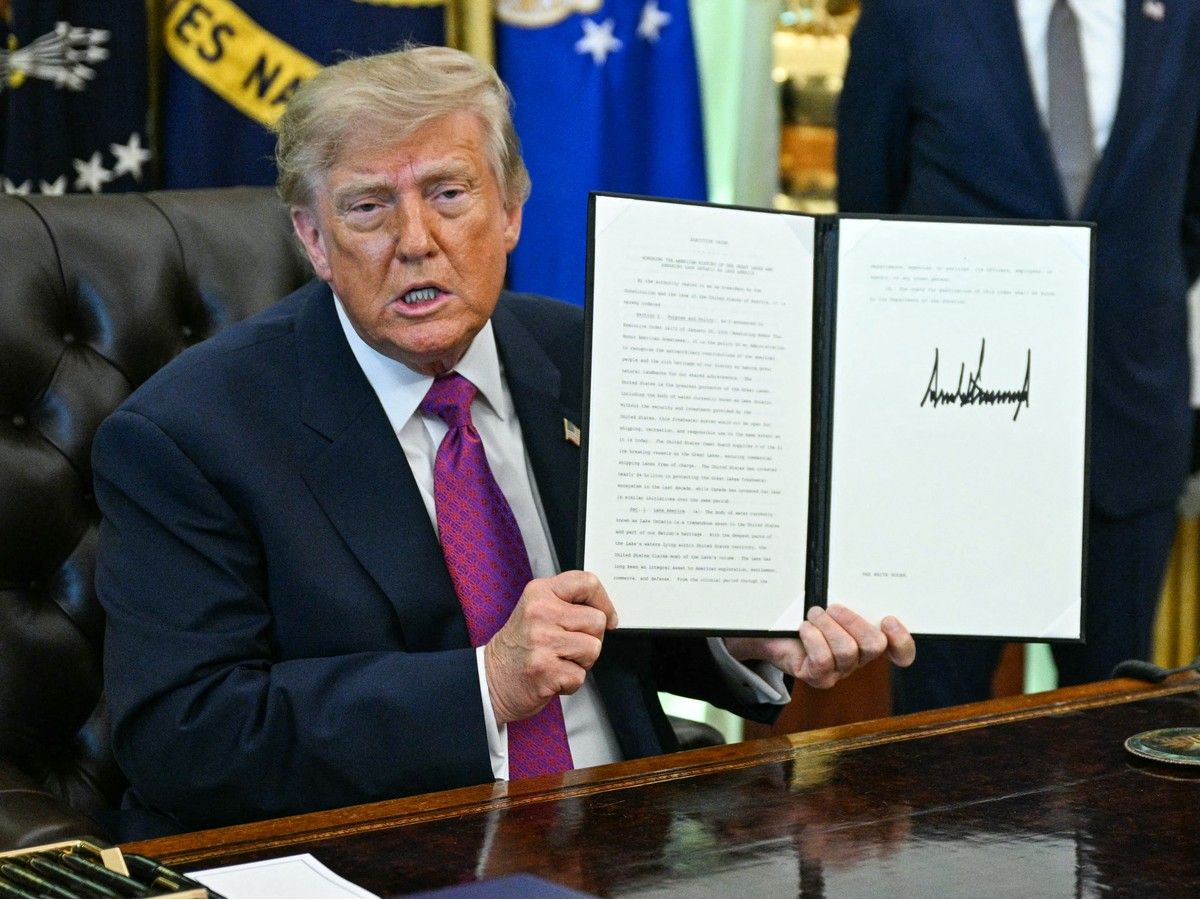
July 31, 2025 Trump signed an executive order raising tariffs from 25 to 35 per cent (not affecting CUSMA products) as he had previously warned if Canada did not meet the deadline. Aug. 1, 2025 Aug. 21, 2025 Aug. 22, 2025 Carney announced that, as of Sept. 1, the Canadian government would “now match the United States by removing all of Canada’s tariffs on U.S. goods specifically covered under CUSMA. asserted
government → sign → CUSMA
At the time, Trump said, “I like Carney a lot, I think he’s a good person and we had a very good talk yesterday, so I think it’ll be good.” asserted
it → say → talk
Trump likely felt this was fairer, because with the exception of the targeted sectoral tariffs on autos, steel and aluminum, the U.S. had not tariffed goods that were part of CUSMA, as Canada had done. asserted
Canada → feel → CUSMA
A reporter asked Carney at this time what happened to elbows up. asserted
what → ask → elbows
Carney replied with another hockey metaphor that suggested he thought taking extra penalties wasn’t the right thing to do. uncertain
taking → reply → penalties
Aug. 29, 2025 Sept. 29, 2025 Oct. 7, 2025 Carney attended a second Oval Office meeting. asserted
Carney → attend → meeting
Trump made it clear he was open to renegotiating or making different deals. asserted
he → make → deals
Carney reportedly was looking for relief on tariffs in specific sectors (Section 232) on things like steel and aluminum, which were tariffed at 50 per cent. uncertain
which → look → cent
Canada-U.S. Trade Minister Dominic LeBlanc called the talks both “successful” and “positive.” asserted
LeBlanc → call → talks
Things looked hopeful. asserted
Things → look → ?
According to U.S. Ambassador to Canada Pete Hoekstra, as part of a potential deal, Carney had offered to double oil experts to the U.S. uncertain
Carney → accord → U.S.
Reportedly, Keystone XL and defence were discussed, and Carney told reporters at the time that he and Trump had “identified opportunities for material progress in trade in steel, aluminium and energy.” uncertain
he → discuss → steel
Trump cancelled negotiations after an Ontario anti-tariff ad featuring former U.S. president Ronald Reagan aired during two baseball games. asserted
ad → cancel → games
Reportedly, talks broke down, not just because of the ad. uncertain
talks → break → ad
White House spokesperson Kush Desai called the ad the “latest example of how Canadian officials would rather play games than engage with the administration,” and the director of the National Economic Council, Kevin Hassett, accused Canada of having a “lack of flexibility,” suggesting it was “leftover behaviours from the Trudeau folks.” asserted
it → call → folks
Carney apologized to Trump for the ad at a dinner at the Asia Pacific Economic Cooperation forum in Gyeongju, South Korea. asserted
Carney → apologize → Gyeongju
The Government of Canada told The Canadian Press that talks had not resumed after the apology, and that Canada was ready to pick up where they left off. asserted
they → tell → apology
Meanwhile, Ontario Premier Doug Ford was framing the ad as a victory: “We’ve achieved our goal, having reached U.S. audiences at the highest levels.” asserted
We → frame → levels
Reaching U.S. audiences might be helpful if your goal is to have an effect on an upcoming U.S. election, not secure a sensitive trade deal. uncertain
goal → reach → deal
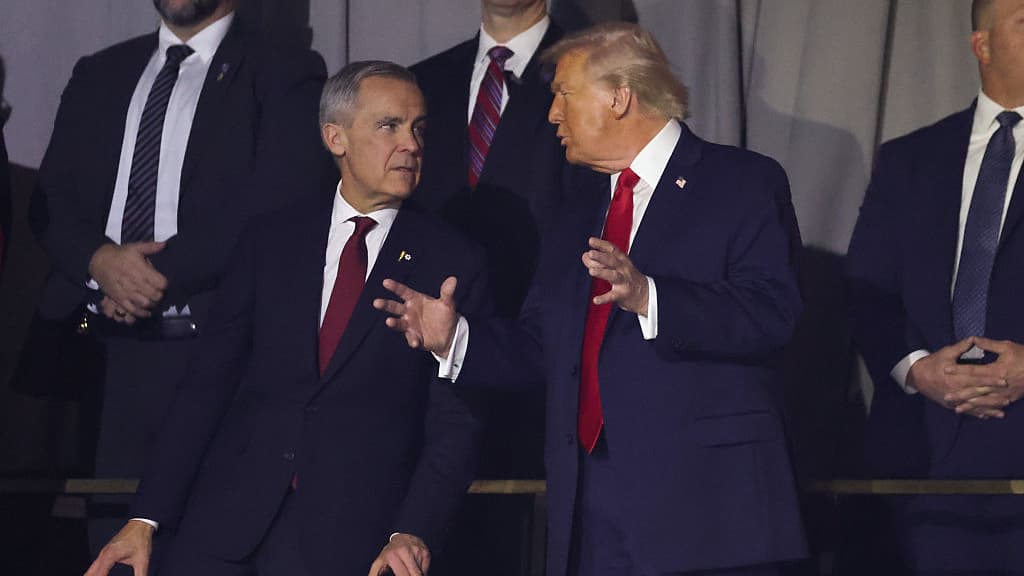
Carney, Mexican President Claudia Sheinbaum and U.S. President Donald Trump met privately and sat together at the FIFA World Cup draw that took place at the John F. Kennedy Center in Washington, D.C. asserted
that → meet → Washington
The Prime Minister’s Office said they had at least one 45-minute discussion and “agreed to keep working together on CUSMA.” asserted
they → say → CUSMA
Trump told reporters that all three of them were also going to discuss immigration and trade. asserted
three → tell → immigration
U.S. Trade Representative Jamieson Greer told Fox Business that it was Canada that was maintaining barriers that were making the talks difficult: “They continue to have certain barriers. asserted
They → tell → barriers
They refuse to sell U.S. wine and spirits on their shelves. asserted
They → refuse → shelves
There are a variety of issues that they have not addressed and they aren’t addressing, and this makes it a big challenge and an obstacle for starting real negotiations with them.” asserted
it → be → them
March 6 Four months later, LeBlanc met Greer in Washington, D.C., to discuss the upcoming CUSMA review on July 1. asserted
LeBlanc → meet → July
Greer’s office released a report outlining trade irritants with Canada, noting that Trump wanted U.S. alcohol to “immediately and permanently” return to shelves in all provinces. asserted
alcohol → release → provinces
It also cited concerns with “Buy Canadian” policies, high tariffs on U.S. dairy and concerns about delays with aircraft validation in Canada. asserted
It → cite → Canada
The Canadian Press reported that Carney never had an official meeting with Trump during the G7 summit in France, but told the press he’d had seven or eight discussions with him and got him a birthday present that he liked “a lot.” asserted
he → report → that
But no official bilateral talks were had between the two. asserted
talks → have → two
Meanwhile, Canada had recently agreed to reduce its tariffs on Chinese EVs from 100 to 6.1 per cent, capping vehicles annually at 49,000, while China suspended its retaliatory tariffs on Canadian agricultural goods. asserted
China → agree → goods
July 1 July 19 July 20 This brings us up to the most recent failed negotiations. asserted
This → bring → negotiations
Curiously, Carney told reporters at the the press conference for the Churchill Falls deal that, “The most important thing happening this week in Canada is today’s announcement,” which was interesting, seeing as we all knew U.S. trade talks were happening and no one had walked away at the point. asserted
one → tell → point
I contacted his office to ask about the remark and other details about the deal. asserted
I → contact → deal
I never received a response. asserted
I → receive → response
Before talks broke down, it looked like things were going well. asserted
things → break → ?
On the evening of Aug. 18, Trump exuberantly declared on Truth Social that Canada and the U.S. had a “DEAL” (pending finalized documents) and that Keystone XL “may be awoken from the grave!” uncertain
XL → declare → grave
…and 38 more, not listed.

💬 Give feedback
🕘 History 🎫 Support