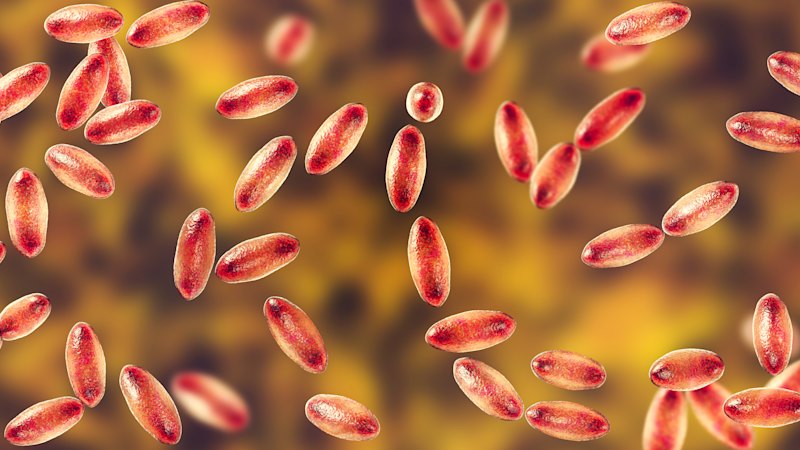
Glenn Corn, a former CIA officer speaking to Fox News Digital, expresses skepticism about Russia’s account of the death of Darya Shipilova, a 28-year-old researcher at an anti-plague institute in Siberia. Russian authorities reported she died from pneumonia with no evidence of lab pathogens, contradicting initial social media claims of pneumonic plague. Corn, citing Russia's history of misinformation, such as its cover-up of the 1979 Sverdlovsk anthrax outbreak, warns that past deceptions make it hard to trust current statements without corroborating evidence.
Written locally by qwen2.5:14b on 2026-10-07,
using this article's own text rather than the other coverage of the
same event (that is the story summary below).
Glenn Corn, a former CIA officer, told Fox News Digital that Russia’s decades-long history of deception makes it difficult to trust the Kremlin’s account of a possible disease outbreak following the death of a 28-year-old researcher at a facility containing dangerous pathogens.
asserted
it → tell → pathogens
Darya Shipilova, who worked at the Irkutsk Anti-Plague Research Institute of Siberia and the Far East, got sick near the end of September.
asserted
who → work → September
After unconfirmed reports that Shipilova died from pneumonic plague were shared far and wide on social media, Russian authorities pushed back, saying she died on Oct. 2 from "pneumonia of unknown etiology" and that testing found no evidence she had been infected with a pathogen from her lab.
uncertain
she → die → lab
Yet the Russian government’s past messaging around major crises has left Corn and others wary of its official account.
asserted
messaging → leave → account
"This is what the challenge is, because they have the history of the 'boy who cried wolf syndrome.'
asserted
who → have → syndrome
They have this history of being deceitful.
asserted
They → have → history
It's very hard to believe what they're saying," Corn said.
asserted
Corn → believe → what
Corn, who is fluent in Russian and spent more than 20 years overseas during his intelligence career, gave several examples of elaborate Russian coverups, including the 1979 anthrax outbreak that killed at least 64 people in the Soviet city of Sverdlovsk, now called Yekaterinburg.
asserted
that → spend → Sverdlovsk
For years, the Soviet Union claimed that the deaths were caused by intestinal anthrax from tainted meat, according to PBS Frontline.
uncertain
deaths → claim → Frontline
It wasn't until 1992 that President Boris Yeltsin finally admitted the illnesses were the result of military activity at a nearby biological weapons facility.
asserted
illnesses → admit → facility
This dedication to deception, Corn said, remains a feature of the current government under President Vladimir Putin.
asserted
Corn → say → Putin
Corn pointed to the Kremlin’s past denials of ties to the Wagner mercenary group, whose murky relationship with the state allowed its fighters to advance Moscow’s interests overseas while Russian officials maintained plausible deniability.
asserted
officials → point → deniability
Putin later acknowledged that the group had been fully financed by the Russian state.
asserted
group → acknowledge → state
"This goes to the strategic culture of leadership in Russia...and their fear of the rest of the world, and their belief that they have to deceive everybody because everybody is deceiving them," Corn said.
asserted
Corn → go → them
Corn said this style of narrative control is also characteristic of China, which remains under Communist Party rule, while modern Russia inherited many of the institutions and governing practices of the communist-led Soviet Union.
asserted
Russia → say → Union
For example, China faced criticism in the early stages of the COVID-19 pandemic for withholding or delaying the release of critical information about the emerging virus, which has gone on to kill more than 7 million people globally.
asserted
which → face → people
"In both systems, people are disincentivized to tell the truth when there's a bad story," Corn said.
asserted
Corn → disincentivize → truth
"Nobody wants to actually say that we have a real problem and we need to deal with it because they're afraid that it will cost them their jobs, their lives, their freedom."
asserted
it → want → jobs
With that history in mind, Corn said U.S. officials should not simply take Moscow at its word on Shipilova’s death, but independently verify its claims and closely monitor for any signs of a wider outbreak.
uncertain
officials → say → outbreak
So far, there is no sign that Shipilova’s illness has spread.
asserted
illness → be → ?
Russia's health watchdog said Tuesday that 60% of the roughly 200 people quarantined after potentially coming in contact with Shipilova have been released.
asserted
% → say → Shipilova
It added that no cases of plague have been found.
asserted
cases → add → plague
The World Health Organization (WHO) said Tuesday that the case presented a "very low" risk outside Russia, The Associated Press reported.
asserted
Press → say → Russia
That same day, WHO Director-General Tedros Adhanom Ghebreyesus said on social media that the global health agency is in contact with Russian health authorities and has requested more information "to clarify the cause of the severe pneumonia" that killed Shipilova.
asserted
that → say → Shipilova
President Donald Trump also told reporters on Tuesday that he has a call scheduled with Putin about the case "very soon," adding that the U.S. is already in "very deep discussions" with Russia.
asserted
U.S. → tell → Russia
 The Aporia