Russian health authorities announced that Daria Shipilova, a 28-year-old lab worker at an anti-plague institute in Irkutsk who died last week, did not have plague, despite initial speculation. Over 60 colleagues remain isolated inside the institute, with several hospitals in the region still under quarantine without clear explanation. Rospotrebnadzor reported that tests on Shipilova found no pathogens linked to her work at the institute and no accidents involving infectious materials were detected. However, two cases of COVID-19 and two rhinovirus infections among those who had contact with her raised concerns about the true cause of her death.
Written locally by qwen2.5:14b on 2026-10-05,
using this article's own text rather than the other coverage of the
same event (that is the story summary below).
Story summary
A 28-year-old female lab technician named Darya Shipilova died in Siberia after breaking a test tube containing live bacteria at the Irkutsk Anti-Plague Institute on September 29, leading to her hospitalization and death two days later. At least 197 people who had contact with Shipilova were placed under quarantine to prevent any potential spread of pneumonic plague. The Russian government has not released an official statement but regional officials have taken swift action by placing several hospitals under quarantine measures. Irkutsk Governor Igor Kobzev declared a mask mandate in the area and Russia's Chief State Sanitary Officer, Anna Popova, visited the region to assess the situation. Reports suggest that while Rospotrebnadzor maintains the broader situation remains stable, there are fears this could be another "Wuhan situation," referencing the initial outbreak of COVID-19 in China. The U.S. State Department is monitoring the incident closely and urging Russia to share accurate information about the case promptly. Despite the concerns, pneumonic plague can still be treated with common antibiotics if administered early. The White House is also reportedly aware and assessing options regarding the situation.
Written for “Plague Outbreak in Siberia” on 2026-10-05,
grounded in this article and the 24 other(s) covering the same event.
Why this leaning score
This article does not take a side on a contested political
question, so it has no leaning score. That is an
answer rather than a gap: a match report or a rescue can be warmly
or critically written without being left or right, and scoring it
anyway is how approval of a subject gets recorded as a political
position.
No political leaning scored for article 57594 · logged 2026-10-05
Rospotrebnadzor said tests found no pathogen linked to the deceased lab worker's work at the Irkutsk anti-plague institute, but more than 60 colleagues remained isolated inside the building and several hospitals stayed closed without explanation.
asserted
hospitals → say → explanation
Russian health authorities said on Monday that a laboratory assistant at an anti-plague institute in Siberia who died last week did not have plague, even as quarantine restrictions remained in place across multiple hospitals in the region.
asserted
restrictions → say → region
Daria Shipilova, 28, a staff member at the anti-plague institute in Irkutsk, may have contracted pneumonic plague after a test tube broke in the laboratory, regional outlets reported, citing unnamed sources close to regional security services.
uncertain
outlets → contract → services
Authorities placed more than 60 institute employees under isolation inside the building from Friday.
asserted
Authorities → place → Friday
A relative of one employee told Siberia.Realii
asserted
relative → tell → Siberia
they slept on the floor and chairs without beds, with food parcels passed through a checkpoint.
asserted
parcels → sleep → checkpoint
No positive test results had emerged among staff by Saturday, the relative said.
asserted
relative → emerge → Saturday
Several Irkutsk hospitals were also placed under quarantine, including three city clinical hospitals, the Ivano-Matreninsky children's hospital and the city maternity hospital.
asserted
hospitals → place → hospitals
The Central District Hospital in Shelekhov, a satellite town where Shipilova lived, was also closed.
asserted
Shipilova → live → Shelekhov
Sources for People of Baikal said ambulances transporting contacts of Shipilova for examination had been escorted by FSB officers since Thursday.
asserted
ambulances → say → Thursday
A mask mandate was introduced at the Irkutsk Aluminium Plant in Shelekhov.
asserted
mandate → introduce → Shelekhov
Russia's national health watchdog Rospotrebnadzor said tests of biological material from Shipilova found no microorganisms linked to her professional activity and no accidents involving pathogenic micro-organisms had been detected at the institute.
asserted
accidents → say → institute
Among those who had contact with her, two cases of COVID-19 and two rhinovirus infections were found; no other infectious agents were identified, it said.
asserted
it → have → COVID-19
Irkutsk governor Igor Kobzev said a special expert commission had concluded the cause of death was "pneumonia of unknown aetiology" and described the public health situation as stable.
asserted
cause → say → situation
"The situation remains under our control and under the control of experts," he said.
asserted
he → remain → experts
The head of neighbouring Buryatia Alexei Tsydenov initially confirmed Shipilova had died of plague after her death, then added the word "possibly."
uncertain
Shipilova → neighbour → word
Irkutsk regional authorities posted a message on Saturday asking residents not to travel to Shelekhov because of plague, then deleted it.
asserted
authorities → post → it
Kremlin spokesman Dmitry Peskov on Monday told journalists to focus on official statements from Rospotrebnadzor and not on "various rumours, various speculations."
Rospotrebnadzor has not explained why dozens of staff were isolated and restrictions imposed on several hospitals simultaneously if test results were negative, according to Current Time.
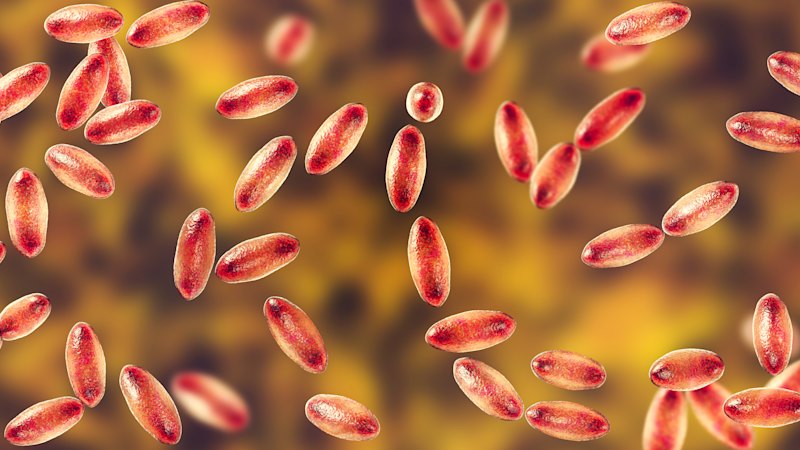
Plague is a bacterial disease with several forms.
uncertain
Plague → tell → forms
Pneumonic plague, the most contagious, is transmitted between people and is fatal without early antibiotic treatment, according to the World Health Organization.
uncertain
plague → transmit → Organization
Russia has recorded isolated plague cases since 2014, most involving transmission from rodents during skinning, and has contained them successfully.
asserted
most → record → them
 The Aporia