The Russian ‘lab leak’ and America’s great weakness

Read the original at The Independent ↗
The Independent · collected 2026-10-06 · by Holly Baxter

Quick Summary

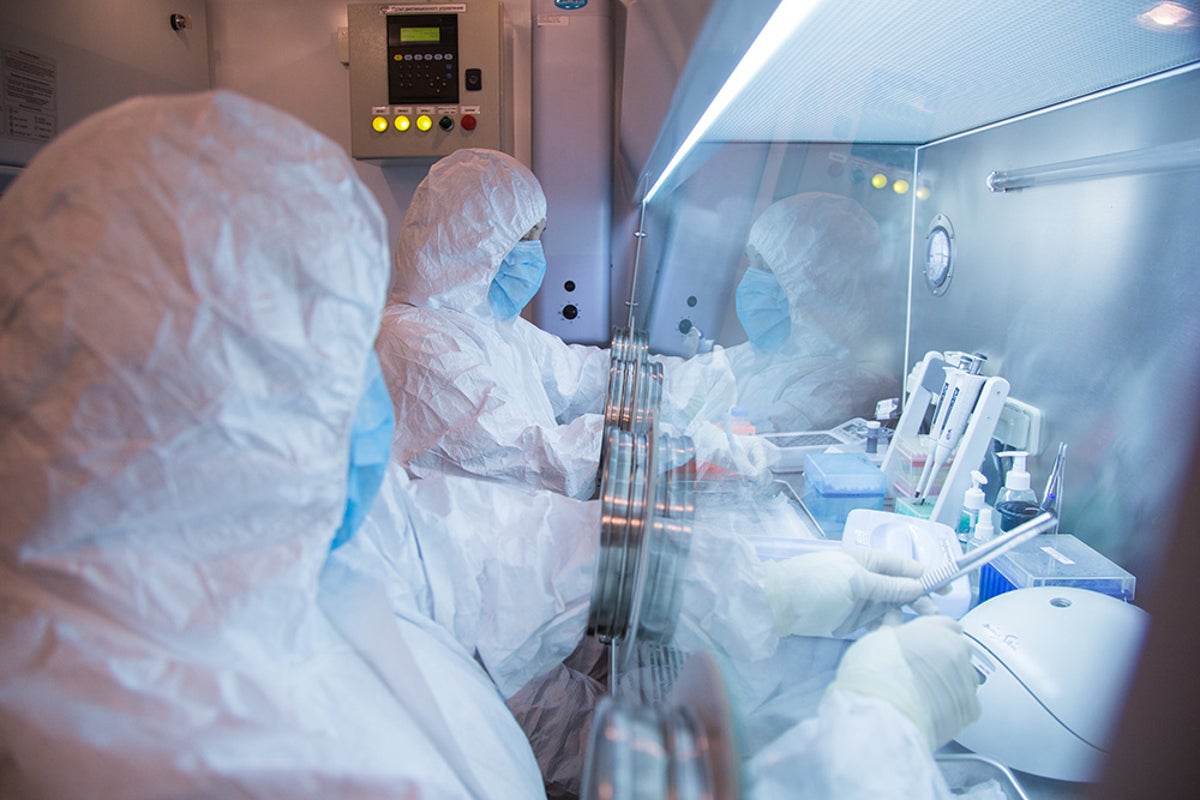
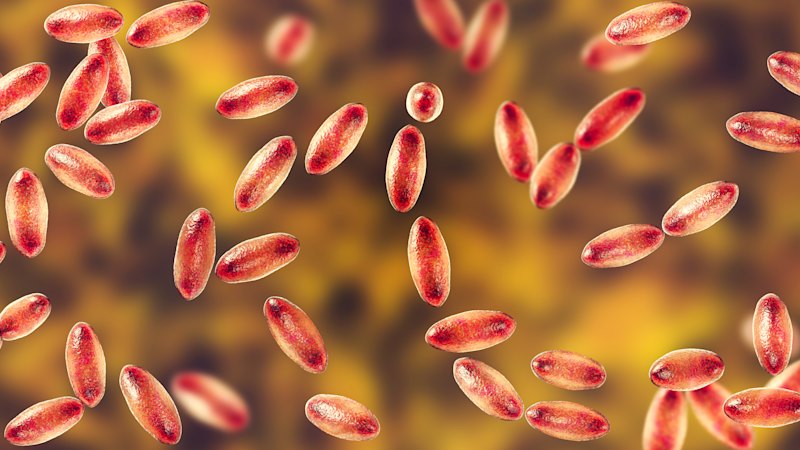
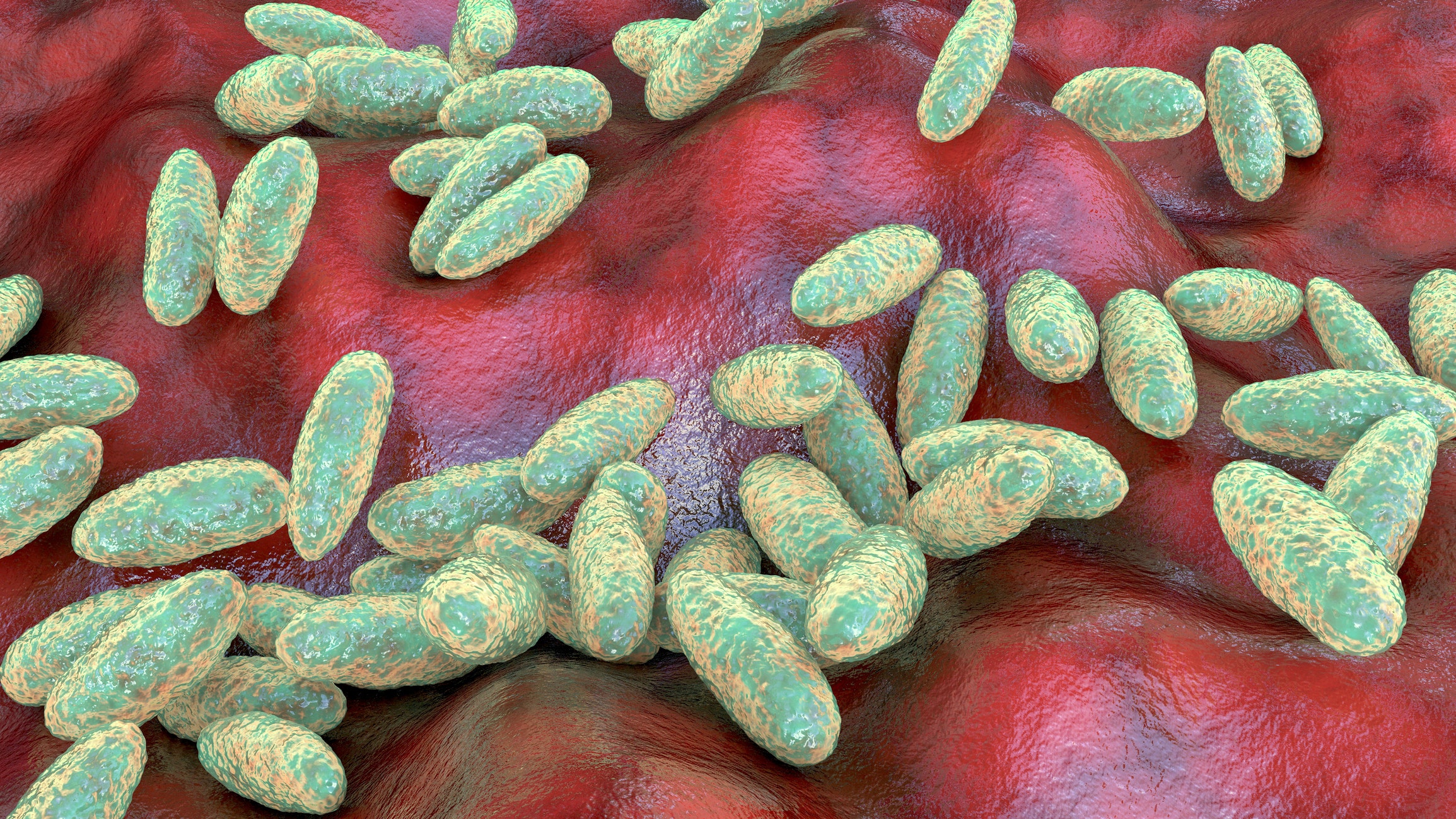
A 28-year-old laboratory worker at an anti-plague research institute in Siberia died after developing severe pneumonia of unknown origin, raising concerns about a potential lab leak involving Yersinia pestis, the bacterium responsible for plague. While Russian authorities claim no link to dangerous pathogens handled by the worker, reports suggest she might have broken a test tube containing plague bacteria. Around 200 people who had contact with her are under observation, and the hospital has been quarantined. Dr. Simon Clarke from the University of Reading notes that while lab escapes are rare due to stringent safety measures, significant issues must have occurred for an infection to take place.
Written locally by qwen2.5:14b on 2026-10-06, using this article's own text rather than the other coverage of the same event (that is the story summary below).

AI analysis runs on qwen2.5:14b, locally

Story summary

In September 2023, a lab technician named Darya Shipilova, aged 28, died in Siberia after contracting pneumonic plague from breaking a test tube at the Irkutsk Anti-Plague Institute. As many as 200 people who had contact with her were placed under quarantine to prevent potential spread. Governor Alexei Tsydenov confirmed the woman's death on social media, though Russia’s health ministry did not immediately issue an official statement.

Russia's Chief State Sanitary Doctor Anna Popova traveled over 2,600 miles from Moscow to Irkutsk to manage the outbreak personally. Local authorities have instituted strict quarantine measures across Shelekhov District Hospital and a nearby maternity facility, with additional safety protocols implemented at a local aluminum plant. Despite these measures, fears of another "Wuhan situation" emerged due to limited transparency from Russian officials.

The U.S. State Department is monitoring developments closely alongside the CDC, urging Russia for more information on the incident. The outbreak raised international concern and prompted discussions about potential risks to American citizens in Russia. While pneumonic plague can be treated effectively with antibiotics if diagnosed early, proper public health measures are crucial to contain its spread.

Written for “Plague Outbreak in Siberia” on 2026-10-06, grounded in this article and the 36 other(s) covering the same event.
Why this leaning score
This article does not take a side on a contested political question, so it has no leaning score. That is an answer rather than a gap: a match report or a rescue can be warmly or critically written without being left or right, and scoring it anyway is how approval of a subject gets recorded as a political position.
No political leaning scored for article 59087 · logged 2026-10-06

Signals How these are calculated →

Claims extracted
53
claim-shaped sentences
Uncertain
15%
8 of 53 hedged
Leaning
not political
takes no side on a contested political question
Correction & hedging signals
58.8
corrections and hedging in what we collected; not a measure of accuracy
Outlets on this story
37
Health
Narrative spread
1
articles carrying this framing
Analyzed 2026-10-06 · how these are computed

Story

📰 Plague Outbreak in Siberia
Health · 37 article(s) covering the same event. See how they differ ↓

How this is being covered How these are calculated →

Article leaning vs. publisher reliability
Source leaning vs. consistency

Compared with similar articles

This article reads unscored and hedges 15% of its claims. Each row says how that neighbour differs.
The Sydney Morning Herald
⚖️ leaning not scored 🔴 35% hedged 7 of 20 📰 publisher trust 61
“Both articles refer to a single incident involving the death of a 28-year-old laboratory worker at an anti-plague research institute in Irkutsk due to pneumonia of unknown origin.”
BBC News
⚖️ leaning not scored 🔴 21% hedged 4 of 19 📰 publisher trust 72
“Both articles describe the death of a Russian lab technician at a plague research center in Siberia due to pneumonia of unknown origin.”
Daily Mail
⚖️ leaning not scored 🔴 18% hedged 16 of 91 📰 publisher trust 65
“Both articles discuss the death of a 28-year-old scientist at an anti-plague institute in Irkutsk, Russia, involving a mysterious illness described as pneumonia of unknown origin.”
Fox News
⚖️ Leans strongly left 🔴 4% hedged 1 of 25 📰 publisher trust 69
“Both articles discuss a specific death of a Siberian laboratory worker who died from pneumonia at an anti-plague research institute, suggesting a potential bio-leak incident.”
South China Morning Post
⚖️ leaning not scored 🔴 25% hedged 1 of 4 📰 publisher trust 67
“While both articles discuss a death at an anti-plague institute in Siberia, ARTICLE B does not provide new information about a specific plague-related death but rather focuses on broader implications and uncertainties.”
Fox News
⚖️ leaning not scored 🔴 40% hedged 4 of 10 📰 publisher trust 69
“While both articles discuss a suspected pneumonic plague case in Irkutsk, Article A is about U.S. monitoring of unconfirmed reports, while Article B provides details about a specific laboratory worker's death and Russian authorities' response, suggesting different reporting on the same incident over time.”
Al Jazeera
⚖️ leaning not scored 🔴 15% hedged 2 of 13 📰 publisher trust 60
“While both articles mention a lab worker's death in Siberia, Article B provides details about Russian authorities' description of pneumonia of unknown origin and lack of connection to pathogens worked with, indicating it might be referring to an earlier or different incident.”
Daily Mail
⚖️ Leans left 🔴 17% hedged 14 of 84 📰 publisher trust 65
“While both articles discuss a laboratory worker's death at an anti-plague institute in Irkutsk, Article A specifies it as a pneumonic plague outbreak leading to lockdowns and quarantine measures, whereas Article B emphasizes uncertainty about the cause of death and Russian authorities' statements.”
Semafor
⚖️ leaning not scored 🔴 0% hedged 0 of 4 📰 publisher trust 95
“While both articles discuss a suspected case of pneumonic plague in Siberia, ARTICLE B focuses on the details and context of the incident itself, including the death of the lab worker, while ARTICLE A covers the international reaction to the reported case.”
The Independent
⚖️ leaning not scored 🔴 47% hedged 7 of 15 📰 publisher trust 59
“While both articles refer to a laboratory worker's death in Siberia, Article B seems more focused on interpreting and discussing the implications of the incident rather than reporting the immediate details. The dates also differ.”

Publisher

The Independent · 1711 article(s) · 4 correction(s) detected
Running correction rate · 4 correction(s)
2026-10-03
Prison chief to resign after shock botched execution of Christa Pike
2026-09-22
Costa Rican man complained of lack of care for diabetes before his death in ICE custody, family says
2026-09-17
Killer who gunned down famed Elvis impersonator set to be executed tonight
2026-09-04
Pennsylvania confirms second death of child with measles after RFK Jr. told CDC director to delete numbers

Who wrote this

Holly Baxter
9 article(s) here · 1 carrying a prediction
🔮 But reports have circulated that she may have accidentally broken a test tube containing plague bacteria, and the hospital where she was treated has been quarantined.
🔮 Beards were out, “war fighters” were in, AMERICA WAS BACK (to getting itself entrenched into forever wars in the Middle East) and Hegseth got to preen around talking about strength and integrity and all those other things he wouldn’t know if he bumped into them in a dark alley.
🔮 Rumors swirled on Monday morning when the White House announced that President Trump would make a mystery announcement at 2 pm.
🔮 But his training in ethics and his technical knowledge meant that he was able to fairly accurately predict the conversations we would have once they were developed.
🔮 When Xi Jinping meets Donald Trump in Washington this week, there will be plenty to discuss: trade, AI, Taiwan, Iran, and the increasingly strange business of American-Chinese relations.
🔮 I dutifully filled out my name (first name only — a detail that struck me as unsettling, though I couldn’t fully articulate why), my appointment time, and what kind of bloodwork I was there for.
2026-09-16 · assertive framing · The day I found out when I’m going to die
🔮 To begin with, Blanche reeled off a couple of “wins” surrounding Trump administration arrests and investigations, before opening for “questions, if there are any,” which of course there would be, because this is why everybody was here.
🔮 Pushed on that, he added that he wouldn’t have wanted to exclude “victims of bestiality” from applying for FBI jobs.
🔮 As AI executives and researchers — so, the people who are actually building the things — warn that increasingly powerful systems may require stronger oversight, the president has an innovative solution.
Also by Holly Baxter
Nothing else under this byline is closely related to this article, so these are simply their most recent.
All 9 articles by Holly Baxter →

Topics

Covid Independent Irkutsk Russian the University of Reading

Subjects

Irkutsk GPE · 3× Covid GPE · 2× Russia GPE · 2× Independent NORP · 1× Moscow GPE · 1× Russian NORP · 1× Simon Clarke PERSON · 1× St. Petersburg GPE · 1× The Irkutsk Anti-Plague Institute ORG · 1× the University of Reading ORG · 1×

Narrative

Irkutsk itself is a long way away from major international cities like Moscow and St. Petersburg — the distance is similar to the distance between New York and Los Angeles, necessitating seven-hour flights or multi-day train rides across desolate landscapes — and the Siberian region, which borders Mongolia and China, has very different weather patterns to the European parts of Russia, which border places like Finland and Ukraine.
framing: assertive · carried by 1 article(s) · first seen 2026-10-06
🔮 But reports have circulated that she may have accidentally broken a test tube containing plague bacteria, and the hospital where she was treated has been quarantined.
2026-10-06 · The Independent
The Russian ‘lab leak’ and America’s great weakness · assertive framing

Claims (53 extracted, 8 hedged)

There’s a lot we don’t know about what has happened in Siberia. What we do know: A 28-year-old laboratory worker at an anti-plague research institute in Irkutsk died last week after developing severe pneumonia. asserted
worker → ’ → pneumonia
Russian authorities have described her illness as pneumonia of unknown origin and said tests found no connection to the dangerous pathogens she worked with. asserted
she → describe → pathogens
But reports have circulated that she may have accidentally broken a test tube containing plague bacteria, and the hospital where she was treated has been quarantined. uncertain
she → circulate → bacteria
Around 200 people who may have had contact with her have reportedly been placed under observation. uncertain
who → have → observation
So, no, it’s not Covid again. asserted
it → ’ → ?
But the possibility of a laboratory accident involving Yersinia pestis, the bacterium responsible for plague, is sufficiently alarming to have attracted international attention. asserted
possibility → involve → attention
Pneumonic plague is particularly dangerous because it can spread between people through respiratory droplets. asserted
it → spread → droplets
However, it is a bacterial disease rather than a viral one, meaning it’s generally treatable with antibiotics when caught quickly. asserted
it → mean → antibiotics
It’s also not that transmissible: you’d have to be in very close contact with an infected person to catch it. asserted
you → ’ → it
Dr. Simon Clarke, an associate professor of cellular microbiology at the University of Reading, puts the lab-leak theory in useful perspective. asserted
Clarke → put → perspective
“It is not unheard of for pathogens to escape from labs,” he says. asserted
he → escape → labs
High-containment laboratories are designed around precisely this possibility, with multiple layers of protection, safety cabinets, airflow systems and strict procedures. asserted
laboratories → design → protection
Lab-acquired infections are rare, and “a broken tube would not automatically lead to exposure or infection.” asserted
tube → acquire → exposure
But it is unusual, he says, for test tubes to be used that much at all these days, which raises its own questions. asserted
which → say → questions
All of this means that “an awful lot must have gone wrong” for a worker to become infected in the way that’s been reported. asserted
that → mean → way
The Irkutsk Anti-Plague Institute is a large research facility that deals with the kind of plague bacteria still circulating among animals in Siberia (and other parts of the world.) asserted
that → deal → world
Irkutsk itself is a long way away from major international cities like Moscow and St. Petersburg — the distance is similar to the distance between New York and Los Angeles, necessitating seven-hour flights or multi-day train rides across desolate landscapes — and the Siberian region, which borders Mongolia and China, has very different weather patterns to the European parts of Russia, which border places like Finland and Ukraine. asserted
which → necessitate → Finland
All of this context is important, when you consider how successful a quarantine might be and why a plague lab might be based in Irkutsk in the first place. uncertain
lab → consider → place
Indeed, the whole institute is currently locked down with around 60 people inside, according to local media reports. uncertain
institute → lock → reports
But none of this is fully reassuring to a world that’s still reeling from the Covid pandemic. asserted
that → reel → pandemic
The Trump administration says it is watching the situation. asserted
it → say → situation
Secretary of State Marco Rubio said on Monday that he was “monitoring it closely,” and that he doesn’t believe it’s a cause for alarm. asserted
it → say → alarm
American agencies including the CDC and the State Department are, like everybody else, seeking more information. asserted
agencies → include → information
Unfortunately, the Trump administration has somewhat kneecapped itself in this regard. asserted
administration → kneecap → regard
The U.S. formally withdrew from the World Health Organization in January, ending its membership, funding and personnel involvement amid claims of political motivation and a lack of transparency. uncertain
U.S. → withdraw → transparency
The WHO isn’t perfect — and Russia is certainly not the most transparent country in the world — but it was the best we had when it came to information-sharing during Covid. asserted
it → have → Covid
America can, of course, still gather intelligence on the current situation. asserted
America → gather → situation
It can certainly speak directly to Russia. asserted
It → speak → Russia
But global disease surveillance works best when information moves quickly and scientists and public health officials have established channels through which they can share it. asserted
they → work → it
And although Putin and Trump have shared a few friendly visits, Trump himself complained during the early days of the Ukraine war that he’d have a phone call with Putin that he thought had gone well and then hear a couple of hours later that Russia had just bombed a hospital. asserted
Russia → share → hospital
America is currently trying to work out what its place is in the next era of biomedical science. asserted
place → try → science
The Trump administration has restricted federal support for research, disrupted the NIH, made it harder for talented foreign students to get visas to study at elite universities in the US, and made it harder for US scientists to collaborate with scientists across the world. asserted
scientists → restrict → world
When I asked researchers in cutting-edge genetics and cancer research in New York what the effect had been on their work, they said that it had been slowed and fractured to the point that they believed China would now take over as the global leader in biomedical breakthroughs. asserted
China → ask → breakthroughs
In their view, the damage has already been done. asserted
damage → do → view
Being longtime allies, China and Russia already have closer comms than the U.S. has with either country. asserted
U.S. → have → country
If China becomes the world leader in medical research, it will bring Russia along for the ride. asserted
it → become → ride
They will share developments and experiments both publicly and privately, especially during times of emergency and quarantine. asserted
They → share → emergency
Current research suggests America still has significant advantages in the quality and commercial reach of its biomedical science. uncertain
America → suggest → science
But China is closing the gap, particularly in areas such as clinical trials, drug development and manufacturing. asserted
China → close → trials
The country that can sequence a pathogen fastest, develop a diagnostic fastest, test a treatment fastest and manufacture it at scale is building the infrastructure that determines how quickly it can protect its own population when something unexpected happens. asserted
something → sequence → population
…and 13 more, not listed.

💬Give feedback
🕘History 🎫Support