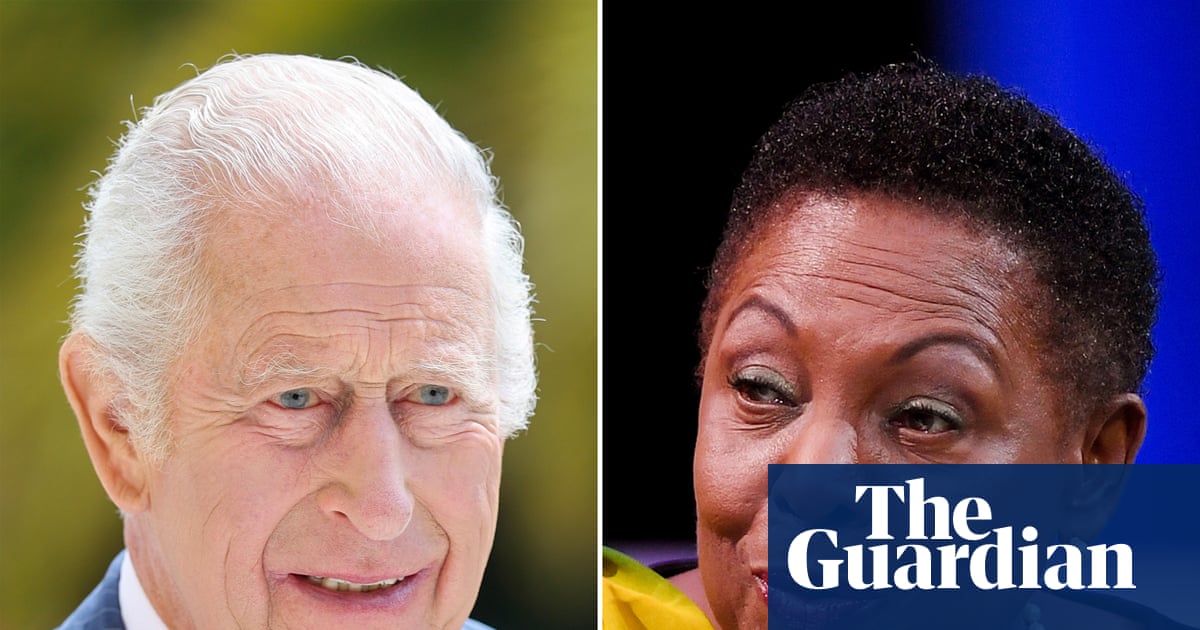
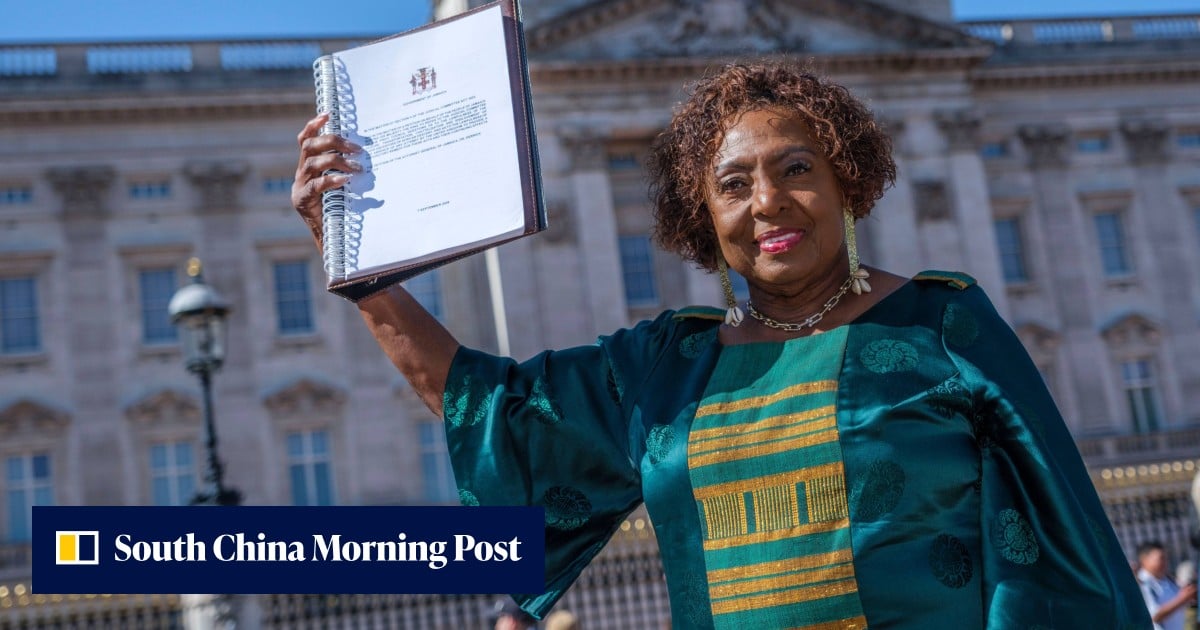
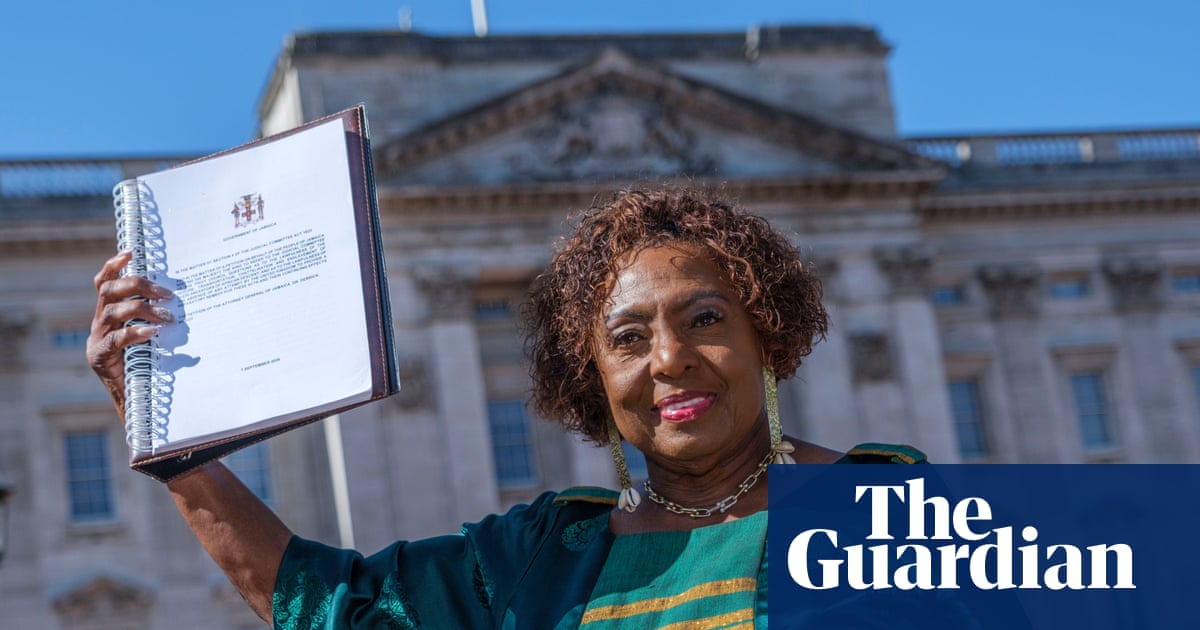
A landmark petition is to be handed to King Charles by Jamaica over slavery reparations, aiming to confront historical crimes that still disadvantage former British colonies, the Caribbean nation’s culture minister has said.
asserted
minister → hand → colonies
The petition will be lodged with Charles, Jamaica’s head of state, on Monday.
asserted
petition → lodge → Monday
“We’re a resilient people.
asserted
We → ’re → ?
We were able to bounce back from [Hurricane] Melissa, for example,” said Olivia Grange, who arrived in London at the weekend with members of Jamaica’s National Council on Reparations.
asserted
who → bounce → Reparations
“But we still have a lot of work to do, and you can imagine if we did not have those inherited problems, the legacy that came out of slavery, how much better we would have been able to do so,” she told the Guardian.
asserted
she → have → Guardian
First announced in June last year, the petition asks the monarch to use his authority to request legal advice from the judicial committee of the London-based privy council, the final court of appeal for UK overseas territories and some Commonwealth countries.
asserted
petition → announce → territories
It wants Charles to ask whether the forced transport of Africans to Jamaica was lawful, if it constituted a crime against humanity, and whether Britain is under an obligation to provide restitution to Jamaica for slavery and its enduring consequences.
asserted
Britain → want → slavery
Grange said that these questions and a privy council response were critical to progressing the country’s reparations claims.
uncertain
questions → say → claims
Between the 15th and 19th centuries, more than 12.5 million Africans were kidnapped, forcibly transported to the Americas and sold into slavery.
asserted
Africans → kidnap → slavery
Grange said that Jamaica had been the first Caribbean nation to create a national reparations mechanism, establishing it in 2009.
asserted
Jamaica → say → 2009
She said the aim was to address the enduring impacts of slavery that put countries such as Jamaica at a grave economic disadvantage and affected its ability to respond to modern-day challenges in the Caribbean, such as the climate crisis.
asserted
that → say → crisis
“We have inherited systems that continue to deprive our country and our people.
asserted
that → inherit → country
The legacy in education, even in health, the way we eat, our diet because of what we were fed, our ancestors were fed,” she said.
asserted
she → eat → what
Ralph Gonsalves, a former prime minister of St Vincent and the Grenadines who was instrumental in setting up the Caribbean Community Reparations Commission, echoed Grange’s sentiments.
asserted
who → set → sentiments
“The present is very much the past, because what we are dealing with is the legacies of underdevelopment which you can source, and we do source, to native genocide and enslavement of African bodies,” he said on Sunday.
asserted
he → deal → Sunday
“People must remember this: that European nations were enriched because of the enslavement of African bodies.”
asserted
nations → remember → bodies
He said Jamaica’s visit was a critical milestone among a number of upcoming events, including a Caribbean reparations conference in Barbados later this month, and planned advocacy at the upcoming UN general assembly in late September and the Commonwealth heads of government meeting in Antigua in November, which King Charles is scheduled to attend.
asserted
Charles → say → which
There are growing global calls for Britain and other former colonial powers to recognise hundreds of years of transatlantic slavery that treated African people as chattel as a crime, and to engage in a process of reparatory justice.
asserted
that → be → justice
In March this year, 123 nations voted for a landmark UN resolution that described chattel slavery as the gravest crime against humanity.
asserted
that → vote → humanity
In June, the Caribbean launched a manifesto outlining the “moral, ethical and legal case for reparations”.
asserted
Caribbean → launch → reparations
And last month, a UN committee on the elimination of racial discrimination said countries were legally obliged to consider reparations for the transatlantic slave trade and take other measures to address the enduring legacy of racial discrimination.
asserted
countries → say → discrimination
The UK was one of several European countries that abstained from voting in the March UN resolution, and in October 2024, the former British prime minister Keir Starmer resisted pressure from member states to include reparations in the Commonwealth heads of government meeting agenda.
asserted
Starmer → abstain → agenda
Grange said she hoped the visit would facilitate a unifying response to the complicated history.
asserted
visit → say → history
A palace spokesperson said Charles “has on many occasions expressed his personal and wholehearted commitment to promoting greater understanding around the issue of slavery and finding ways to address historic wrongs for the benefit of communities today.”
asserted
Charles → say → communities
Later on Sunday, the delegation hosted a remembrance church service in Brixton, and later in the week they are due to meet UK members of parliament.
asserted
they → host → parliament
Grange said there would also be a visit to the British Museum to discuss repatriation of Jamaican artefacts.
asserted
Grange → say → artefacts
She said: “We may have different history, different heritage, different skin colour, but it’s about humanity.
uncertain
it → say → humanity
It’s about, as a people, being able to live together, to work together, and to respect each other.
asserted
It → ’ → other
“And in our efforts to seek reparatory justice, we will use the opportunity to also promote and encourage what Jamaica is known for, One Love, because we have the song of the century through Bob Marley.”
asserted
we → seek → Marley
 The Aporia